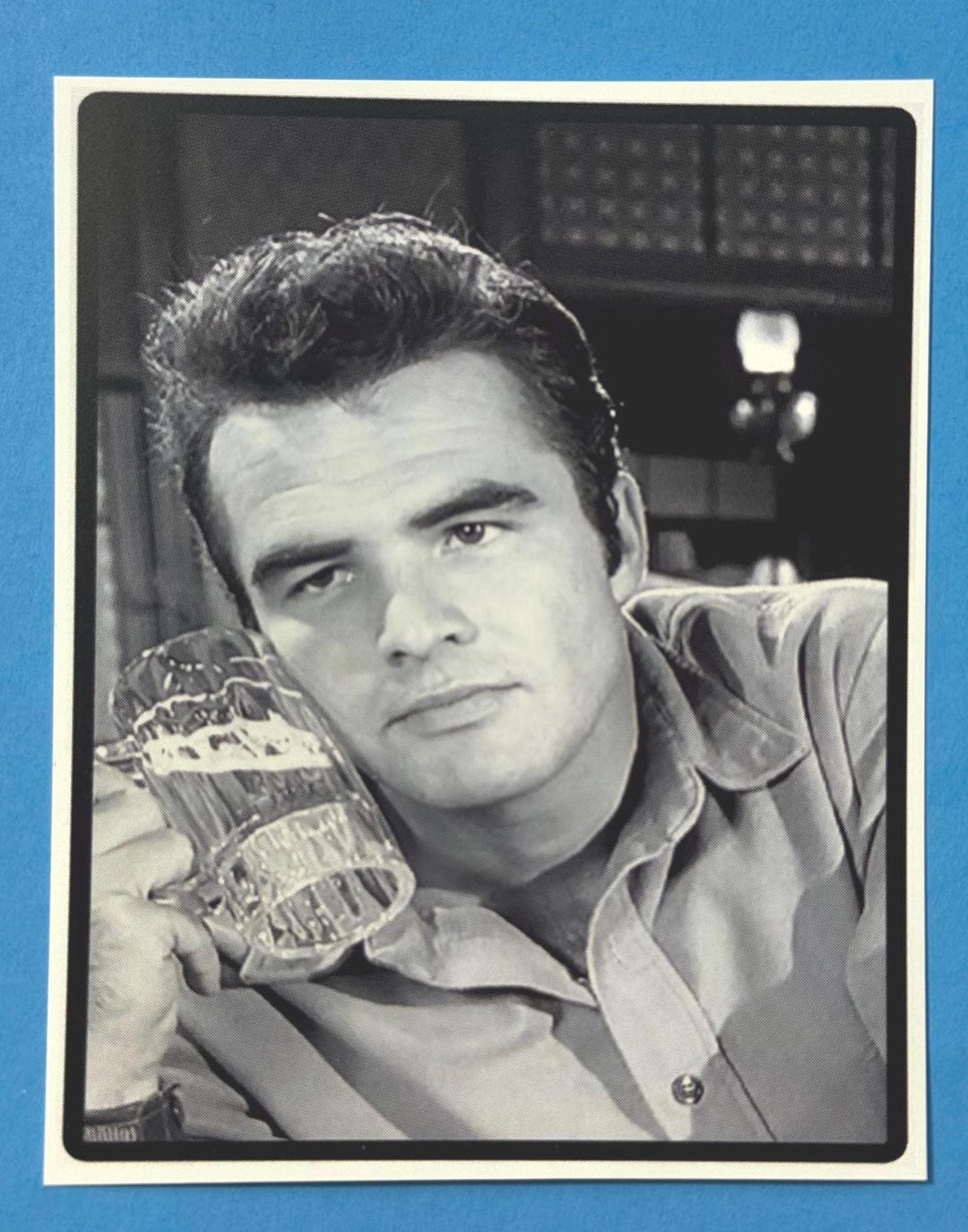
How Quint Asper Left Gunsmoke: The Story Behind Burt Reynolds’ Departure
Quint Asper, portrayed by Burt Reynolds, left Gunsmoke in 1965 at the end of the show's tenth season. His departure was not marked by an on-screen death or a specific "farewell" storyline; instead, the character simply stopped appearin...
Quint Asper, portrayed by Burt Reynolds, left Gunsmoke in 1965 at the end of the show's tenth season. His departure was not marked by an on-screen death or a specific "farewell" storyline; instead, the character simply stopped appearing after the episode "Winner Take All" (Season 10, Episode 28). Reynolds chose to leave the series to pursue a career in feature films, encouraged by his co-stars who recognized his potential as a leading man.
Contents
The Character of Quint Asper: A New Dynamic for Dodge City
To understand why and how Quint Asper left, one must first understand why he was there. Quint Asper was introduced in the Season 8 episode "Quint Asper Comes Home", which aired on September 29, 1962. At the time, Gunsmoke was the reigning king of television Westerns, but it was facing a significant transition. Dennis Weaver, who played the beloved, limping deputy Chester Goode, was beginning to distance himself from the show to seek other opportunities.
Quint was designed to fill a specific atmospheric void. He was a "half-breed" character—the son of a white father and a Comanche mother. This background allowed the writers to explore themes of racial tension, identity, and the "outsider" perspective in the Old West. Quint was a skilled blacksmith, providing a grounded, working-class presence in Dodge City that contrasted with Marshal Matt Dillon’s authority and Doc Adams’ professional wisdom.
During his three-year tenure (1962–1965), Burt Reynolds appeared in 50 episodes. He brought a youthful, athletic energy to the screen. Unlike Chester, who was often the comic relief or the victim of circumstance, Quint was formidable, capable of holding his own in a fight, and possessed a quiet intensity that hinted at the movie star Reynolds would eventually become.
The "Silent Exit": Why There Was No Farewell Episode
One of the most frequent questions from modern viewers—who are accustomed to the high-stakes "character departures" of 2026 television—is why Quint Asper didn't get a proper send-off. In the mid-1960s, television production operated under a different set of rules regarding character continuity.
The Logic of 1960s Television
In the era of episodic television, showrunners often avoided serialized storytelling. Characters frequently disappeared between seasons without explanation. If an actor’s contract was up or they decided to move on, the character simply vanished from the canvas. Dodge City was portrayed as a transient frontier town; people arrived and left constantly.
Quint’s Final Appearance
Quint Asper’s final credited appearance was in "Winner Take All", which aired on April 17, 1965. The episode did not hint at his departure. He performed his duties as the town blacksmith and interacted with the main cast as usual. When Season 11 premiered in the fall of 1965, Quint was gone, and the show moved on with the introduction of Thad Greenwood (played by Roger Ewing) to fill the "youthful assistant" archetype.
The Real-World Reason: Burt Reynolds’ Career Ambitions
While the character's exit was silent on screen, the behind-the-scenes reality was quite vocal. Burt Reynolds was a man with a plan. Despite the stability and national exposure provided by Gunsmoke, Reynolds felt restricted by the ensemble format.
The Advice of Milburn Stone
A pivotal moment in television history occurred during a conversation between Reynolds and Milburn Stone, who played Doc Adams. Stone was a veteran actor and a mentor figure on set. According to various interviews Reynolds gave later in his career, Stone pulled him aside and told him plainly that he was wasting his time in Dodge City.
Stone reportedly told Reynolds, "It’s time for you to go. You’re a leading man, and you’re never going to be one here. Go to Hollywood and become a movie star." Stone recognized that as long as Reynolds stayed on Gunsmoke, he would always be in the shadow of James Arness’s towering Marshal Dillon. Reynolds took this advice to heart, realizing that his contract was the only thing keeping him from pursuing the "big screen" roles he craved.
The Transition to Film
By 1965, the Western genre was beginning to evolve. Reynolds wanted to be part of the new wave of cinema. Leaving Gunsmoke was a massive gamble; at the time, it was one of the most-watched shows in America. However, Reynolds’ departure allowed him to take roles in films like Operation C.I.A. (1965) and eventually the spaghetti Western Navajo Joe (1966), which set the stage for his superstardom in the 1970s with hits like Deliverance and Smokey and the Bandit.
Comparing Major Character Departures in Gunsmoke
The departure of Quint Asper was unique compared to other major cast changes throughout the show’s 20-year run. The following table illustrates how the "Dodge City family" shifted over time.
| Character | Actor | Tenure | Reason for Leaving | On-Screen Explanation |
|---|---|---|---|---|
| Chester Goode | Dennis Weaver | 1955–1964 | Pursuit of lead roles | Moved away to find his fortune |
| Quint Asper | Burt Reynolds | 1962–1965 | Pursuit of film career | None (Character disappeared) |
| Thad Greenwood | Roger Ewing | 1965–1967 | Career change/Military | None (Character disappeared) |
| Kitty Russell | Amanda Blake | 1955–1974 | Personal/Travel fatigue | Character "moved back East" |
| Festus Haggen | Ken Curtis | 1964–1975 | Series Cancellation | N/A (Stayed until the end) |
The Impact of Quint Asper’s Departure on the Series
When Reynolds left, the show underwent a tonal shift. The "blacksmith" element of the town was downplayed, and the show leaned more heavily into the comedic and idiosyncratic partnership between Matt Dillon and Festus Haggen.
The Rise of Festus Haggen
While Ken Curtis (Festus) had already joined the cast before Reynolds left, the departure of Quint Asper allowed Festus to become the primary sidekick. Festus provided a very different energy—more eccentric and comedic—which arguably helped Gunsmoke survive into the 1970s by leaning into a lighter, "character-driven" Western style that appealed to changing audience tastes.
The "Missing" Legacy
For decades after he left, fans would write to the studio asking what happened to Quint. Because there was no closure, rumors persisted that a "lost episode" existed where Quint was killed or married and moved away. In the 2026 digital era, where every episode is cataloged and analyzed by AI-driven archives, we can definitively state that no such episode exists. Quint’s legacy remains tied to the 50 episodes he graced, serving as a snapshot of a future Hollywood legend honing his craft.
Historical Context: Gunsmoke in 1965
To understand the weight of Reynolds leaving, one must look at the landscape of 1965. The United States was in the midst of the Vietnam War and the Civil Rights Movement. Television was moving from black-and-white to color (a transition Gunsmoke would complete by Season 12).
The Western was the dominant genre, but it was becoming more sophisticated. Audiences were no longer satisfied with simple "good vs. evil" tropes. Quint Asper’s "half-breed" status was a precursor to this sophistication. Had Reynolds stayed, the show might have explored deeper social issues through his character. His departure forced the show back toward more traditional Western archetypes for a few seasons before it eventually adapted to the gritty realism of the late 60s.
Essential Episodes Featuring Quint Asper
For those looking to revisit Burt Reynolds’ time on the show, several episodes stand out as essential viewing for understanding the character’s arc:
- "Quint Asper Comes Home" (S8, E3): The definitive origin story where Quint seeks revenge against white men before being integrated into Dodge City.
- "Quint-Cident" (S9, E11): An episode that showcases Reynolds' leading-man charisma as he deals with a woman who becomes obsessed with him.
- "Quint's Indian" (S9, E30): Explores the racial tensions of the era and Quint's struggle to find a place in a world that views him as an outsider.
- "Winner Take All" (S10, E28): His final appearance, significant purely for being the last time viewers would see the character in the series.
Summary of the Departure
Burt Reynolds' exit from Gunsmoke was a professional calculated risk that paid off. He did not leave because of creative differences or conflict with the cast; rather, he left because he had outgrown the role. The lack of an on-screen explanation for Quint Asper’s departure remains one of the show's most discussed "missing links," but it serves as a testament to the era of television where the actors were often bigger than the continuity of the characters they played.
By 2026 standards, we might call this a "ghosting" of the audience, but in 1965, it was simply a young actor moving on to his destiny. Quint Asper remains a fan favorite, remembered for his strength, his unique backstory, and for being the springboard that launched one of the most iconic careers in Hollywood history.
Frequently Asked Questions
Was Quint Asper killed off in Gunsmoke?
No, Quint Asper was not killed off. His character simply stopped appearing after the end of Season 10. There is no dialogue in subsequent episodes explaining where he went, though fans often speculate he simply moved to another territory to continue his blacksmithing trade.
Why did Burt Reynolds leave Gunsmoke after only three years?
Reynolds left to pursue a career in movies. He felt that he had learned everything he could from his co-stars Milburn Stone and James Arness. Stone specifically encouraged him to leave, telling him he had the potential to be a major film star.
Did Burt Reynolds ever return to Gunsmoke for a guest appearance?
No, after his departure in 1965, Burt Reynolds never returned to the series as Quint Asper or any other character. He did, however, maintain a lifelong friendship with several cast members and often spoke fondly of his time on the show during interviews.
Who replaced Quint Asper on the show?
The character of Thad Greenwood, played by Roger Ewing, was introduced in Season 11 (1965) to fill the role of the younger, athletic protege to Marshal Matt Dillon. Thad remained on the show for two seasons before also departing without an on-screen explanation.
Was there tension between Burt Reynolds and James Arness?
No, by all accounts, the set of Gunsmoke was very professional. Reynolds looked up to Arness as a father figure and a leader. The decision to leave was purely based on Reynolds' career goals and was supported by the main cast.
Final Recommendation for Fans
If you are diving back into the world of Gunsmoke in 2026, the best way to experience Quint Asper's journey is through the high-definition remasters of Seasons 8 through 10. While the character's exit lacks a narrative "punch," his growth from a vengeful outsider to a pillar of the Dodge City community remains one of the most compelling character arcs in the show's extensive history. To see the bridge between TV actor and movie star, watch for the subtle ways Reynolds uses his physicality in his final season—it is clear he was ready for the big screen.
Image Gallery