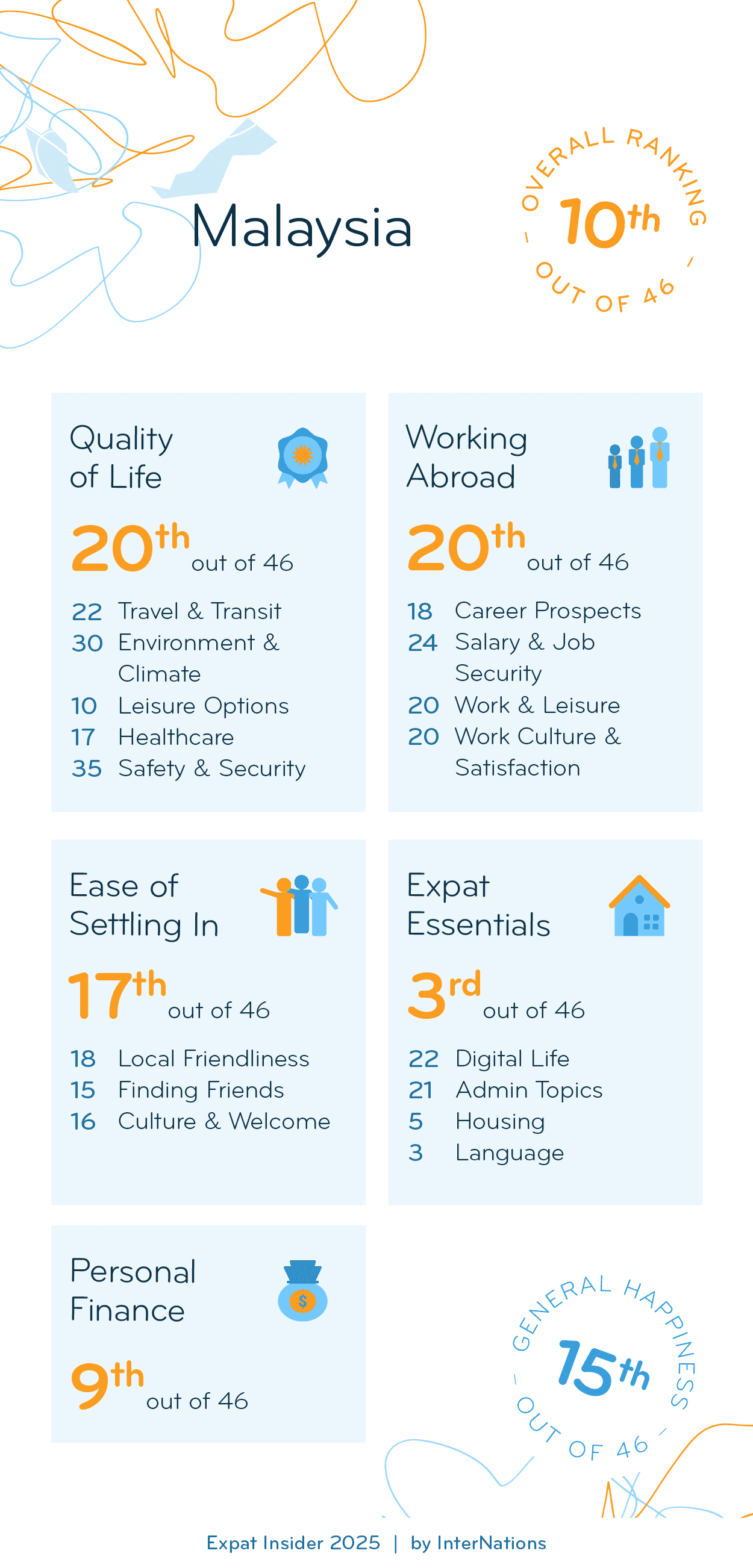
Malaysia for Expats: The Complete Guide to Visas, Living Costs, Taxes, and Relocation
Malaysia offers expats an attractive combination of affordable living, modern infrastructure, high-quality private healthcare, and robust digital connectivity. Moving to Malaysia requires choosing the appropriate visa—such as an Employ...
Malaysia offers expats an attractive combination of affordable living, modern infrastructure, high-quality private healthcare, and robust digital connectivity. Moving to Malaysia requires choosing the appropriate visa—such as an Employment Pass, a Malaysia My Second Home (MM2H) tier, or a digital nomad pass—while adhering to local tax residency rules and state-specific foreign property purchasing thresholds.
Contents
Visa Options and Entry Pathways for Expats
Navigating Malaysia’s immigration landscape requires matching your personal or professional status with the correct residency framework. The Malaysian government enforces specific financial, employment, and background verification criteria across all immigration pathways.
Employment Pass (EP)
For foreign professionals hired by companies registered in Malaysia, the primary work authorization is the Employment Pass. Managed by the Expatriate Services Division (ESD) under the Immigration Department of Malaysia, the EP is divided into three distinct categories based on monthly salary and contract duration:
- Category I: Reserved for top-tier executives and specialists earning a minimum basic monthly salary of RM 10,000. Contracts can be granted for up to 5 years, and pass holders are eligible to hire foreign domestic helpers and bring dependents (spouse, children under 21, and parents).
- Category II: Designed for managerial and technical positions with a basic monthly salary between RM 5,000 and RM 9,999. Passes are typically issued for up to 2 years, with dependent privileges included.
- Category III: Covers skilled positions with salaries between RM 3,000 and RM 4,999. Passes are issued for a maximum of 12 months (renewable up to a total of 2 years), and dependent passes are generally not permitted.
All EP applications require employer sponsorship, pre-approval from the relevant regulatory agency (such as the Malaysia Digital Economy Corporation for tech roles), and clear proof that a local employee could not fill the position.
Malaysia My Second Home (MM2H) Tiers
The Malaysia My Second Home (MM2H) program offers long-term residency to high-net-worth individuals, retirees, and families wishing to live in Malaysia without active local employment. The national program features a three-tiered structure:
- Silver Tier: Requires a fixed deposit in a Malaysian bank (typically around RM 500,000), offering a 5-year renewable residency visa.
- Gold Tier: Requires a fixed deposit of approximately RM 2 million, granting a 15-year renewable pass with extended privileges.
- Platinum Tier: Aimed at ultra-high-net-worth applicants, requiring a fixed deposit of RM 5 million for a 20-year renewable pass, with potential pathways toward permanent residency eligibility under strict regulatory review.
In addition to the federal scheme, East Malaysia operates independent versions: Sarawak MM2H (S-MM2H) and Sabah MM2H. These regional programs maintain separate financial thresholds, lower minimum fixed deposit amounts, and specific annual physical presence requirements (such as staying at least 30 days per year in the respective state).
DE Rantau Digital Nomad Pass
Introduced through the MDEC DE Rantau initiative, the DE Rantau Nomad Pass targets remote workers, digital freelancers, independent contractors, and software engineers. Key requirements include:
- Proof of remote work contract or freelance income with non-Malaysian clients.
- A verified minimum annual income threshold of USD 24,000.
- Pass validity of 3 to 12 months, with the option to renew for a second 12-month period.
- The ability to bring direct dependents (spouse and children) under secondary passes.
Premium Visa Programme (PV20)
The Premium Visa Programme (PV20) caters to global investors, business founders, and wealthy individuals seeking a 20-year long-term residence pass. Unlike the traditional Employment Pass, the PV20 grants participants the right to study, conduct business, purchase real estate, and invest in local companies, though direct local employment remains restricted unless separate work authorizations are obtained.
Expat Visa Programs Comparison
The following table summarizes the core requirements, costs, and rights associated with Malaysia’s primary visa programs.
| Visa Type | Primary Target Audience | Minimum Income / Financial Requirement | Pass Duration | Right to Work Locally | Dependents Allowed |
|---|---|---|---|---|---|
| Employment Pass (Cat I) | Senior Executives & Specialists | RM 10,000 monthly salary | Up to 5 Years | Yes (Sponsoring employer only) | Yes (Spouse, children, parents) |
| Employment Pass (Cat II) | Mid-Level Managers & Tech Staff | RM 5,000 – RM 9,999 monthly salary | Up to 2 Years | Yes (Sponsoring employer only) | Yes (Spouse, children) |
| MM2H (Silver Tier) | Retirees & Long-Term Residents | Fixed deposit of ~RM 500,000 | 5 Years | No (Passive investment allowed) | Yes (Spouse, unmarried children <34) |
| MM2H (Gold / Platinum) | High-Net-Worth Investors | Fixed deposit RM 2m – RM 5m | 15–20 Years | No (Platinum has business permissions) | Yes (Spouse, unmarried children <34) |
| DE Rantau Nomad Pass | Digital Freelancers & Remote Workers | USD 24,000 annual income | 3–12 Months | No (Foreign income sources only) | Yes (Spouse, children under 18) |
| PV20 Pass | Global Investors & Entrepreneurs | Offshore income & deposit criteria | 20 Years | Business owner rights (No local employment) | Yes (Spouse, children, parents) |
Tax Residency and Legal Obligations in Malaysia
Understanding tax obligations is crucial for expats residing in Malaysia. The statutory body managing direct taxes is the Inland Revenue Board of Malaysia (HASiL).
- Expat Physical Presence in Malaysia (Calendar Year)
- 182 Days or More
- Tax Resident Status
- Progressive Rates
- Personal Reliefs
- Local Income Taxed
- Tax Resident Status
- Fewer than 182 Days
- Non-Resident Status
- Flat 30% Tax Rate (No Personal Reliefs)
- Non-Resident Status
- 182 Days or More
The 182-Day Tax Residency Rule
Under Section 7 of the Income Tax Act 1967, an individual’s tax residency status is determined by their physical presence in Malaysia during a calendar year (January 1 to December 31):
- Tax Resident Status: Achieved if you are physically present in Malaysia for 182 days or more within a single calendar year. Tax residents benefit from progressive tax rates ranging from 0% to 30% and are eligible to claim personal tax reliefs and rebates.
- Non-Resident Status: If you reside in Malaysia for fewer than 182 days in a calendar year, you are classified as a non-resident for tax purposes. Non-residents are taxed at a flat rate of 30% on employment income derived within Malaysia and cannot claim personal tax allowances.
Foreign-Sourced Income (FSI) Treatment
Malaysia generally operates on a territorial tax system, meaning income earned from sources outside Malaysia is generally exempt from local taxation when remitted into the country by individual tax residents, provided specific foreign tax compliance conditions are met. However, any income derived from services performed within Malaysia—even if paid into an offshore bank account by an overseas employer—is subject to Malaysian tax rules.
Housing, Property Ownership, and Rental Rules
Renting or buying real estate in Malaysia involves navigating distinct regulatory frameworks designed to protect local housing affordability while accommodating foreign investment.
State-Specific Foreign Minimum Purchase Thresholds
Foreigners are permitted to buy landed and strata residential properties in Malaysia, subject to consent from state authorities. To prevent speculation, each state enforces minimum purchase price thresholds for foreign buyers:
- Kuala Lumpur (Federal Territory): Minimum purchase price of RM 1,000,000 for residential properties.
- Selangor: Minimum threshold of RM 2,000,000 for foreign buyers, restricted primarily to strata-titled residential units in designated developments. Foreigners cannot purchase landed properties unless they hold specific approvals.
- Penang: Minimum threshold ranges from RM 1,000,000 to RM 3,000,000, depending on whether the property is located on the island or mainland and whether it is a landed or strata unit.
- Johor: Generally set at RM 1,000,000, with specialized lower thresholds in designated greenfield areas within Iskandar Malaysia.
Foreign nationals are strictly prohibited from purchasing Malay Reserve Land, low- to medium-cost public housing, and properties allocated for Bumiputera (indigenous) quotas.
Navigating Residential Rental Agreements
For expats renting housing, the initial financial commitment typically includes standard upfront deposits:
- Earnest Deposit: 1 month’s rent (serves as a reservation fee and becomes the first month's rent upon contract signing).
- Security Deposit: Equivalent to 2 months' rent (refundable at the end of the lease, minus costs for damage repairs).
- Utilities Deposit: Equivalent to 0.5 month's rent (covers unpaid electricity, water, or sewage bills).
Tenancy agreements are legally binding once executed and stamped by the Inland Revenue Board (HASiL). Standard lease durations run for 1 or 2 years, with an option to renew explicitly written into the contract.
Healthcare and Health Insurance Systems
Malaysia’s healthcare system is recognized globally for providing high standards of clinical care at competitive costs.
Public vs. Private Healthcare Infrastructure
The Malaysian healthcare system functions as a dual system:
- Public System: Managed by the Ministry of Health (MOH), providing subsidized services primarily for Malaysian citizens. While expats can access public facilities in emergencies, non-citizens are charged higher fee schedules.
- Private System: Modern private hospitals certified by the Malaysian Society for Quality in Health (MSQH) or Joint Commission International (JCI) cater extensively to foreign residents. Facilities in Kuala Lumpur, Penang, and Johor offer English-speaking specialists, state-of-the-art diagnostic equipment, and short wait times.
Mandatory Medical Screening and Health Insurance Coverage
Expats entering on an Employment Pass or MM2H visa must undergo a mandatory medical screening at an approved local clinic or hospital upon arrival. Private comprehensive health insurance or an employer-provided group medical policy is essential. Most private hospitals require a guarantee letter (GL) from an insurance provider before admitting patients for non-emergency inpatient procedures.
Top Expat Destinations in Malaysia
Kuala Lumpur and Klang Valley
As the financial and commercial nucleus, Kuala Lumpur (KL) offers an urban environment with international schools, shopping centers, and public transport options like the Mass Rapid Transit (MRT) and Light Rail Transit (LRT).
- Popular Neighborhoods: Mont Kiara (favored by families due to nearby international schools), Bangsar (popular for dining and nightlife), KLCC (high-rise condo living), and Desa ParkCity (gated community with walkable green spaces).
- Best Suited For: Corporate professionals, financial sector workers, and families seeking international school options.
Penang (Georgetown)
Penang combines modern living with historical culture, culinary heritage, and coastal scenery. Georgetown, a UNESCO World Heritage site, serves as the island's cultural center.
- Popular Neighborhoods: Tanjung Tokong, Gurney Drive, and Batu Ferringhi.
- Best Suited For: Retirees, digital nomads, and expats working in the semiconductor and manufacturing sectors.
Johor Bahru and Iskandar Malaysia
Located across the causeway from Singapore, Johor Bahru (JB) has grown rapidly due to cross-border investment and planned developments in Iskandar Malaysia.
- Popular Neighborhoods: Iskandar Puteri, Horizon Hills, and East Ledang.
- Best Suited For: Families requiring proximity to Singapore and commuters using cross-border infrastructure.
East Malaysia: Kuching and Kota Kinabalu
Located on the island of Borneo, Kuching (Sarawak) and Kota Kinabalu (Sabah) offer lower living costs, abundant natural surroundings, and a slower pace of life. Both states maintain separate immigration systems, requiring specialized visas (such as the S-MM2H) for long-term residency.
Frequently Asked Questions
Can foreign expats work locally under a digital nomad pass?
No. The DE Rantau Digital Nomad Pass authorizes holders to reside in Malaysia while working remotely for foreign clients or offshore employers. You are not permitted to accept employment, sell services, or execute contracts with local Malaysian entities without transitioning to a standard Employment Pass.
What are the minimum salary requirements for an Employment Pass?
To qualify for an Employment Pass in Malaysia, the minimum basic monthly salary is RM 3,000 for Category III, RM 5,000 for Category II, and RM 10,000 for Category I. Each category carries different rules regarding contract length and dependent rights.
How does Malaysia handle tax residency for remote workers?
Tax residency is based on physical presence. If a remote worker resides in Malaysia for 182 days or more during a calendar year, they are classified as a Malaysian tax resident. Remote workers must evaluate whether their work performed while physically present in Malaysia creates a local tax obligation, regardless of where their employer or bank account is located.
Are foreign expats allowed to buy landed residential property?
Yes, foreign nationals can purchase landed residential properties, provided the property price meets or exceeds the minimum threshold set by the specific state government (e.g., RM 1 million in Kuala Lumpur). Certain property types—such as Malay Reserve Land, agricultural land, and low-cost units—are strictly reserved for Malaysian citizens.
Can an expat spouse work legally in Malaysia?
An expat spouse holding a Dependent Pass cannot automatically take up employment. If a spouse receives a valid job offer from a Malaysian company, the employer must apply to convert the spouse's status or secure a separate work permit (such as an Employment Pass) through the Expatriate Services Division.
Practical Next Steps for Moving to Malaysia
To ensure a smooth transition, follow this operational checklist:
- Determine Visa Strategy: Confirm whether your path requires employer sponsorship (Employment Pass), independent income verification (DE Rantau Nomad Pass), or liquid capital investment (MM2H).
- Prepare Document Attestation: Gather essential legal documents—including marriage certificates, birth certificates for dependents, degree credentials, and police clear-conduct certificates—and have them authenticated or Apostilled by the appropriate authorities in your home country.
- Calculate Initial Moving Capital: Budget for 3.5 months of upfront rent deposits, initial health screening fees, private health insurance premiums, and temporary accommodation for your first 30 days.
- Open a Local Bank Account: Once your long-term visa pass (EP, MM2H, or DE Rantau) is endorsed in your passport, visit a major Malaysian bank (such as Maybank, CIMB, or RHB) with your visa documentation, tenancy agreement, and employment letter to set up a local Ringgit account.
- Establish Tax Registration: Register for a tax identification number (TIN) via HASiL's e-Daftar portal shortly after arrival to track your residence days and fulfill tax compliance obligations.
Image Gallery