Navigating Iowa Auto Accident Insurance Claims: Laws, Procedures, and Recovery
Navigating Iowa auto accident insurance claims requires an understanding of the state's "at-fault" insurance system and modified comparative negligence laws. Victims must report accidents involving injuries or property damage exceeding...
Navigating Iowa auto accident insurance claims requires an understanding of the state's "at-fault" insurance system and modified comparative negligence laws. Victims must report accidents involving injuries or property damage exceeding $1,500, file personal injury claims within two years, and demonstrate the other party's liability to secure compensation for medical bills, lost wages, and vehicle repairs.
Contents
Understanding Iowa’s At-Fault Insurance System
Iowa operates under a traditional tort-based or "at-fault" insurance system. This means that the driver who is determined to be legally responsible for causing a motor vehicle accident is also responsible for the resulting damages. In practice, this responsibility usually falls upon the at-fault driver’s insurance provider. Unlike "no-fault" states where drivers first turn to their own Personal Injury Protection (PIP) coverage regardless of who caused the crash, Iowa law allows victims to seek recovery directly from the negligent party.
For a claimant, this system offers multiple avenues for recovery. You may file a "first-party" claim with your own insurance company if you have collision or medical payments coverage, or you may file a "third-party" claim against the other driver’s liability policy. If the insurance companies fail to offer a fair settlement, the at-fault system grants you the right to file a personal injury lawsuit in the Iowa civil court system. This framework places a high premium on establishing clear evidence of negligence, as the financial burden of the accident rests on the party found to be at fault.
Mandatory Auto Insurance Requirements in Iowa (2026)
As of 2026, Iowa continues to enforce strict financial responsibility laws to ensure that drivers can cover the costs of the damage they might cause. While some drivers may choose higher limits for better protection, the state-mandated minimums are the baseline for any legal operation of a motor vehicle.
The current minimum liability requirements in Iowa are:
- $20,000 for bodily injury to one person: This is the maximum amount the insurance company will pay for the medical expenses or pain and suffering of a single victim in an accident you cause.
- $40,000 for total bodily injury per accident: If multiple people are injured, this is the total cap for all injury claims combined.
- $15,000 for property damage: This covers repairs to the other driver's vehicle or damage to structures like fences or buildings.
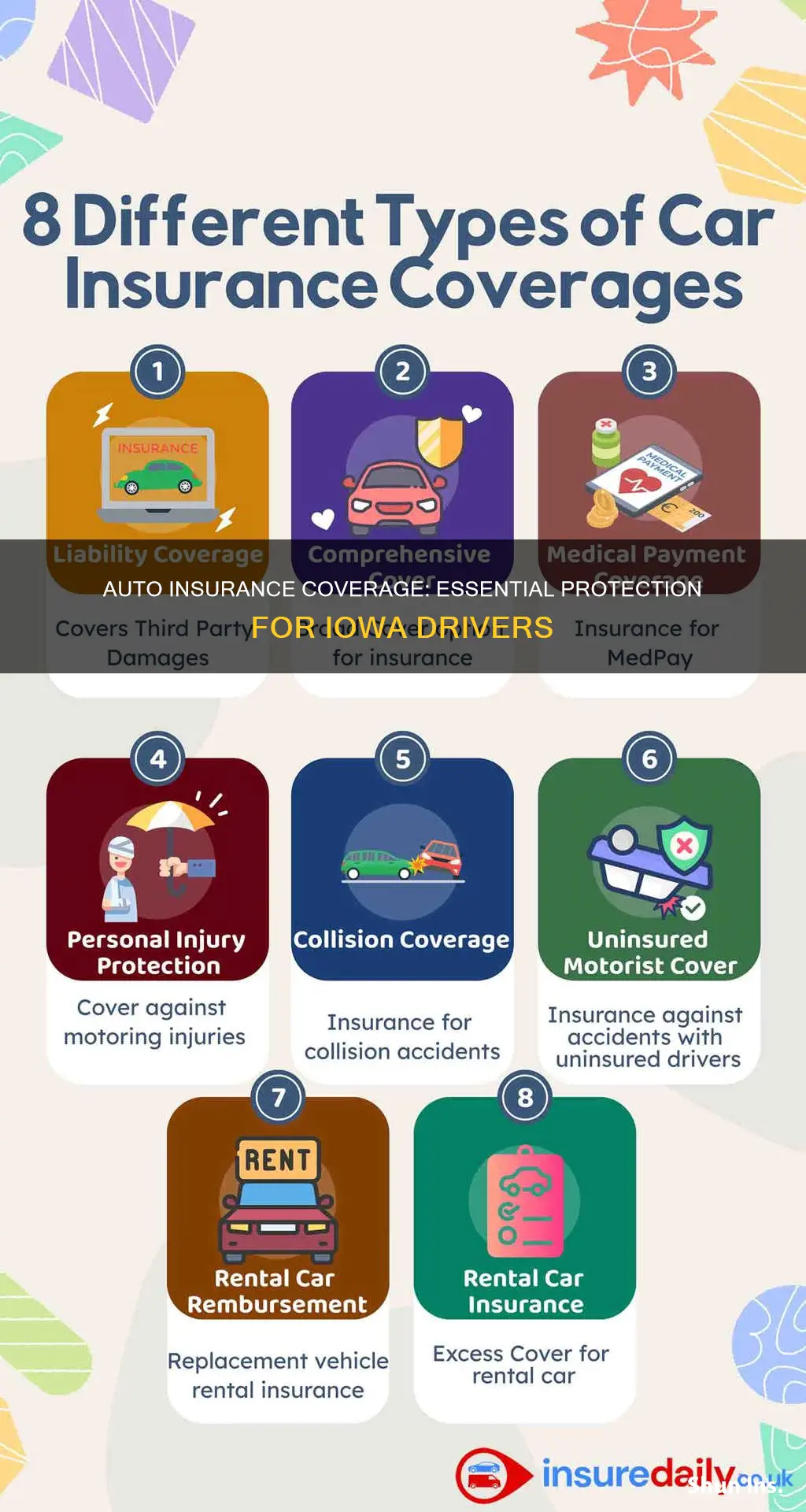
It is important to note that these figures are often insufficient for serious accidents involving modern vehicles or significant medical intervention. Many Iowa legal experts recommend carrying significantly higher limits, such as a 100/300/100 policy, to protect personal assets from being seized in the event of a high-value judgment. Additionally, while Uninsured and Underinsured Motorist (UM/UIM) coverage is not strictly mandatory, Iowa law requires insurers to offer it, and drivers must reject it in writing if they do not want it. This coverage is critical because it protects you if you are hit by a driver who lacks insurance or has insufficient limits to cover your total damages.
The Role of Modified Comparative Fault in Iowa
One of the most critical aspects of Iowa auto accident insurance claims is the state’s application of modified comparative fault. Under Iowa Code § 668.3, the state follows a "51% bar" rule. This legal doctrine determines how compensation is distributed when more than one party is partially responsible for an accident.
Under this rule, an injured party can only recover damages if their share of the fault is 50% or less. If a jury or an insurance adjuster determines that you were 51% or more responsible for the collision, you are legally barred from recovering any compensation from the other party. If you are found to be partially at fault but below the 51% threshold, your total recovery is reduced by your percentage of fault. For example, if you are awarded $100,000 in damages but are found to be 20% at fault (perhaps for speeding slightly while the other driver ran a stop sign), your final payout would be $80,000.
This rule makes the initial investigation and the collection of evidence vital. Insurance adjusters frequently attempt to shift a higher percentage of fault onto the claimant to minimize the company’s payout or to trigger the 51% bar to avoid payment entirely. Professional legal counsel is often used in Iowa specifically to contest these fault allocations and preserve the claimant's right to recovery.
Immediate Steps Following an Iowa Car Accident
The actions taken in the moments and days following a collision directly impact the success of an insurance claim. In Iowa, specific legal duties must be met to remain in compliance with state law and to protect the integrity of a future claim.
- Ensure Safety and Call 911: Immediately check for injuries and move vehicles out of traffic if possible. Iowa law requires drivers to stop at the scene of an accident involving injury or death.
- Report the Accident: Under Iowa Code § 321.266, you must report an accident to the nearest law enforcement agency if it results in injury, death, or total property damage of $1,500 or more. If a police officer does not investigate the scene, you must file a written report with the Iowa Department of Transportation (DOT) within 72 hours.
- Document the Scene: Use a smartphone to take high-resolution photos of vehicle positions, license plates, road conditions, traffic signals, and any visible injuries.
- Exchange Information: Collect the name, address, phone number, insurance provider, and policy number of all drivers involved. Also, gather contact information from any witnesses who saw the event occur.
- Seek Medical Evaluation: Even if you feel "fine," the adrenaline following a crash can mask symptoms of whiplash, internal bleeding, or concussions. A medical record created immediately after the accident serves as essential evidence linking your injuries to the crash.
Filing the Insurance Claim: Process and Documentation
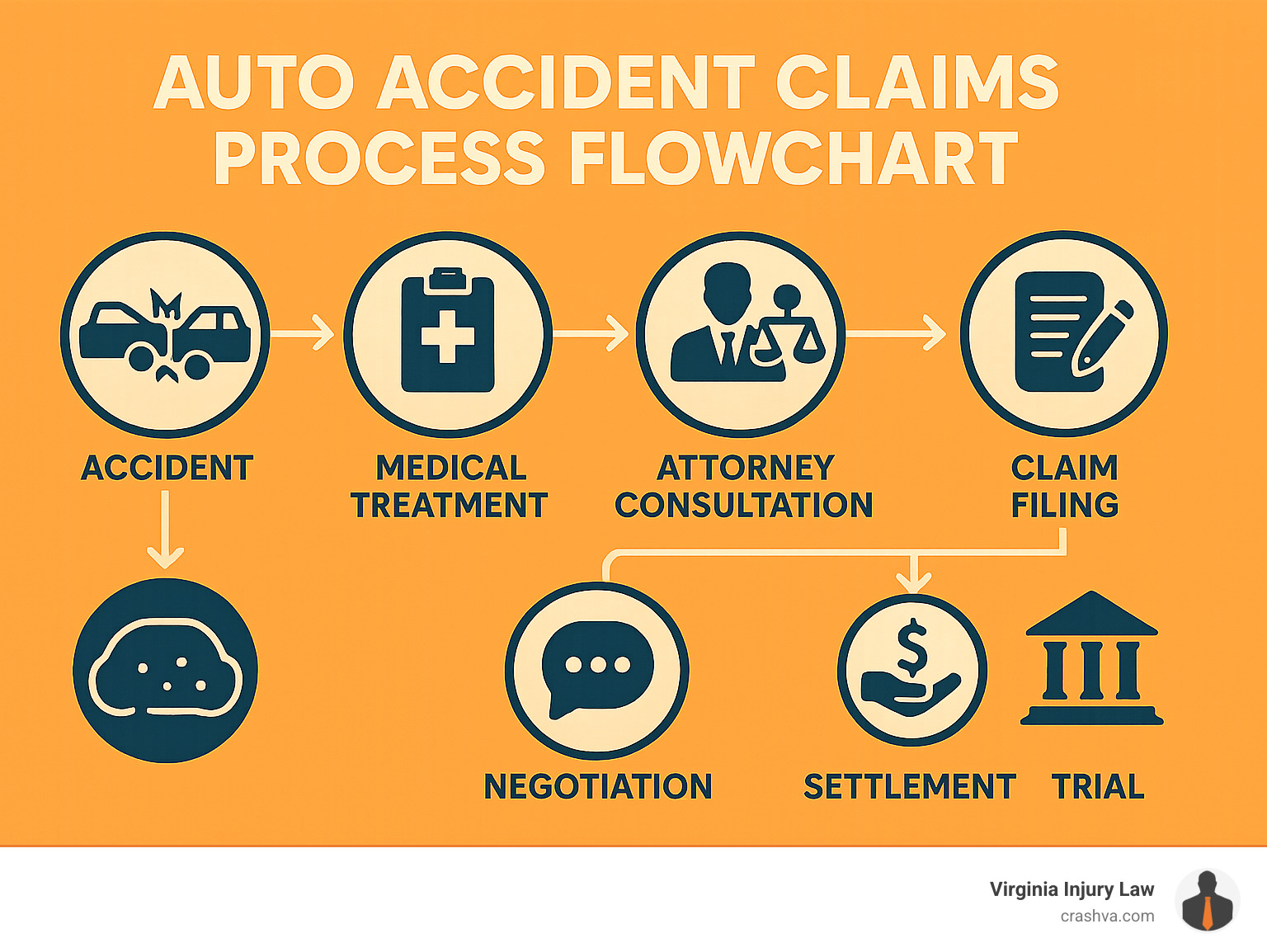
Once the immediate aftermath is managed, the formal claim process begins. In Iowa, you typically notify your own insurance company first, even if you were not at fault, as most policies require "prompt notice" of any accident.
When filing a third-party claim against the at-fault driver's insurance, you will be assigned a claims adjuster. The adjuster’s role is to investigate the accident, verify coverage, and determine the value of the claim. It is important to remember that the adjuster works for the insurance company, not for you. They may ask for a recorded statement; however, you are generally not legally obligated to provide one to the other driver's insurance company without legal representation.
To support your claim, you should compile a "Claim File" containing:
- The official police accident report.
- Itemized medical bills and records.
- Documentation of lost wages (letters from employers or tax returns).
- Estimates for vehicle repairs or a total loss valuation.
- A "Pain and Suffering" journal detailing how the injuries affect your daily life.
| Feature | Personal Injury Claim | Property Damage Claim |
|---|---|---|
| Statute of Limitations | 2 Years from date of accident | 5 Years from date of accident |
| Recovery Type | Medical bills, lost wages, pain/suffering | Vehicle repair or replacement value |
| Proving Fault | Essential (subject to 51% bar) | Essential (often simpler to prove) |
| Primary Evidence | Medical records, expert testimony | Repair estimates, photos of damage |
| Reporting Requirement | Mandatory if injury or death occurs | Mandatory if damage exceeds $1,500 |
Statute of Limitations for Iowa Accident Claims
The "statute of limitations" is a legal deadline for filing a lawsuit. If you miss this window, you lose the right to seek compensation in court, which also strips you of any leverage during insurance negotiations.
In Iowa, the deadlines vary significantly depending on the nature of the claim:
- Personal Injury: You have two years from the date of the accident to file a lawsuit for bodily injuries.
- Property Damage: You have five years to file a lawsuit for damage to your vehicle or other physical property.
- Wrongful Death: If a loved one is killed in an accident, the representative of the estate has two years from the date of the death to file a claim.
There are rare exceptions to these rules, such as the "discovery rule" or claims involving minors, but for the vast majority of Iowa drivers, the two-year mark is the absolute cutoff for injury recovery. It is unwise to wait until the deadline approaches to start a claim, as evidence fades and witnesses move away.
Common Challenges in Iowa Insurance Negotiations
Insurance companies are profit-driven entities, and their goal is to resolve claims for the lowest possible amount. In Iowa, claimants often face specific hurdles during the negotiation phase.
One common tactic is the lowball offer. This is an initial settlement offer made shortly after the accident, often before the full extent of the victim's medical needs is known. Accepting this offer requires signing a release that prevents you from seeking further compensation if your condition worsens.
Another challenge is the dispute of medical necessity. Insurers may argue that certain treatments, such as physical therapy or specialized imaging, were unnecessary or were related to a pre-existing condition rather than the accident. In these cases, your medical providers may need to submit "letters of medical necessity" to verify that the care was a direct result of the collision.
Finally, "Bad Faith" claims can arise if an insurance company fails to investigate a claim properly, denies a claim without a reasonable basis, or fails to settle a claim when liability is clear. While Iowa law allows for bad faith litigation, these cases are complex and require proving that the insurer acted with a lack of a reasonable basis for denying the benefits of the policy.
Frequently Asked Questions
Do I have to report a minor "fender bender" to the Iowa DOT?
If the total damage to all property involved (including both cars and any stationary objects) appears to be less than $1,500 and there are no injuries, you are not legally required to file a report with the DOT. However, if any person is injured or the damage exceeds that amount, a report is mandatory. When in doubt, it is safer to file the report to avoid potential license suspension for failure to report.
What happens if I am hit by an uninsured driver in Iowa?
If the at-fault driver has no insurance, you must turn to your own insurance policy’s Uninsured Motorist (UM) coverage. This coverage "steps into the shoes" of the missing liability policy to pay for your medical bills and general damages. If you do not have UM coverage and the other driver is uninsured, your only recourse is to sue the driver personally, though collecting a judgment from an individual without insurance can be extremely difficult.
Can I still receive money if the accident was 30% my fault?
Yes. Under Iowa’s modified comparative fault law, as long as you are 50% or less at fault, you can recover damages. However, your total compensation will be reduced by your 30% share of the fault. If your total damages are $10,000, you would receive $7,000.
How long does a typical Iowa insurance claim take to settle?
The timeline varies based on the complexity of the accident and the duration of your medical treatment. A simple property damage claim may resolve in a few weeks. However, personal injury claims should not be settled until you have reached "Maximum Medical Improvement" (MMI), which ensures all medical costs are accounted for. This process can take anywhere from six months to over a year.
Practical Recommendation for Claimants
If you are involved in an auto accident in Iowa, the most critical step you can take after securing medical care is to avoid signing any releases or giving recorded statements to the at-fault party's insurance company until you have consulted with a professional. The legal landscape of modified comparative fault is narrow; a single poorly phrased sentence can be used to assign you 51% of the fault, effectively ending your claim. Ensure all your communication is documented in writing and maintain a meticulous record of every expense related to the accident to ensure a full and fair recovery.
Image Gallery