Average APR for a Personal Loan: 2026 Rates and Borrowing Guide
The average APR for a personal loan currently ranges between 11.5% and 12.5% for borrowers with good credit, though individual offers vary significantly. As of 2026, your specific rate is primarily determined by your FICO score, debt-t...
The average APR for a personal loan currently ranges between 11.5% and 12.5% for borrowers with good credit, though individual offers vary significantly. As of 2026, your specific rate is primarily determined by your FICO score, debt-to-income ratio, and the prevailing federal benchmark rates, with ranges extending from 6% to 36%.
Contents
Personal loans remain one of the most versatile financial tools available for debt consolidation, home improvements, and major life expenses. However, the "average" rate is often a misleading metric because the market is highly segmented based on risk. To find a loan that fits your budget, you must understand how lenders calculate the Annual Percentage Rate (APR) and how current economic conditions in 2026 influence the cost of capital.
Understanding Personal Loan APRs in 2026
The Annual Percentage Rate (APR) is a more comprehensive measure of the cost of borrowing than the simple interest rate. While the interest rate represents the cost of the principal, the APR includes the interest rate plus any mandatory fees, such as origination fees or administrative costs, expressed as a yearly percentage.
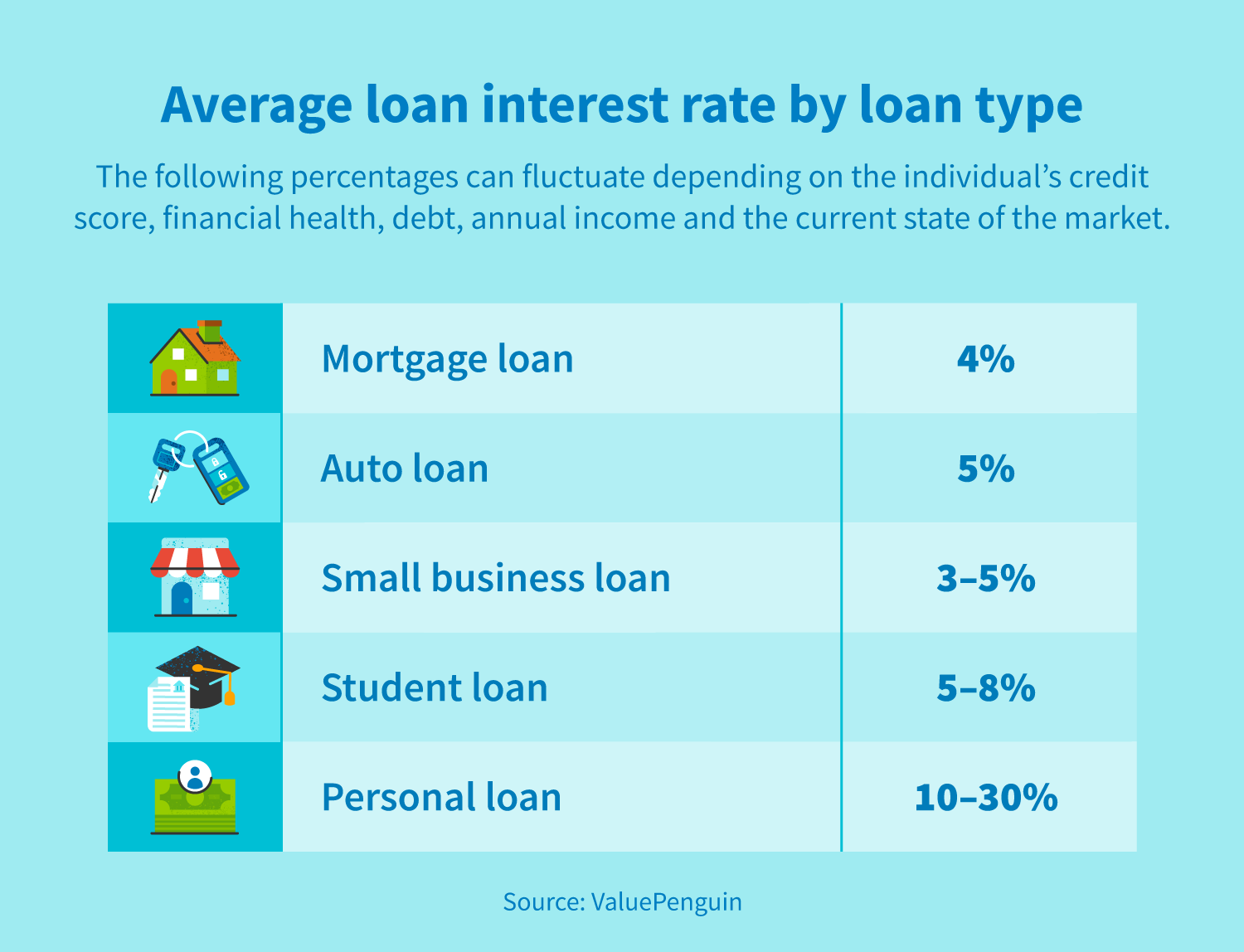
In the current 2026 lending environment, the spread between the lowest and highest available APRs remains wide. This is due to the "unsecured" nature of most personal loans. Unlike a mortgage or an auto loan, an unsecured personal loan is not backed by collateral. If a borrower defaults, the lender has no physical asset to seize. Consequently, lenders charge higher rates to compensate for this increased risk.
Lenders determine these rates using proprietary algorithms that weigh hundreds of data points. While your credit score is the most significant factor, 2026 has seen a shift toward "trended data" in underwriting. This means lenders look not just at your current debt levels, but also at whether you are actively paying down balances or merely making minimum payments over time.
Average APR by Credit Score Tier
Your creditworthiness is the primary engine driving your APR. Lenders categorize borrowers into "risk tiers," and moving from one tier to the next can save you thousands of dollars over the life of a loan.
Excellent Credit (720–850)
Borrowers in this tier are seeing some of the most competitive rates since the early 2020s. In 2026, the average APR for excellent credit is roughly 10.5% to 14.5%. These borrowers often have their choice of lenders, including premium online platforms and traditional commercial banks. They are frequently offered perks like "rate discounts" for setting up autopay or having an existing relationship with the institution.
Good Credit (690–719)
The majority of American borrowers fall into this category. The average APR for good credit currently sits between 15.0% and 21.0%. At this level, lenders begin to look more closely at your debt-to-income (DTI) ratio. If your DTI is high, you may find yourself at the higher end of this range even with a solid credit score.
Fair Credit (630–689)
Borrowers with fair credit face more limited options. The average APR in 2026 for this group is 22.0% to 28.5%. Many traditional banks avoid this tier entirely, leaving the market to online "fintech" lenders and credit unions. Borrowers here should be particularly wary of origination fees, which are often deducted from the loan proceeds before they reach your bank account.
Poor Credit (300–629)
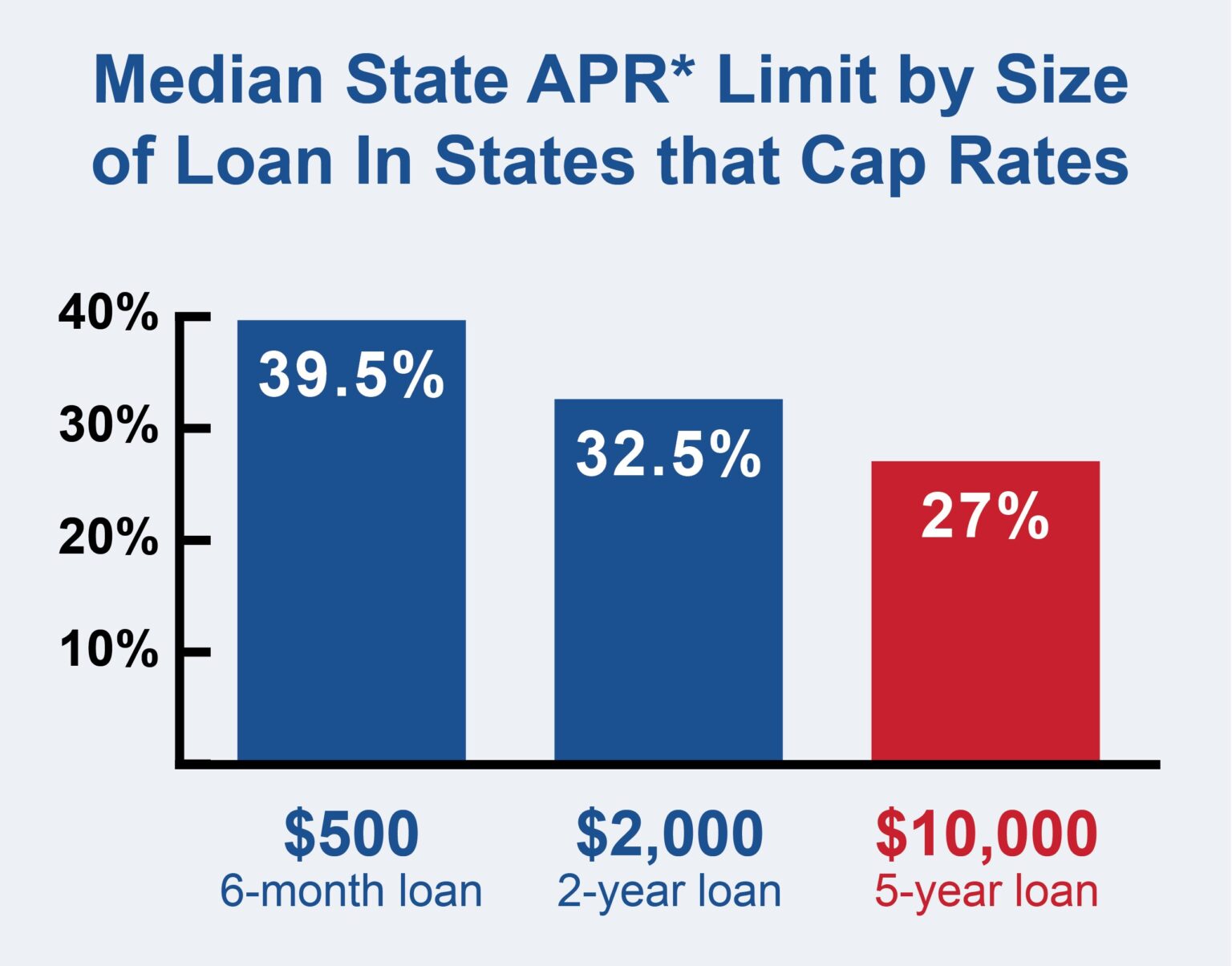
Loans for poor credit are often categorized as "subprime." Average APRs typically range from 29.0% to 35.9%. Most consumer advocates and regulatory bodies, such as the Consumer Financial Protection Bureau (CFPB), suggest that 36% should be the absolute ceiling for a responsible loan. Borrowers in this tier should exhaust all other options, such as credit union "Payday Alternative Loans" (PALs), before committing to these high rates.
Comparative Average APRs by Lender Type
Where you apply for a loan can be just as impactful as your credit score. Different institutions have different "costs of funds" and risk tolerances.
| Lender Type | Average APR Range (2026) | Best For | Typical Fees |
|---|---|---|---|
| Credit Unions | 9.5% – 18.0% | Lower rates for members | Low or no origination fees |
| Online Lenders | 11.0% – 35.9% | Speed and convenience | 1% – 10% origination fee |
| Traditional Banks | 10.0% – 24.0% | Existing customers | Often no origination fees |
| Peer-to-Peer | 12.0% – 32.0% | Diverse credit profiles | Significant origination fees |
Credit Unions: The Local Advantage
Credit unions are member-owned, non-profit organizations. Because they do not have to answer to shareholders, they often return profits to members in the form of lower interest rates. In 2026, many credit unions have capped their personal loan rates significantly lower than national banks, making them the preferred choice for borrowers with fair to good credit.
Online Lenders: The Speed of AI
Fintech companies use advanced machine learning to process applications in minutes. While they offer extreme convenience, their APRs can be higher because of the "convenience premium" and the fact that they often take on slightly riskier borrowers than traditional banks. They are a primary source of loans for debt consolidation, often offering to pay off your creditors directly.
Commercial Banks: The Relationship Model
Large national banks like JPMorgan Chase or Wells Fargo typically reserve personal loans for their existing customers. If you have a long history of maintaining a high balance in a checking or savings account, these banks may offer you a "relationship discount" that beats the market average.
Factors That Influence Your Personal APR
Beyond your credit score, several technical factors influence the final APR a lender presents in your loan agreement.
Debt-to-Income (DTI) Ratio
Your DTI is the percentage of your gross monthly income that goes toward paying debts. Even if you have a perfect 850 credit score, a DTI over 45% suggests that you are "stretched thin." Lenders in 2026 are increasingly sensitive to DTI due to fluctuating living costs. A lower DTI usually results in a lower APR offer.
Loan Term Length
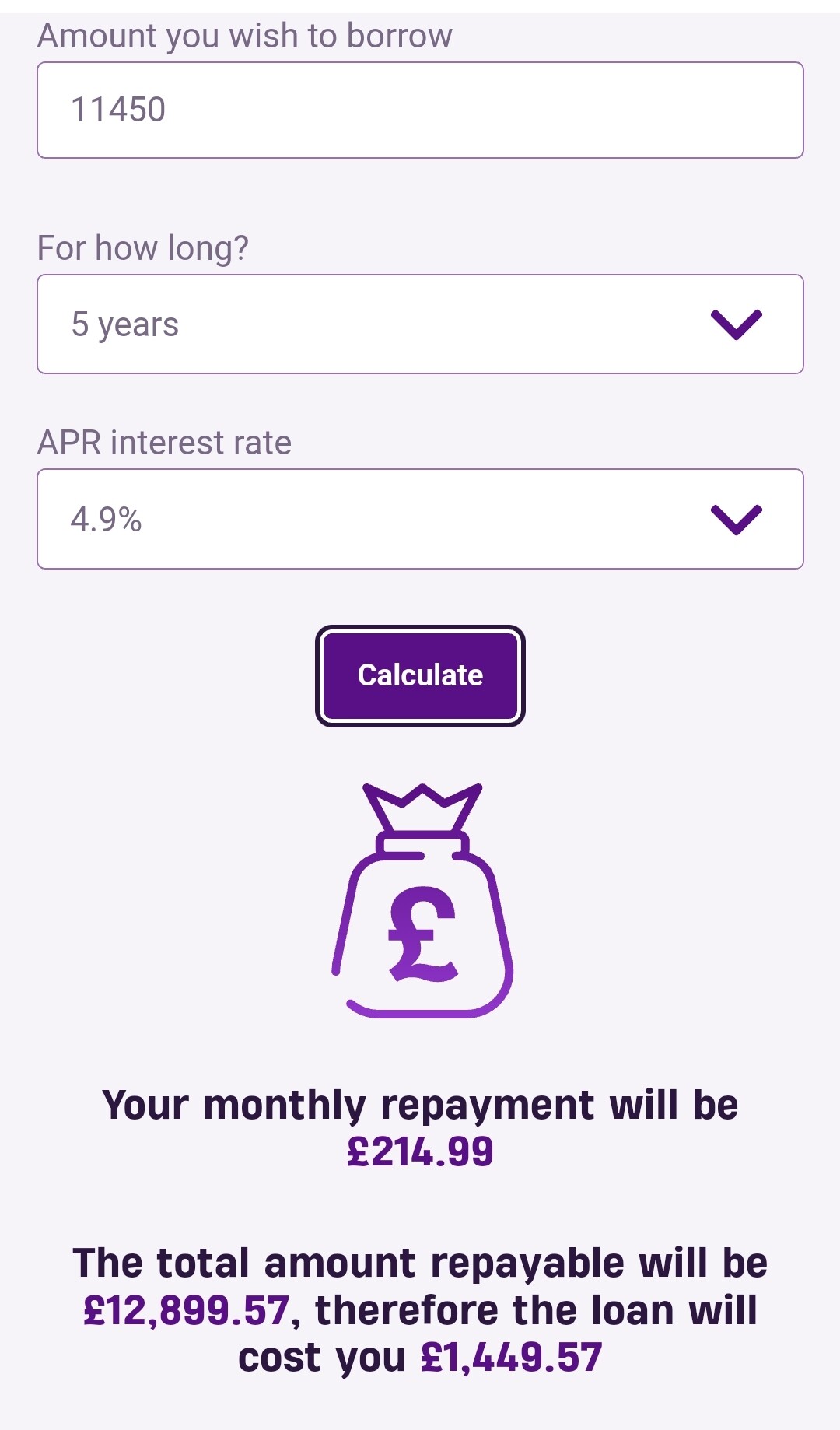
The duration of the loan significantly impacts the APR. Short-term loans (24 to 36 months) often carry lower APRs because the lender’s money is at risk for a shorter period. Long-term loans (60 to 72 months) typically have higher APRs. While the monthly payment on a 72-month loan is lower, the total interest paid over the life of the loan is substantially higher.
Loan Amount
Interestingly, very small loans (under $2,000) and very large loans (over $50,000) often have higher APRs than mid-sized loans. Small loans have high administrative costs relative to the interest earned, while large unsecured loans represent a massive concentration of risk for the lender.
Economic Policy and the Federal Reserve
While personal loans are not directly tied to the Federal Funds Rate like some adjustable-rate mortgages, they are influenced by it. When the Federal Reserve maintains higher benchmark rates to combat inflation, lenders' borrowing costs rise, and those costs are passed on to consumers in the form of higher APRs. In 2026, we are seeing a stabilization of these rates after the volatility of the mid-2020s.
The Impact of Fees on Your Effective APR
It is a common mistake to look only at the interest rate and ignore the fees. The APR is designed to prevent this by rolling those costs into one percentage.
- Origination Fees: These are "upfront" fees for processing the loan. They typically range from 1% to 10% of the loan amount. If you borrow $10,000 with a 5% origination fee, you only receive $9,500, but you still owe interest on the full $10,000.
- Prepayment Penalties: Some lenders charge a fee if you pay off the loan early. In 2026, most reputable online lenders have moved away from these, but some traditional banks still include them.
- Late Payment Fees: While these aren't included in the initial APR calculation, they can effectively increase the cost of your loan if you are not diligent with payments.
How to Secure a Rate Below the National Average
Securing a competitive rate requires a proactive approach. Do not accept the first offer you receive; the personal loan market is highly competitive.
- Prequalify with Multiple Lenders: Most modern lenders offer a "soft credit pull" prequalification. This allows you to see your estimated APR without affecting your credit score. Compare at least three offers before making a decision.
- Check Your Credit Report for Errors: According to the Federal Trade Commission (FTC), one in five people has an error on at least one of their credit reports. Correcting a simple error could move you from "Fair" to "Good" credit, potentially saving you 5% or more in APR.
- Consider a Co-signer: If your credit is in the "Fair" or "Poor" range, adding a co-signer with "Excellent" credit can drastically reduce your APR. Note that the co-signer is equally responsible for the debt if you fail to pay.
- Opt for Direct Pay: If you are using the loan for debt consolidation, some lenders offer a "direct pay" discount. They send the funds directly to your credit card companies, ensuring the money is used as intended and reducing their risk.
Frequently Asked Questions
What is a "good" APR for a personal loan in 2026?
A good APR is generally anything below 13%. If your credit score is above 720, you should aim for a rate in the 10% to 12% range. If your rate is higher than 18% and you have good credit, you should continue shopping around.
Can I refinance a personal loan if rates drop?
Yes, you can refinance a personal loan by taking out a new loan with a lower APR to pay off the old one. This is a common strategy if your credit score has improved significantly since you first took out the loan or if market rates have decreased.
Is a fixed-rate or variable-rate personal loan better?
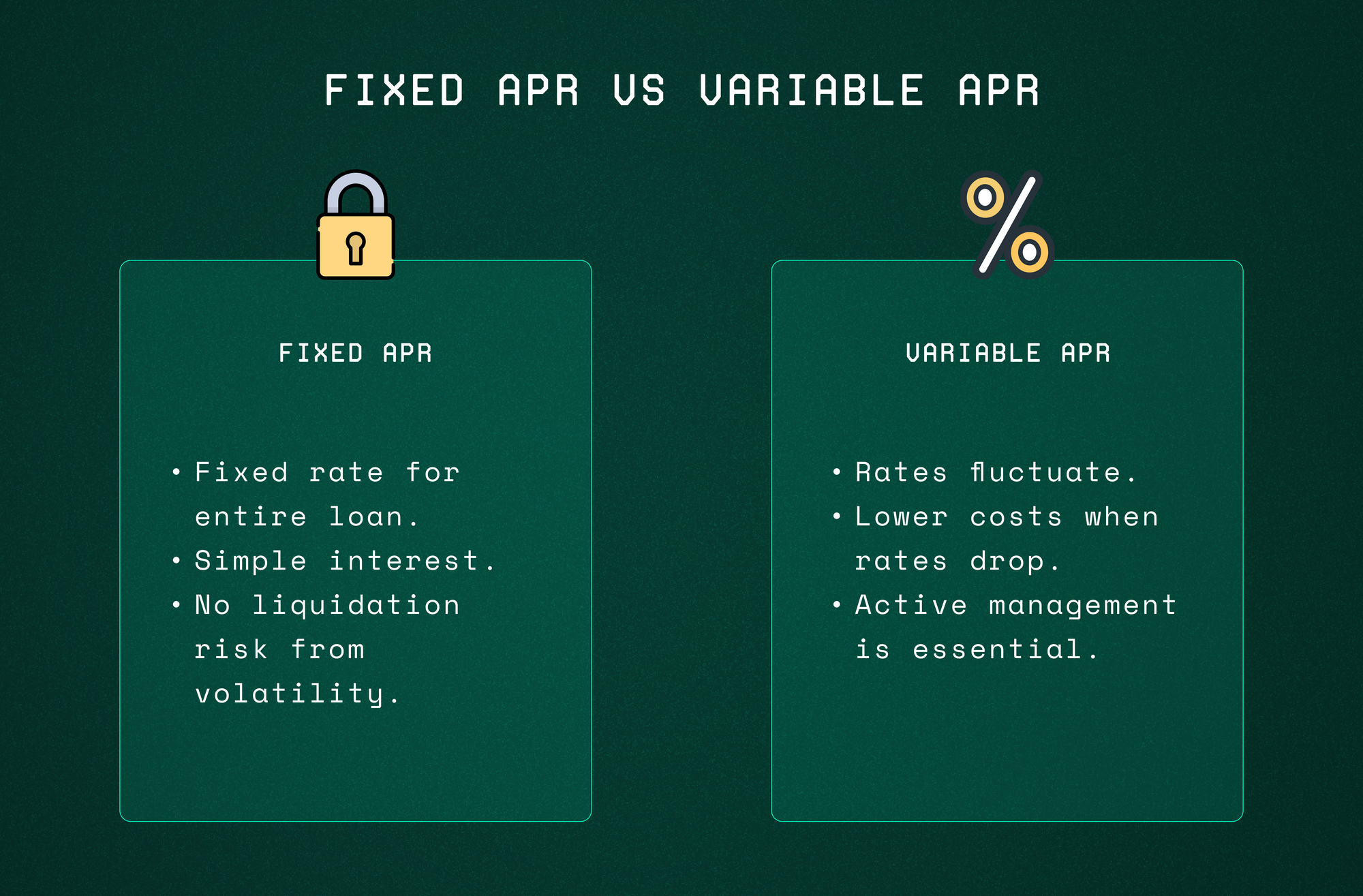
In 2026, the vast majority of personal loans are fixed-rate. This means your APR remains the same for the life of the loan, providing predictable monthly payments. Variable-rate loans are rarer and carry the risk that your APR (and payment) could increase if market interest rates rise.
Does a personal loan APR include credit insurance?
No. Optional add-ons like credit life insurance or disability insurance are not typically included in the APR. These products increase your monthly payment but are not required to obtain the loan. Carefully evaluate whether these provide actual value for your situation.
How does my income affect my APR?
Income doesn't directly change your APR the way a credit score does, but it determines your Debt-to-Income ratio. A higher income relative to your debts makes you a lower-risk borrower, which helps you qualify for the lowest advertised rates within your credit tier.
Practical Recommendation
Before applying for a personal loan, calculate your current DTI and check your FICO score via your bank or a free service. If you find your estimated APR is above 20%, consider spending three to six months improving your credit score—by paying down credit card balances or disputing errors—before officially applying. This short delay can save you hundreds, if not thousands, of dollars in interest charges over the term of the loan.
Image Gallery