Workers’ Compensation for Injury on a Business Trip in Hawaii: Coverage, Rules, and Claims Process
Employees injured while traveling to Hawaii for work are generally entitled to workers’ compensation benefits under the "traveling employee" doctrine. This legal framework considers workers to be within the course and scope of employme...
Employees injured while traveling to Hawaii for work are generally entitled to workers’ compensation benefits under the "traveling employee" doctrine. This legal framework considers workers to be within the course and scope of employment continuously during a business trip—including lodging, meals, and transit—unless the injury occurs during a major personal deviation.
Contents
Disclaimer: This guide is provided for educational and informational purposes only and does not constitute formal legal advice. Workers' compensation laws involve complex jurisdictional rules. Injured workers and employers should consult a qualified attorney licensed in Hawaii or their home state, or contact the Hawaii Department of Labor and Industrial Relations for guidance.
The "Traveling Employee" Doctrine in Hawaii Workers' Compensation
When an employee travels to Hawaii for business, their legal status under workers' compensation law differs significantly from that of a standard daily commuter. Under standard employment law, the "going and coming rule" excludes injuries sustained during an ordinary commute to and from a fixed workplace. However, for business travelers, Hawaii courts and administrative bodies recognize the traveling employee doctrine.
Under this doctrine, an employee on a temporary business assignment away from their home base is generally considered to be acting within the course and scope of employment 24 hours a day throughout the trip. The underlying rationale is that business travel forces employees into unfamiliar environments, heightened travel risks, and living arrangements created entirely for the employer's benefit.
In Hawaii, workers' compensation is governed by Hawaii Revised Statutes (HRS) Chapter 386. Under HRS § 386-3, an employer is liable to pay statutory benefits if an employee sustains a personal injury either by accident arising out of and in the course of employment or by disease proximity caused by or resulting from the nature of the employment. For a traveling employee, the scope of "in the course of employment" expands from the traditional clock-in/clock-out window to cover the entire duration of the trip, provided the employee does not step outside their employment duties for personal pursuits.
What Activities Are Covered During Hawaii Business Travel?
Understanding the boundaries of coverage requires distinguishing between work-related travel activities and personal deviations. Hawaii administrative law and judicial precedents establish clear distinctions between covered conduct and non-covered personal activities.
Covered Activities Under the Traveling Employee Rule
Because business travel requires an employee to maintain daily life activities away from home, normal life necessities during the trip are treated as extensions of the job. Covered circumstances generally include:
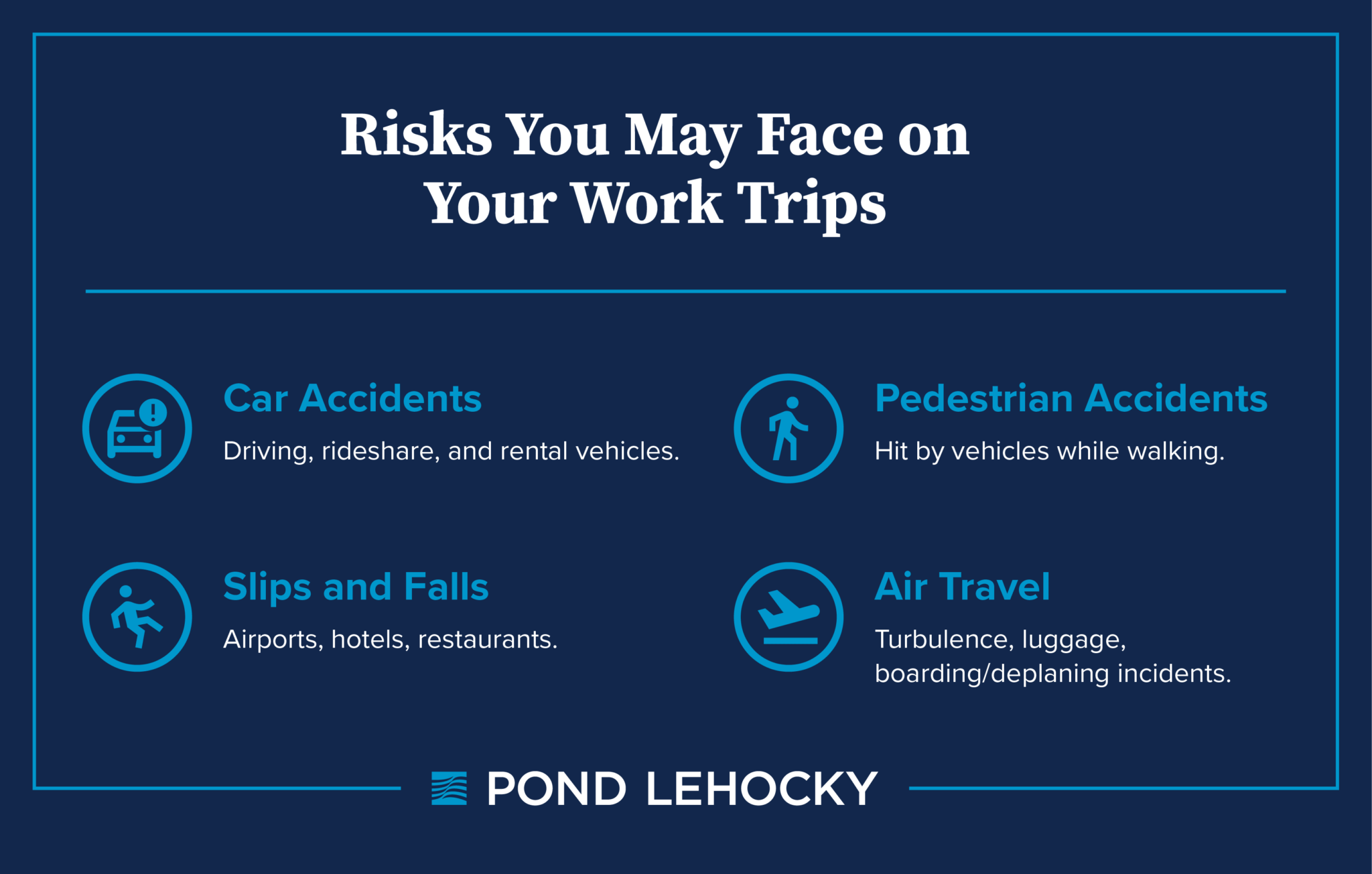
- Commercial and Transit Travel: Flight delays, shuttle accidents, rental car crashes, and luggage handling injuries while traveling to, from, or within the Hawaiian Islands for business.
- Hotel and Lodging Incidents: Slip-and-fall accidents, structural hazards, or fires occurring in the employee’s hotel room, lobby, or assigned temporary lodging.
- Business Meals and Client Dining: Slipping in a restaurant during a business lunch, food poisoning from an employer-mandated meal, or injuries occurring while traveling to get dinner while on the assignment.
- Inter-Island Travel for Work: Moving between islands (e.g., flying from Oahu to Maui for a secondary client meeting) as mandated by the employer's itinerary.
Non-Covered Activities and Personal Deviations
Coverage is not absolute. If a worker abandons the business purpose of the trip to pursue purely personal entertainment or leisure, they commit what the law terms a distinct personal deviation. Injuries sustained during a personal deviation are generally non-compensable under Hawaii workers' compensation law.
Examples of non-covered activities include:
- Extreme Leisure and Excursions: Voluntary recreational activities undertaken during free hours, such as recreational surfing, helicopter tours, scuba diving, or hiking off-marked trails, unless explicitly required or sponsored by the employer.
- Personal Sightseeing: Taking an extra day or weekend after business duties have concluded to tour local attractions independently.
- Intoxication and Misconduct: Injuries where alcohol or substance abuse is proven to be the primary cause of the accident, or injuries resulting from willful self-injury and fighting.
- Unauthorized Side Trips: Driving to a remote part of an island for personal shopping or visiting relatives entirely unrelated to the work assignment.
Multi-State Jurisdictional Issues: Hawaii Law vs. Home State Law
One of the most complex aspects of an injury occurring on a business trip to Hawaii is determining which state's workers' compensation system applies.
When a worker employed by a mainland firm (e.g., based in California, Texas, or New York) is injured while temporarily working in Hawaii, two potential jurisdictions may claim authority over the case: Hawaii and the employer’s home state.
- Mainland Employer Base
- Temporary Hawaii Travel
- Home State Claim (Extraterritorial)
- Hawaii Claim (HRS § 386-6)
- Election of Benefits Rule (No Double Recovery of Total Benefits)
- Temporary Hawaii Travel
1. Extraterritorial Jurisdiction of Home State
Most states have "extraterritorial" provisions in their workers' compensation acts. If an employee is hired in California and sent on a three-day conference to Honolulu, California workers' compensation laws typically follow the employee across state lines. The employee can file a claim in their home state.
2. Hawaii State Jurisdiction (HRS § 386-6)
Hawaii law also Asserts jurisdiction over work injuries occurring within its borders. Under HRS § 386-6, if an employee hired outside Hawaii is injured while working temporarily within the state, Hawaii workers' compensation statutes apply to the injury occurring on Hawaii soil.
3. Dual Filing and the "No Double Recovery" Rule
In many instances, an injured worker may legally file a claim in either Hawaii or their home state, or initiate claims in both states concurrently. However, the worker cannot recover double full benefits.
If benefits are awarded under Hawaii law, the home state insurer will receive a credit for amounts paid in Hawaii (and vice versa). Workers often choose the jurisdiction that offers:
- Higher temporary total disability (TTD) payment caps.
- More favorable medical provider choices.
- Broader statutes of limitations for filing claims.
- Better long-term permanent partial disability (PPD) ratings.
Comparative Overview: Scope of Coverage on Hawaii Business Trips
The following table summarizes common scenarios encountered during business travel to Hawaii, outlining whether the scenario is typically covered and the underlying legal rationale.
| Scenario / Activity | Coverage Status | Primary Legal Rationale |
|---|---|---|
| Taxi crash between Honolulu Airport (HNL) and hotel | Covered | Portal-to-portal travel rule applies; transit is essential to the assignment. |
| Slip and fall in hotel bathroom at night | Covered | Temporary lodging is considered part of the work environment for traveling staff. |
| Lunch meeting with local Hawaii clients | Covered | Direct conduct of business activities within scope of employment. |
| Solo weekend excursion to hike Diamond Head | Not Covered | Classified as a distinct personal deviation for private leisure. |
| Attending mandatory company luau/dinner | Covered | Employer-sponsored or mandatory social event creates business nexus. |
| Injury while intoxicated at a hotel bar late at night | Generally Denied | Intoxication as the primary cause of injury bars recovery under HRS § 386-3. |
| Car accident while driving to an authorized client site | Covered | Travel between business locations within the state falls within scope of duties. |
Step-by-Step Guide to Handling an Injury on a Hawaii Business Trip
When an injury occurs away from the home office, following a precise, documented protocol is critical to safeguarding legal rights and ensuring proper medical funding.
Step 1: Seek Immediate Medical Treatment
Prioritize health and physical safety above administrative steps. If an emergency occurs, call 911 or visit the nearest emergency room (such as The Queen's Medical Center on Oahu or Maui Memorial Medical Center).
Crucial Note for Out-of-State Workers: Inform the treating healthcare provider immediately that the injury occurred while working on a business trip. Request that medical records explicitly record the history of how the accident happened during work duties.
Step 2: Formally Report the Injury to Your Employer
Under HRS § 386-81, an injured employee must notify their employer of the injury as soon as practicable after the occurrence.
- Provide written notice (via email or formal accident report) to your manager and HR department.
- Include exact details: date, time, location in Hawaii, activities being performed, and witness contact information.
- Keep copies of all written communications for your records.
Step 3: Employer Obligation & WC-1 Filing in Hawaii
Once notified, the employer or their workers' compensation insurance carrier must file an official report with the Hawaii Department of Labor and Industrial Relations (DLIR) Disability Compensation Division.
- The primary form used is Form WC-1 (Employer's Report of Industrial Injury).
- Employers must file this form within 7 working days after learning of an injury that causes disability beyond the day of the accident or requires medical treatment beyond first aid.
Step 4: Medical Provider Selection and Billing
Under Hawaii law, injured workers generally have the right to choose their initial attending physician. However, if you live out of state and return home after receiving emergency care in Hawaii, transferring medical care to a primary doctor in your home state requires coordinating between the Hawaii claims administrator, your home physician, and state administrative rules.
Common Challenges and Denials in Business Travel Claims
Insurance carriers scrutinize out-of-state business trip claims closely due to the high costs of out-of-network emergency care, medical transport, and prolonged temporary disability. Common grounds for claim disputes include:
- Claim Submitted to Carrier
- Claim Accepted
- Medical Coverage
- TTD Benefits
- Claim Contested
- Personal Deviation Allegation
- Lack of Hawaii Jurisdiction
- Claim Accepted
1. The Personal Deviation Defense
Insurers frequently argue that the employee was engaged in a personal errand when injured. For instance, if an employee stops at a beach park on the way back from a client meeting, the carrier may argue the accident occurred during a personal detour. Overcoming this defense requires showing that the route was direct or that the detour was insubstantial and reasonably incidental to the trip.
2. Contesting Employer Mandates for Social Events
If an injury occurs at an after-hours dinner or recreational activity, the insurer may claim attendance was purely voluntary. Claimants must provide documentation (such as emails, event schedules, or manager directives) showing that attendance was expected, encouraged, or directly tied to building business relationships.
3. Out-of-Network and Out-of-State Medical Billing Conflicts
Hawaii medical providers may bill using Hawaii's statutory medical fee schedule under HRS § 386-21. When an out-of-state insurer handles the claim, billing disputes often arise regarding fee schedule rates, authorization for specialists, and out-of-state physical therapy.
Practical Guidance for Employers and Remote Workers
To prevent coverage disputes and ensure proper risk management during Hawaii business travel, both employers and employees should adhere to established corporate travel guidelines.
Guidance for Employers
- Establish Clear Travel Policies: Maintain a written business travel policy defining expectations, authorized travel hours, approved transit modes, and guidelines on personal time extensions (bleisure travel).
- Verify Extraterritorial Insurance Coverage: Ensure your workers' compensation insurance policy includes endorsements for out-of-state coverage (Other States Insurance / Section 3B of standard NCCI policies) when sending staff to Hawaii.
- Document Assignment Details: Issue clear travel itineraries detailing mandatory meetings, expected travel windows, and required corporate functions.
Guidance for Employees
- Maintain Travel Logs: Keep receipts, rental car logs, meeting agendas, and flight itineraries. These records establish timeline boundaries and prove course-of-employment status.
- Separate Work from Leisure: If extending a business trip for personal vacation in Hawaii, explicitly log off work networks and document the exact date and time work duties conclude.
- Report Incidents Immediately: Never wait until returning to the mainland home office to report a Hawaii injury. Immediate reporting prevents claims adjusters from questioning the incident's credibility.
Frequently Asked Questions (FAQs)
What happens if I extend my Hawaii business trip for vacation and get hurt?
If you combine business with personal travel (often called "bleisure" travel), injuries sustained during the personal vacation portion are not covered. Once your business obligations conclude and your personal vacation time begins, the traveling employee doctrine no longer applies, and the risk shifts entirely to your personal health insurance.
Can I choose my own doctor in Hawaii after an on-the-job injury?
Yes. Under Hawaii workers' compensation law, an injured employee has the right to select an initial attending physician. If you are an out-of-state resident returning home shortly after the injury, you can select a primary treating physician in your home state, provided the doctor agrees to comply with the reporting and billing regulations of the applicable workers' compensation system.
Which state pays higher workers' compensation benefits: Hawaii or my home state?
Benefit rates vary significantly by state. Hawaii sets high maximum weekly rates for Temporary Total Disability (TTD) compared to many mainland states, but medical fee schedules and permanent impairment guidelines differ. An experienced workers' compensation attorney can evaluate both jurisdictions to help you determine where to pursue your primary claim.
Does workers' compensation cover hotel room injuries on a business trip?
Yes, in most cases. Because an employer requires a traveling employee to stay away from home, temporary lodging is considered an extension of the workplace. Slip-and-fall injuries, structural accidents, or hazards encountered inside your assigned hotel room are generally compensable under the traveling employee rule.
How long do I have to file a workers' compensation claim in Hawaii?
Under HRS § 386-82, a formal claim for workers' compensation in Hawaii must be filed within two years after the employee knows (or has reason to know) of the nature of the injury and its relation to employment. However, you must report the injury to your employer immediately or as soon as practicable following the incident.
Recommended Next Steps
If you or an employee has been injured while on a business trip to Hawaii, take the following actions to protect legal rights and expedite benefit delivery:
- Secure Complete Medical Documentation: Obtain physical and electronic copies of all emergency room records, diagnostic imaging, and physician discharge notes from the Hawaii medical facility.
- Submit Written Injury Notification: File a formal written incident report with your corporate HR or risk management department today, specifying exact travel details.
- Confirm Insurance Jurisdiction: Contact your employer's workers' compensation carrier to verify whether the claim is being processed under Hawaii law (HRS Chapter 386) or home-state extra-territorial provisions.
- Consult a Workers' Compensation Specialist: Because multi-state travel claims involve competing statutory rules, speak with an attorney licensed in employment/workers' compensation law to ensure maximum benefit recovery.
Image Gallery