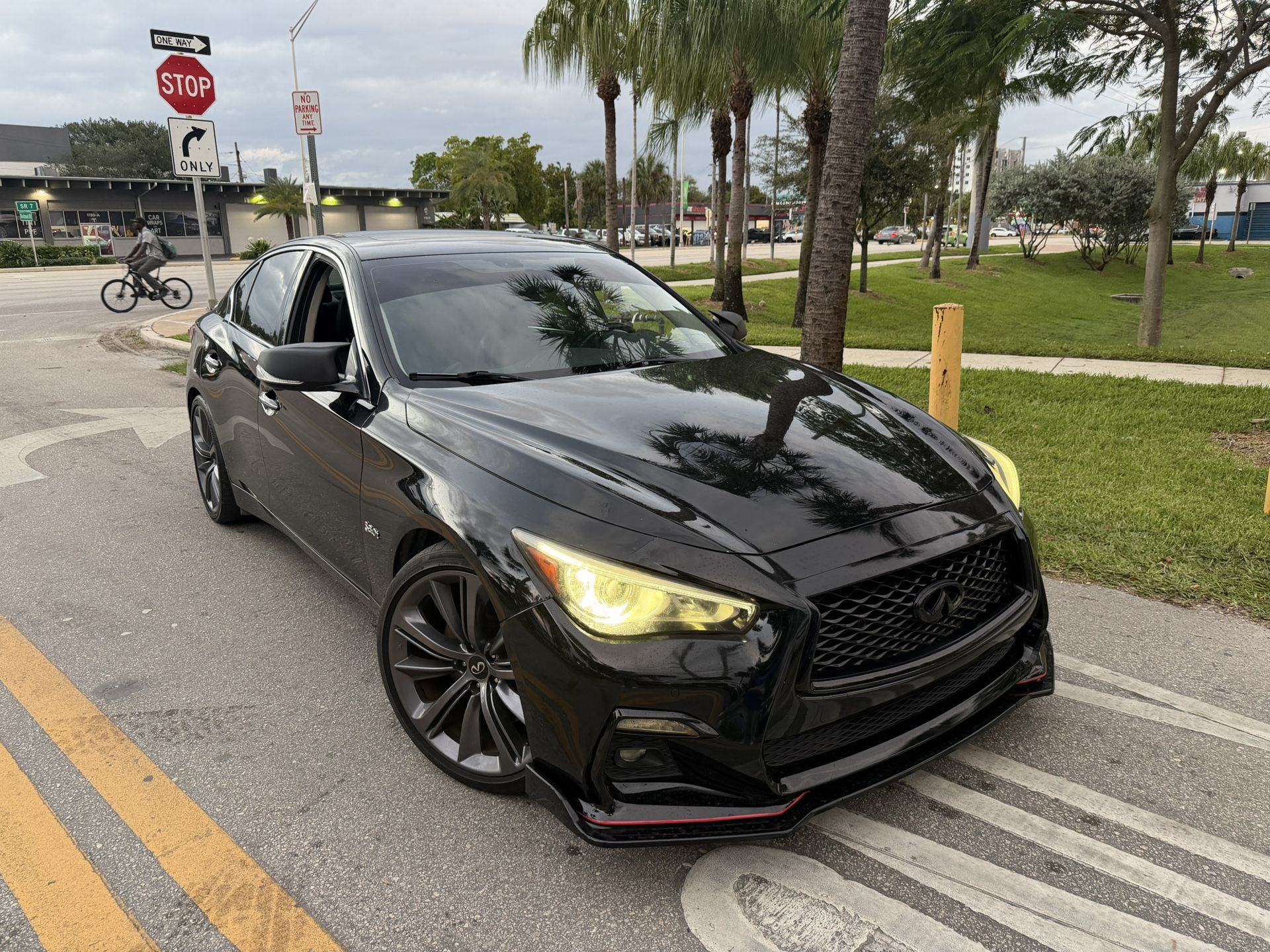
2018 Infiniti Q50 0-60 Acceleration: Performance Specs and Trim Comparisons
The 2018 Infiniti Q50 offers a wide range of 0-60 mph acceleration times depending on the engine configuration, ranging from a respectable 6.7 seconds in the 2.0t base model to a blistering 4.5 seconds in the high-performance Red Sport...
The 2018 Infiniti Q50 offers a wide range of 0-60 mph acceleration times depending on the engine configuration, ranging from a respectable 6.7 seconds in the 2.0t base model to a blistering 4.5 seconds in the high-performance Red Sport 400. The popular 3.0t Twin-Turbo V6 (300 hp) typically completes the sprint in approximately 5.0 to 5.4 seconds, depending on the drivetrain.
Contents
The 2018 model year represented a significant era for the Q50. By this time, Infiniti had fully transitioned its luxury sports sedan into the "VR" engine generation, moving away from the naturally aspirated VQ engines of the past. As of 2026, the 2018 Q50 remains a highly sought-after vehicle on the pre-owned market for enthusiasts looking for a balance of modern twin-turbo power and classic hydraulic-feeling (though electronically assisted) handling. Understanding the nuances of how each trim achieves its acceleration requires looking at the interplay between the turbocharging systems, the 7-speed automatic transmission, and the Intelligent All-Wheel Drive (AWD) systems.
The Foundation of Performance: The VR30DDTT Engine
Central to the 2018 Infiniti Q50's acceleration profile is the VR30DDTT engine. This 3.0-liter V6 twin-turbocharged powerplant was designed to provide a flat torque curve, ensuring that power is available almost immediately from a standstill. In the standard 3.0t trims (Luxe and Sport), this engine produces 300 horsepower and 295 lb-ft of torque.
The acceleration in these trims is characterized by a linear surge. Unlike the peaky nature of older V6 engines, the twin-turbos in the 2018 Q50 begin providing significant boost as low as 1,600 RPM. This allows the car to achieve a 0-60 mph time of roughly 5.0 seconds when equipped with All-Wheel Drive. The AWD system is particularly beneficial for 0-60 sprints because it can divert up to 50% of the engine’s power to the front wheels, minimizing the wheel spin that often plagues Rear-Wheel Drive (RWD) models during hard launches.
The Red Sport 400: Reaching the 4.5-Second Mark
The flagship for 2018 was the Red Sport 400. While it uses the same 3.0-liter displacement as the standard V6, Infiniti engineers implemented several hardware and software changes to extract an additional 100 horsepower. These modifications include:
- Optical Turbo Speed Sensors: These sensors allow the turbos to spin faster (up to 220,000 RPM) while remaining within safe operating limits, maximizing boost pressure.
- Enhanced Cooling: An improved intercooler system manages the heat generated by the increased boost, ensuring consistent 0-60 times even after multiple runs.
- Aggressive ECU Mapping: The engine control unit is tuned to deliver a more aggressive throttle response and a wider power band.
In independent testing, the 2018 Red Sport 400 RWD recorded 0-60 mph times of 4.5 to 4.8 seconds. The AWD variant is often slightly faster to 60 mph due to the "dig" provided by four-wheel traction, though the extra weight of the AWD system (approximately 150-200 lbs) can slightly narrow the gap in longer quarter-mile races.
The Entry-Level 2.0t and the High-Torque Hybrid
Not every 2018 Q50 was built for the drag strip. The entry-level 2.0t utilized a 2.0-liter turbocharged four-cylinder engine sourced through a partnership with Mercedes-Benz. Producing 208 horsepower and 258 lb-ft of torque, its 0-60 mph time sits at roughly 6.7 to 7.0 seconds. While this is modest compared to its V6 siblings, the 2.0t was designed for fuel efficiency and urban commuting rather than outright performance.
The 2018 Q50 Hybrid is the "sleeper" of the lineup. It combines a 3.5-liter V6 with a 50kW electric motor to produce a total system output of 360 horsepower. Because electric motors provide maximum torque at 0 RPM, the Hybrid's off-the-line acceleration is surprisingly violent. It can reach 60 mph in about 4.9 to 5.2 seconds, making it nearly as fast as the 3.0t Sport while offering significantly better city fuel economy.
2018 Infiniti Q50 Acceleration and Specifications Table
| Trim Level | Engine Type | Horsepower | Torque (lb-ft) | 0-60 MPH (est.) | Drivetrain |
|---|---|---|---|---|---|
| 2.0t Pure/Luxe | 2.0L Turbo I4 | 208 hp | 258 lb-ft | 6.7 - 7.0s | RWD / AWD |
| 3.0t Luxe | 3.0L Twin-Turbo V6 | 300 hp | 295 lb-ft | 5.2 - 5.4s | RWD / AWD |
| 3.0t Sport | 3.0L Twin-Turbo V6 | 300 hp | 295 lb-ft | 5.0 - 5.2s | RWD / AWD |
| Hybrid Luxe | 3.5L V6 + Electric | 360 hp | 400 lb-ft* | 4.9 - 5.2s | RWD / AWD |
| Red Sport 400 | 3.0L Twin-Turbo V6 | 400 hp | 350 lb-ft | 4.5 - 4.7s | RWD / AWD |
*Combined system torque; individual components vary.
Factors Influencing Real-World Acceleration
While factory specifications provide a baseline, several real-world factors influenced how the 2018 Q50 performed on the pavement. In 2026, as these vehicles have aged, these factors are even more critical for owners to consider.
Transmission and Shift Logic
The 7-speed automatic transmission in the 2018 Q50 was often criticized by contemporary reviewers for being slower than the dual-clutch transmissions found in German competitors. However, using the Sport or Sport+ drive modes significantly alters the shift logic. These modes hold gears longer and sharpen throttle response, which is essential for achieving the sub-5-second times in the V6 models. The transmission also features "Downshift Rev Matching," which helps maintain stability when slowing down for a corner, though it has less impact on the 0-60 sprint itself.
The AWD vs. RWD Launch
For 0-60 mph enthusiasts, the AWD system is the clear winner. The 2018 Q50's RWD models, especially the Red Sport 400, are known for struggling with traction. The high torque of the VR30 engine can easily overwhelm the rear tires from a standstill. The AWD system's ability to sense slip and instantly transfer torque to the front wheels allows for a more consistent, "point-and-shoot" acceleration experience.
Tire Selection and Condition
Most 2018 Q50 models came standard with run-flat tires. While convenient, these tires are often heavier and have stiffer sidewalls, which can negatively impact grip during a hard launch. Many enthusiasts have since replaced these with high-performance summer tires (such as the Michelin Pilot Sport series), which can shave a tenth of a second or more off the 0-60 time by providing superior bite.
Comparison with 2018 Competitors
To understand the 2018 Infiniti Q50's 0-60 performance, it is helpful to see how it stacked up against its primary rivals at the time of its release.
- BMW 340i (F30): With its B58 inline-six engine, the 340i was the benchmark. It clocked 0-60 mph in about 4.6 to 4.8 seconds. The Q50 Red Sport 400 was slightly faster on paper, though the BMW’s ZF 8-speed transmission often made it feel more responsive in real-world driving.
- Audi S4: Utilizing a 3.0L turbocharged V6 and legendary Quattro AWD, the S4 delivered a 0-60 time of roughly 4.4 seconds. The Q50 Red Sport AWD was its closest competitor in terms of raw acceleration.
- Lexus IS 350 F Sport: The Lexus relied on a naturally aspirated 3.5L V6. With a 0-60 time of approximately 5.6 to 5.8 seconds, it was significantly slower than the turbocharged Infiniti 3.0t models.
Maintenance and Longevity for Performance
By 2026, a 2018 Q50 is eight years old. To maintain the 0-60 performance levels described above, owners must pay close attention to specific maintenance items. Twin-turbocharged engines are sensitive to oil quality; frequent oil changes are vital to prevent turbocharger wear. Additionally, the heat-exchange system for the intercoolers should be checked for leaks, as any loss in cooling efficiency will lead to "heat soak," which significantly slows down acceleration times during spirited driving.
Frequently Asked Questions
Is the 2018 Infiniti Q50 Red Sport 400 faster than the 3.0t Sport?
Yes. While both use the 3.0L Twin-Turbo V6, the Red Sport 400 features different turbo speed sensors and software tuning that results in 400 hp compared to the 300 hp in the Sport trim. This results in a 0-60 mph time that is roughly 0.5 to 0.7 seconds faster.
How does the 0-60 time change with a "tune"?
The VR30 engine in the 2018 Q50 is famous for its tuning potential. With a simple ECU reflash (often called a "Stage 1" tune), even a standard 300 hp Luxe model can reach the 400 hp mark. Highly modified Q50s have been known to achieve 0-60 mph times in the high 3-second range, though this requires upgraded fueling and cooling components.
Does the 2018 Q50 have launch control?
The 2018 Q50 does not feature a dedicated, button-activated launch control system like some of its German rivals. However, drivers can achieve a "brake torque" launch by holding the brake and building RPMs slightly before releasing, which is the standard method for achieving the advertised 0-60 times.
Is the 2.0t engine fast enough for daily driving?
With a 0-60 time of approximately 6.7 seconds, the 2.0t is comparable to a standard modern crossover. It is "fast enough" for highway merging and city traffic, but it lacks the effortless passing power and aggressive acceleration found in the V6 models.
Practical Recommendation
If your primary goal is the fastest 0-60 mph acceleration for the best value, look for a 2018 Infiniti Q50 3.0t Sport with AWD. While the Red Sport 400 is the ultimate factory performer, the 300 hp Sport trim with AWD provides the most consistent launches and can be easily upgraded to Red Sport power levels via aftermarket tuning. Always ensure the vehicle has a documented service history, particularly regarding the turbochargers and the AWD transfer case, to ensure the car still performs at its 2018 factory specifications in 2026.
Image Gallery