The Best Blow Up Mattress for Camping in 2026: A Technical Guide to Outdoor Sleep Systems
Finding the best blow up mattress for camping in 2026 requires balancing thermal insulation, material durability, and inflation convenience. For most car campers, a TPU-laminated mattress with an R-value above 4.0 offers the best mix o...
Finding the best blow up mattress for camping in 2026 requires balancing thermal insulation, material durability, and inflation convenience. For most car campers, a TPU-laminated mattress with an R-value above 4.0 offers the best mix of puncture resistance and four-season warmth, ensuring a supportive night's sleep across various terrains.
Contents
Understanding the Modern Camping Air Mattress
In the landscape of 2026 outdoor gear, the "blow up mattress"—often technically referred to as an airbed or inflatable sleeping pad—has evolved significantly. No longer are campers restricted to heavy, leak-prone PVC blocks. Modern engineering has introduced materials that are lighter, more resilient to temperature fluctuations, and designed to mimic the support of a traditional home mattress while remaining portable.
The primary goal of a camping mattress is twofold: cushioning and insulation. While a home airbed focuses almost entirely on cushioning, a camping-specific model must prevent the cold ground from leeching body heat. This is measured by the R-value, a critical metric for any outdoor enthusiast.
Key Technical Specifications for 2026
When evaluating the best options for your camping kit, four technical pillars determine the quality and longevity of the product: R-value, material composition, internal construction, and the inflation system.
R-Value and Thermal Efficiency
The R-value measures a material's resistance to heat flow. In a camping context, the higher the R-value, the better the mattress insulates you from the cold ground.
- Summer Camping (R 1.0 to 2.0): Suitable for warm nights where ground temperature is not a concern.
- Three-Season Camping (R 3.0 to 5.0): The sweet spot for most campers, providing protection from spring frosts and autumn chills.
- Winter/Extreme Cold (R 6.0+): Essential for sub-zero temperatures to prevent hypothermia and ensure comfort.
As of 2026, the ASTM F3340-18 standard remains the industry benchmark for verifying these ratings, ensuring that consumers can compare brands like Therm-a-Rest, Exped, and Nemo on an equal playing field.
Material Science: PVC vs. TPU
Historically, air mattresses were made of Polyvinyl Chloride (PVC). While cheap, PVC is prone to "stretching" (which users often mistake for leaking) and becomes brittle in cold weather.
- TPU (Thermoplastic Polyurethane): The 2026 standard for high-end camping mattresses. TPU is lighter, stronger, and more environmentally friendly. It does not off-gas harmful chemicals and maintains its flexibility even in freezing temperatures.
- Denier Count: Look for fabrics with a higher denier (e.g., 50D to 75D) on the bottom of the mattress to prevent punctures from rocks or twigs, while a lower denier or brushed fabric on top provides a softer sleeping surface.
Internal Support Structures
The "bounce" of an air mattress is determined by its internal architecture.
- I-Beam Construction: Parallel internal ribs that provide a flat surface but can sometimes feel "wobbly" if not fully inflated.
- Coil Construction: Internal fabric or synthetic pillars that mimic the feel of a traditional spring mattress, offering superior weight distribution.
- Offset Cells: Frequently used in lightweight pads to provide a stable, "dimpled" surface that prevents the air from shifting when you move.
Top Camping Air Mattress Categories for 2026
1. Best for Car Camping (Glamping)
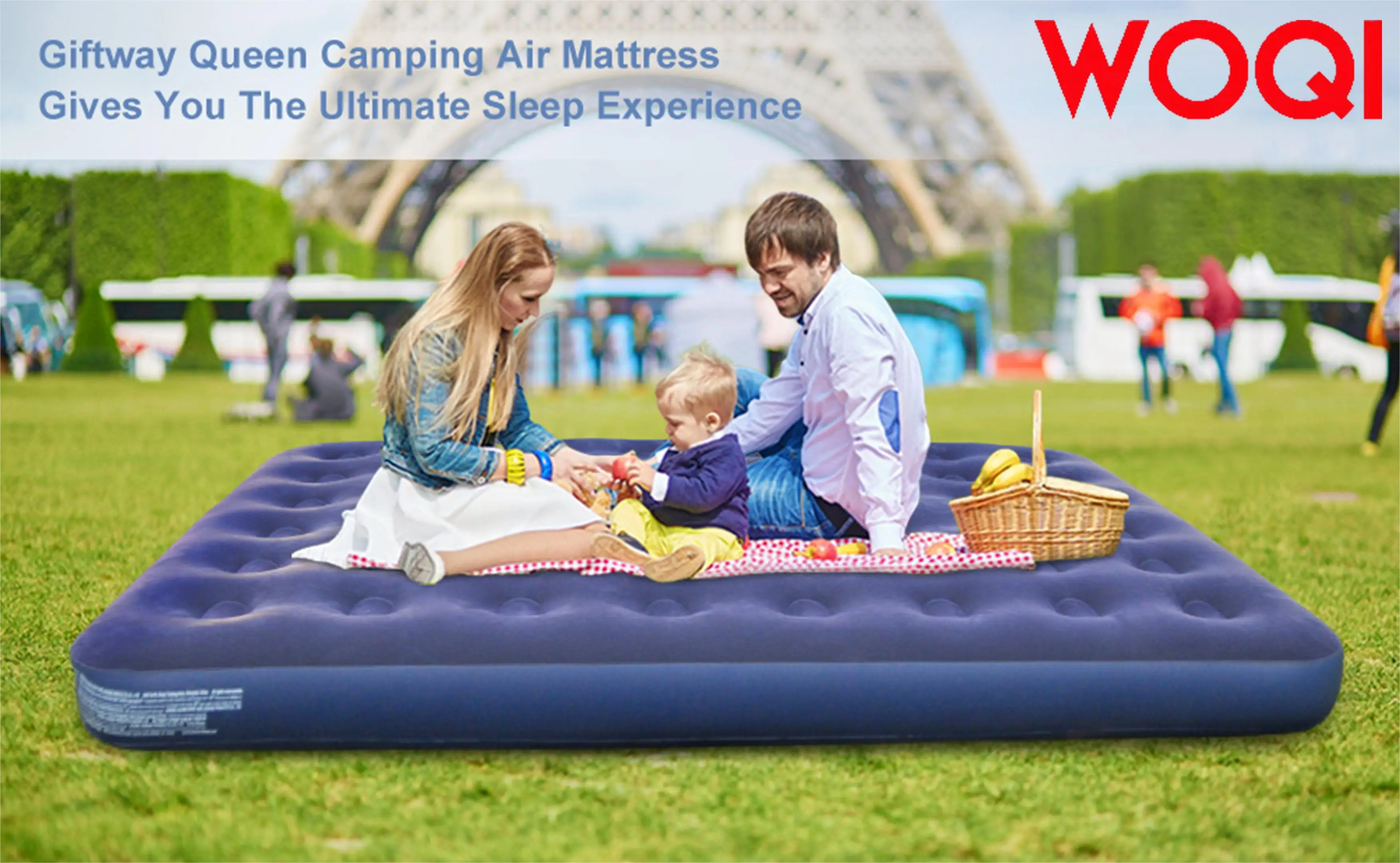
For those who aren't worried about weight, a "double-high" or "queen-sized" inflatable bed is the gold standard. These mattresses often reach 18 to 22 inches in height, making it easier to get in and out of bed. In 2026, these models often feature integrated rechargeable pumps that can be charged via USB-C, eliminating the need for manual pumping or proximity to a vehicle's power outlet.
2. Best for Backcountry Portability
Backpackers require a mattress that balances weight with comfort. The best blow up mattresses in this category weigh less than 20 ounces and fold down to the size of a water bottle. Look for tapered designs that save weight by narrowing at the feet.
3. Best for Couples
Two-person camping mattresses have seen major upgrades. The best models now feature dual-chamber technology, allowing each sleeper to customize their firmness level. This prevents the "seesaw effect" where one person's movement tosses the other.
Comparison of Leading 2026 Camping Mattress Features
| Feature | Luxury Airbed (Car Camping) | Technical Sleeping Pad (Backpacking) | Budget All-Rounder |
|---|---|---|---|
| Typical R-Value | 3.5 - 5.0 | 2.0 - 7.0 | 1.5 - 3.0 |
| Material | Heavy-duty TPU / Flocked Top | Ultralight 20D/30D Nylon | PVC / Polyester Blend |
| Inflation Method | Integrated Electric Pump | Pump Sack / Lung Power | Manual Foot Pump / External |
| Weight | 10 - 20 lbs | 12 - 25 oz | 3 - 6 lbs |
| Packed Size | Large Suitcase Style | 1-Liter Bottle Size | Small Duffle Bag |
| Stability | High (Internal Coils) | Moderate (V-Chambers) | Low to Moderate |
Inflation and Deflation Mechanisms
The method of inflation is often the most overlooked aspect of purchasing a camping mattress. In 2026, three primary systems dominate the market:
- Integrated Electric Pumps: Common in luxury airbeds. They are convenient but add significant weight and require periodic charging.
- Pump Sacks: A lightweight bag that attaches to the valve. You capture air in the bag and squeeze it into the mattress. This is highly efficient and prevents moisture from your breath (which can cause mold) from entering the mattress.
- Self-Inflating Valves: These mattresses contain open-cell foam that expands when the valve is opened, drawing air in. While they offer excellent insulation, they are bulkier than pure air mattresses.
Maintenance and Leak Prevention
Even the best blow up mattress can fail if handled improperly. To ensure your investment lasts through the 2026 season and beyond:
- Clear the Site: Always sweep your tent floor for sharp objects before laying down your mattress.
- Use a Ground Sheet: An extra layer of protection between your tent floor and the earth can prevent micro-punctures.
- Temperature Regulation: Remember that air contracts in the cold. A mattress that feels firm at 6:00 PM may feel soft by 2:00 AM. This isn't usually a leak; it's physics. A quick top-off before bed is often necessary.
- Storage: Store your mattress loosely folded or unrolled with the valve open in a cool, dry place. Keeping it compressed for months can damage the internal baffles or foam.
Frequently Asked Questions
Why does my camping air mattress lose air overnight?
Most "leaks" are actually caused by the material stretching or the air inside cooling down and contracting. If the mattress is new and made of PVC, it will naturally stretch during the first few uses. However, if the drop in firmness is significant, check the valve for debris or use soapy water to locate small punctures.
Can I use a regular home airbed for camping?
While possible for indoor-style "glamping" in a climate-controlled environment, home airbeds lack R-value insulation. On a cold night, the air inside a standard home mattress will reach the same temperature as the ground, making you feel significantly colder than if you were using a dedicated camping mattress with thermal barriers.
Is a thicker mattress always more comfortable?
Not necessarily. While thickness provides more clearance from the ground, the internal construction (coils vs. baffles) determines support. A 4-inch technical pad with high-quality internal baffles can be more supportive and comfortable than a 10-inch budget mattress that sags in the middle.
How do I repair a puncture in the field?
Most high-quality mattresses include a repair kit. For TPU mattresses, a clear adhesive patch (like Tear-Aid Type A) works best. Clean the area with an alcohol wipe, apply the patch, and wait the recommended curing time—usually 30 minutes to 2 hours—before re-inflating.
What is the best way to inflate a mattress without a pump?
If you don't have a pump, a pump sack is the most hygienic and efficient method. If you must use your breath, be aware that the moisture can lead to mold growth inside the mattress over time. Many 2026 models now include anti-microbial treatments inside the air chambers to mitigate this risk.
Final Recommendation for 2026
For the average camper seeking the best balance of performance and value in 2026, we recommend a 4-inch thick TPU mattress with an R-value of at least 4.0 and a pump-sack inflation system. This configuration provides enough cushion for side sleepers, enough insulation for year-round use, and the durability to survive rugged environments without the weight penalty of integrated electronics. Always verify the manufacturer's warranty, as many premium brands now offer limited lifetime protection against seam failures and material defects.
Image Gallery