What Is a Realistic Solar Panel Installation Budget?
A realistic solar panel installation budget for a typical United States home ranges between $18,000 and $25,000 before tax credits and rebates. After applying the 30% Federal Residential Clean Energy Credit, the net out-of-pocket budge...
A realistic solar panel installation budget for a typical United States home ranges between $18,000 and $25,000 before tax credits and rebates. After applying the 30% Federal Residential Clean Energy Credit, the net out-of-pocket budget drops to roughly $12,600 to $17,500. System size, electrical panel upgrades, and battery storage significantly influence the final investment.
Contents
Baseline Costs: System Sizes and Average Prices
Establishing a realistic budget for a residential solar photovoltaic (PV) system requires understanding how system capacity is measured and priced. Solar installers quote systems based on total direct-current (DC) watt capacity. In the United States, average residential turn-key installation costs currently sit between $2.85 and $3.25 per watt before financial incentives.
The average American household consumes approximately 10,500 kilowatt-hours (kWh) of electricity per year, which generally requires a system rated between 6 kilowatts (kW) and 10 kW, depending on local sunlight availability (peak sun hours), panel tilt, azimuth, and shading.
Gross System Cost = Total Capacity (Watts) × Cost Per Watt Net System Cost = Gross System Cost × (1 - Tax Credit Rate)
The table below outlines realistic baseline figures across standard residential system sizes.
Average Solar Installation Cost Breakdown by System Size
| System Size (kW) | Est. Annual Output (kWh) | Average Gross Price | Net Price (30% Federal ITC) | Target Home Size (Sq. Ft.) |
|---|---|---|---|---|
| 4 kW | 5,200 – 6,400 | $11,800 – $13,200 | $8,260 – $9,240 | < 1,200 sq. ft. (Low energy use) |
| 6 kW | 7,800 – 9,600 | $17,100 – $19,500 | $11,970 – $13,650 | 1,200 – 1,800 sq. ft. |
| 8 kW | 10,400 – 12,800 | $22,800 – $26,000 | $15,960 – $18,200 | 1,800 – 2,500 sq. ft. |
| 10 kW | 13,000 – 16,000 | $28,500 – $32,500 | $19,950 – $22,750 | 2,500 – 3,500 sq. ft. |
| 12 kW | 15,600 – 19,200 | $34,200 – $39,000 | $23,940 – $27,300 | > 3,500 sq. ft. or EV / Heat Pump |
Note: Estimates reflect national averages. Geographic location, roof complexity, and equipment tier cause local variances.
Anatomy of a Solar Budget: Soft Costs vs. Hardware Costs
When analyzing a quote from a solar contractor, many homeowners assume that high-efficiency solar modules make up the majority of the invoice. However, according to data from the National Renewable Energy Laboratory (NREL), equipment hardware accounts for less than half of the total project expenditure. The remainder consists of "soft costs"—administrative, regulatory, and labor expenses required to design and deploy a grid-tied system legally.
Hardware Components (40% – 45% of Budget)
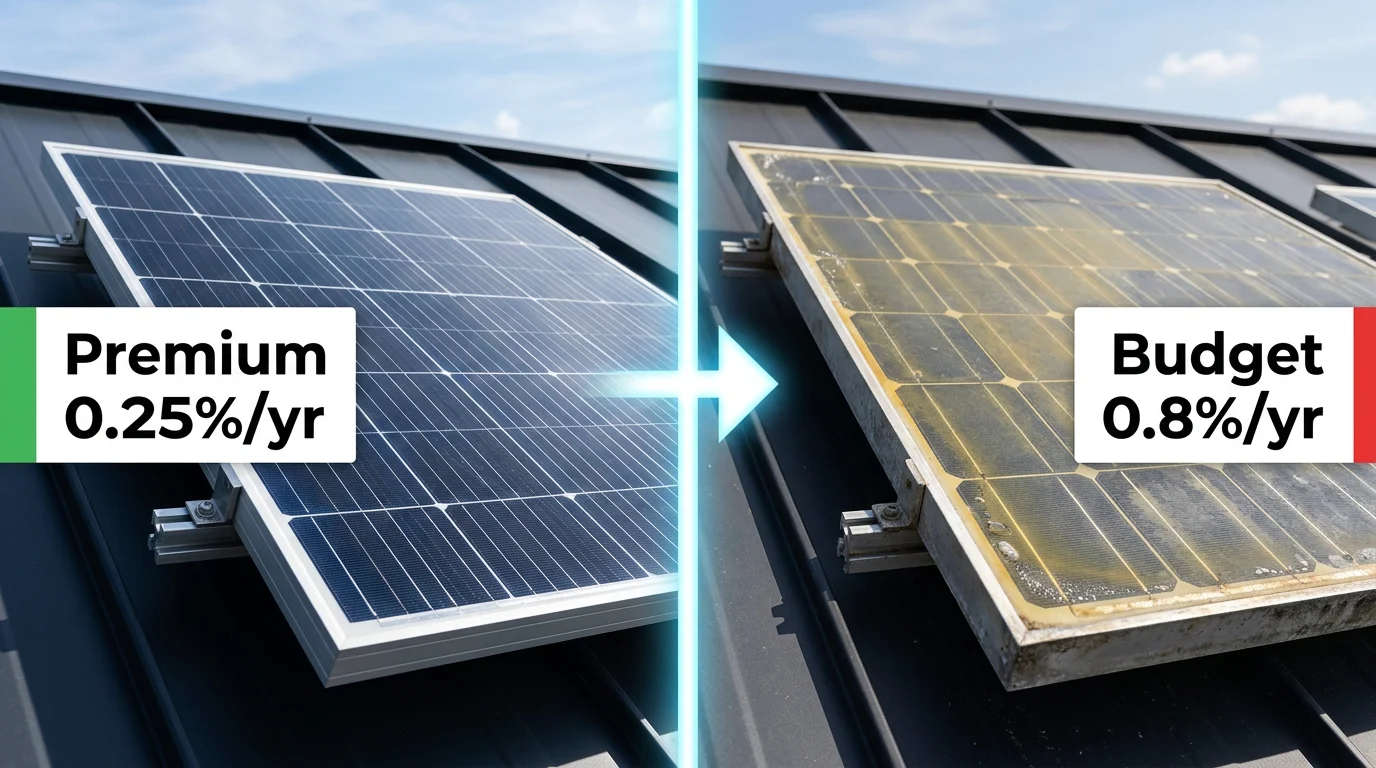
- Solar Panels (Modules): Monocrystalline panels (typically 400W to 455W per module) represent 20% to 25% of total system costs. Premium brand panels with higher efficiency ratings (e.g., SunPower, Maxeon, REC) cost more per watt than standard tier-1 options (e.g., Canadian Solar, Qcells, JA Solar).
- Inverters: Inverters convert direct current (DC) generated by panels into usable alternating current (AC).
- String Inverters: A single central inverter (e.g., SolarEdge, SMA) is the most budget-friendly option, costing around $1,500 to $2,500.
- Microinverters: Small inverters mounted under each panel (e.g., Enphase) improve performance on complex or shaded roofs but increase equipment costs by $1,000 to $2,500.
- Racking and Mounting Hardware: Flashings, roof attachments, rails, and clamps engineered to withstand regional wind speeds and snow loads account for 5% to 8% of the budget.
- Balance of System (BOS): Electrical wiring, conduits, junction boxes, disconnect switches, and circuit breakers usually add $1,000 to $1,800.
Soft Costs and Labor (55% – 60% of Budget)
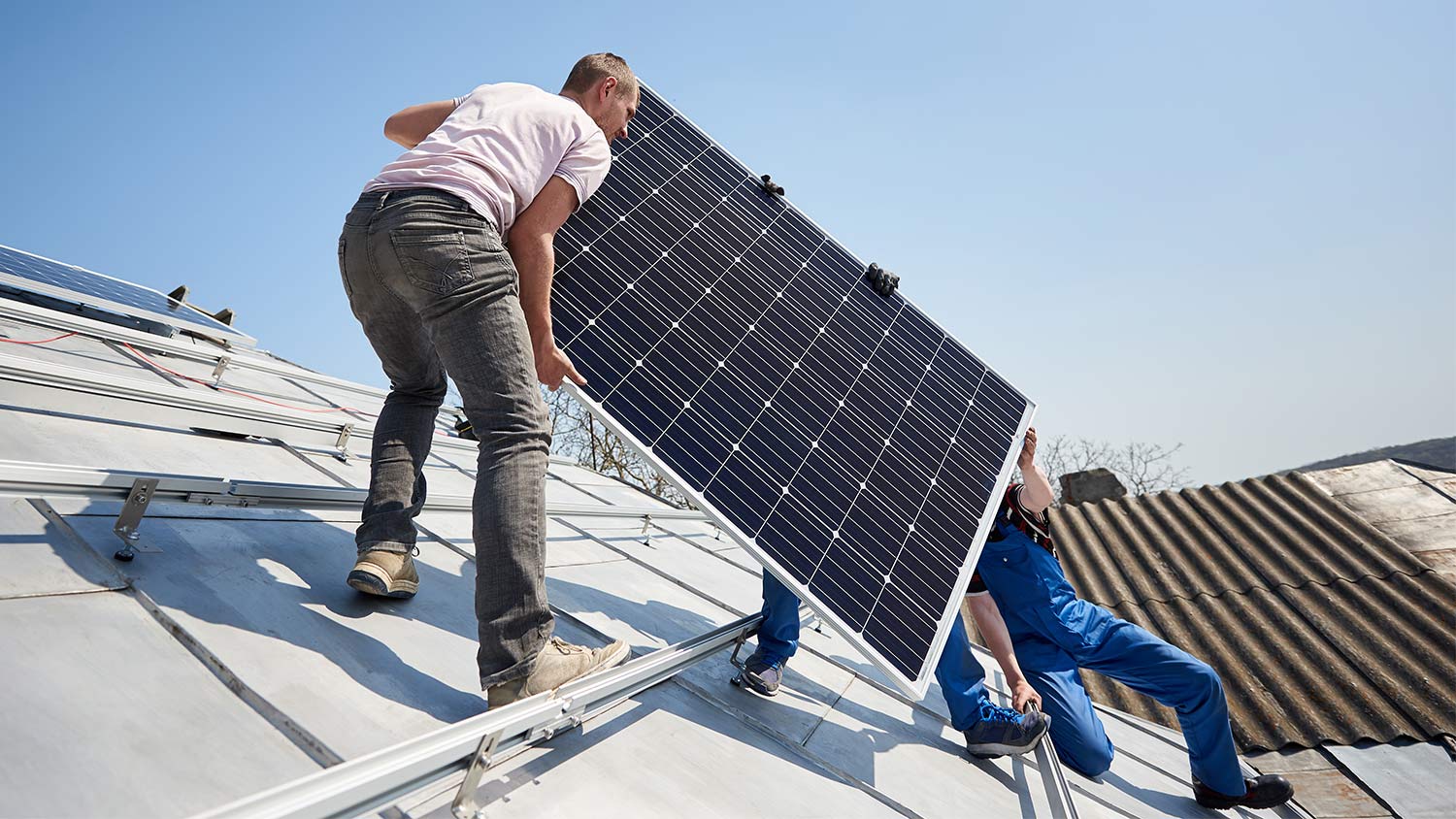
- Installation Labor: Certified electricians and solar installation crews handle structural mounting, roof penetrations, and high-voltage wiring.
- Engineering & System Design: Site assessments, CAD drawings, structural engineering stamps, and electrical single-line diagrams required by local building departments.
- Permitting and Interconnection Fees: Local government building permits, electrical permits, and municipal utility grid interconnection application fees range from $300 to $1,500 depending on jurisdiction.
- Customer Acquisition & Overhead: Operational expenses, supply chain logistics, warranties, site surveys, and sales commissions carried by the installation company.
Key Add-Ons That Expand Your Solar Budget
While a standard grid-tied solar array covers baseline daytime electricity generation, modern energy requirements and utility rate structures often warrant additional infrastructure upgrades.
Total Budget = Base System (Gross) + Battery Storage + Electrical Upgrades + Site Prep - Financial Incentives
1. Energy Storage (Solar Batteries)
Adding a residential battery backup system (such as a Tesla Powerwall, Enphase IQ Battery, or SolarEdge Bank) allows homeowners to store excess solar production for nighttime use or emergency backup during grid outages. Under modern utility rules like California's Net Billing Tariff (NBT/NEM 3.0), battery storage is critical to maximizing return on investment.
- Capacity: Typical home batteries provide 10 kWh to 13.5 kWh of storage capacity.
- Cost Impact: A single battery installation adds $10,000 to $15,000 in gross costs. Adding a second unit for full-home backup increases the budget by another $8,000 to $11,000.
- Tax Eligibility: Standalone and paired energy storage devices with a capacity of 3 kWh or greater qualify for the 30% federal tax credit under Internal Revenue Code Section 25D.
2. Main Electrical Panel Upgrades (MPU)
Older homes built prior to 1990 frequently have 100-amp or 125-amp main electrical service panels. Connecting a modern 6 kW to 10 kW solar array—especially when combined with an EV charger or heat pump—often requires upgrading the service panel to 200 amps to comply with the National Electrical Code (NEC).
- Cost Impact: $2,500 to $4,500, depending on utility service feed lines and underground conduit requirements.
3. Roof Repairs and Preparation
Solar panels have a design life of 25 to 30 years. Installing an array over an asphalt shingle roof with less than 10 to 15 years of remaining structural life creates costly future maintenance, as removing and reinstalling panels for a later roof replacement adds $2,500 to $5,000 in labor.
- Cost Impact: Full roof replacement prior to solar installation ranges from $7,500 to $16,000, depending on roof square footage and materials.
Incentives and Tax Credits: Reducing Out-of-Pocket Expense
Financial incentives significantly compress the real net cost of a solar installation. Understanding how these programs operate prevents miscalculating available capital.
Net Out-of-Pocket Cost = Gross Project Cost - Federal Tax Credit - Direct State/Utility Rebates
The Federal Residential Clean Energy Credit (Section 25D)
The primary driver of solar affordability in the U.S. is the federal tax credit established under the Inflation Reduction Act.
- Credit Amount: 30% of total qualified gross installation costs (including labor, hardware, storage, and panel upgrades required for installation).
- Application: Claimed when filing annual federal income taxes (IRS Form 5695). It is a non-refundable tax credit, meaning it reduces overall federal tax liability dollar-for-dollar, but will not pay out a refund exceeding total tax liability in a single year. Excess credit carries forward to subsequent tax years.
Details on eligibility criteria and documentation guidelines are maintained by the U.S. Department of Energy Clean Energy Tax Credits resources.
State and Utility-Level Rebates
- Solar Renewable Energy Certificates (SRECs): In states with Renewable Portfolio Standards (RPS) like New Jersey, Massachusetts, and Maryland, homeowners earn tradeable certificates for every megawatt-hour (MWh) produced, yielding ongoing annual revenue ($300–$1,500/year).
- State Tax Credits: States like New York and South Carolina offer state-level income tax credits (up to $5,000) that stack directly on top of the federal credit.
- Low-Income and Energy Equity Incentive Programs: Specific local municipal utilities offer direct cash rebates ranging from $500 to $3,000 for qualifying residential installations. Homeowners can search verified incentive rules by state via the Database of State Incentives for Renewables & Efficiency (DSIRE).
Comparing Solar Financing Options
How a residential solar project is funded changes both immediate capital requirements and total 20-year return on investment.
Total Capital Outlay (Cash) < Total Paid via Secured Loan < Total Paid via Unsecured Long-Term Loan
1. Upfront Cash Purchase
Purchasing the system outright yields the lowest lifetime cost and maximum long-term financial savings by eliminating interest expense and lender origination fees.
- Upfront Outlay: High ($17,000 – $30,000 gross).
- Financial Return: Highest Internal Rate of Return (IRR); payback periods typically range from 6 to 9 years.
- Incentive Ownership: The homeowner directly claims the 30% federal tax credit and all local SRECs or rebates.
2. Secured or Unsecured Solar Loans
Solar loans allow homeowners to finance 100% of the installation cost with zero down payment, preserving liquidity while shifting energy expenses from a utility bill to a fixed monthly loan payment.
- Unsecured Solar Loans: Specialty clean energy lenders offer 10- to 25-year terms. Be cautious of "dealer fees"—upfront finance points (ranging from 10% to 30% of the contract value) rolled into the loan balance to buy down headline interest rates.
- Home Equity Loans / HELOCs: Borrowing against home equity generally offers lower interest rates than unsecured loans without hidden dealer fees, and interest may be tax-deductible if the loan improves the dwelling.
- Incentive Ownership: The homeowner receives the 30% federal tax credit, which lenders usually expect to be applied as a lump-sum principal payment within month 12 to 18 to keep monthly payments flat.
3. Solar Leases and Power Purchase Agreements (PPAs)
Under a lease or PPA, a third-party developer owns and maintains the solar equipment installed on the roof. The homeowner pays a fixed monthly fee or buys the electricity generated at a set rate per kWh.
- Upfront Outlay: $0 upfront.
- Drawbacks: The third-party owner claims the 30% tax credit, not the homeowner. Leases can complicate future home sales, as buyers must assume the contract or require the seller to buy out the remaining agreement term.
Real-World Case Studies: Three Realistic Solar Budgets
To illustrate how these factors come together, consider three typical residential solar deployment scenarios.
Scenario A: Urban Baseline (Small Roof, Standard Grid) Scenario B: Suburban Family Home (Medium Roof, Battery Included) Scenario C: Large Estate (High Consumption, EV, Dual Storage)
Scenario A: Urban Starter Home (6 kW System, No Storage)
- Property: 1,500 sq. ft. single-story residence in Texas.
- Energy Needs: 8,000 kWh annually.
- Hardware: 14× 430W Monocrystalline Panels, String Inverter with DC Optimizers.
- Gross Contract Price: $17,400 ($2.90/watt)
- Electrical Upgrade: $0 (200A panel already present)
- Total Gross Cost: $17,400
- Federal Tax Credit (30%): -$5,220
- Net Investment: $12,180
Scenario B: Suburban Home with Battery Backup (8 kW System + 13.5 kWh Battery)
- Property: 2,200 sq. ft. home in California under Time-of-Use rates.
- Energy Needs: 11,000 kWh annually.
- Hardware: 19× 420W Premium Panels, Microinverters, 13.5 kWh Battery Storage.
- Gross Solar Array Cost: $24,800 ($3.10/watt)
- Battery Add-On Cost: $12,500
- Main Panel Upgrade (MPU): $2,800
- Total Gross Cost: $40,100
- Federal Tax Credit (30%): -$12,030
- Net Investment: $28,070
Scenario C: High-Demand Rural Estate (12 kW System + Dual Storage)
- Property: 4,000 sq. ft. home with two Electric Vehicles and heat pump HVAC in the Northeast.
- Energy Needs: 17,500 kWh annually.
- Hardware: 28× 430W High-Efficiency Panels, Microinverters, 27 kWh Dual Battery System.
- Gross Solar Array Cost: $36,000 ($3.00/watt)
- Dual Battery Storage: $23,000
- Roof Structural Reinforcement: $2,500
- Total Gross Cost: $61,500
- Federal Tax Credit (30%): -$18,450
- State Solar Tax Credit: -$5,000
- Net Investment: $38,050
Step-by-Step Guide to Calculating Your Solar Budget
Follow this logical workflow to estimate an accurate, site-specific budget before contacting contractors.
Step 1: Calculate Annual kWh Usage Step 2: Determine Needed System Capacity (kW) Step 3: Estimate Gross Solar Hardware + Installation Cost Step 4: Audit Electrical Panel & Roof Condition Step 5: Decide on Battery Storage Needs Step 6: Subtract Verified Federal, State, and Utility Credits
- Review 12 Months of Electric Bills: Calculate total annual kilowatt-hour (kWh) consumption from utility account statements.
- Estimate System Size: Divide total annual kWh by 1,300 (average regional production multiplier for sunny regions) or 1,100 (for cloudier northern regions) to determine required DC kilowatt capacity.
- Calculate Baseline Gross Installation Cost: Multiply required capacity by $3.00 per watt. (Example: $8 \text{ kW} \times 1,000 \text{ W/kW} \times $3.00 = $24,000$).
- Inspect Infrastructure: Check the main electrical panel rating (located on the door of the breaker box). If under 200 amps, add $3,000 for a main panel upgrade. Assess roof age; if over 15 years old, budget for reroofing before installation.
- Evaluate Battery Storage Requirements: If subject to severe power outages or unfavorable utility net-metering rates, budget an extra $11,000 to $14,000 per 10–13 kWh battery module.
- Apply Incentives: Calculate 30% of total combined gross costs for the federal tax credit, and subtract any direct cash rebates offered by state energy offices or local utilities.
Frequently Asked Questions
What is the true average turnkey cost of solar panels for a typical house?
For a standard 2,000-square-foot home consuming around 10,000 kWh annually, an 8 kW system costs approximately $23,000 to $25,000 gross. After applying the 30% federal clean energy tax credit, the average net cost drops to $16,100 to $17,500.
Are battery backups mandatory when budgeting for solar panel installation?
No, battery backups are optional for standard grid-tied systems. A standard grid-tied solar system without a battery costs roughly $10,000 to $15,000 less. However, without a battery, grid-tied solar systems automatically shut down during power outages for worker safety, and homes under time-of-use rates or reduced export tariffs lose financial efficiency without storage.
How do dealer fees on solar loans affect the total installation budget?
Solar loan dealer fees are upfront points charged by lenders to offer below-market interest rates (such as 3.99% or 4.99%). These fees often add 15% to 30% directly onto the principal cash price of the system, turning a $20,000 cash project into a $25,000+ financed balance. Always ask installers for both the cash price and the financed price to compare true costs.
Can maintenance, cleaning, and insurance costs derail a solar budget?
Residential solar systems require minimal maintenance due to having no moving parts. Occasional panel cleaning costs between $150 and $300 per service if rainfall is insufficient. Homeowner insurance premiums may rise modestly ($50 to $150 per year) to cover the elevated dwelling replacement value, though many standard policies cover roof-mounted solar without dedicated premium hikes.
Is a roof replacement covered by the 30% federal solar tax credit?
No. According to IRS guidelines, structural roof repairs and full roof replacements cannot be claimed under the Section 25D federal clean energy credit, even if done simultaneously with solar installation. Only specialized solar roof tiles or integrated solar shingles that function directly as both roofing materials and electricity generators qualify.
Strategic Action Plan for Homeowners
When establishing a residential solar installation budget, base your financial calculations on gross price cash quotes rather than low monthly payments that hide financing dealer fees.
Begin by requesting minimum three itemized quotes from reputable local and regional solar contractors. Ensure each proposal breaks down component brands, inverter architecture, panel degradation rates, labor warranties, and electrical upgrade requirements. Finally, verify tax liability with a certified public accountant (CPA) to confirm ability to utilize the full 30% Section 25D tax credit within your expected timeframe.
Image Gallery