Boneless Pork Roast Cooking Time: Oven Temperatures, Chart, and Internal Temp Guide
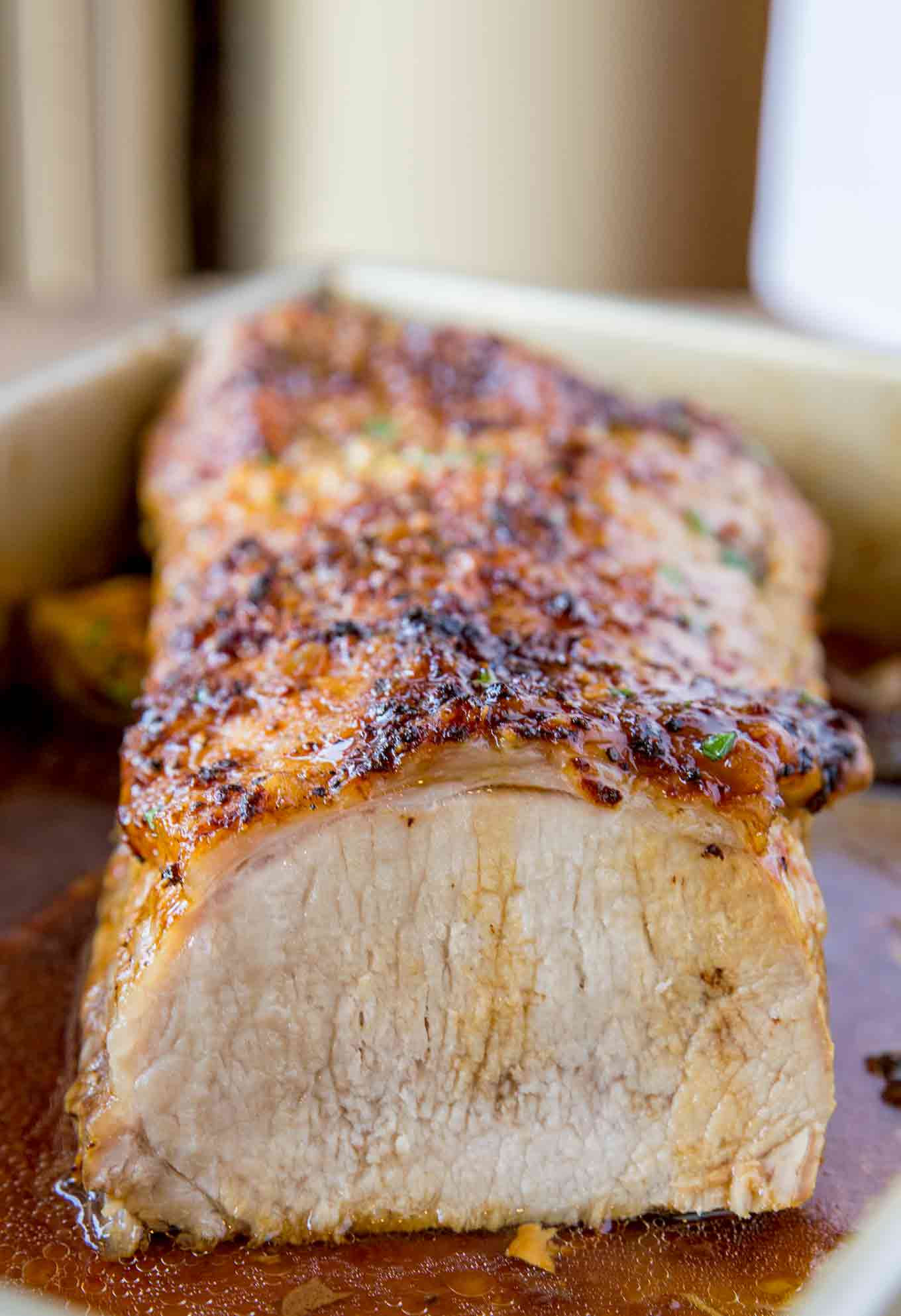
To cook a boneless pork loin roast in an oven preheated to 350°F (177°C), calculate 20 to 25 minutes per pound. The roast is safely done when a digital meat thermometer inserted into the thickest part reads 145°F (63°C), followed by a...
To cook a boneless pork loin roast in an oven preheated to 350°F (177°C), calculate 20 to 25 minutes per pound. The roast is safely done when a digital meat thermometer inserted into the thickest part reads 145°F (63°C), followed by a mandatory 3-minute rest period. Tougher cuts like boneless pork shoulder require lower heat (300°F–325°F) and longer cooking times (40 to 55 minutes per pound) to reach 195°F–205°F for pull-apart tenderness.
Contents
Understanding Pork Cuts: Loin vs. Shoulder
Calculating the accurate boneless pork roast cooking time requires identifying the specific cut of meat. The term "pork roast" generally refers to two distinct cuts originating from different muscle groups on the animal. Because these cuts feature drastically different fat content, collagen levels, and muscle usage, treating them identically in the oven results in either dry, tough meat or undercooked fat.
- PORK LOIN: Lean, Tender, Quick-Cooking (Roast at 350°F / Target: 145°F)
- PORK SHOULDER / BUTT: Fatty, Tough, Slow-Braising (Roast at 300°F–325°F / Target: 195°F–205°F)
1. Boneless Pork Loin Roast
The pork loin is a large, lean muscle running along the spine between the shoulder and the hip. It is often confused with pork tenderloin, but it is much wider and can be sold as a tied, boneless roast weighing anywhere from 2 to 5 pounds.
- Texture and Fat: Very lean, with a thin layer of fat cap on top.
- Cooking Goal: Preserve moisture by cooking quickly to medium doneness. Overcooking beyond 150°F (66°C) squeezes out cell liquid, leaving the meat dry and chalky.
2. Boneless Pork Shoulder (Boston Butt or Pork Butt)
Cut from the upper portion of the pig's front leg, the boneless pork shoulder contains significant intramuscular fat and dense connective tissue (collagen).
- Texture and Fat: High fat content, heavy marbling, and abundant collagen.
- Cooking Goal: Low and slow roasting. Connective tissue begins melting into gelatin around 160°F (71°C), but full breakdown requires sustained heat until internal temperatures reach 195°F to 205°F (90°C to 96°C).
3. Boneless Tenderloin
While not a traditional "roast," small boneless tenderloins (typically 1 to 1.5 pounds) cook extremely fast. They require high heat (400°F / 204°C) for 15 to 20 minutes total and should not be confused with a center-cut boneless loin roast.
Boneless Pork Roast Cooking Time & Temperature Chart
The following reference chart details roasting guidelines for conventional ovens based on standard weight categories. Times are estimates; always rely on an accurate instant-read food thermometer to determine final doneness.
| Cut Type | Weight | Oven Temp | Approx. Time Per Pound | Target Internal Temp | Rest Time |
|---|---|---|---|---|---|
| Boneless Pork Loin Roast | 2 – 3 lbs | 350°F (177°C) | 22 – 25 mins/lb | 145°F (63°C) | 3 – 5 mins |
| Boneless Pork Loin Roast | 4 – 5 lbs | 350°F (177°C) | 20 – 23 mins/lb | 145°F (63°C) | 5 – 10 mins |
| Boneless Pork Loin (Sear & Roast) | 3 – 4 lbs | 425°F (218°C) sear, then 325°F (163°C) | 18 – 22 mins/lb total | 145°F (63°C) | 5 – 10 mins |
| Boneless Pork Shoulder (Sliced) | 3 – 5 lbs | 325°F (163°C) | 30 – 35 mins/lb | 170°F (77°C) | 10 mins |
| Boneless Pork Shoulder (Shredded) | 3 – 5 lbs | 300°F (149°C) | 45 – 55 mins/lb | 195°F – 205°F (90°C – 96°C) | 15 – 20 mins |
| Boneless Pork Shoulder (Shredded) | 6 – 8 lbs | 300°F (149°C) | 40 – 50 mins/lb | 195°F – 205°F (90°C – 96°C) | 20 – 30 mins |
| Boneless Tenderloin | 1 – 1.5 lbs | 400°F (204°C) | 15 – 20 mins total | 145°F (63°C) | 3 – 5 mins |
How to Bake a Lean Boneless Pork Loin Roast
Cooking a boneless pork loin requires careful heat management to prevent the lean muscle fibers from drying out. Follow this step-by-step process for a juicy, perfectly seasoned roast.
- Room Temp Prep
- Season & Sear
- Roast @ 350°F
- Pull @ 140°F
- Rest to 145°F
Step 1: Temper and Season the Meat
Remove the pork loin from the refrigerator 30 to 45 minutes before cooking. Bringing the meat closer to room temperature prevents the exterior from overcooking while waiting for the cold center to warm up. Pat the surface thoroughly dry with paper towels; removing surface moisture facilitates proper browning (the Maillard reaction).
Apply a high-quality oil (such as avocado or olive oil) and season generously with salt, black pepper, garlic powder, and fresh herbs like rosemary or thyme.
Step 2: Sear for Flavour (Optional but Recommended)
Preheat a heavy skillet or Dutch oven over medium-high heat. Add a tablespoon of high-smoke-point oil and sear the roast for 2 to 3 minutes per side until a golden-brown crust forms. Searing locks in deep savoury notes, though it does not physically "seal in juices."
Step 3: Roast Uncovered at 350°F (177°C)
Place the roast fat-side up on a wire rack inside a shallow baking pan. Positioning the fat cap on top allows the rendering fat to baste the meat continuously throughout the cook.
- Do not cover the loin with foil or add liquid to the pan; baking uncovered yields a crisp exterior and prevents steaming.
- Bake at 350°F (177°C) for approximately 20 to 25 minutes per pound.
Step 4: Account for Carryover Cooking
Remove the pork from the oven when the meat thermometer registers 140°F (60°C). During the resting phase, trapped heat continues rising inside the roast—a phenomenon known as carryover cooking. The internal temperature will rise 5°F during rest, effortlessly hitting the safety target of 145°F (63°C).
Step 5: Rest Before Carving
Tent the roast loosely with aluminum foil and let it rest on a cutting board for 5 to 10 minutes. Carving immediately causes muscle fibers to contract and release held juices onto the board, draining moisture out of every slice.
How to Slow-Roast a Boneless Pork Shoulder (Boston Butt)
Unlike the loin, a boneless pork shoulder contains heavy intermuscular fat tissue and collagen strands. Cooking it quickly to 145°F results in a tough, rubbery piece of meat. It requires low heat, extended time, and high internal temperatures to melt collagen into gelatin.
TEMPERATURE MATRIX FOR PORK SHOULDER:
| Internal Temperature | Description |
|---|---|
| 145°F (63°C) | Technically safe, but tough and chewy |
| 160°F (71°C) | Collagen begins breaking down |
| 170°F (77°C) | Slicable shoulder roast |
| 195°F–205°F | Collagen fully dissolved; pull-apart tender |
Low-and-Slow Oven Method
- Preheat Oven: Set the oven to 300°F (149°C) or 325°F (163°C).
- Prepare the Cut: Boneless shoulders are often unrolled or butchered unevenly. Tie the roast tightly with butcher's twine at 1.5-inch intervals to form a uniform cylinder, ensuring even heat distribution.
- Roast Covered or Uncovered:
- For crisp pork crackling or bark, roast uncovered in a roasting pan fat-side up for 4 to 5 hours.
- For maximum tenderness, roast uncovered for 2 hours, then wrap tightly in heavy-duty aluminum foil or butcher paper with a splash of apple cider vinegar or broth, returning it to the oven for an additional 2 to 3 hours.
- Target Temperature: Insert a probe into the center of the meat. When it slides in with zero resistance (like warm butter) and registers 195°F to 205°F (90°C to 96°C), it is ready.
- Resting Phase: Rest wrapped pork shoulder for 20 to 30 minutes before shredding with tongs or meat claws.
Alternative Cooking Methods: Air Fryer, Slow Cooker, and Pressure Cooker
When cooking without a conventional oven, alternative kitchen appliances alter total cooking times significantly due to convection dynamics or pressure environments.
1. Air Fryer (Convection Roasting)
Air fryers circulate concentrated dry heat, cutting cooking time by roughly 20% compared to standard ovens.
- Best Cut: Small boneless pork loin (2 to 3 lbs).
- Temperature: 360°F (182°C).
- Cooking Time: 12 to 15 minutes per pound.
- Process: Flip the roast halfway through the cooking cycle. Check internal temperature starting at the 35-minute mark for a 3-lb roast.
2. Slow Cooker (Crock-Pot)
Slow cookers are ideal for boneless pork shoulder but unsuitable for lean pork loins, which become dry and stringy over long moist-heat cycles.
- Best Cut: Boneless pork shoulder (3 to 6 lbs).
- Settings & Times:
- LOW: 8 to 10 hours (Recommended for maximum tenderness).
- HIGH: 5 to 6 hours.
- Tip: Add 1/2 cup of liquid (broth, cider, or sauce) to prevent scorching during the initial warm-up phase.
3. Pressure Cooker (Instant Pot)
Electric pressure cookers rapidly break down tough muscle fibers using high-pressure steam (11.5–12 PSI).
- Best Cut: Boneless pork shoulder cut into 2-inch chunks or left as a bound 3–4 lb roast.
- Cooking Time: 15 minutes per pound on High Pressure for cubed meat, or 20 minutes per pound for whole cuts.
- Release Method: Always perform a Natural Pressure Release (NPR) for 15 to 20 minutes after the cycle finishes. Quick-releasing pressure forces liquid out of the protein cells, making the pork tough.
Critical Factors That Influence Cooking Time
Recipe charts provide baseline estimates, but several physical variables alter real-world oven times.
| Factors Expediting Cook Time | Factors Delaying Cook Time |
|---|---|
| Bringing meat to room temp | Throwing straight-from-fridge roast into oven |
| Convection fan usage | Deep, high-walled baking pans |
| Flat, shallow roasting pans | Uncalibrated, cool ovens |
| Tying roast tightly |
- Initial Meat Temperature: Placing a cold roast straight out of a 36°F (2°C) refrigerator into the oven adds 10 to 15 minutes of overall cooking time compared to a tempered roast sitting at room temperature for 45 minutes.
- Oven Calibration and Convection Settings: Many domestic ovens run 10°F to 25°F hotter or cooler than displayed. Using a convection setting (forced air) cooks pork roughly 25% faster than standard thermal roasting; reduce the oven temperature setting by 25°F when using convection.
- Shape and Thickness: A long, thin loin roast cooks significantly faster than a thick, spherical roast of the exact same weight. Thick roasts require more time for conductive heat energy to travel to the core.
- Roasting Pan Choice: High-walled glass or ceramic baking dishes trap moisture and shield the sides of the roast from air currents, slowing down heat transfer. Use a low-rimmed metal sheet pan fitted with a wire rack for optimal airflow.
Safe Internal Temperatures and Measurement Techniques
The United States Department of Agriculture (USDA) updated food safety guidelines for fresh pork, establishing safe internal temperature thresholds lower than historic recommendations.
USDA SAFE DONENESS SCALE FOR FRESH PORK LOIN:
| Temperature Range | Doneness & Description |
|---|---|
| 145°F - 150°F (63°C - 66°C) | Medium-Rare to Medium (Juiciest, slight pink stem) |
| 150°F - 155°F (66°C - 68°C) | Medium-Well (Firm, low moisture) |
| 160°F+ (71°C+) | Well-Done (Dry, chalky texture) |
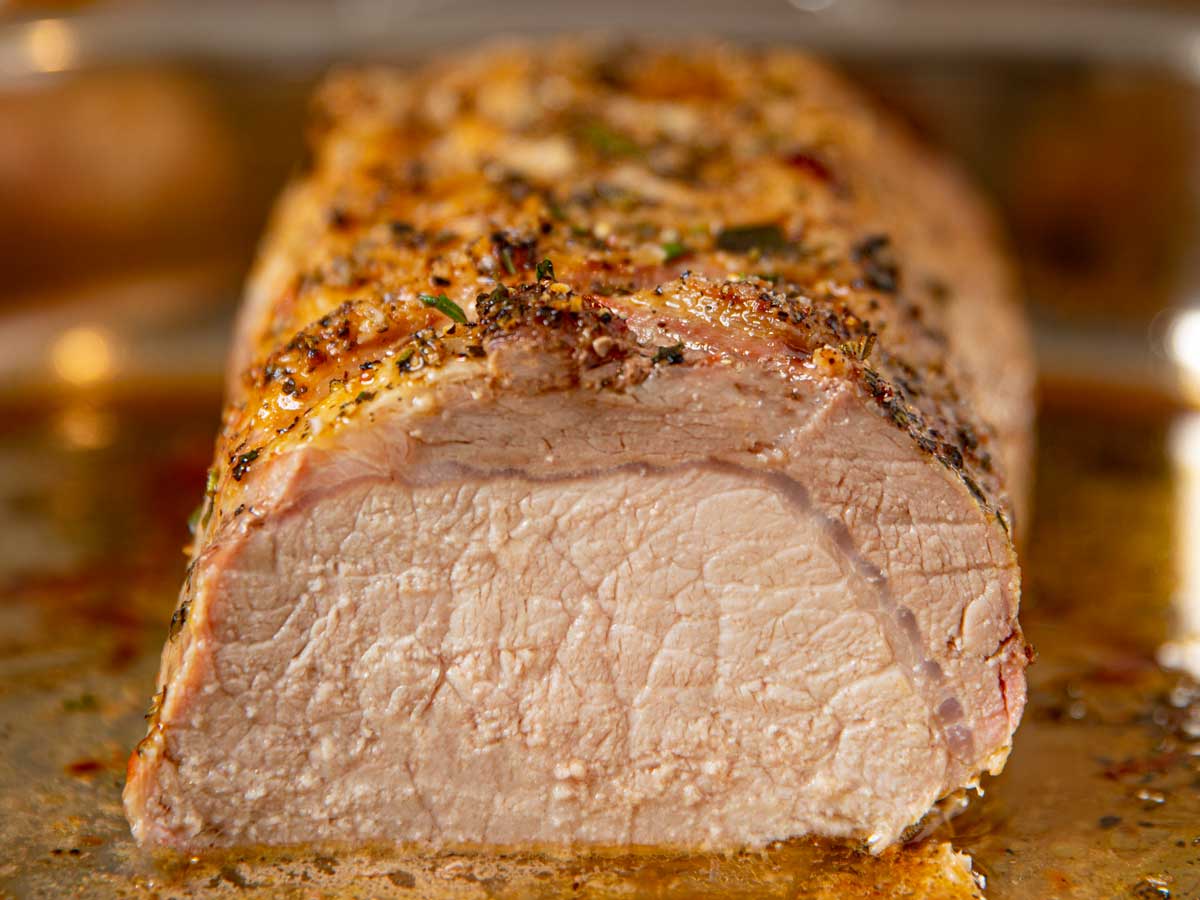
- Fresh Pork (Loin, Chops, Tenderloin): Cook to a minimum internal temperature of 145°F (63°C) followed by a 3-minute rest time. At 145°F, pork exhibits a pale pink center that is safe, tender, and juicy.
- Ground Pork: Must reach 160°F (71°C) (does not require a rest period).
- Slow-Cooked Pork Shoulder: Safe at 145°F, but unpalatably tough. Target 195°F to 205°F (90°C to 96°C) for shredding.
How to Use a Digital Thermometer Correctly
- Insert an instant-read probe into the thickest part of the roast.
- Avoid pushing the tip through to the bottom of the pan or touching heavy fat pockets, which skew temperature readings.
- For rolled and tied roasts, aim directly for the geographic center of the roll.
- Take multiple readings in two or three separate spots on larger cuts to verify uniform heating.
Common Mistakes to Avoid When Cooking Boneless Pork Roast
Avoid these execution errors to ensure meat texture, moisture retention, and crust development remain optimal:
- Confusing Pork Loin with Pork Tenderloin: Buying a 4-pound pork loin and treating it like a tenderloin (or vice-versa) leads to raw centers or burnt, ruined meat. Loin cuts are thick and wide; tenderloins are thin, narrow strips weighing around 1 pound.
- Cooking Pork Loin to 165°F+ Out of Precaution: Older culinary manuals suggested cooking pork until completely white throughout (165°F–170°F). Modern agricultural standards and USDA guidelines confirm 145°F is safe. Cooking past 150°F destroys the cut's moisture content.
- Skipping the Wire Rack: Sitting a lean loin directly on the flat bottom of a baking dish causes the bottom third to simmer in rendered liquids, yielding a soggy, unevenly cooked roast.
- Carving Without Resting: Cutting into pork immediately upon removal from the oven releases the pressurized moisture inside muscle fibers. A 5 to 10-minute rest allows juice distribution back into the protein matrix.
Frequently Asked Questions
Do you cook a boneless pork roast covered or uncovered?
Cook lean boneless pork loin uncovered to allow proper heat circulation and create a savory exterior crust. If you are slow-roasting a boneless pork shoulder to make pulled pork, start uncovered to build surface bark, then wrap it tightly in foil or butcher paper halfway through to retain moisture and accelerate collagen breakdown.
How long does a 3 lb boneless pork roast take to cook at 350 degrees?
A 3 lb boneless pork loin roast takes approximately 60 to 75 minutes at 350°F (177°C) to reach the target internal temperature of 140°F–145°F. Always remove the roast from the oven when the internal probe hits 140°F, allowing carryover cooking to bring it to 145°F while resting.
Why is my boneless pork roast tough?
Pork roast toughness stems from one of two opposite issues depending on the cut. If it is pork loin, toughness is caused by overcooking past 150°F, which drives out cell water. If it is pork shoulder, toughness is caused by undercooking; the roast was likely pulled out around 145°F–160°F before its collagen melted into gelatin at 195°F–205°F.
How much water do you put in the bottom of the pan for a pork roast?
Do not add water to the bottom of the pan when dry-roasting pork loin in an oven. Adding liquid creates steam, which prevents browning and causes the meat to develop a boiled texture. Liquid is only necessary when braising pork shoulder in a covered Dutch oven or slow cooker.
Can a boneless pork roast still be slightly pink inside?
Yes. According to official food safety standards from the USDA, fresh pork cooked to 145°F (63°C) and rested for 3 minutes is completely safe to eat, even if it displays a pale pink hue in the center.
Summary and Practical Next Steps
To execute a boneless pork roast successfully:
- Identify the cut: Treat lean loin to medium-heat roasting (350°F) until it reaches 145°F internal temp; treat fatty shoulder to low-and-slow heat (300°F–325°F) until it hits 195°F–205°F.
- Calculate baseline timing: Allow 20–25 minutes per pound for loins at 350°F, or 40–55 minutes per pound for shoulders at 300°F.
- Use a digital thermometer: Never rely solely on timer clocks or visual color checks. Pull pork loins at 140°F and rest them for 5 minutes so carryover heat achieves the ideal 145°F finish.
Image Gallery