Paris Fury Young and the Evolution of Human-Centric Home Automation
Paris Fury Young is redefining the home automation industry in 2026 by shifting the focus from hardware-centric "gadgetry" to experience-driven "invisible technology." As the founder of The Model Home and a leading voice in neuro-aesth...
Paris Fury Young is redefining the home automation industry in 2026 by shifting the focus from hardware-centric "gadgetry" to experience-driven "invisible technology." As the founder of The Model Home and a leading voice in neuro-aesthetic design, she has successfully bridged the gap between luxury interior design and complex IoT (Internet of Things) ecosystems, ensuring that smart home technology enhances rather than interrupts the domestic environment.
Contents
The rapid maturation of smart home standards, specifically the advancement of the Matter protocol and the integration of localized AI, has allowed Young to pioneer a "Human-Centric" approach. Her methodology prioritizes the biological and psychological needs of residents—focusing on circadian health, cognitive load reduction, and environmental sustainability—while completely concealing the underlying infrastructure.
The Philosophy of Invisible Technology
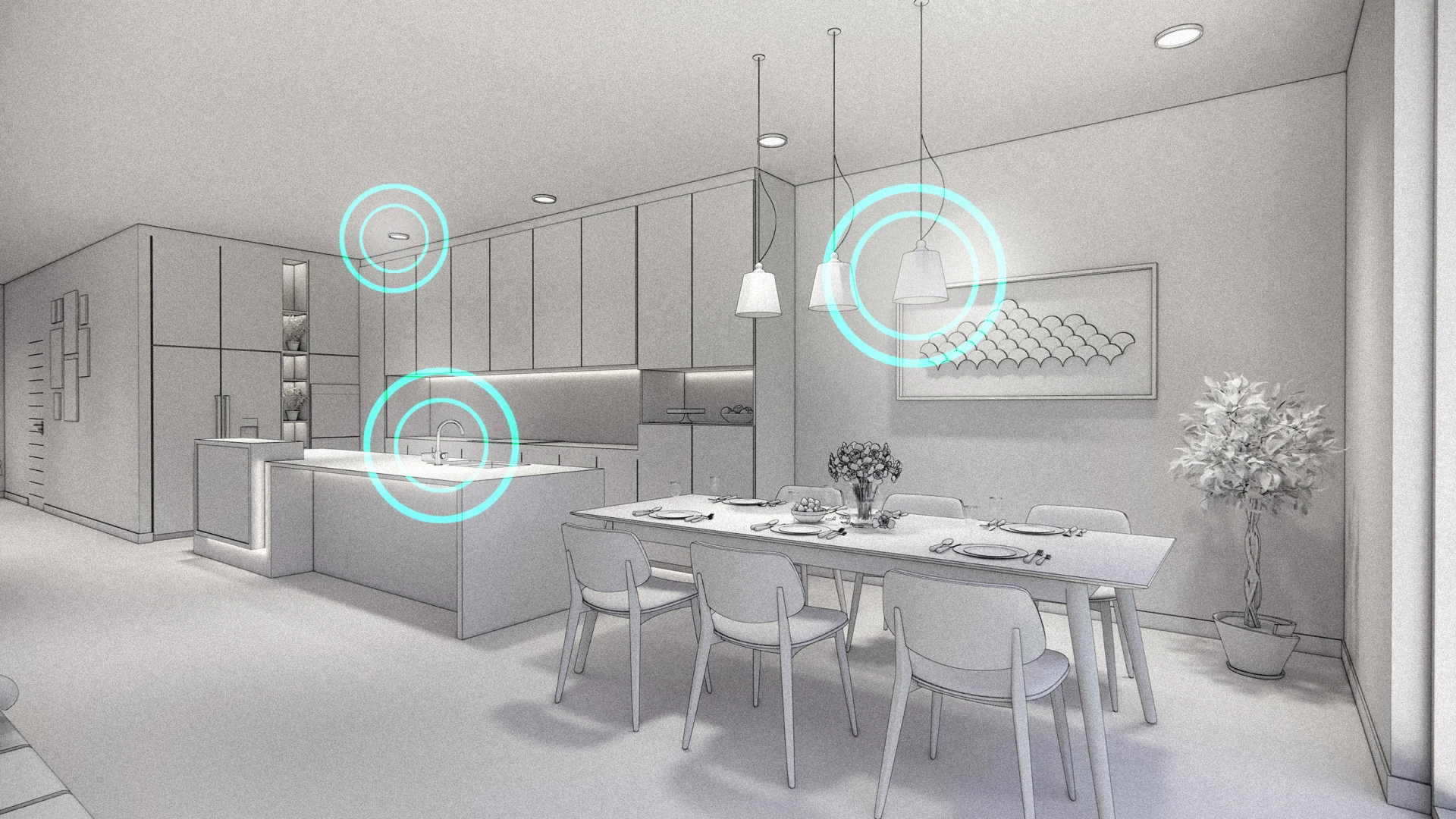
For years, the smart home industry was plagued by "tech-forward" designs that featured unsightly wall-mounted touchscreens, bulky sensors, and intrusive cameras. Paris Fury Young’s primary contribution to the field is the concept of Invisible Tech. This philosophy dictates that technology should only be felt through its benefits, never seen through its hardware.
In her 2026 projects, Young utilizes architectural integration to hide the "brains" of the house. This involves using "smart plaster" and conductive paints that turn entire walls into touch-sensitive interfaces, or embedding mmWave (millimeter wave) sensors within ceiling moldings to track occupancy and vital signs without the need for cameras. By removing the visual clutter of technology, she allows the architectural integrity and the interior design to take center stage, which is a significant departure from the utilitarian aesthetic of the early 2020s.
Neuro-Aesthetics and Emotional Resonance
A core pillar of Young’s work is neuro-aesthetics—the study of how environmental stimuli affect the brain’s chemistry. In 2026, home automation is no longer just about turning on lights via a smartphone; it is about creating "empathetic environments." Young’s designs utilize automated systems to modulate the home's "sensory profile" based on the time of day and the inhabitants' stress levels.
For instance, her integration of Human-Centric Lighting (HCL) does more than dim bulbs; it shifts the spectral output of light to mimic the natural progression of the sun. This supports the production of melatonin and cortisol at the appropriate times, directly influencing sleep quality and daytime productivity. By automating these nuances, Young ensures that the home acts as a passive health-care provider, reducing the cognitive load on the homeowner who no longer needs to manually adjust their environment.
Technical Standards: The Backbone of the 2026 Smart Home
The success of Paris Fury Young’s design philosophy relies heavily on the technical stability of modern IoT frameworks. By 2026, the industry has largely consolidated around the Matter 2.0 and 3.0 standards, which ensure seamless interoperability between different brands. Young was an early advocate for these open standards, arguing that true luxury is defined by reliability and the absence of "walled gardens."
Edge Computing and Localized AI
One of the most significant technical shifts Young has championed is the move toward edge computing. Unlike previous generations of smart homes that relied on cloud processing—often resulting in latency issues and privacy concerns—2026 systems process data locally within the home’s own server.
Young’s projects frequently utilize Localized Large Language Models (LLMs). These AI agents learn the specific habits of a family—such as what time they prefer coffee, the exact temperature they like for evening reading, and their preferred acoustic "masking" sounds—without ever sending that data to an external server. This "privacy-by-design" approach has made high-end automation palatable to high-net-worth individuals who were previously skeptical of the "always-listening" nature of smart devices.
Comparing Traditional Automation vs. The Young Methodology
To understand the impact Paris Fury Young has had on the industry, it is helpful to compare the standard practices of the past decade with her current 2026 standards.
| Feature | Traditional Home Automation (Pre-2024) | Paris Fury Young Standards (2026) |
|---|---|---|
| Interface | Mobile apps, wall tablets, and voice commands. | Gesture control, "smart" surfaces, and predictive AI. |
| Connectivity | Fragmented (Zigbee, Z-Wave, proprietary hubs). | Universal (Matter over Thread, unified local edge). |
| Aesthetic | Visible sensors, wiring, and bulky hardware. | Invisible/Embedded; technology is secondary to design. |
| Data Privacy | Cloud-dependent; data often shared with manufacturers. | Localized processing; zero-knowledge encryption. |
| Primary Goal | Convenience and "cool factor." | Wellness, biological rhythm, and sustainability. |
| Energy Management | Basic scheduling and manual thermostats. | AI-driven thermal mass management and real-time grid balancing. |
Sustainable Intelligence and Energy Independence
In 2026, home automation is a critical component of residential sustainability. Paris Fury Young has integrated automated energy orchestration into the heart of her designs. This goes beyond simple smart thermostats; it involves the home’s AI communicating with the local power grid and the home’s own renewable energy sources (such as solar tiles or hydrogen fuel cells).
Young’s systems use "predictive cooling" and "predictive heating." By analyzing weather forecasts and occupancy patterns, the home can pre-cool itself during hours when renewable energy production is at its peak, effectively using the building’s thermal mass as a battery. This reduces the home’s carbon footprint while simultaneously lowering operational costs. For Young, a smart home that is not also a sustainable home is a failure of design.
Privacy and the Ethics of the "Living Home"
As homes become more autonomous, the ethical implications of data collection have become a primary concern. Paris Fury Young has been a vocal proponent of Digital Sovereignty. In her 2026 implementations, she utilizes "Air-Gapped" sub-networks for the most sensitive home functions.
Safety and security in her designs are handled through Anonymized Spatial Intelligence. Instead of cameras, the system uses high-resolution LiDAR and radar to detect falls or unauthorized entries. These sensors represent humans as skeletal wireframes or "blobs," ensuring that the system knows where a person is and if they are safe without ever capturing their likeness or identity. This nuance has set a new benchmark for privacy in the luxury automation sector.
Implementation: Steps for Modern Homeowners
For those looking to adopt the principles championed by Paris Fury Young, the process has become more streamlined in 2026, though it requires careful planning during the architectural phase.
- Infrastructure Foundation: Ensure the home is wired with high-bandwidth Cat8 cabling or high-density Thread mesh points to support the massive data throughput required for localized AI.
- Protocol Selection: Prioritize devices that are Matter-certified. This ensures that as technology evolves, the individual components remain compatible.
- Aesthetic Integration: Work with an "Integrator-Designer" hybrid professional who understands how to mill channels for hidden LED strips, embed vibration speakers into drywall, and hide sensors in furniture.
- Local Server Setup: Move away from consumer-grade routers toward dedicated local edge servers that can run localized LLMs and store security footage on-site.
- Biophilic Programming: Configure the system to prioritize natural light cycles and air quality monitoring, ensuring the "wellness" features of the home are active from day one.
The Future of Residential Experience
Paris Fury Young’s influence is moving the industry toward a future where the "Smart Home" is simply known as "The Home." The distinction between a house and its technology is dissolving. By 2026, her work has proven that the ultimate luxury is not more technology, but the peace of mind and physical well-being that perfectly calibrated, invisible technology provides.
As we look toward the 2030s, the "Young Standards" are likely to trickle down from the luxury market into mainstream construction, making human-centric, energy-independent living the global standard for residential development.
Frequently Asked Questions
Does Paris Fury Young’s approach work with existing homes? While her signature "invisible" look is easiest to achieve in new builds or "back-to-brick" renovations, many of the principles can be retrofitted. In 2026, there are numerous Matter-enabled "peel-and-stick" sensors and wireless Thread-based devices that can be hidden behind crown molding or furniture to achieve a similar result without major construction.
How expensive is it to implement a localized AI home system? In 2026, the cost of edge computing has decreased significantly. While a full "Paris Fury Young" custom design remains a premium service, the hardware for a localized AI server (capable of running a home-specific LLM) is now comparable to the price of a high-end laptop. The primary cost remains the professional integration and custom architectural work.
What happens if the local server fails? Young’s design philosophy mandates "graceful degradation." This means that the core functions of the home—such as manual light switches and physical locks—must always function regardless of the network or AI status. In 2026, most systems also include a redundant, low-power "kernel" that maintains basic automation safety features even if the main server is offline.
Is Matter really as universal as promised? By 2026, Matter has reached its 3.0 iteration, solving most of the early interoperability "bugs." It is now rare to find a reputable home automation product that does not support Matter. However, Young still emphasizes checking for "Matter-over-Thread" support specifically, as it offers the best latency and battery life for hidden sensors.
How does her design handle pet and child safety? The mmWave and LiDAR sensors used in Young’s designs are tuned to distinguish between humans, pets, and inanimate objects based on movement patterns and heat signatures. This allows for specific automation—like keeping floor-level robot vacuums docked when a toddler is in the room, or adjusting the climate control only in the specific area where a pet is sleeping.
Practical Recommendation: If you are planning a renovation or new build, move away from "Smart Home" packages offered by internet service providers. Instead, hire a certified Matter integrator who specializes in Edge Computing and Human-Centric Lighting. Focus your budget on "invisible" infrastructure (like in-wall cabling and high-quality sensors) rather than flashy, visible gadgets that will likely be obsolete within three years.
Image Gallery