What Happened to Justin Tucker? Understanding the Slump, Mechanics, and Current Status of the NFL's Top Kicker
Justin Tucker experienced an uncharacteristic performance slump during the 2024 NFL season, marked by a noticeable drop in field goal accuracy, particularly from 50 yards and beyond. Contrary to online speculation, Tucker was neither c...
Justin Tucker experienced an uncharacteristic performance slump during the 2024 NFL season, marked by a noticeable drop in field goal accuracy, particularly from 50 yards and beyond. Contrary to online speculation, Tucker was neither cut by the Baltimore Ravens nor sidelined by a career-ending injury. Instead, his struggles stemmed from a combination of subtle mechanical shifts in his kicking stroke, operational timing changes within the Ravens' field-goal unit, and natural physical adjustments associated with kicking in his mid-30s.
Contents
The Rise of an NFL Legend: Justin Tucker’s Historical Standard
To understand why a temporary drop in field goal percentage created widespread shock across the sports world, one must first recognize the unprecedented standard Justin Tucker established throughout his career.
Undrafted out of the University of Texas in 2012, Tucker earned the Baltimore Ravens' starting kicking job during training camp and immediately set a benchmark for historical consistency. Over his first decade in the league, Tucker achieved an all-time NFL record field goal percentage, routinely operating above a 90% success rate.
His signature moment came in September 2021 against the Detroit Lions, when he set the NFL record for the longest field goal in league history—a 66-yard game-winner that bounced off the crossbar and over as time expired.
Across five First-team All-Pro selections, twelve seasons of elite reliability, and a pivotal role in Baltimore's Super Bowl XLVII victory, Tucker built a reputation as the most dependable clutch performer in professional football. When a player with that pedigree misses multiple kicks over a short period, fans and analysts immediately search for underlying explanations.
The Statistical Shift: Breakdown of Tucker's Recent Struggles
The primary catalyst for queries regarding what happened to Justin Tucker was his performance curve during the 2023 and 2024 seasons. For years, Tucker was essentially automatic from almost any location on the field. However, statistical indicators began to diverge from his historical averages.
| Metric | Historical Average | 2024 Season Pace |
|---|---|---|
| Overall Field Goal % | ~90.0% - 91.3% | ~73.0% - 78.5% |
| 50+ Yard Accuracy | ~70.0% - 74.0% | Below 45.0% |
| Extra Point Accuracy | ~98.5% - 99.0% | ~97.0% |
| Touchback Percentage | High Range (>75%) | Kickoff Rule Adjusted |
The most pronounced drop occurred on attempts from 50 yards or longer. Historically, Tucker was one of the few kickers in NFL history who possessed both extreme distance and pinpoint control from long range. During the 2024 campaign, however, Tucker missed more attempts beyond 50 yards in a single stretch than he typically missed across multiple full seasons.
Additionally, a few pulled kicks from mid-range distances raised eyebrows, leading to active discussions on sports broadcasts and analytical programs regarding whether his technique, health, or supporting cast had compromised his baseline consistency.
Technical and Physical Factors Behind the Decline
Specialists in kicking mechanics and NFL coaching staffs evaluate field goals through a multi-variable lens. A field goal is rarely the sole responsibility of the kicker; it represents a precise operation involving three distinct athletes working within a frame of roughly 1.3 seconds. Analysts point to several interconnected factors explaining Tucker's performance variance.
1. Plant Foot Placement and Hip Rotation Mechanics
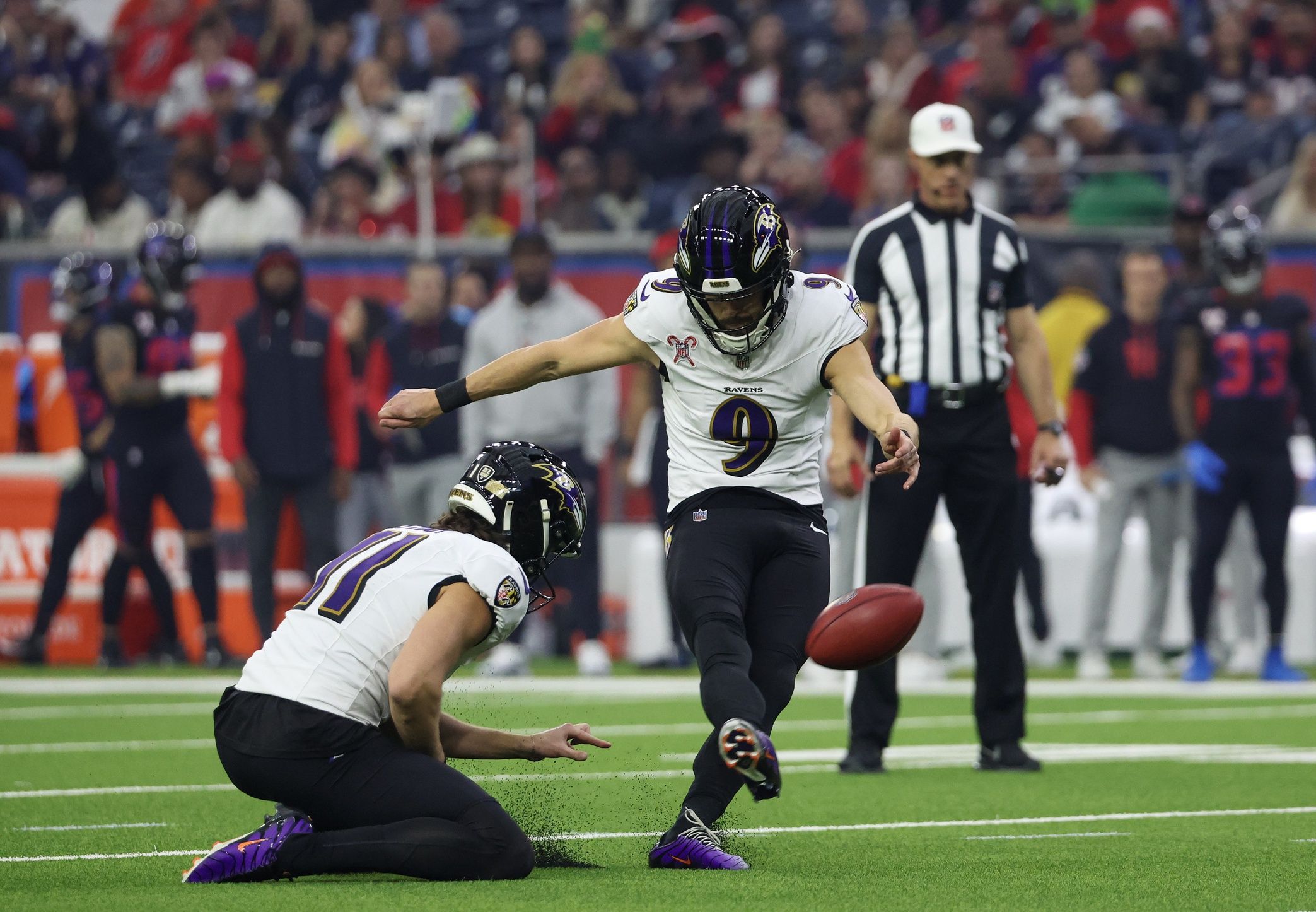
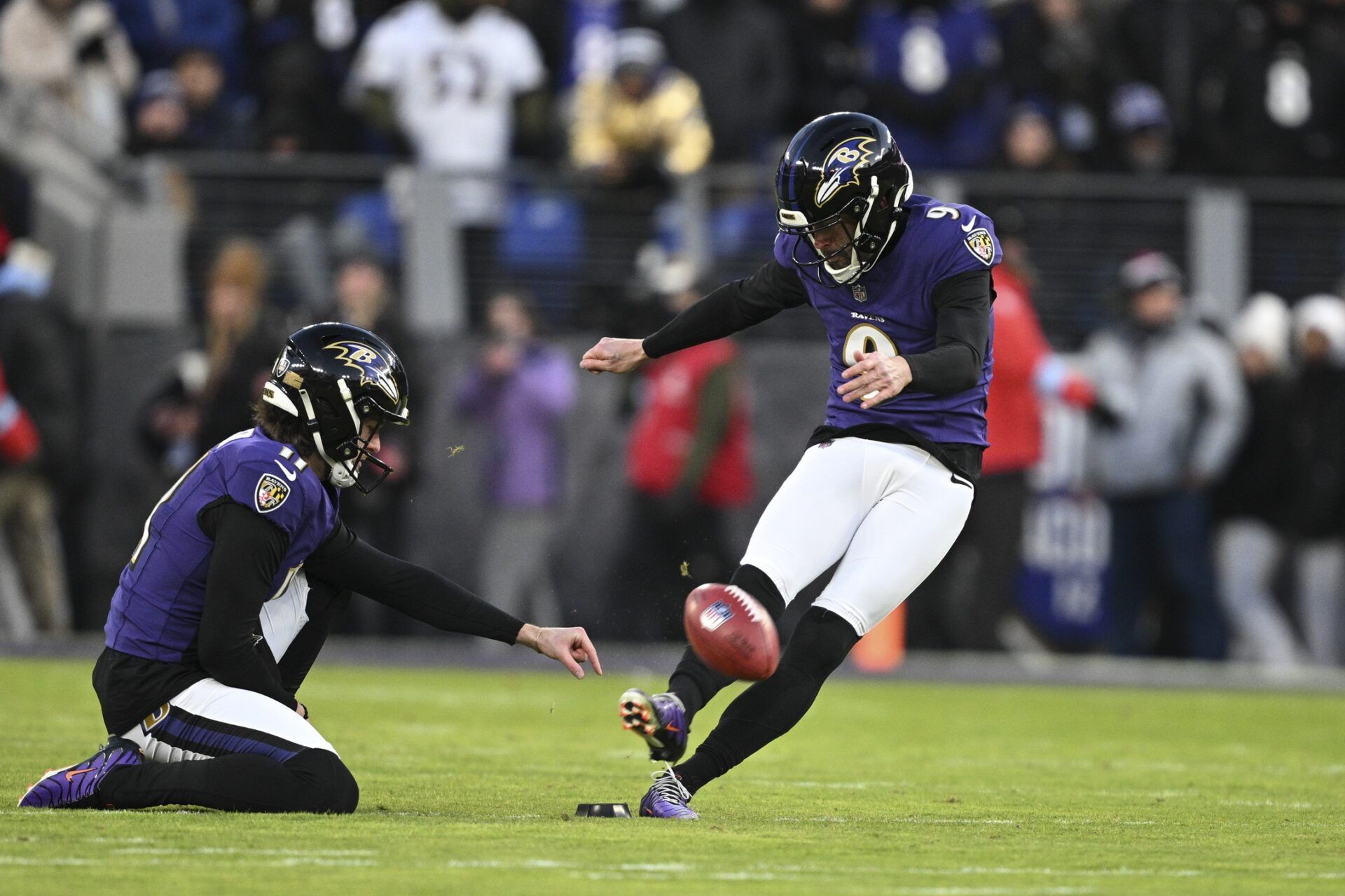
Kicking long field goals requires mechanical repeatability down to fractions of an inch. Video breakdowns by special teams analysts highlighted subtle inconsistencies in Tucker's plant foot positioning. When a kicker plants their non-kicking foot too far behind or too wide of the ball, it alters the launch angle and hip rotation path.
For Tucker, a slight shift in plant foot placement caused his kicking leg to wrap across his body too early, leading to pulled kicks wide left or push-slice trajectory misses wide right. At 50+ yards, minor deviations at the point of contact multiply into wide misses by the time the ball reaches the uprights.
2. Operational Dynamics: The Snap-and-Hold Unit
For the first half of his career, Tucker benefited from remarkable stability in Baltimore's specialist unit, working alongside veteran long snapper Morgan Cox and punter/holder Sam Koch. This trio maintained near-perfect operational rhythm for years.
In recent seasons, Baltimore transitioned its specialist group, introducing Jordan Stout as the primary punter and holder alongside long snapper Nick Moore. Even minor variations in ball placement, lean, tilt, or the speed of the snap can disrupt a kicker's visual target during their approach. While Stout and Moore are skilled professionals, building the instinctual synchronization that defined Tucker's early career requires hundreds of repetitions under game conditions.
- Long Snapper (0.7s Snap)
- Holder (0.6s Catch & Tilt)
- Kicker Strike
3. Natural Aging and Leg Velocity Changes
Born in November 1989, Tucker entered his mid-30s during these key seasons. In professional sports, kicking power and flexibility gradually shift over time. While modern training methods allow specialists to maintain leg strength longer than in previous eras, maximum leg velocity can dip slightly as kickers age.
When kickers attempt to compensate for subtle losses in raw power on 55+ yard attempts, they often swing harder than their natural rhythm dictates. Over-swinging distorts technique, leading to mishits that would not occur on controlled 40-yard attempts.
How the Baltimore Ravens Addressed the Situation
Rather than making a dramatic roster move, the Baltimore Ravens organization maintained absolute confidence in Tucker while taking deliberate technical steps to resolve the issue.
- Special Teams Audits: Special Teams Coordinator Chris Horton and kicking consultant Randy Brown spent extensive practice time conducting high-speed film audits of Tucker's foot strike, approach steps, and ball rotation.
- Streamlining the Operation: The coaching staff prioritized refining holder Jordan Stout’s spot alignment, ensuring the ball was positioned with the exact tilt angle Tucker prefers on long-distance attempts.
- Target Management: The team adjusted game-day strategy in certain atmospheric conditions, recognizing that lower temperatures and high wind conditions at M&T Bank Stadium require different risk calculations for 55-yard field goal attempts.
Head coach John Harbaugh publicly reinforced Tucker’s position as the team's kicker, consistently downplaying external noise and emphasizing that Tucker's track record and work ethic earned him the runway needed to make necessary mechanical corrections.
Debunking Common Myths About Justin Tucker
Given the intense focus on premier athletes, several false reports and rumors circulated online during Tucker's period of struggle. It is essential to separate verified facts from speculation.
Myth 1: Justin Tucker Was Released or Demoted
Fact: Tucker remained on the Baltimore Ravens' active roster. The team did not sign a replacement kicker to the 53-man squad or strip Tucker of his starting duties.
Myth 2: A Major Physical Injury Caused the Slump
Fact: Tucker was not placed on Injured Reserve, nor did he undergo major surgery during this period. While all NFL players manage routine soreness throughout a season, no structural injury was cited as the cause for his missed kicks.
Myth 3: Tucker Announced Plans for Retirement
Fact: Tucker has repeatedly stated his intention to kick for as long as his body performs at an elite level. His contract extension with Baltimore keeps him bound to the team, and he has expressed no desire to step away from the sport prematurely.
Comparing Historical Kicking Curves: Legacy Context
To put Tucker's adjustment phase in perspective, history shows that even the most celebrated NFL kickers undergo temporary drops in performance before adjusting their mechanics.
- Adam Vinatieri: The legendary four-time Super Bowl champion experienced seasons below an 80% field goal rate at various points in his career (including 2003 and 2009) before rebounding to play productively into his late 40s.
- Stephen Gostkowski: Gostkowski had operational and mechanical hiccups mid-career with the New England Patriots before re-establishing himself as an All-Pro caliber kicker.
- Morten Andersen: The Hall of Fame kicker saw fluctuations in his 30s before adapting his approach path and extending his career to age 47.
Tucker’s career trajectory aligns with this broader historical pattern. Great kickers who sustain long careers do so by successfully recalibrating their technique when natural physical shifts occur.
Frequently Asked Questions
Is Justin Tucker still the most accurate kicker in NFL history?
While his overall career field goal percentage dipped slightly during his recent slump, Tucker remains among the absolute top all-time leaders in field goal accuracy in NFL history, consistently competing with modern kickers like Harrison Butker and Eddy Piñeiro for the top spot.
How long is Justin Tucker's current contract with the Ravens?
Tucker signed a four-year contract extension with the Baltimore Ravens in August 2022, securing his position through the 2026 season and making him one of the highest-paid specialists in professional football.
What is Justin Tucker's longest made field goal?
Tucker holds the NFL record for the longest successful field goal at 66 yards, set on September 26, 2021, against the Detroit Lions at Ford Field.
Who is the current holder for Justin Tucker's field goals?
Punter Jordan Stout serves as the primary holder for Justin Tucker on field goals and extra point attempts for the Baltimore Ravens.
Did the NFL kickoff rule changes affect Justin Tucker?
The NFL's updated dynamic kickoff rules altered how teams approach kickoff strategy, focusing less on automatic touchbacks and more on directional, high-hang-time placement kicks. While this required tactical adjustments from all kickers, it did not directly alter field goal mechanics.
Summary and Key Takeaway
What happened to Justin Tucker was not a sudden exit from football or a career-altering injury, but a rare mechanical and statistical downturn for a player accustomed to near-perfection. Through adjustments to his plant foot placement, refined operational timing with holder Jordan Stout, and tactical management by the Baltimore coaching staff, Tucker continues to anchor the Ravens' special teams unit while preserving his legacy as one of the greatest kickers in football history.
Image Gallery