The Lord of the Rings Movie Dates: A Complete Release Timeline from 2001 to 2026
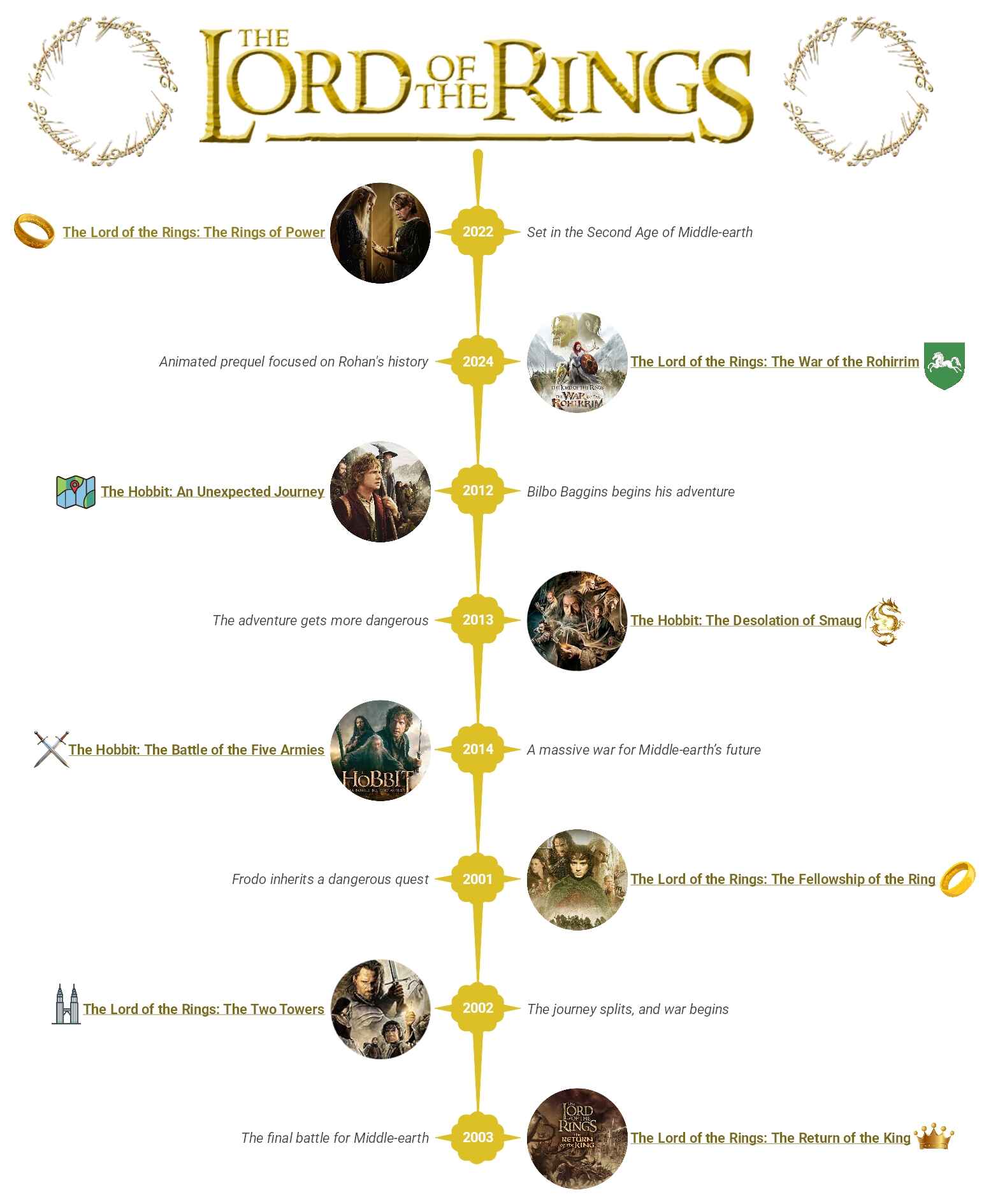
The primary theatrical release dates for The Lord of the Rings trilogy were December 19, 2001 (The Fellowship of the Ring), December 18, 2002 (The Two Towers), and December 17, 2003 (The Return of the King). Subsequent franchise expans...
The primary theatrical release dates for The Lord of the Rings trilogy were December 19, 2001 (The Fellowship of the Ring), December 18, 2002 (The Two Towers), and December 17, 2003 (The Return of the King). Subsequent franchise expansions include The Hobbit trilogy (2012–2014) and new 2024–2026 cinematic entries.
Contents
The Foundation of the Franchise: The Original Trilogy (2001–2003)
The cinematic journey into J.R.R. Tolkien’s Middle-earth began in earnest at the turn of the millennium. New Line Cinema took a significant financial and creative risk by greenlighting three films to be shot simultaneously under the direction of Peter Jackson. This production strategy dictated a specific release pattern that became a holiday tradition for millions of fans worldwide.
The Fellowship of the Ring (December 19, 2001)
The first installment, The Fellowship of the Ring, premiered globally in mid-December 2001. This date was strategically chosen to capitalize on the holiday movie-going season, a slot typically reserved for "event" cinema. The film introduced audiences to Elijah Wood as Frodo Baggins and the sprawling landscapes of New Zealand, which served as the visual stand-in for Middle-earth. The success of this December launch established a "December release window" that the franchise would claim for nearly all its subsequent theatrical entries.
The Two Towers (December 18, 2002)
Exactly one year later, The Two Towers arrived in theaters. By this point, the "Lord of the Rings movie dates" had become an annual expectation. This second entry was notable for its technological leap, particularly in the motion-capture performance of Andy Serkis as Gollum. The mid-December release allowed the film to dominate the box office through the New Year, proving that the franchise had sustained momentum rather than just initial novelty.
The Return of the King (December 17, 2003)
The conclusion of the original trilogy, The Return of the King, followed the established pattern, releasing on December 17, 2003. This film became a historic achievement in cinema, eventually sweeping all 11 Academy Awards for which it was nominated, including Best Picture. The release date marked the end of an era, concluding a three-year cycle that remains one of the most successful "back-to-back" release strategies in Hollywood history.
The Prequel Era: The Hobbit Trilogy (2012–2014)
After nearly a decade of legal and production delays, the franchise returned to the big screen with the adaptation of The Hobbit. Peter Jackson returned to the director's chair, and the production once again utilized the December release strategy that had served the original trilogy so well.
- An Unexpected Journey (December 14, 2012): This film reintroduced audiences to the Shire, focusing on a younger Bilbo Baggins. It utilized a high-frame-rate (48fps) projection in select theaters, a technical experiment that remains a point of discussion among cinephiles.
- The Desolation of Smaug (December 13, 2013): The second chapter continued the December tradition, focusing on the introduction of the dragon Smaug.
- The Battle of the Five Armies (December 17, 2014): The final installment of the prequel trilogy arrived just over a decade after The Return of the King, closing the narrative loop between the two trilogies.
New Horizons: The War of the Rohirrim and 2026 Developments
As of 2026, the Middle-earth franchise has entered a new phase of expansion. Unlike the live-action epics of the past, recent and upcoming projects have explored different formats and specific lore segments to provide fresh perspectives on Tolkien's world.
The War of the Rohirrim (December 13, 2024)
A significant shift occurred in late 2024 with the release of The Lord of the Rings: The War of the Rohirrim. This project departed from the live-action format, opting for high-end Japanese anime-style animation. Directed by Kenji Kamiyama, the film is set roughly 183 years before the events of the original trilogy. Its release date of December 13, 2024, signaled Warner Bros.' commitment to maintaining the "December Middle-earth" tradition, even while experimenting with the medium of storytelling.
The Hunt for Gollum (Scheduled for 2026)
Looking at the current 2026 landscape, the most anticipated development is The Lord of the Rings: The Hunt for Gollum. Announced as the first of a new set of live-action films, this project sees Andy Serkis return not only to the title role but also as the director. Peter Jackson, Fran Walsh, and Philippa Boyens serve as producers, ensuring creative continuity with the original films.
While the exact day is subject to production milestones, the studio has targeted a 2026 release window. This project aims to explore untold chapters of Gollum's life, specifically focusing on the period when Gandalf and Aragorn were searching for him to learn more about the One Ring before the events of The Fellowship of the Ring.
Summary of Lord of the Rings Movie Release Dates
The following table summarizes the primary theatrical release dates for all major films within the Middle-earth cinematic universe through 2026.
| Film Title | Primary Release Date | Format | Director |
|---|---|---|---|
| The Fellowship of the Ring | December 19, 2001 | Live Action | Peter Jackson |
| The Two Towers | December 18, 2002 | Live Action | Peter Jackson |
| The Return of the King | December 17, 2003 | Live Action | Peter Jackson |
| The Hobbit: An Unexpected Journey | December 14, 2012 | Live Action (48fps) | Peter Jackson |
| The Hobbit: The Desolation of Smaug | December 13, 2013 | Live Action | Peter Jackson |
| The Hobbit: The Battle of the Five Armies | December 17, 2014 | Live Action | Peter Jackson |
| The War of the Rohirrim | December 13, 2024 | Animated (Anime) | Kenji Kamiyama |
| The Hunt for Gollum | Scheduled 2026 | Live Action | Andy Serkis |
The Impact of Extended Edition Releases
When discussing "Lord of the Rings movie dates," one cannot overlook the Extended Editions. These versions of the films were not released in theaters initially but became the definitive versions for many fans. The release dates for these home media versions usually lagged behind the theatrical releases by 11 to 12 months.
The Extended Editions were released on DVD (and later Blu-ray and 4K UHD) in the November preceding the theatrical release of the next film. For example, the Extended Edition of The Fellowship of the Ring was released in November 2002, serving as a massive marketing tool to build hype for the theatrical debut of The Two Towers just weeks later. This cycle created a year-round engagement with the franchise that helped it achieve its legendary status in pop culture.
How to Watch in Chronological vs. Release Order
The disparity between release dates and the timeline of Middle-earth events often leads to confusion for new viewers. To experience the story in the order the events occurred (internal chronology), you should follow this sequence:
- The War of the Rohirrim (Set ~183 years before the main trilogy)
- The Hobbit Trilogy (An Unexpected Journey, Desolation of Smaug, Battle of the Five Armies)
- The Hunt for Gollum (Set primarily between The Hobbit and The Fellowship of the Ring)
- The Lord of the Rings Trilogy (Fellowship, Two Towers, Return of the King)
However, most critics and long-time fans recommend the Release Order for first-time viewers. The original 2001–2003 trilogy was designed to introduce the world's mechanics—such as the power of the Ring and the nature of the various races—in a way that the prequels take for granted. Watching the original trilogy first provides the necessary emotional and narrative context for the subsequent "history" lessons found in the newer films.
Frequently Asked Questions
Why do most Lord of the Rings movies release in December?
The December release window was initially chosen to capture the peak holiday audience, but it eventually became a brand identity for the franchise. The long runtimes of the films (often exceeding three hours) benefit from the holiday period when viewers have more leisure time. Furthermore, it avoids the "summer blockbuster" rush, allowing the films to dominate the awards season conversation in January and February.
Are there more movies coming after 2026?
Warner Bros. Discovery has indicated that The Hunt for Gollum is the first of "a few" new live-action films planned for the coming years. While specific dates beyond 2026 have not been finalized, the studio's strategy involves mining the Appendices of The Lord of the Rings for additional stories that have not yet been adapted for the screen.
Was there an earlier Lord of the Rings movie?
Yes, before the Peter Jackson era, there was an animated adaptation directed by Ralph Bakshi, released on November 15, 1978. While it is not part of the modern cinematic universe, it was a significant technical milestone for its time, using rotoscoping techniques to overlay animation on live-action footage.
When did the 4K versions of the films release?
The remastered 4K Ultra HD versions of both The Lord of the Rings and The Hobbit trilogies were released on December 1, 2020. These versions featured updated color grading and visual effects cleanup overseen by Peter Jackson to create a more consistent visual look across all six Middle-earth films.
Practical Recommendations for Fans
If you are planning a marathon or looking to complete your collection in 2026, ensure you distinguish between "Theatrical" and "Extended" cuts. For the best visual experience, the 2020 4K remasters are the current gold standard. If you are following the 2026 release of The Hunt for Gollum, it is highly recommended to re-watch the prologue of The Fellowship of the Ring and the opening scenes of The Return of the King to refresh your memory on Gollum’s complex history with the Ring.
Image Gallery