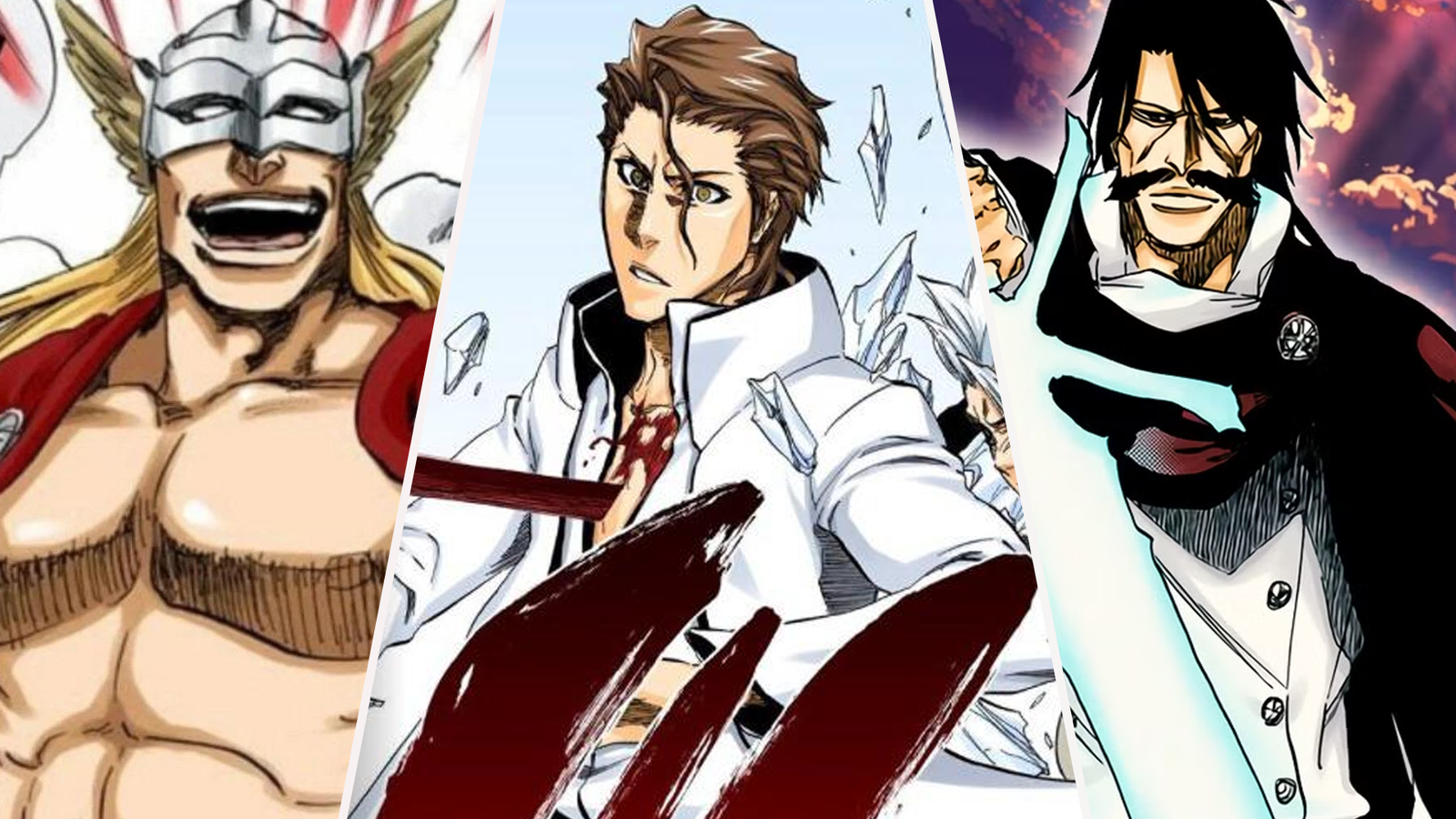
How Was Sosuke Aizen Defeated? The Complete Breakdown of His Downfall
Sosuke Aizen was defeated through a combined effort involving Ichigo Kurosaki’s mastery of the Final Getsuga Tensho and Kisuke Urahara’s strategic foresight. Ichigo used the transcendent power of "Mugetsu" to severely weaken Aizen, all...
Sosuke Aizen was defeated through a combined effort involving Ichigo Kurosaki’s mastery of the Final Getsuga Tensho and Kisuke Urahara’s strategic foresight. Ichigo used the transcendent power of "Mugetsu" to severely weaken Aizen, allowing a specialized sealing Kido, previously planted by Urahara, to activate once Aizen's power levels dropped and the Hogyoku began to reject him.
Contents
The defeat of Sosuke Aizen marks the climax of the Arrancar Saga in Tite Kubo’s Bleach. As of 2026, it remains one of the most analyzed sequences in shonen history due to its blend of metaphysical power systems and psychological depth. To understand how a being who had transcended both Shinigami and Hollow boundaries was finally brought down, one must look at the intersection of Ichigo’s raw power, Urahara’s scientific genius, and the sentient nature of the Hogyoku itself.
The Role of the Hogyoku and Aizen’s Transcendence
Before examining the defeat, it is essential to understand the nature of Aizen’s invincibility. By merging with the Hogyoku—a spherical material capable of manifesting the desires of those around it—Aizen bypassed the natural limits of a Soul Reaper. Throughout the battle in the Fake Karakura Town, Aizen underwent several transformations, each moving him further away from a humanoid form and closer to a divine, albeit monstrous, entity.
The Hogyoku does not simply provide "power levels"; it breaks down the barriers between different types of souls. This allowed Aizen to reach a state where he could no longer be sensed by ordinary Shinigami or even Captain-level combatants. His Reiatsu (Spiritual Pressure) was on a completely different plane of existence. For anyone to defeat him, they would need to reach that same transcendent plane or find a way to make the Hogyoku stop supporting him.
Understanding the Wish-Granting Mechanism
For years, it was believed the Hogyoku’s power was the "dissolution of boundaries" between Shinigami and Hollows. However, Kisuke Urahara later clarified that its true power is to read the hearts of those around it and materialize their deepest desires, provided they have the potential to achieve them. This distinction is critical to Aizen’s eventual defeat. As Aizen became more arrogant and isolated, his subconscious desires began to conflict with his conscious goal of standing atop the heavens, creating the opening Ichigo and Urahara needed.
Ichigo Kurosaki’s Transcendence: The Final Getsuga Tensho
The primary physical catalyst for Aizen’s defeat was Ichigo Kurosaki’s evolution during his time in the Dangai (the precipice world between the Soul Society and the Human World). While Aizen was busy terrorizing Karakura Town, Ichigo spent three months (which equated to only a few hours in the outside world) undergoing intense training with the spirit of his Zanpakuto.
Training in the Dangai and the Jinzen Process
Ichigo utilized a process called Jinzen—deep meditation where a Shinigami enters their inner world to communicate with their sword. To defeat Aizen, Ichigo had to accept the "Final Getsuga Tensho." This required him to let himself be pierced by Tensa Zangetsu, symbolizing total submission and union with his weapon.
The result was a form where Ichigo became Getsuga itself. In this state, Ichigo’s physical and spiritual attributes surpassed Aizen's to such a degree that when Aizen attempted to strike him, Ichigo caught his blade with his bare hands. Aizen, who had previously been untouchable, found himself unable to even scratch Ichigo. This was the first time Aizen felt the fear of being surpassed, a psychological blow that began to shake his resolve.
The Nature of Mugetsu
The pinnacle of this form is "Mugetsu" (Dreamless Ditch/Heavenless Night). When Ichigo releases this technique, he launches a blade of pure black spiritual energy that blankets the sky in darkness. Mugetsu was powerful enough to cleave through Aizen’s final "Monster" form and split the landscape. However, the technique came with a heavy price: the total loss of Ichigo’s Shinigami powers. While Mugetsu did not kill Aizen—thanks to the Hogyoku’s regenerative properties—it provided the necessary reduction in Aizen’s power for Urahara’s plan to take effect.
Kisuke Urahara’s Long Game and the Sealing Kido
While Ichigo provided the brawn, Kisuke Urahara provided the "checkmate." Urahara is widely considered the smartest character in Bleach, and his defeat of Aizen was planned long before the final clash in Karakura Town.
The Sealing Kido: Kyuu-Juu-Roku No Ichika
During an earlier exchange in the battle, Urahara fired several Kido spells at Aizen. While Aizen easily brushed them off, Urahara had actually hidden a specific, custom-made sealing spell called Kyuu-Juu-Roku No Ichika: Karyu Gekisatsu (96th Street, 1st Clause: Incinerating Fire-Dragon Sealing) inside another spell.
This seal was designed to activate only when Aizen’s power reached its lowest point. As long as Aizen was at full strength and fully supported by the Hogyoku, the seal remained dormant. It was only after Ichigo struck Aizen with Mugetsu that Aizen’s Reiatsu dipped low enough for Urahara’s seal to manifest from within Aizen’s own body.
| Feature | Aizen's Final Form (Monster) | Ichigo's Mugetsu Form |
|---|---|---|
| Source of Power | Hogyoku (Wish-Granting) | Total Union with Zanpakuto |
| Reiatsu Level | Transcendent (Unfeelable to Captains) | Transcendent (Unfeelable to Aizen) |
| Durability | Instant Regeneration | High Physical Resistance |
| Primary Weakness | Subconscious Doubt / Arrogance | Complete Loss of Powers After Use |
| Outcome | Defeated and Sealed | Victory at the Cost of Abilities |
The Psychological Downfall: Why the Hogyoku Rejected Aizen
A question often asked by fans is why the Hogyoku didn't simply heal Aizen after Mugetsu and let him continue the fight. The answer lies in the metaphysics of the Bleach universe. Ichigo noted after the battle that when their blades crossed, he felt nothing but overwhelming loneliness from Aizen’s soul.
Ichigo theorized that because Aizen was a genius of unparalleled proportions, he had always been alone. Deep down, Aizen may have wished to be a "normal" Shinigami—or at least to have someone who could see the world from his perspective. When Ichigo surpassed him, the Hogyoku interpreted Aizen’s inner turmoil and sudden vulnerability as a desire to lose his god-like power.
Consequently, the Hogyoku stopped recognizing Aizen as its master. It did not leave his body, but it ceased to grant his wishes for evolution. Without the Hogyoku’s protection, Urahara’s seal successfully encased Aizen in a cross-shaped pillar of energy, rendering him immobile and powerless.
Aftermath and Imprisonment in Muken
Following his defeat, Aizen was taken before the Central 46, the judicial body of the Soul Society. Despite being sealed, he remained immortal due to his prior fusion with the Hogyoku; he could not be executed. He was sentenced to 18,800 years in Muken, the lowest level of the underground prison, Central Great Underground Prison. This sentence was later increased to 20,000 years after Aizen insulted the judges.
Aizen remained bound and blindfolded in total darkness, his Reiatsu suppressed by specialized seals. While he was physically defeated and removed from the board as a primary antagonist for the duration of the Fullbringer arc, his presence continued to loom over the series, eventually leading to his temporary release during the Quincy Invasion (Thousand-Year Blood War).
Frequently Asked Questions
Did Ichigo kill Aizen?
No, Ichigo did not kill Aizen. Aizen had achieved a form of immortality through his fusion with the Hogyoku. Even after being hit by the Final Getsuga Tensho, Aizen's body began to regenerate. He was defeated by being sealed, not by being killed.
Why didn't Aizen use Kyoka Suigetsu on Ichigo?
Aizen never showed Ichigo the release of his Shikai, Kyoka Suigetsu. To be under the influence of "Complete Hypnosis," a person must see the release of the blade. Because Aizen considered Ichigo a "research subject" and later didn't view him as a threat until it was too late, he never initiated the ritual required to place Ichigo under his spell.
How did Urahara plant the seal?
Urahara planted the seal during a brief clash earlier in the battle. He used a Kido spell as a "trojan horse," hiding the sealing formula inside a more conventional attack. Aizen, in his arrogance, allowed the attack to hit him, believing his transcendent power would negate any effects.
Can Aizen ever be truly defeated?
In a physical sense, Aizen can be suppressed or sealed, but as long as he is fused with the Hogyoku, he cannot be permanently destroyed by conventional means. His "defeat" is more of a containment than a permanent removal from existence.
What is the difference between Mugetsu and the Final Getsuga Tensho?
The Final Getsuga Tensho is the state Ichigo enters where he becomes the technique itself. Mugetsu is the specific, single attack he uses while in that state. Once Mugetsu is fired, the Final Getsuga Tensho ends, and the user loses their spiritual powers.
Practical Recommendation for Fans
If you are looking to revisit the details of Aizen's defeat, it is highly recommended to consult the original manga chapters 417 through 421 or episodes 308 through 310 of the Bleach anime. These sources provide the visual nuance of the Hogyoku's rejection and the specific dialogue between Urahara and Aizen regarding the nature of the "Soul King," which adds significant context to why Aizen sought power in the first place. For those following the 2026 landscape of the series, these historical events remain the foundation for Aizen's complex role in the subsequent Thousand-Year Blood War arc.
Image Gallery