Cash Value Life Insurance Opinion: Is Permanent Coverage Worth the Investment?
Cash value life insurance generates polarized opinions among financial advisors. While proponents highlight its tax-deferred growth, estate planning advantages, and guaranteed policy loans, critics cite high upfront commissions, drag o...
Cash value life insurance generates polarized opinions among financial advisors. While proponents highlight its tax-deferred growth, estate planning advantages, and guaranteed policy loans, critics cite high upfront commissions, drag on early returns, and complex fee structures. For high-net-worth individuals who have maxed out standard tax-advantaged accounts, cash value policies can serve as a strategic financial tool; however, for the average family, buying lower-cost term life insurance and investing the difference usually yields superior long-term wealth.
Contents
Disclaimer: This article is for informational and educational purposes only and does not constitute legal, tax, or financial advice. Readers should consult a qualified certified financial planner (CFP) or tax professional regarding their specific financial situation.
Deciphering Cash Value Life Insurance: Mechanism and Structure
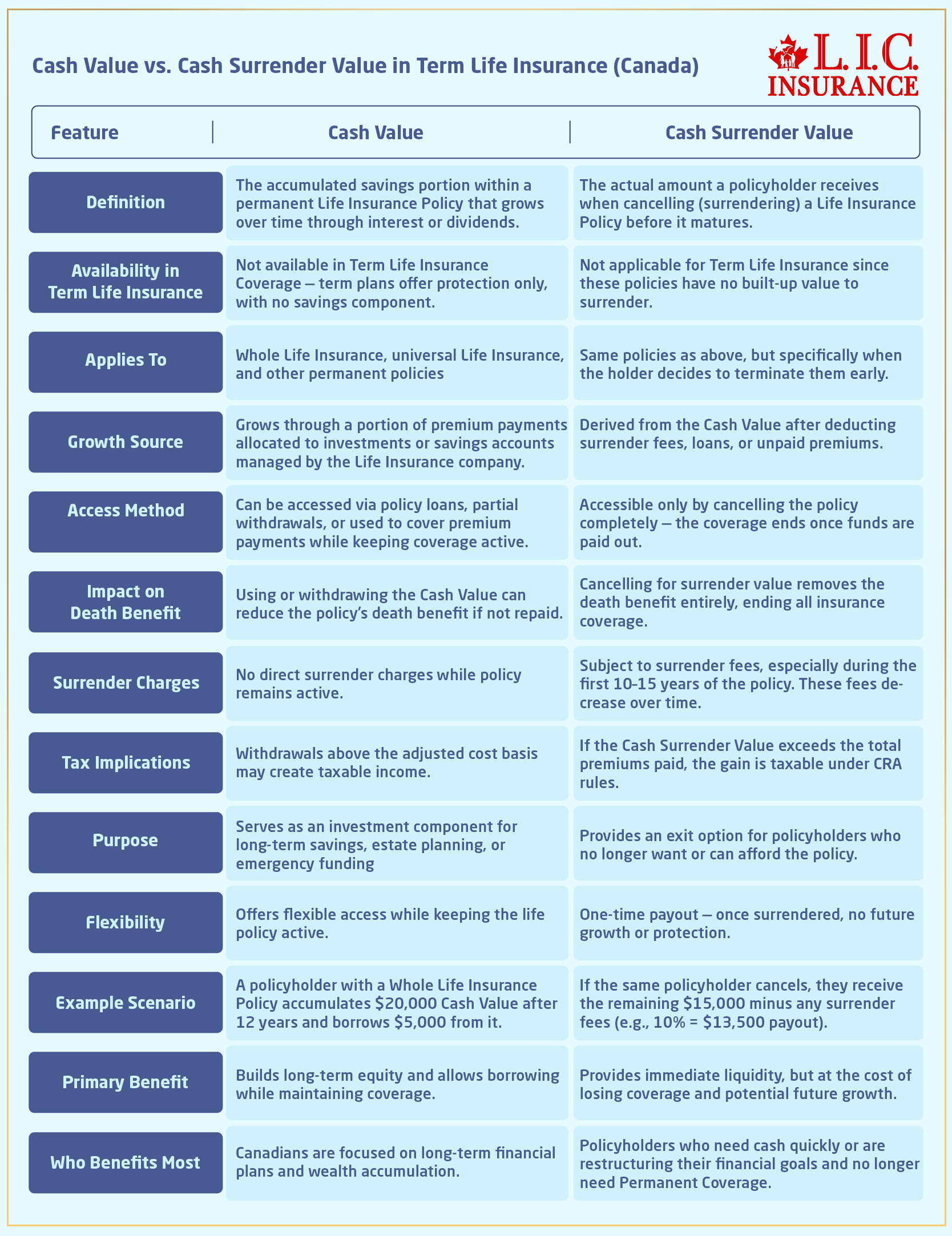
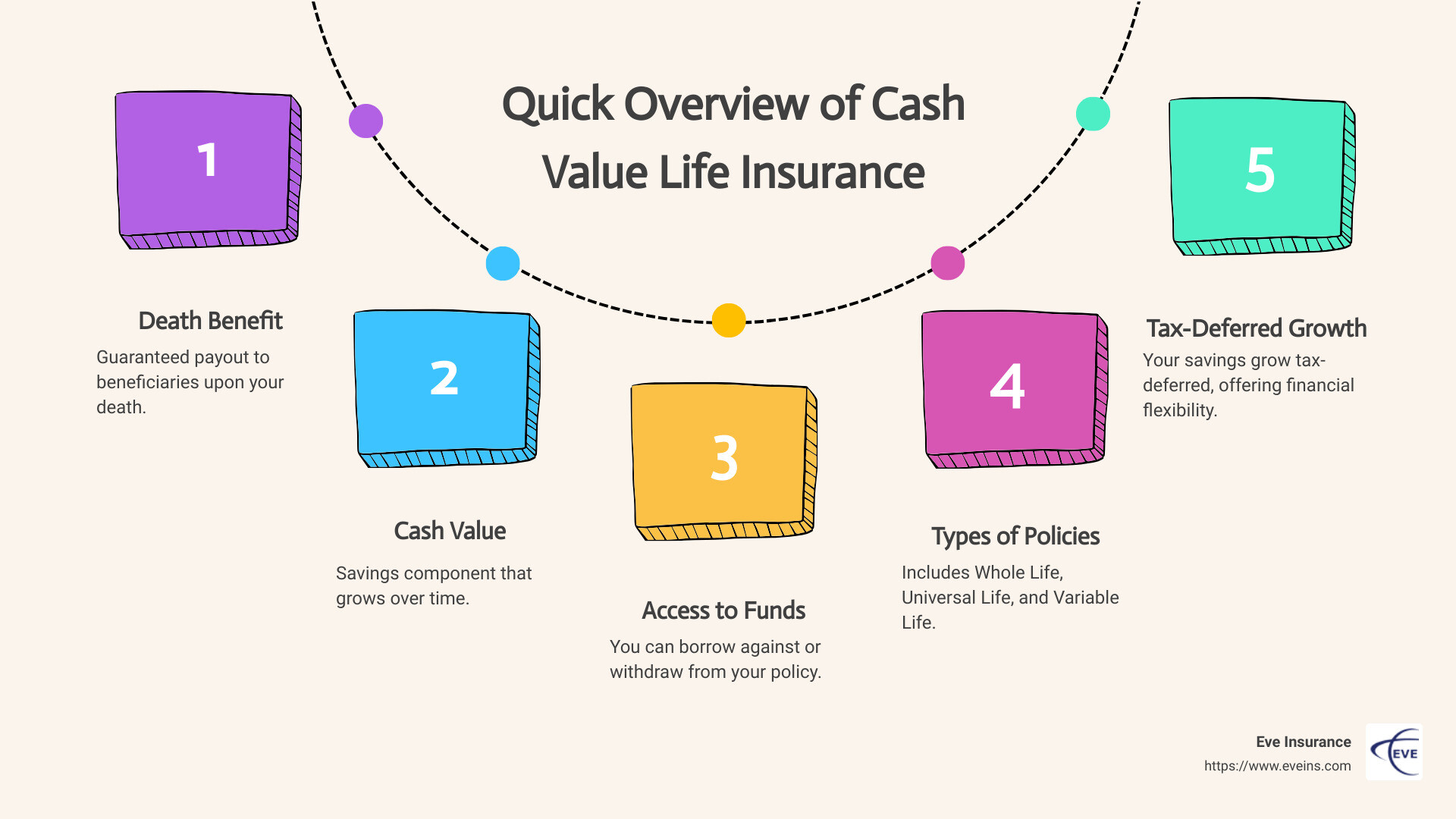
Cash value life insurance is a category of permanent life insurance that combines a death benefit with an internal savings or investment component. Unlike term life insurance, which provides coverage for a fixed period (such as 10, 20, or 30 years) and pays out only if the insured passes away during that window, cash value insurance is designed to remain in force for the policyholder's entire life, provided required premiums are paid.
When a policyholder pays a premium into a cash value contract, the insurance company allocates the payment across three distinct buckets:
- Cost of Insurance (COI): The baseline cost required to cover the mortality risk of the policyholder.
- Administrative Fees & Commissions: Policy overhead, underwriting costs, state premium taxes, and agent compensation.
- Cash Accumulation Account: The remaining balance, which earns interest or investment returns based on the specific policy structure.
Over time, cash accumulates within the policy on a tax-deferred basis. Policyholders can access this equity through withdrawals, policy loans, or by surrendering the policy. However, the exact performance and risk profile depend heavily on the subtype of permanent policy selected.
Common Types of Cash Value Policies
- Whole Life Insurance: Offers fixed monthly or annual premiums, a guaranteed minimum rate of return on the cash value, and a fixed death benefit. Participating whole life policies issued by mutual insurers may also pay non-guaranteed dividends.
- Universal Life (UL) Insurance: Features flexible premium payments and adjustable death benefits. The cash value earns interest tied to prevailing market interest rates or an insurer-declared benchmark, subject to guaranteed minimums.
- Indexed Universal Life (IUL): Links cash value growth to a specific equity market index, such as the S&P 500, utilizing caps, participation rates, and interest floors (often 0%) to limit downside risk while capping upside market potential.
- Variable Universal Life (VUL): Allows policyholders to invest their cash value directly into sub-accounts resembling mutual funds. VUL policies offer higher growth potential but carry direct market risk, meaning the cash value and death benefit can fluctuate significantly.
The Core Debate: Why Opinions Are Divided
The financial community remains sharply divided over the utility of permanent life insurance. The debate generally pits traditional insurance-first estate planners against investment-focused wealth advisors. Understanding both perspectives helps consumers determine where their financial priorities fit.
- Cash Value Premium Payment
- Cost of Insurance (COI)
- Administrative Fees & Agent Commissions
- Cash Value Accumulation Account
- Tax-Deferred Growth
- Policy Loans & Withdrawals
The Proponents' Perspective: Security, Taxes, and Flexibility
Advocates of permanent coverage emphasize that cash value policies offer unique structural protections that conventional investment vehicles cannot duplicate:
- Tax-Deferred Accumulation: Under Internal Revenue Code (IRC) Section 7702, cash value grows without triggering annual income or capital gains taxes, allowing interest to compound faster over extended horizons.
- Tax-Free Liquidity via Loans: Policyholders can borrow against their cash value tax-free, using the policy as a private source of liquidity for real estate purchases, business capitalization, or emergency reserves without triggering a taxable event.
- Guaranteed Payout and Estate Planning: Permanent insurance guarantees a tax-free death benefit to beneficiaries regardless of how long the insured lives, making it useful for funding estate tax liabilities, irrevocable life insurance trusts (ILITs), or equalizing inheritances.
- Asset Protection: In many jurisdictions, the cash surrender value of a life insurance policy is legally protected from creditors, lawsuits, and bankruptcy filings.
The Critics' Perspective: High Costs and Drag on Capital
Opponents—most prominently proponents of the "Buy Term and Invest the Difference" (BTID) strategy—argue that cash value insurance is an inefficient financial product for the vast majority of households:
- High Front-Loaded Fees: Insurance agent commissions often range from 60% to 100% of the first year's premium, alongside ongoing policy administrative fees. Consequently, early cash value growth is minimal, and surrendering a policy in the first 5 to 10 years frequently results in substantial financial loss due to surrender charges.
- Opportunity Cost: The internal rate of return (IRR) on conservative whole life policies historically averages between 3% and 5% net of fees over the long term. By contrast, a diversified equity portfolio invested in low-cost index funds has historically generated higher long-term real returns.
- Complexity and Policy Lapse Risk: Flexible-premium products like Universal Life can become underfunded if interest rates drop or if policyholders underpay premiums. As the insured ages, the underlying cost of insurance increases dramatically, potentially causing the cash value to erode rapidly and requiring massive capital injections to keep the policy from lapsing.
Performance Comparison: Cash Value vs. "Buy Term and Invest the Difference"
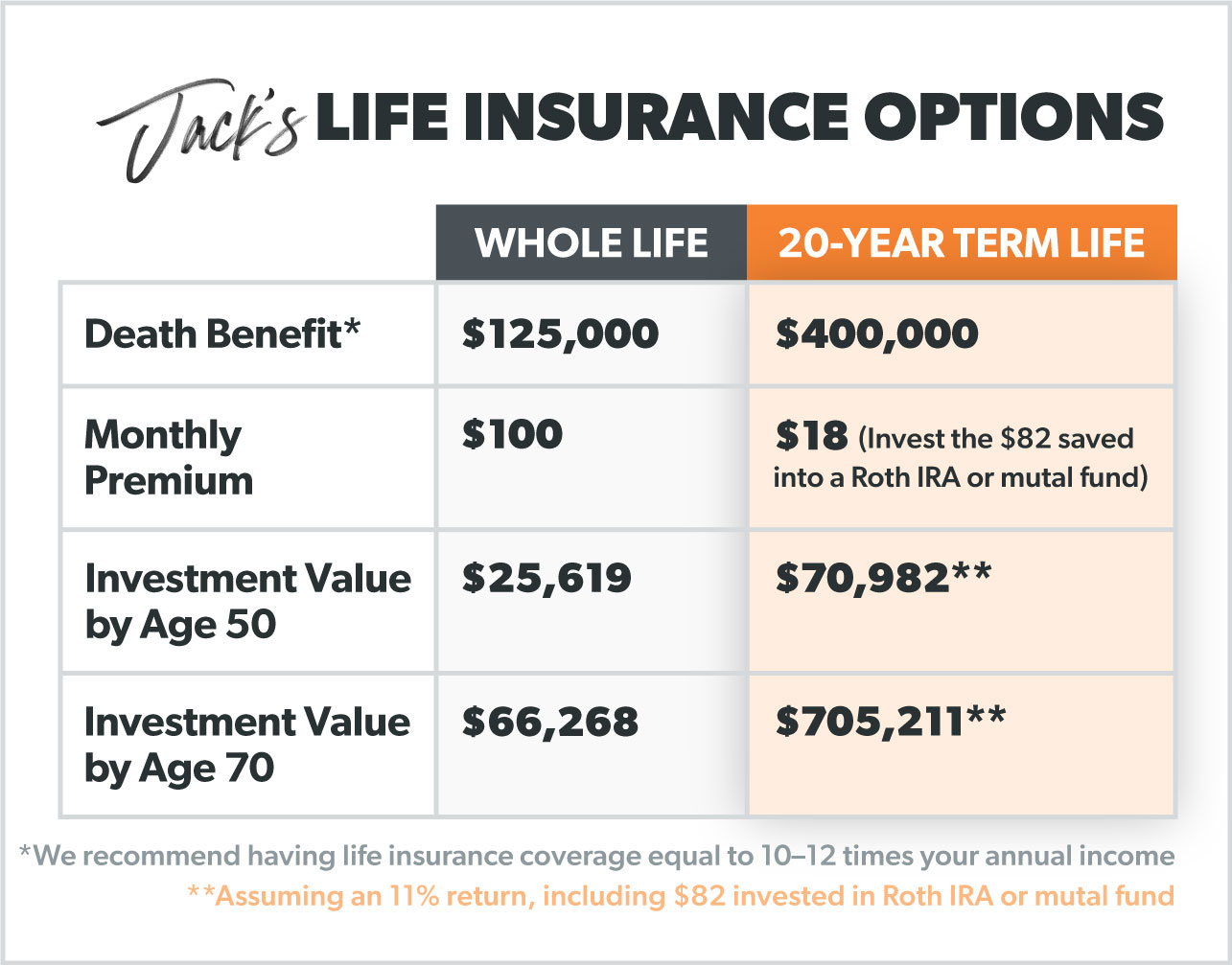
To evaluate whether permanent insurance makes financial sense, compare the projected outcome of a whole life policy against a combined strategy of buying a 30-year term policy and placing the remaining capital into an low-cost index fund.
The table below illustrates structural differences across key financial metrics:
| Comparison Metric | Whole Life Insurance | Term Life Insurance + Index Fund |
|---|---|---|
| Primary Objective | Lifelong coverage + conservative savings | Temporary protection + aggressive capital growth |
| Upfront Cost / Premium | High (5x to 10x more expensive than term) | Low premium for term; balance invested directly |
| Long-Term Return Expectation | Modest (typically 3%–5% IRR net of fees) | Variable market returns (historically 7%–10% nominal) |
| Tax Treatment of Growth | Tax-deferred under IRC Section 7702 | Tax-deferred in IRAs/401(ks); taxable in brokerage |
| Access to Funds | Tax-free policy loans; cash withdrawals | Direct brokerage sales or retirement account distributions |
| Early Liquidity (Years 1–7) | Low to zero due to surrender charges | High (immediate access to invested brokerage funds) |
| Policy Complexity | High (requires monitoring non-guaranteed values) | Low (straightforward term coverage and market index) |
| Estate & Creditor Protection | Strong statutory protections in many states | Varies by state and account type (e.g., ERISA vs. taxable) |
The comparative data shows that for pure wealth accumulation, the self-directed investment path usually outperforms permanent insurance. However, the insurance contract provides non-market stability and contractual guarantees that self-directed portfolios do not offer.
Navigating Tax Rules and Policy Loans
Understanding the tax framework established by the Internal Revenue Service (IRS) is essential when holding or evaluating cash value contracts.
Withdrawals vs. Loans
The IRS treats cash value distributions under a First-In, First-Out (FIFO) tax rule. Policyholders can withdraw money tax-free up to their total cost basis (the aggregate premiums paid into the policy). Withdrawals exceeding the basis are taxed as ordinary income.
Conversely, taking a policy loan is not considered a taxable event, regardless of whether the borrowed sum exceeds the paid-in basis. However, policy loans accrue interest charged by the insurer. If unpaid interest causes total outstanding loans to exceed the remaining cash value, the policy will lapse. A policy lapse with outstanding loans triggers an immediate tax liability on all gains accrued above the original basis, creating an unexpected tax burden.
The Modified Endowment Contract (MEC) Trap
Under rules established by the Technical and Miscellaneous Revenue Act of 1988 (TAMRA), if a policy receives excessive funding during its first seven years—failing the IRS "7-Pay Test"—it loses its standard tax classification and becomes a Modified Endowment Contract (MEC).
Once classified as an MEC:
- Distributions and loans are taxed on a Last-In, First-Out (LIFO) basis, meaning earnings are withdrawn first and taxed as ordinary income.
- Withdrawals taken prior to age 59½ are generally subject to a 10% IRS tax penalty.
- The tax-free death benefit is preserved, but the tax-free loan liquidity benefit is permanently lost.
Investors interested in maximizing cash accumulation must ensure their policies are carefully structured by qualified underwriters to maintain non-MEC status under IRC Section 7702.
Who Benefits Most vs. Who Should Avoid It
Cash value life insurance is neither universally good nor universally bad; its suitability depends on an individual's tax bracket, estate size, and overall wealth structure.
- Is Cash Value Right for You?
- Is your net worth over $13.99M (single) or $27.98M (married), OR have you maxed out all standard retirement accounts?
- Yes: Consider Permanent Insurance
- Tax-deferred growth
- Estate tax liquidity
- Asset protection
- Business succession funding
- No: Use Term Life + Investing
- Lower monthly costs
- Higher equity return potential
- Unencumbered early capital
- Simpler overall structure
- Yes: Consider Permanent Insurance
- Is your net worth over $13.99M (single) or $27.98M (married), OR have you maxed out all standard retirement accounts?
Ideal Candidates for Cash Value Policies
- High-Net-Worth Individuals (HNWIs): Wealthy individuals facing federal estate taxes (for single filers exceeding $13.99 million or married couples exceeding $27.98 million in 2026, subject to statutory inflation adjustments) can use permanent insurance held inside an Irrevocable Life Insurance Trust (ILIT) to pay estate taxes without liquidating real estate or private business assets.
- High Earners Who Have Maxed Out Traditional Accounts: Individuals who contribute the maximum allowable limits to 401(k)s, IRAs, and Health Savings Accounts (HSAs) can use cash value policies as a supplementary tax-advantaged holding.
- Business Owners and Key Executive Planning: Companies frequently use permanent life policies to fund Buy-Sell agreements, retain key executives via split-dollar plans, or support deferred compensation strategies.
- Individuals Needing Lifelong Coverage: Families caring for special-needs dependents who will require lifelong financial support benefit from the permanent nature of whole life insurance.
Who Should Avoid Cash Value Insurance
- Young Professionals and Average Income Earners: Individuals who are still building emergency savings, paying off high-interest debt, or not fully funding tax-advantaged retirement plans should opt for inexpensive term insurance.
- Short-to-Medium Term Investors: Anyone who may need access to their capital within 5 to 10 years should avoid cash value products due to surrender charges and fee structures.
- Pure Growth Investors: Investors aiming for maximum capital appreciation over extended horizons will likely achieve better net performance through direct equity and index fund investments.
Analyzing Policy Illustrations: Critical Red Flags
Before signing a contract for a permanent life insurance policy, consumers must carefully evaluate the sales illustration provided by the insurer. A policy illustration is a multi-page projection of how the contract may perform over time.
Key areas to audit include:
- Guaranteed vs. Non-Guaranteed Columns: Illustrations prominently display "non-guaranteed" projections based on current dividend scales or high interest rates. Always review the "guaranteed" column to see how the policy performs if the insurer hits minimum baseline performance.
- Surrender Charge Schedule: Check how long surrender penalties apply. Many contracts impose significant fees for terminating the policy during the first 10 to 15 years.
- Illustrated Rate Assumptions: Be cautious of illustrations that rely on aggressive interest rate assumptions (e.g., illustrating an Indexed Universal Life policy at an unadjusted 7% or 8% annual return). Request illustrations modeled at conservative growth rates, such as 4% to 5%.
- Cost of Insurance Escalation: In Universal Life contracts, verify whether the cost of insurance increases significantly as you age and whether the cash balance is strong enough to absorb those higher fees without requiring extra premium payments later in life. Regulatory guidance from the National Association of Insurance Commissioners (NAIC) outlines model disclosure rules designed to protect consumers from misleading illustrations.
Frequently Asked Questions
Is cash value life insurance a good investment?
From a strict investment perspective, permanent life insurance is generally less efficient than traditional equity investments due to sales commissions, administrative costs, and mortality charges. It is better viewed as a financial risk-management and tax-planning tool rather than a high-yielding investment contract.
What happens to the cash value when I die?
In a standard whole life policy, when the insured dies, the insurance company pays the face-value death benefit to the beneficiaries, and the remaining cash value reverts to the insurer. However, certain policy options or rider selections (such as an increasing death benefit option) allow beneficiaries to receive both the face amount and the accumulated cash value, though this increases monthly premiums.
Can I surrender my cash value policy if I no longer want it?
Yes, policyholders can surrender their policy at any time to receive the net cash surrender value (total cash value minus any outstanding loans and applicable surrender charges). If the surrendered cash value exceeds the total premiums paid into the policy, the surplus is taxable as ordinary income.
How does a 1035 Exchange work for cash value policies?
Under Section 1035 of the Internal Revenue Code, policyholders can roll the cash value of an underperforming or unwanted life insurance policy into a new life insurance policy or an annuity tax-free. This allows consumers to change products without triggering immediate income tax on policy gains.
How does policy loan interest work?
When taking a policy loan, the insurance company lends funds using the policy's cash value as collateral. The insurer charges interest on the borrowed amount, while the unborrowed (and sometimes borrowed) portion continues to earn interest or dividends. If the net interest differential is favorable, borrowing costs remain low, but unpaid interest compounds and increases the risk of a policy lapse.
Next Steps and Actionable Guidance
If you are deciding whether to purchase or keep a cash value life insurance policy, consider taking the following sequential steps:
- Calculate Your Exact Insurance Need: Determine if your coverage need is temporary (e.g., covering a 30-year mortgage or raising children to adulthood) or permanent (e.g., funding an estate plan or lifelong special-needs trust). Use term life insurance for temporary obligations.
- Audit Existing Retirement Allocations: Ensure you are maxing out lower-cost, tax-advantaged options—such as 401(k) match programs, Traditional or Roth IRAs, and Health Savings Accounts (HSAs)—before allocating capital to permanent life insurance.
- Request a Fee and Drag Analysis: If evaluating a policy, ask the agent or broker for a full schedule of fees, including cost of insurance deductions, mortality and expense (M&E) charges, surrender penalties, and premium taxes.
- Obtain an In-Force Illustration: If you already own a permanent policy, request an updated "in-force illustration" from your insurance carrier annually. This report shows how your policy is performing relative to its original projections and provides early warning if additional funding is needed to prevent a lapse.
- Consult an Independent Fee-Only Advisor: Seek guidance from a fee-only Certified Financial Planner (CFP) who does not earn commissions on product sales. Independent advice ensures your life insurance decisions align objectively with your overall estate plan and long-term financial goals.
Image Gallery