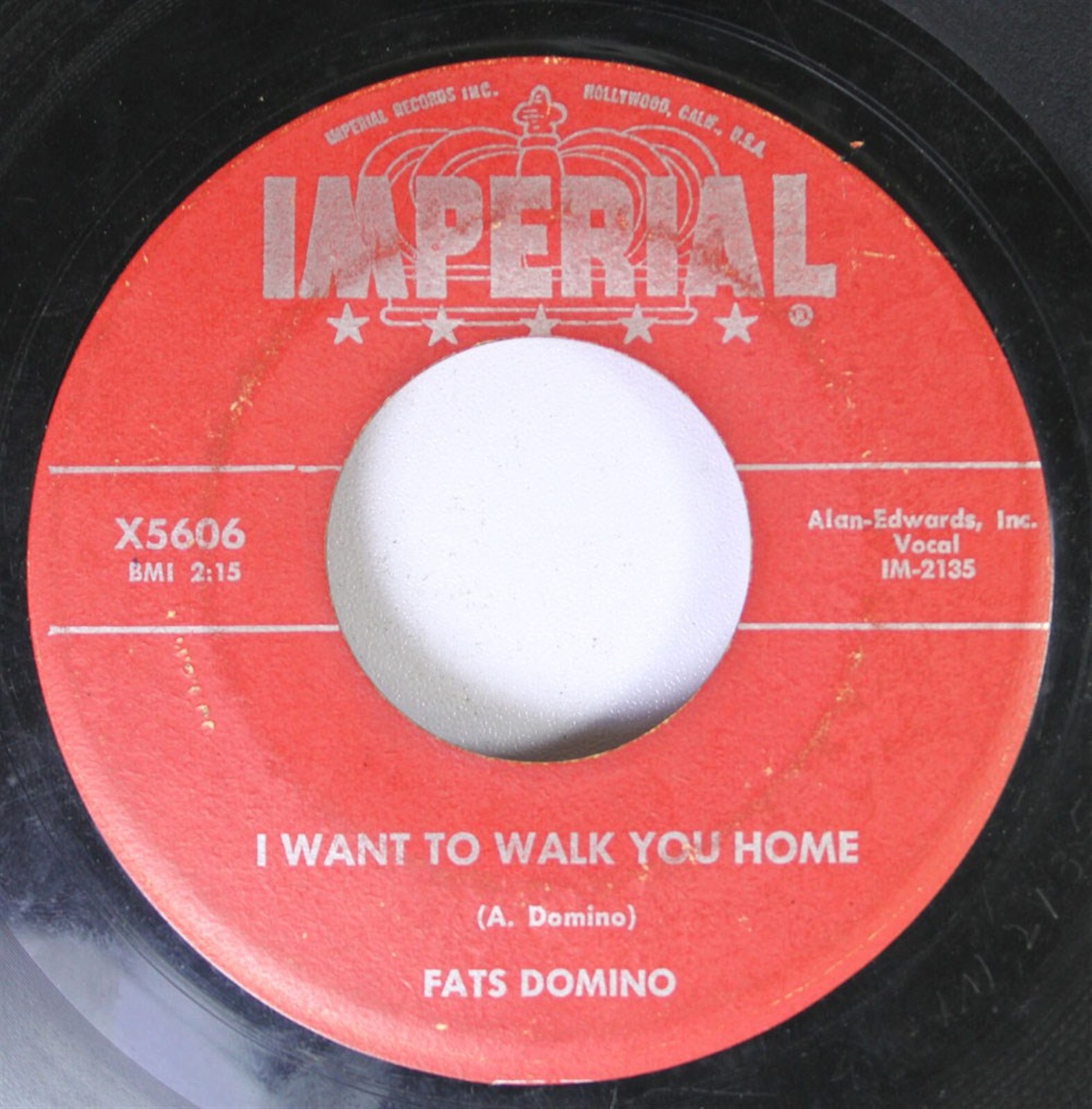
Understanding the "I Want to Walk You Home" Lyrics: A Deep Dive into Fats Domino’s Classic
"I Want to Walk You Home," written and performed by Fats Domino in 1959, is a quintessential rock and roll and R&B ballad that captures the essence of mid-century courtship. The lyrics express a polite yet persistent request for a roma...
"I Want to Walk You Home," written and performed by Fats Domino in 1959, is a quintessential rock and roll and R&B ballad that captures the essence of mid-century courtship. The lyrics express a polite yet persistent request for a romantic interest’s company, emphasizing themes of innocence, admiration, and the social rituals of the 1950s.
Contents
The Historical Context of "I Want to Walk You Home"
To truly understand the lyrics of "I Want to Walk You Home," one must first understand the landscape of 1959. This was a pivotal year in American music, a time when the raw energy of early rock and roll was beginning to blend more seamlessly with polished R&B production. Antoine "Fats" Domino Jr. was already a titan of the industry, known for his warm personality and the "New Orleans sound"—a mix of boogie-woogie piano, rolling rhythms, and heavy brass.
As of 2026, looking back nearly 70 years, the song remains a foundational text in the history of American pop. It was recorded at the legendary Cosimo Matassa’s studio in New Orleans, a site responsible for many of the recordings that defined the genre. The collaboration between Domino and his longtime producer and co-writer, Dave Bartholomew, resulted in a track that felt both effortless and meticulously crafted. Unlike the more aggressive rockabilly songs of the era, "I Want to Walk You Home" relied on a steady, walking tempo that mirrored the literal subject matter of the song.
The song’s success was immediate. It climbed to the top of the R&B charts and secured a top-ten spot on the Billboard Hot 100. For listeners today, the lyrics serve as a time capsule, reflecting a period when "walking someone home" was the primary vehicle for private conversation and romantic escalation before the ubiquity of telephones and digital communication.
Verse Analysis: Breaking Down the Sentiment
The beauty of the lyrics lies in their simplicity. However, beneath the surface-level repetition is a narrative of social negotiation and earnest desire.
The Opening Request
The song begins with the titular refrain: "I want to walk you home / Please let me walk you home." This is more than a request for physical proximity; it is a request for permission. In the 1950s, the "walk home" was a public declaration of interest. By asking "Please let me," the narrator acknowledges the social boundaries of the time. He is not demanding her time but rather petitioning for it, showcasing a level of chivalry that was a hallmark of Domino’s public persona.
The Observation of Beauty
In the lines "You look so sweet / I want to walk you home," the narrator focuses on "sweetness" rather than overt sexuality. This was a common trope in early rock and roll, designed to pass the scrutiny of radio censors while still conveying genuine attraction. The term "sweet" in this context implies a mix of physical beauty and a pleasant disposition—qualities that the narrator finds irresistible.
The Persistence and the "Pleading"
One of the most revealing segments of the song is the bridge: "I'm not talking about your mother / I'm not talking about your sister / I'm not talking about your brother / I'm talking about you." This serves to narrow the focus entirely on the individual. It removes the familial gatekeepers from the immediate equation, signaling that the narrator’s intentions are specific and personal.
Furthermore, the lines "I'll be begging and pleading / Just to walk you home" highlight the power dynamic. The narrator is willing to humble himself. This "begging and pleading" isn't necessarily a sign of desperation but rather a performance of devotion. In the romantic lexicon of the 1950s, a man’s willingness to persist in the face of initial hesitation was often seen as proof of his sincerity.
The Role of the "New Orleans Shuffle" in Lyrical Delivery
The "understanding" of lyrics often depends as much on the delivery as the words themselves. Fats Domino’s vocal style was characterized by a distinctive New Orleans accent and a "laid-back" phrasing that made the lyrics feel casual and approachable.
The song’s rhythm is built on triplets—a signature of the New Orleans R&B style. This musical structure creates a "bouncy" or "swinging" feel that mimics the cadence of someone walking down a sidewalk. When Domino sings about walking home, the piano and the drums (often played by Earl Palmer or similar New Orleans greats) provide a literal rhythmic representation of that action.
The interplay between the lyrics and the music is a masterclass in thematic cohesion. The "walking" bassline doesn't just support the melody; it reinforces the lyrical goal. Every time the listener hears the repeated request, the rhythm reminds them of the physical journey the narrator is so eager to take. This technical depth is why the song resonated then and remains a subject of study for music historians in 2026.
Sociological Interpretation: The Ritual of the Walk
To understand these lyrics in 2026, one must bridge the gap between the mid-century dating culture and modern social interactions. In 1959, the "walk home" was a liminal space—a transition from the public sphere (a dance, a school, or a shop) to the private sphere (the home).
During this walk, a couple could talk without the direct supervision of parents or peers. It was the "first date" before the term was formalized as it is today. The lyrics highlight a desire for this specific type of intimacy. When the narrator says, "I want to walk you home," he is essentially asking for a private audition.
The social stakes were high. If a girl allowed a boy to walk her home, it was a signal to the neighborhood and her family that he was an approved suitor. Therefore, the repetitive nature of the lyrics—the constant asking—reflects the significance of the "yes" the narrator is hoping to receive.
Technical Specifications and Personnel
The recording of "I Want to Walk You Home" is a prime example of the "Imperial Records" sound. The production was handled by Dave Bartholomew, who was the architect of the New Orleans R&B explosion.
| Feature | Detail |
|---|---|
| Primary Artist | Fats Domino |
| Release Date | July 1959 |
| Label | Imperial Records |
| Key Personnel | Dave Bartholomew (Producer), Cosimo Matassa (Engineer) |
| Chart Peak | #1 (R&B), #8 (Billboard Hot 100) |
| Genre | New Orleans R&B, Rock and Roll |
| Instrumentation | Piano, Saxophone, Bass, Drums, Guitar |
| Recording Location | Cosimo Matassa’s J&M Studios, New Orleans |
The personnel involved in these sessions often included the "Studio Band," a group of elite musicians including saxophonists Lee Allen and Alvin "Red" Tyler. Their contributions to the horn sections provided the "weight" behind the lyrics, giving the song a full-bodied sound that complimented Domino's lighthearted vocal delivery.
Comparative Analysis: Interpretations Through the Years
While Fats Domino’s version is the definitive one, the song has been covered by various artists, each bringing a different nuance to the lyrics.
- The British Invasion Context: When British bands covered the song in the early 1960s, they often emphasized the "rock" elements over the "R&B" shuffle. This changed the tone of the lyrics from a soulful plea to a more urgent, youthful demand.
- The Country/Folk Influence: Some artists have slowed the track down, turning it into a yearning ballad. In this tempo, the lyrics about "begging and pleading" take on a more melancholic, almost desperate tone compared to Domino’s original optimistic bounciness.
- Modern Reimagining: In contemporary settings, the song is often viewed through a lens of nostalgia. Artists who cover it in 2026 typically do so as an homage to the "innocent era," playing up the vintage charm of the request.
Regardless of the version, the core message remains the same: a celebration of the simple, physical act of being near someone you admire.
Frequently Asked Questions
Who wrote the lyrics to "I Want to Walk You Home"?
The song was written by Antoine "Fats" Domino Jr. himself. While he often collaborated with producer Dave Bartholomew on arrangements and songwriting, Domino is the primary credited writer for this specific track. His ability to write lyrics that were catchy yet emotionally resonant was a key factor in his long-term success.
What is the significance of the "triplet" rhythm in the song?
The triplet rhythm is a hallmark of the New Orleans shuffle. It divides each beat into three equal parts, creating a rolling, "walking" sensation. This rhythmically reinforces the lyrical theme of walking someone home, making the song feel as though it is physically moving forward.
Did "I Want to Walk You Home" face any censorship?
While some early rock songs were censored for suggestive lyrics, "I Want to Walk You Home" was considered very "safe." Its focus on polite courtship and domestic themes (mentioning the mother, sister, and brother) made it a favorite for radio programmers who were wary of more controversial "rebel" rock and roll.
Is there a specific "story" behind the song?
Like many of Fats Domino’s hits, the song isn't necessarily about one specific person but rather a universal experience. It draws on the common social reality of New Orleans youth in the mid-20th century. Domino was known for his ability to tap into common, relatable feelings of love and longing.
How did the song perform on the charts compared to other Fats Domino hits?
"I Want to Walk You Home" was one of Domino's most successful late-50s tracks. While "Ain't That a Shame" and "Blueberry Hill" are perhaps his most famous, "I Want to Walk You Home" was a massive R&B #1 hit, proving his sustained dominance in the genre as the decade came to a close.
Summary of the Lyric’s Legacy
The lyrics of "I Want to Walk You Home" represent more than just a pop song; they are a window into a specific cultural moment. The combination of Fats Domino’s warm delivery, the New Orleans triplet rhythm, and the respectful yet persistent nature of the "pleading" creates a song that is both a historical artifact and a timeless expression of attraction.
For those looking to appreciate the track in 2026, it serves as a reminder of the power of simplicity in songwriting. By focusing on a single, relatable goal—the walk home—Fats Domino created a masterpiece of the New Orleans R&B genre that continues to resonate with listeners seeking a sense of charm, sincerity, and musical craftsmanship.
Image Gallery