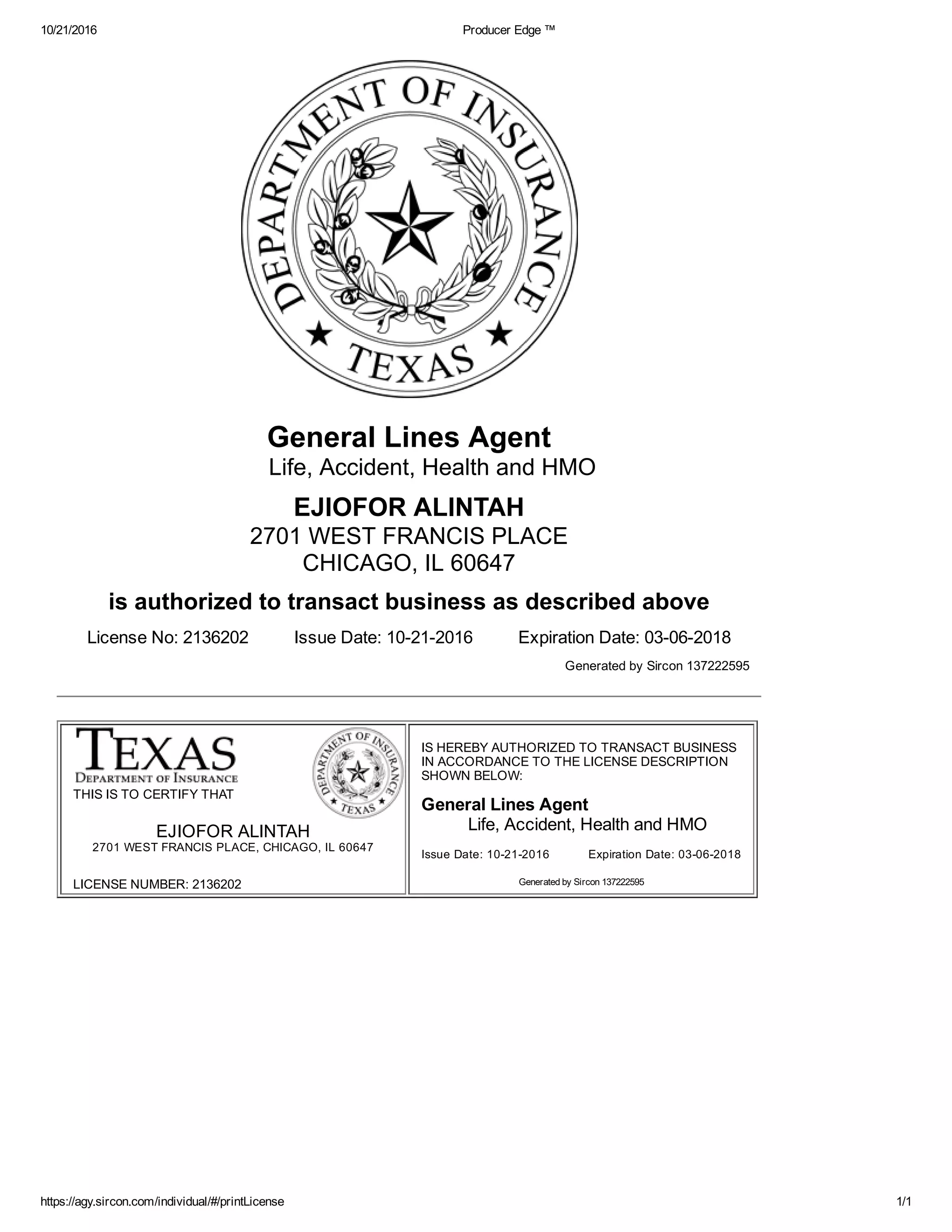
Navigating Non-Resident Life Insurance License Costs Per State
Obtaining a non-resident life insurance license allows producers to legally sell insurance products in states outside their home jurisdiction. Costs vary significantly by state, typically ranging from $25 to $300 per application, plus...
Obtaining a non-resident life insurance license allows producers to legally sell insurance products in states outside their home jurisdiction. Costs vary significantly by state, typically ranging from $25 to $300 per application, plus additional administrative fees. Licensing involves verifying home state standing, submitting an application via the National Insurance Producer Registry (NIPR), and paying state-specific reciprocity fees.
Contents
Understanding Non-Resident Licensing Requirements
A non-resident license is a reciprocal privilege granted to an insurance producer who holds an active resident license in their home state. Because each state regulates insurance independently, producers must obtain separate authorization for every state in which they wish to conduct business.
Before applying, a producer must be in "good standing" in their home state. Regulators verify this through the Producer Database (PDB) managed by the National Association of Insurance Commissioners (NAIC). If your home state license lapses, your non-resident licenses in other states are often automatically terminated. Therefore, maintaining your resident license is the foundational requirement for all non-resident operations.
The Financial Landscape: Breakdown of Costs
The "cost" of a non-resident license is rarely a single flat fee. Instead, it is composed of several distinct parts:
- State Filing Fee: This is the primary cost mandated by the Department of Insurance (DOI) in the target state. These fees are set by state statute and can change based on budgetary adjustments or legislative action.
- NIPR Processing Fee: Most states require applications to be processed through the NIPR. This system charges a convenience fee for digital processing.
- Electronic Check or Credit Card Surcharge: If you pay via a credit card, many state portals pass the payment gateway’s merchant fee on to the applicant.
- Renewal Fees: Non-resident licenses are not permanent. They must be renewed periodically—usually every two years—at a cost that often mirrors the initial application fee, though some states offer pro-rated or discounted renewal cycles.
Comparative Fee Structures
State fees for non-resident licenses are influenced by reciprocal agreements. Under the NAIC’s Uniform Producer Licensing Model Act, many states charge identical fees for non-residents as they do for residents, while others apply a flat surcharge for non-resident processing.
| State | Typical Initial Fee Range (USD) | Renewal Frequency |
|---|---|---|
| Alabama | $50 - $100 | Biennial |
| California | $150 - $250 | Biennial |
| Florida | $50 - $100 | Biennial |
| New York | $40 - $100 | Biennial |
| Texas | $50 - $150 | Biennial |
Note: These figures represent estimated standard processing fees as of 2026. Actual costs fluctuate based on specific line-of-authority combinations (e.g., adding health or accident to a life license).
Step-by-Step Application Process
To minimize costs and avoid delays, most producers use the NIPR electronic application portal. Following a standardized workflow ensures that you meet state-specific criteria without incurring "resubmission" fees caused by errors.
- Verify Home State Status: Ensure your NIPR PDB record is accurate and that your resident license is active and free of disciplinary actions.
- Check Reciprocity: Some states require non-residents to provide proof of certification from their home state. This is rarely a cost-intensive step but is a critical procedural requirement.
- Access the NIPR Gateway: Use the "Apply for a License" feature. You will select your resident state and the non-resident state you are targeting.
- Submit and Pay: Once the data is entered, you will be prompted to pay the total sum, which includes the state fee and the NIPR service fee.
- Monitor Status: Most approvals occur instantly or within 48 hours for automated states. Some states require manual review, which does not incur extra costs but requires patience.
Common Pitfalls and Cost-Saving Considerations
The most frequent mistake applicants make is applying for the wrong "Line of Authority" (LOA). If you only intend to sell life insurance, selecting "Life and Health" will often lead to higher fees than a "Life-only" application. Always review the specific license classes offered by the target state before payment.
Another consideration is "bulk" processing. If you are a high-volume producer looking to expand into multiple states simultaneously, consider using NIPR’s "State Selection" features to batch applications. While this does not reduce the individual state fees, it saves significant time and reduces the risk of administrative errors that lead to rejected applications—an expensive ordeal that often requires starting the process over.
Troubleshooting Licensing Discrepancies
If your application is rejected, do not immediately re-apply. Rejection usually stems from:
- Background Check Flags: If you have past regulatory actions, these must be disclosed. Failure to do so leads to immediate denial, and the application fee is almost never refunded.
- Database Lag: Sometimes, the PDB has not yet updated your status following a home state renewal. Wait 24–48 hours after a home state change before applying for non-resident licenses.
- Corporate vs. Individual Licensing: Ensure you are applying as an individual producer if you are not licensed as an agency. Fees for business entity licenses are substantially higher than for individual producers.
Professional Advisory Limitation
This guide provides general information regarding administrative procedures and fee structures as of 2026. Insurance regulation is subject to state-level legislative changes, including fee adjustments and updated compliance mandates. Producers should consult the official Department of Insurance website for the specific state in question to confirm current statutes and fee schedules before making financial commitments.
Frequently Asked Questions
Does the cost of a non-resident license depend on my home state? Yes, indirectly. Some states have "reciprocity" agreements. If your home state charges high fees for non-residents, the state you are applying to might charge you that same higher amount (a retaliatory fee structure). Always check the specific non-resident fee schedule for your target state.
Are licensing fees refundable if my application is denied? In the vast majority of cases, no. State Departments of Insurance generally treat the application fee as an administrative processing charge. If you are denied due to background issues or lack of qualifications, that payment is considered earned by the state.
How often do I need to pay for a non-resident license? Most non-resident licenses follow a biennial (two-year) renewal cycle. However, expiration dates vary. Some states align the expiration with your birth month, while others use a fixed calendar date. Check your individual state portal to avoid a lapse, which could trigger a penalty or the need to re-apply from scratch.
Can I get a discount if I apply for multiple states at once? While there is no bulk discount for state fees, the NIPR platform is designed to make the process more efficient. By utilizing the digital portal, you avoid the high cost of manual, paper-based submissions, which some states charge as an additional "paper processing" surcharge.
What happens if I forget to renew a non-resident license? If a license expires, you are legally prohibited from soliciting, negotiating, or receiving commissions for insurance in that state. You will typically be required to pay the renewal fee plus a "late fee" or "reinstatement fee" if the grace period has passed.
Next Steps for Producers
- Audit your current license footprint: List every state where you currently conduct business and confirm the expiration dates.
- Review the NIPR Fee Schedule: Visit the NIPR website and use their "State Licensing Requirements" tool to pull a current quote for your specific license type in your target states.
- Sync Renewals: If possible, try to align your renewal schedules to ensure you are not hit with multiple surprise bills in a single quarter.
Image Gallery