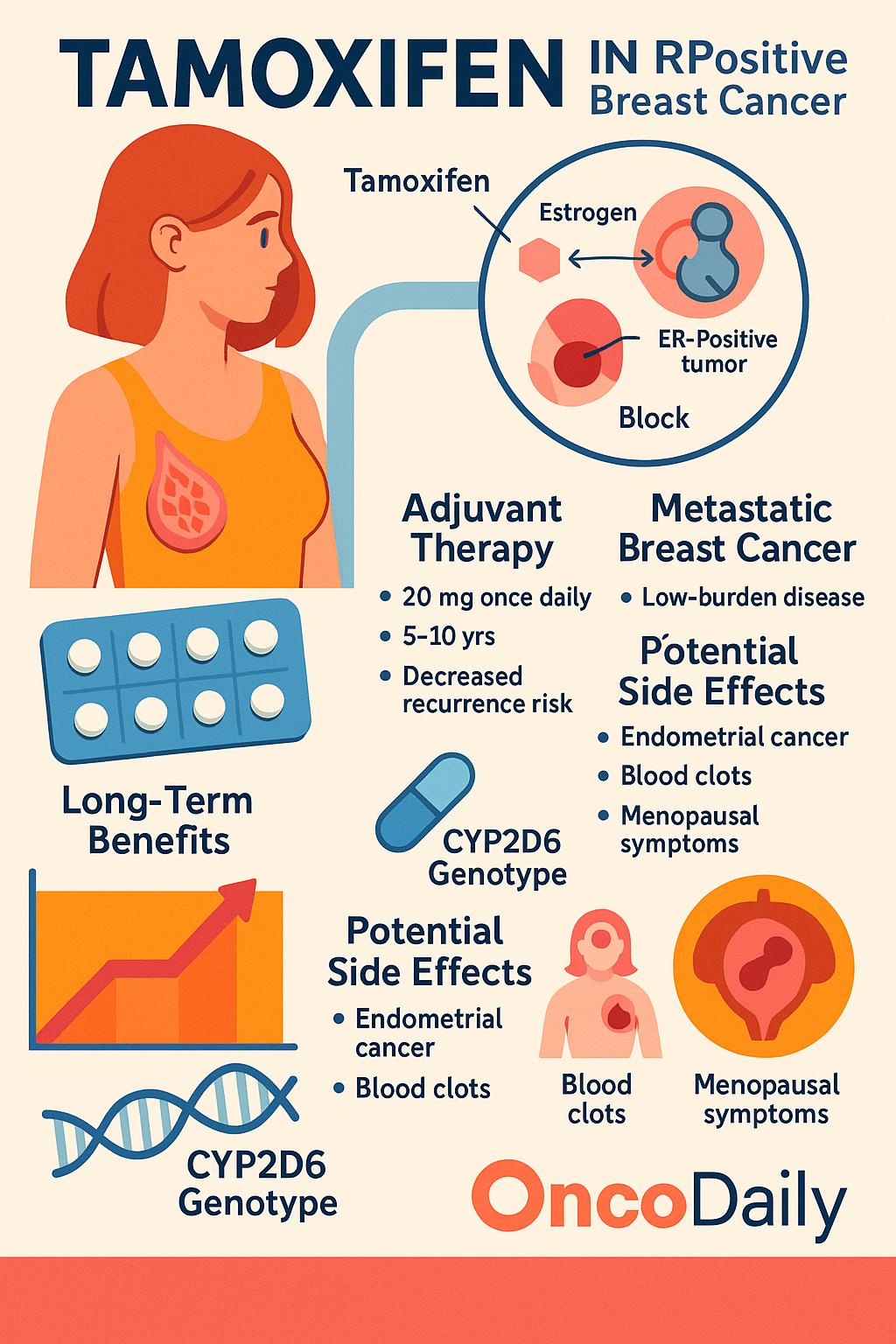
Understanding the Tamoxifen Benefits for Patients
Tamoxifen is a foundational medication used primarily to treat and prevent hormone receptor-positive breast cancer by blocking the effects of estrogen in breast tissue. For patients, its primary benefits include a significant reduction...
Tamoxifen is a foundational medication used primarily to treat and prevent hormone receptor-positive breast cancer by blocking the effects of estrogen in breast tissue. For patients, its primary benefits include a significant reduction in cancer recurrence, increased long-term survival rates, and secondary protective effects on bone density and cholesterol levels in postmenopausal individuals.
Contents
Tamoxifen belongs to a class of medications known as Selective Estrogen Receptor Modulators (SERMs). Unlike many treatments that destroy cells directly, tamoxifen works by interfering with the hormonal signals that certain types of cancer cells need to grow. As of 2026, it remains one of the most studied and prescribed endocrine therapies in the world, serving as a cornerstone of treatment for both early-stage and metastatic breast cancer, as well as a preventative measure for high-risk individuals.
The Role of Tamoxifen in Breast Cancer Management
The primary clinical utility of tamoxifen is the treatment of hormone receptor-positive (HR+) breast cancer. In these cancers, the cells have receptors that allow estrogen to attach and signal the cell to divide and multiply. By occupying these receptors, tamoxifen acts as a "broken key" in a lock, preventing the body’s natural estrogen from binding to the cancer cells.
For patients diagnosed with early-stage breast cancer, tamoxifen is typically prescribed as adjuvant therapy—treatment given after primary surgery or radiation to reduce the risk of the cancer returning. The benefit is profound: clinical data accumulated over decades indicates that five years of tamoxifen treatment reduces the annual death rate from breast cancer by approximately one-third.
In the context of metastatic or advanced breast cancer, the benefit shifts toward disease stabilization and symptom management. It can shrink tumors or slow their progression, providing patients with extended periods of stable health and a higher quality of life compared to more aggressive cytotoxic chemotherapies.
Mechanism of Action: How Tamoxifen Targets Hormone Receptors
To understand why tamoxifen is beneficial, one must understand its "selective" nature. It does not lower estrogen levels throughout the whole body; instead, it modulates how different tissues respond to estrogen.
In breast tissue, tamoxifen acts as an estrogen antagonist. It binds to estrogen receptors (ER) on the surface of cells. Because the tamoxifen molecule is shaped similarly to estrogen, it fits into the receptor site but fails to trigger the biological "on" switch for cell growth. This effectively starves the cancer cells of the hormonal stimulus they require to proliferate.
However, in other parts of the body, such as the bones and the liver, tamoxifen acts as an estrogen agonist. This means it mimics some of the beneficial effects of estrogen. This dual nature is what allows tamoxifen to provide secondary health benefits beyond its anti-cancer properties, particularly for postmenopausal women who are at risk for osteoporosis and cardiovascular issues.
Clinical Benefits in Prevention and Risk Reduction
One of the most significant benefits of tamoxifen is its role in primary prevention. For women who have not been diagnosed with breast cancer but are at high risk due to genetic factors (like BRCA mutations) or a strong family history, tamoxifen can reduce the risk of developing invasive breast cancer by about 50%.
This preventative benefit extends to patients diagnosed with Ductal Carcinoma In Situ (DCIS), a non-invasive condition where abnormal cells are found in the lining of a breast duct. Taking tamoxifen after surgery for DCIS significantly lowers the likelihood of developing invasive cancer in either breast.
The National Cancer Institute (NCI) and other regulatory bodies have long recognized tamoxifen as a standard of care for risk reduction. While the decision to use it for prevention involves a careful balance of risks and benefits, for many high-risk patients, it offers a proactive way to manage their health outcomes.
The 10-Year Milestone: Extended Adjuvant Therapy
In recent years, leading up to 2026, medical guidelines have increasingly emphasized the benefits of extended tamoxifen therapy. Historically, five years was the standard duration. However, landmark trials such as the ATLAS (Adjuvant Tamoxifen: Longer Against Shorter) and aTTom (adjuvant Tamoxifen—To offer more?) studies proved that 10 years of therapy provides superior protection.
The benefits of the 10-year regimen include:
- Continued Recurrence Reduction: The risk of recurrence continues to drop during years 5 through 10 and remains lower for years afterward.
- Reduced Mortality: Patients who complete the 10-year course show a significant decrease in breast cancer-related deaths compared to those who stop after five years.
- Long-term Carryover Effect: The protective benefits of tamoxifen persist for many years even after the patient stops taking the medication, a phenomenon often called the "carryover effect."
Healthcare providers now personalize the duration of therapy based on the patient’s specific risk profile, including tumor size, lymph node involvement, and how well the patient tolerates the initial five years of treatment.
Beyond Oncology: Cardiovascular and Bone Health
Because tamoxifen mimics estrogen in certain tissues, it offers non-oncological benefits that are particularly valuable for postmenopausal patients. When estrogen levels naturally decline during menopause, women face increased risks of bone loss and heart disease.
Bone Density Preservation
In postmenopausal women, tamoxifen acts like estrogen in the skeletal system. It inhibits the activity of osteoclasts (cells that break down bone), thereby helping to maintain bone mineral density. This reduces the risk of fractures and osteoporosis, which is a significant advantage over another class of drugs called aromatase inhibitors (AIs), which are known to cause bone thinning.
Lipid Profile and Heart Health
Tamoxifen has been shown to lower levels of total cholesterol and low-density lipoprotein (LDL), often referred to as "bad" cholesterol. By improving the lipid profile, tamoxifen may offer a degree of cardiovascular protection. While it is not a replacement for dedicated heart medications, this effect is a positive secondary outcome for many patients.
Comparing Tamoxifen to Aromatase Inhibitors
For postmenopausal patients, the choice often lies between tamoxifen and aromatase inhibitors (such as letrozole or anastrozole). The following table highlights the comparative benefits and considerations.
| Feature | Tamoxifen (SERM) | Aromatase Inhibitors (AI) |
|---|---|---|
| Mechanism | Blocks estrogen receptors in breast cells. | Stops the production of estrogen entirely. |
| Patient Eligibility | Pre- and postmenopausal women; also men. | Primarily postmenopausal women. |
| Effect on Bone | Protects bone density in postmenopausal women. | Increases risk of bone loss and fractures. |
| Cardiovascular Effect | Lowers LDL cholesterol. | May increase cholesterol in some patients. |
| Common Side Effects | Hot flashes, night sweats, uterine risk. | Joint pain, muscle aches, bone thinning. |
| Blood Clot Risk | Slightly increased risk. | No significant increase in risk. |
| Standard Duration | 5 to 10 years. | 5 to 10 years. |
Managing Side Effects to Maintain Benefit Adherence
To fully realize the benefits of tamoxifen, consistent adherence to the daily pill regimen is essential. However, the anti-estrogenic effects can lead to side effects that challenge a patient's quality of life. Understanding and managing these is key to staying on the medication.
- Hot Flashes and Night Sweats: These are the most common issues. Patients often find relief through lifestyle changes (dressing in layers), non-hormonal medications (like certain SSRIs), or acupuncture.
- Uterine Health: In rare cases, tamoxifen’s estrogenic effect on the uterus can cause thickening of the uterine lining (endometrial hyperplasia). Patients are encouraged to report any unusual vaginal bleeding immediately to their gynecologist for monitoring.
- Thromboembolic Events: There is a small but notable increase in the risk of blood clots. Patients should stay active and discuss any history of clotting disorders with their physician.
By proactively addressing these side effects with a healthcare team, patients can ensure they remain on the therapy long enough to achieve maximum cancer-fighting benefits.
Eligibility and Personalizing Treatment
Tamoxifen is remarkably versatile. Unlike aromatase inhibitors, which are generally only effective for postmenopausal women (whose estrogen comes from fat tissue and adrenal glands), tamoxifen is effective regardless of menopausal status.
- Premenopausal Women: Tamoxifen remains the gold standard for younger women with HR+ breast cancer.
- Postmenopausal Women: It is a vital alternative for those who cannot tolerate the joint pain associated with aromatase inhibitors or those at high risk for osteoporosis.
- Male Patients: Men with breast cancer are almost always treated with tamoxifen, as it is the most effective endocrine therapy studied in the male population.
Modern genomic testing, such as the Oncotype DX or MammaPrint, helps doctors determine the likely benefit of tamoxifen for an individual patient, ensuring that those with low-risk tumors are not over-treated, while those with higher risk receive the full 10-year course.
Frequently Asked Questions
How long does it take for tamoxifen to start working?
Tamoxifen begins blocking estrogen receptors shortly after the first few doses. However, because it works by preventing cell growth rather than killing cells instantly, its clinical benefits (such as tumor shrinkage or recurrence prevention) are realized over months and years of consistent use.
Can I take tamoxifen if I want to get pregnant?
No. Tamoxifen can cause fetal harm and should not be taken during pregnancy. Patients of reproductive age are advised to use non-hormonal contraception (like copper IUDs or barrier methods) while on the drug. Generally, it is recommended to stop tamoxifen for at least two months before attempting to conceive to allow the drug to clear from the system.
Does tamoxifen cause weight gain?
While many patients report weight gain during treatment, clinical trials have often shown that weight changes in tamoxifen users are similar to those in the general aging population or those undergoing menopause. However, managing metabolism through diet and exercise is recommended, as maintaining a healthy weight is itself a factor in reducing cancer recurrence risk.
Is tamoxifen effective for triple-negative breast cancer?
No. Tamoxifen specifically targets hormone receptors. Triple-negative breast cancer lacks estrogen, progesterone, and HER2 receptors, meaning tamoxifen has no target to bind to. This is why testing the hormone status of the tumor is a prerequisite for starting therapy.
What happens if I miss a dose?
If you miss a dose, take it as soon as you remember. If it is almost time for your next dose, skip the missed one and continue with your regular schedule. Do not take two doses at once. Consistency is important for maintaining steady levels of the medication in your bloodstream.
Practical Recommendations for Patients
To maximize the benefits of tamoxifen, patients should maintain a collaborative relationship with their oncology team. It is advisable to keep a daily log of any symptoms or side effects to discuss during follow-up appointments. Regular gynecological exams and bone density scans (DEXA) are also recommended to monitor the systemic effects of the medication. Finally, utilizing tools like pill organizers or smartphone reminders can help ensure the high level of adherence necessary for long-term cancer prevention and survival.
Image Gallery