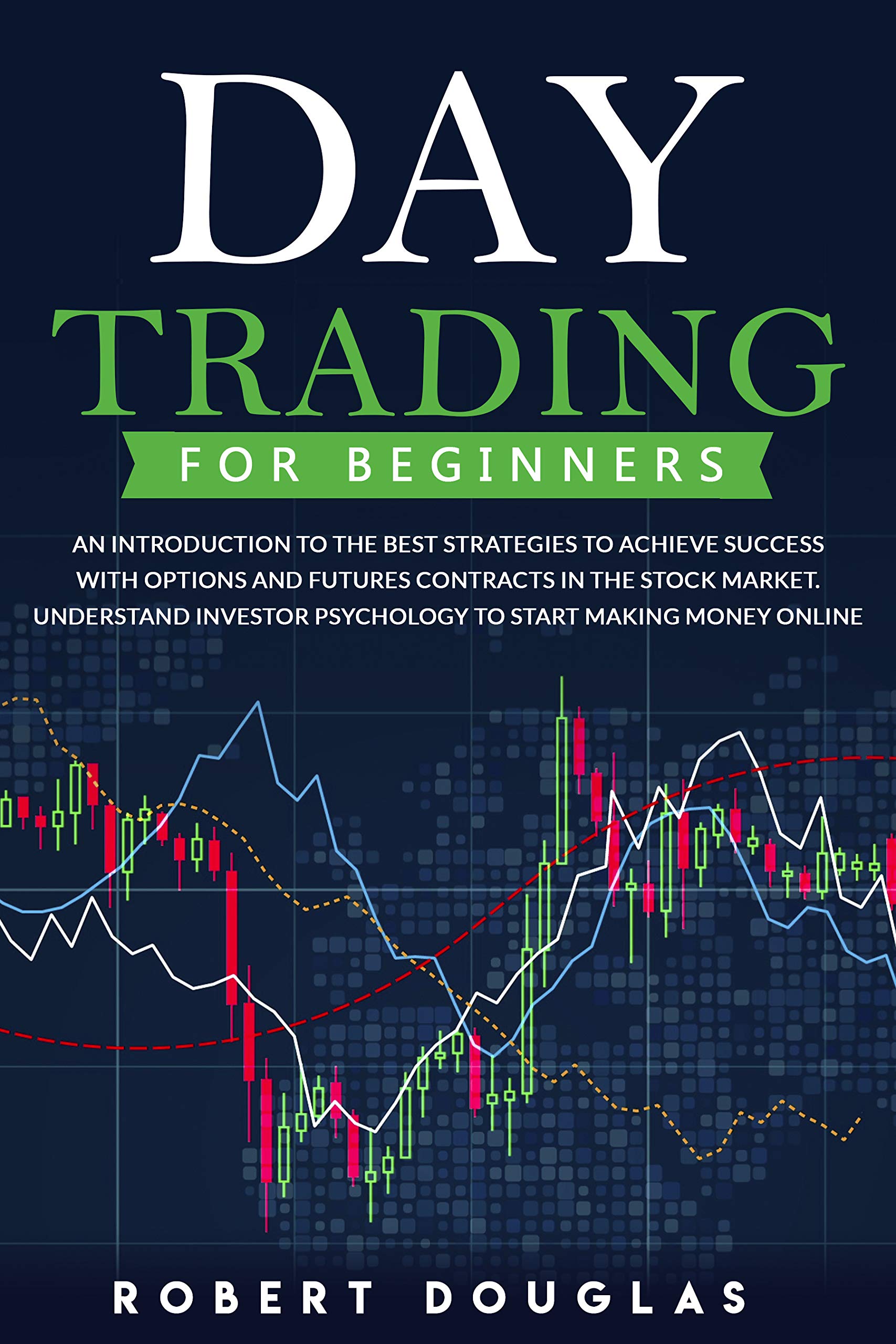
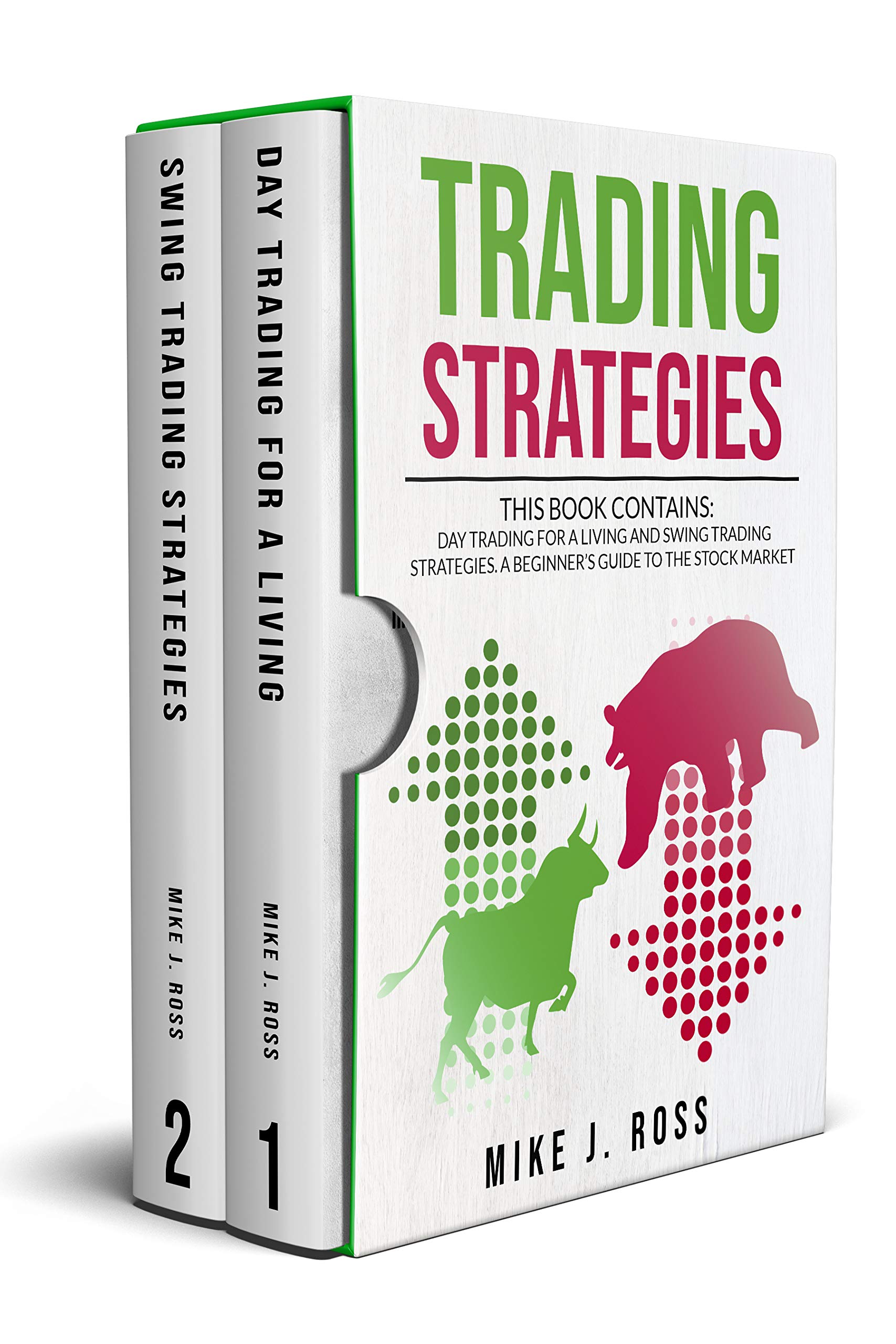
The Definitive Guide to the Best Trading Books for Beginners
Selecting the right trading books for beginners requires building a balanced curriculum across market structure, technical analysis, trading psychology, and risk management. Key texts like John J. Murphy’s Technical Analysis of the Fin...
Selecting the right trading books for beginners requires building a balanced curriculum across market structure, technical analysis, trading psychology, and risk management. Key texts like John J. Murphy’s Technical Analysis of the Financial Markets and Mark Douglas’s Trading in the Zone provide the foundational framework needed to understand price movements, build probabilistic mindsets, and manage capital effectively.
Contents
Disclaimer: This guide is provided for educational purposes only and does not constitute financial advice. Trading stocks, options, forex, and futures involves substantial risk of loss. Always consult a licensed financial advisor before allocating real capital.
Why Books Remain Essential for Early Trading Education
In an era dominated by short-form videos and real-time social media alerts, books remain the single most effective tool for developing a cohesive trading methodology. Online content often presents fragmented tactics without explaining the underlying mechanics, risk parameters, or statistical foundations required for consistent performance.
A structured trading book provides a comprehensive context that piece-meal tutorials cannot replicate. Professional authors and market veterans typically spend decades refining their frameworks before publishing them. Studying these texts exposes beginners to complete, tested operational systems—covering market structure, trade identification, position sizing, entry triggers, stop-loss placement, and exit strategies.
Furthermore, reading high-quality financial literature helps filter out the dangerous misconceptions prevalent among novice traders. It establishes realistic expectations regarding profit margins, drawdowns, and win-loss ratios, preventing beginners from treating financial markets as high-stakes lotteries.
The Four Core Pillars of a Trading Curriculum
A complete trading education cannot rely on a single perspective. To trade effectively across equities, foreign exchange (forex), commodities, or digital assets, a beginner must study four distinct disciplines:
- TRADING EDUCATION
- Market Dynamics & Structure
- Technical Analysis
- Risk Management
- Trading Psychology
- Market Dynamics & Mechanics: Understanding how liquidity flows, how order books function, and how institutional players operate within equities, futures, or currency markets.
- Technical Analysis & Price Action: Learning how to interpret chart patterns, identify trends, locate support and resistance zones, and use mathematical indicators to evaluate probability.
- Risk Management & Position Sizing: Mastering capital preservation, calculating expected value, managing drawdowns, and establishing strict stop-loss discipline.
- Trading Psychology & Execution: Developing emotional regulation, overcoming cognitive biases like greed and fear, and executing a trading plan without hesitation.
Essential Trading Books for Beginners (Categorized Breakdown)
1. Market Mechanics and Historical Context
Reminiscences of a Stock Operator by Edwin Lefèvre
- First Published: 1923
- Core Focus: Market history, trader psychology, trend-following principles
Although published over a century ago, this thinly veiled biography of legendary trader Jesse Livermore remains mandatory reading for anyone entering financial markets. The book traces Livermore's evolution from a teenage bucket-shop ticker watcher to one of Wall Street's largest speculators.
The primary value of Reminiscences lies in its timeless observations regarding human nature and price behavior. Lefèvre demonstrates that while market technologies and instruments change, price behavior remains constant because human emotions—specifically fear, greed, hope, and ignorance—do not change. Beginners learn critical lessons about respecting market trends, avoiding the urge to trade constantly, and taking large losses early rather than holding losing positions out of hope.
A Random Walk Down Wall Street by Burton G. Malkiel
- Modern Reference Edition: 13th Edition (2023)
- Core Focus: Market efficiency, fundamental analysis vs. technical analysis, risk-adjusted returns
Burton Malkiel’s classic text provides an essential counterweight to technical trading literature. As a Princeton economist, Malkiel introduces the Efficient Market Hypothesis (EMH), arguing that asset prices reflect all available information, making it difficult to consistently beat the market without taking on disproportionate risk.
For novice traders, this book serves as an important reality check. It explains the mechanics of broad market indices, options, futures, and modern portfolio theory. Even if a beginner intends to pursue active technical trading, understanding Malkiel's arguments helps them respect market efficiency and avoid naive strategies that fail to account for transaction costs and bid-ask spreads.
2. Technical Analysis and Price Action
Technical Analysis of the Financial Markets by John J. Murphy
- First Published: 1999 (New York Institute of Finance)
- Core Focus: Comprehensive charting techniques, indicators, market intermarket relationships
Widely considered the definitive textbook for the Chartered Market Technician (CMT) program, John Murphy’s guide covers every major aspect of technical analysis. Murphy systematically introduces readers to chart construction, trend lines, support and resistance, price patterns (such as head-and-shoulders, triangles, and flags), moving averages, oscillators, and volume studies.
For beginners, this text serves as an encyclopedia rather than a simple narrative. Murphy explains not just how to draw a trendline or calculate a Relative Strength Index (RSI), but why these visual indicators reflect shifts in supply and demand. Reading this book allows novitiate traders to build a standardized technical vocabulary and recognize chart setups across various asset classes.
Classic Reversal Pattern: Head and Shoulders Structure
- Head
- Left Shoulder
- Right Shoulder
- Neckline (Support Zone)
Japanese Candlestick Charting Techniques by Steve Nison
- First Published: 1991 (Second Edition: 2001)
- Core Focus: Candlestick price patterns, market sentiment visualization
Steve Nison introduced Japanese candlestick charting to the Western financial world in this classic text. Before Nison’s work, most Western traders relied exclusively on simple line charts or American bar charts.
Candlestick charts display the open, high, low, and close prices for a specific timeframe, visualizing the psychological battle between buyers and sellers within that candle body and wicks. Nison details individual candle signals (such as dojis, hammers, and shooting stars) alongside multi-candle reversal and continuation patterns (such as morning stars, engulfing patterns, and haramis). Beginners gain a deep appreciation for price action visual indicators that act as real-time sentiment gauges.
3. Risk Management and Position Sizing
The Universal Principles of Successful Trading by Brent Penfold
- First Published: 2010 (Wiley Trading)
- Core Focus: Capital preservation, trade expectations, risk parameters, system development
Brent Penfold cuts through popular trading myths to focus heavily on the element that determines long-term survival: risk control. Penfold establishes that strategy selection is secondary to capital management and psychological discipline.
The book breaks down complex mathematical concepts—such as the risk of ruin, expectancy equations, and fixed-fractional position sizing—into accessible frameworks. Penfold explicitly teaches readers how to determine position size based on account size and stop-loss distance, ensuring that a string of consecutive losses cannot deplete a beginner’s trading capital.
$$\text{Position Size (Shares/Contracts)} = \frac{\text{Account Capital} \times \text{Risk Percentage per Trade}}{\text{Entry Price} - \text{Stop-Loss Price}}$$
4. Trading Psychology and Mindset
Trading in the Zone by Mark Douglas
- First Published: 2000 (Prentice Hall Press)
- Core Focus: Probabilistic thinking, emotional discipline, elimination of cognitive bias
Mark Douglas's Trading in the Zone is universally recognized as the essential text on trading psychology. Douglas argues that market success requires a complete shift in thinking: from trying to predict the outcome of an individual trade to thinking strictly in terms of probabilities over a series of trades.
TRADER MINDSET COMPARISON
- Linear Thinking (Beginner)
- Individual Trade
- Focus on Outcome
- Fear / Greed / Regret
- Probabilistic Thinking (Disciplined)
- Sample of 100 Trades
- Focus on Execution
- Statistical Advantage
Most beginners enter markets trying to be "right" on every transaction. Douglas explains how this desire leads to hesitation, early profit-taking, moving stop-losses, and revenge trading. By teaching traders to accept uncertainty and embrace risk, Douglas provides the psychological framework necessary to execute a technical system consistently without emotional interference.
The Daily Trading Coach by Brett N. Steenbarger
- First Published: 2009 (Wiley)
- Core Focus: Self-coaching, performance psychology, continuous improvement metrics
Dr. Brett Steenbarger, a clinical psychologist and trading performance coach, provides 101 structured lessons designed to help traders act as their own performance coaches. Unlike general self-help literature, this book uses actionable techniques from cognitive-behavioral therapy (CBT) and sports psychology.
Steenbarger outlines clear daily routines for pre-market preparation, intra-day monitoring, and post-market review. For beginners, this book provides a blueprint for tracking personal metrics, identifying recurring behavioral errors, and optimizing trading strategies over time.
Comparative Overview of Essential Trading Books
The following table summarizes the primary focus, difficulty level, and recommended asset class/style for each featured book:
| Book Title | Author | Primary Focus Area | Target Reader Experience | Best Applied Asset Class / Style |
|---|---|---|---|---|
| Reminiscences of a Stock Operator | Edwin Lefèvre | Market Psychology & History | Absolute Beginner | All Markets / Trend Following |
| Technical Analysis of Financial Markets | John J. Murphy | Charting & Technical Analysis | Beginner to Intermediate | Equities, Futures, Forex |
| Trading in the Zone | Mark Douglas | Execution & Mindset | Beginner to Advanced | All Active Trading Styles |
| Japanese Candlestick Charting | Steve Nison | Price Action Analysis | Beginner | Equities, Forex, Crypto |
| The Universal Principles of Successful Trading | Brent Penfold | Risk Management & Sizing | Beginner to Intermediate | Active Swing & Day Trading |
| A Random Walk Down Wall Street | Burton G. Malkiel | Market Structure & Efficiency | Absolute Beginner | Long-Term & Systemic Trading |
| How to Make Money in Stocks | William J. O'Neil | Growth Equities & Timing | Beginner to Intermediate | Growth Stocks / Swing Trading |
| The Daily Trading Coach | Brett N. Steenbarger | Self-Coaching & Metrics | Intermediate | Active Day & Swing Trading |
How to Implement Lessons from Trading Books
Reading trading books linearly without practical application rarely builds effective market skills. To absorb and deploy these principles, adopt a structured, four-phase study methodology:
- Phase 1: Theory & Notes
- Phase 2: Historical Chart Annotation
- Phase 3: Simulated Paper Trading
- Phase 4: Live Micro-Position Trading
Phase 1: Conceptual Extraction
While reading, maintain a dedicated study journal. Avoid highlighting passive text. Instead, write down specific, actionable rules defined by the author regarding:
- Market conditions required for strategy entry.
- Quantitative criteria for calculating position size.
- Specific chart patterns and technical indicator confirmations.
- Conditions under which a trade must be exited immediately (stop-loss placement).
Phase 2: Historical Chart Annotation
Apply chart-based concepts directly to historical market data using modern plotting platforms like TradingView or proprietary broker tools.
- Locate 50 distinct historical examples of candlestick setups or technical patterns described in Steve Nison's or John Murphy's books.
- Note where entries, stop-losses, and profit targets would have been placed.
- Track how often the patterns succeeded or failed to understand real-world probability.
Phase 3: Simulated Paper Trading
Before placing real capital at risk, test the methodology using a paper trading account. Execute a sample size of at least 50 to 100 simulated trades using the rules gathered from your reading. Document every trade in a trading journal, recording:
- Reason for entry.
- Risk-to-reward ratio.
- Adherence to risk management principles (e.g., risking no more than 1% of virtual portfolio capital per trade).
- Emotional state during trade management.
Phase 4: Live Micro-Position Execution
Transition to real-money execution using minimal position sizes (e.g., single shares or fractional contracts). This phase tests whether you can manage real emotional feedback while keeping potential financial loss negligible. Review your trade performance weekly against the principles taught by Douglas and Penfold.
Common Pitfalls to Avoid When Reading Trading Literature
Novice traders frequently fall into recurring cognitive traps when consuming market literature:
- Searching for the "Holy Grail" Indicator: Beginners often read technical books looking for a single secret indicator that guarantees winning trades. Experienced authors emphasize that no technical setup works 100% of the time; successful trading relies on statistical edges across broad sample sizes.
- Ignoring Publication Context: Strategies written for high-volatility environments or high-interest-rate eras may perform differently under altered macro conditions. Always separate enduring principles (such as cut losses short and let profits run) from era-specific tactics.
- Skipping the Math on Risk Management: Readers frequently skim through chapters detailing formulaic position sizing to reach visually engaging strategy sections. Failing to master risk management formulas usually leads to account depletion regardless of technical entry skills.
- Over-complicating Systems: Combining tools from five different books simultaneously creates "paralysis by analysis." Build simple, clear trading plans combining one macro framework, one technical entry signal, and strict risk rules.
Frequently Asked Questions
Should beginners read investing books or trading books first?
Beginners should start with foundational books covering overall market structure and broad investment theory—such as Burton Malkiel's A Random Walk Down Wall Street—before moving into active trading texts. Understanding how markets function generally prevents traders from mistaking broad market index trends for personal trading skill.
Is technical analysis still relevant given automated algorithm trading?
Yes. Modern algorithmic systems are largely programmed to monitor technical levels, liquidity pools, moving averages, and volatility bands derived from classical technical analysis. Understanding technical patterns allows retail traders to spot institutional accumulation and distribution zones mapped visually on public price charts.
Are older books published decades ago still useful for today's markets?
Books dealing with human psychology (like Reminiscences of a Stock Operator or Trading in the Zone) and fundamental risk management are timeless because human market behavior and capital preservation rules remain constant. However, specific mechanics—such as execution speeds, commission structures, and platform tools—should be updated with current market practices.
How long does it take to become proficient after reading trading books?
Reading books provides the theoretical framework, but practical proficiency typically requires 6 to 18 months of consistent charting, paper trading, and real-market micro-position testing. Books accelerate the learning curve by keeping beginners from making catastrophic mistakes early in their development.
What is the ideal risk-per-trade percentage for a beginner?
Most risk-management literature (including Brent Penfold’s guidelines) recommends risking no more than 1% to 2% of total trading capital on any single trade. For beginners, risking 0.5% to 1% preserves capital long enough to gain real market experience without risking severe drawdowns.
Next Steps for Building Your Personal Trading Library
To construct an effective personal learning track without feeling overwhelmed, execute the following operational sequence:
- Start with Mindset and Risk: Read Mark Douglas’s Trading in the Zone alongside Brent Penfold’s The Universal Principles of Successful Trading. Establish your risk parameters before looking at chart patterns.
- Master Chart Construction: Read John J. Murphy’s Technical Analysis of the Financial Markets systematically. Use a notebook to draw patterns and summarize indicator dynamics.
- Build a Single Trading Strategy: Choose one entry methodology (e.g., breakout trading, trend continuation, or candlestick reversal) from your technical reading. Write down explicit, written rules for entries, stops, position sizing, and profit targets.
- Log and Journal Trades: Maintain a detailed log of every paper trade and small-scale live trade using spreadsheet software or dedicated software tools like TraderSync or Edgewonk.
Image Gallery