Is Silicon-Based Life Realistic? The Science of Non-Carbon Astrobiology
Silicon-based life is scientifically improbable under Earth-like conditions, but it remains theoretically plausible in extreme, non-aqueous environments. While silicon shares carbon’s four valence electrons and structural versatility,...
Silicon-based life is scientifically improbable under Earth-like conditions, but it remains theoretically plausible in extreme, non-aqueous environments. While silicon shares carbon’s four valence electrons and structural versatility, its inability to form stable double bonds, its extreme reactivity with water, and the solid nature of its primary oxide ($SiO_2$) present severe metabolic barriers.
Contents
The Chemical Foundation: Why Silicon Is Carbon's Primary Alternative
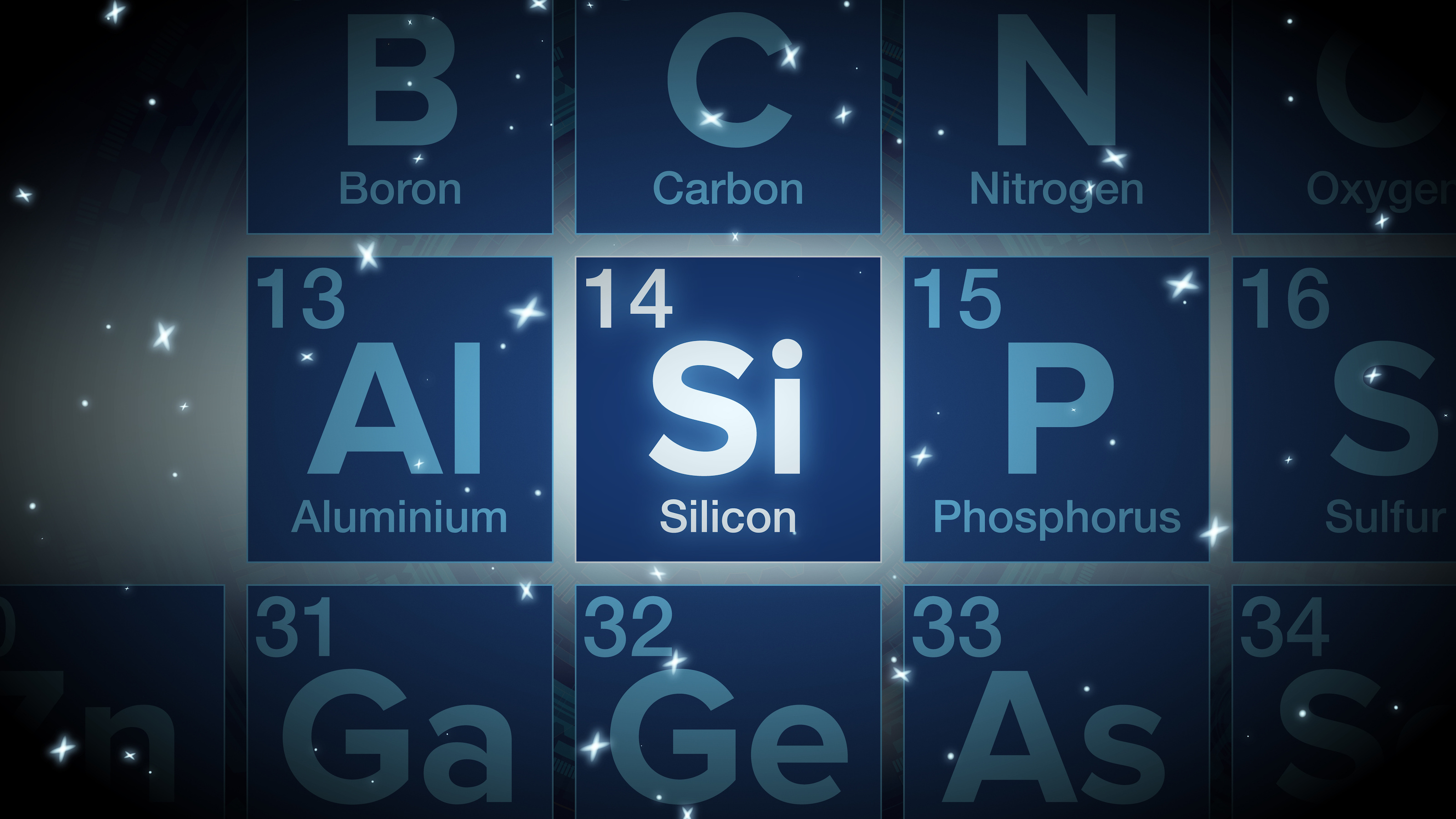
When astrobiologists and biochemists evaluate alternatives to carbon-based life, silicon ($Si$) is consistently the primary candidate. Positioned directly beneath carbon ($C$) in Group 14 of the periodic table, silicon shares key structural traits with carbon. Both atoms possess four valence electrons, allowing them to form up to four covalent bonds simultaneously. This tetravalent architecture enables the formation of complex, three-dimensional molecular frameworks, long chains, and ring structures essential for storing genetic information and building cellular machinery.
On Earth, silicon is vastly more abundant than carbon. Silicon makes up roughly 27.7% of the Earth's crust by mass, primarily in the form of silicate minerals and quartz, making it the second most abundant element after oxygen. Carbon, by contrast, accounts for less than 0.1% of Earth's crustal mass. Despite this overwhelming local advantage, terrestrial biology evolved exclusively around carbon.
Understanding why carbon won out on Earth requires examining atomic structure. Silicon has a larger atomic radius (111 pm) than carbon (67 pm). Because its outer valence electrons are shielded by an inner shell of electrons, silicon forms longer, weaker covalent bonds than carbon. While this structural difference allows silicon to participate in diverse chemical configurations, it also fundamentally changes how silicon molecules interact with energy, solvents, and oxygen.
- Carbon Framework:
- H - C - C - C - H
- Stable, versatile chains
- Silicon Framework:
- H - Si - Si - Si - H
- Unstable in water/oxygen
Four Major Biochemical Obstacles to Silicon-Based Biology
For a chemical element to support biological processes, it must be able to construct stable yet dynamic molecules that assemble into cell structures, store genetic code, and undergo metabolic reactions. Silicon faces four major chemical obstacles that limit its biological potential under standard conditions.
1. The Respirative Solid: The Silica Problem
In carbon-based metabolism, organisms oxidize carbon compounds to release energy. The primary waste product of this reaction is carbon dioxide ($CO_2$). Carbon dioxide features strong double bonds ($O=C=O$) and exists as a gas across a broad temperature range. It dissolves easily in water, allowing organisms to excrete it via respiration or liquid waste, while plants ingest it directly from the atmosphere for photosynthesis.
When silicon is oxidized, it forms silicon dioxide ($SiO_2$), commonly known as silica or quartz. Because silicon's larger atomic size makes double-bonding with oxygen energetically unfavorable, silicon dioxide does not form discrete $O=Si=O$ gas molecules under standard conditions. Instead, it forms an exceptionally stable, rigid three-dimensional crystal lattice.
- Carbon Oxidation Waste: C + O2 to CO2 (Gas / Soluble)
- Silicon Oxidation Waste: Si + O2 to SiO2 (Solid Crystal / Sand)
At ambient temperatures and pressures, silicon dioxide is a solid mineral with a melting point above 1,700 °C (3,092 °F). A silicon-based organism breathing oxygen on an Earth-like planet would not exhale a gas; it would produce solid quartz grit inside its metabolic structures. Disposing of solid mineral waste presents an immense mechanical and thermodynamic barrier to life.
2. Hydrolytic Instability: The Water Problem
Water ($H_2O$) is the fundamental solvent of terrestrial life, facilitating chemical transport and biochemical reactions. However, complex silicon compounds called silanes—molecules consisting of silicon-silicon and silicon-hydrogen bonds—are highly reactive in the presence of liquid water.
Silanes undergo rapid hydrolysis, reacting exothermically with water molecules to break their silicon chains and produce silicates and hydrogen gas. While carbon-based polymers like proteins, carbohydrates, and nucleic acids (DNA/RNA) remain stable in water over long periods, complex silicon polymers degrade almost instantly in aqueous solutions. Consequently, silicon-based life could not exist alongside liquid water.
3. Bond Energy Asymmetry and Catenation Limits
Catenation is the ability of an element to form long, covalent chains with atoms of the same type. Carbon excels at catenation because a single carbon-carbon bond ($C-C$, ~346 kJ/mol) is comparable in strength to a carbon-oxygen bond ($C-O$, ~358 kJ/mol). This energy balance allows carbon compounds to transition fluidly between bonded states during metabolic processes without requiring extreme energy inputs or triggering irreversible reactions.
Silicon exhibits pronounced bond energy asymmetry:
- Silicon-Silicon ($Si-Si$): ~222 kJ/mol (relatively weak)
- Silicon-Hydrogen ($Si-H$): ~318 kJ/mol
- Silicon-Oxygen ($Si-O$): ~452 kJ/mol (exceptionally strong)
Because the $Si-O$ bond is dramatically stronger than the $Si-Si$ bond, silicon compounds rapidly and irreversibly degrade into silicon-oxygen networks whenever oxygen or water is present. Once silicon binds to oxygen, breaking that bond to rearrange biological molecules requires enormous amounts of energy. Furthermore, silicon chains ($Si_n H_{2n+2}$) become increasingly unstable as they grow longer; pure silicon chains rarely exceed six or seven consecutive silicon atoms before decomposing.
4. Lack of Structural Diversity and Multiple Bonds
Carbon easily forms double ($C=C$) and triple ($C\equiv C$) bonds, as well as aromatic ring structures like benzene ($C_6 H_6$). These multiple bonds create rigid structural geometry, enable electron delocalization, and form the basis of aromatic biochemistry, which includes essential amino acids and nucleotide bases.
Silicon struggles to form stable multiple bonds due to the poor spatial overlap of its larger $3p$ electron orbitals (a phenomenon historically summarized by the double-bond rule). While synthetic chemists can create stable silicon-silicon double bonds ($Si=Si$, disilenes) using bulky protective molecular groups, these structures do not form naturally or remain stable in dynamic biological mixtures. Without multiple bonds, silicon cannot replicate the vast structural and functional repertoire of organic biochemistry.
Hypothetical Environments Where Silicon Life Could Exist
Given these chemical constraints, silicon-based life cannot survive in Earth-like conditions. However, theoretical astrobiologists have modeled exotic environments where alternative solvent systems and ambient conditions might allow silicon chemistry to function.
| Environment | Conditions / Solvents | Advantages |
|---|---|---|
| Cryogenic Hydrocarbon Lakes (e.g., Titan-like moons) | Temperatures: ~90 K (-180 °C)Solvent: Liquid methane / ethane | Absence of liquid water, silanes remain stable |
| Supercritical & Anhydrous Acid Environments | Solvents: Concentrated sulfuric acid (H2SO4) or liquid siloxanes | Low water activity, unique reaction pathways |
| High-Temperature, Anhydrous Planetary Crusts | Conditions: High heat, extreme pressures, non-oxygen atmospheresSolvents: Molten salts or supercritical fluids | Overcomes Si-O bond strength energy barriers |
Cryogenic Non-Aqueous Planets (Liquid Methane and Ethane)
The most widely supported environment for silicon life is a cold, water-free planet or moon featuring liquid hydrocarbon seas, similar to Saturn’s moon Titan. At surface temperatures around 90 Kelvin (-183 °C / -297 °F), liquid water does not exist; water is frozen solid as hard as granite, eliminating the threat of hydrolysis.
In this cryogenic, non-polar liquid methane or ethane environment, silanes become surprisingly stable. At extremely low temperatures, the reactivity of silanes drops to manageable levels, while the lower activation energies of certain silicon reactions allow chemical processes to proceed where carbon compounds would be frozen in place. In these cold conditions, silicon polymers such as polysilanes (chains of silicon atoms) or silicone chains (alternating silicon and oxygen atoms, $-Si-O-Si-O-$) could theoretically serve as genetic storage media or cell membranes.
High-Temperature, Ultra-Dry Environments
An alternative scenario involves high-temperature, anhydrous (water-free) environments, such as deep planetary crusts or hot, high-pressure worlds with atmospheres dominated by nitrogen or hydrogen instead of oxygen.
At high temperatures (several hundred degrees Celsius), the energy barriers that normally lock silicon into rigid silicate minerals can be overcome. Under high pressures and in the presence of solvents like supercritical carbon dioxide or liquid siloxanes, organosilicon chemistry can undergo rapid dynamic reactions. If free oxygen is completely absent, silicon compounds can interact with nitrogen ($Si-N$ bonds) or phosphorus ($Si-P$ bonds) to build complex high-temperature polymers known as polysilazanes.
Organosilicon Biology: Hybrid Carbon-Silicon Systems
Rather than pure silicon life (which relies entirely on $Si-Si$ backbones), many astrobiologists view organosilicon life—a hybrid system where carbon forms the structural framework while incorporating silicon atoms into functional groups—as far more realistic.
Naturally Occurring Mineral Silicon on Earth
Earth biology already makes extensive structural use of silicon, though not as a genetic backbone. Diatoms (single-celled algae), radiolarians, and certain plants like horsetails absorb dissolved silicic acid ($H_4 SiO_4$) from their environment to construct intricate protective shells and structural skeletons made of hydrated amorphous silica ($SiO_2 \cdot nH_2 O$). However, these organisms rely on standard carbon biochemistry for their metabolic processes and genetic material.
- Terrestrial Diatom Shell:
- Amorphous SiO2 Matrix
- Pure Structural Minerals
- Synthetic Enzymatic Bond:
- C - Si Bond
- Biological Organosilicon
Directed Evolution: Biosynthesis of Carbon-Silicon Bonds
Nature had long been thought incapable of enzymatically synthesizing carbon-silicon covalent bonds. However, a breakthrough led by researchers at Caltech (published in Science in 2016 by Frances Arnold and her team) demonstrated that biological systems can be adapted to form organosilicon compounds.
Using directed evolution, researchers mutated a heme protein (cytochrome c) from the bacterium Rhodothermus marinus. The mutated enzyme functioned as a catalyst capable of creating organosilicon bonds inside living Escherichia coli cells. The engineered protein performed this reaction up to 15 times more efficiently than synthetic chemical catalysts, proving that biological machinery can incorporate silicon into organic molecules when guided by natural selection mechanisms.
This discovery suggests that while pure silicon life is improbable on Earth, hybrid organosilicon biochemistry is biologically feasible and could evolve naturally under the right selective pressures.
Comparing Carbon and Silicon Biochemistry
To visualize the fundamental differences between these two element bases, the following table compares their key biochemical parameters:
| Biochemical Metric | Carbon Base ($C$) | Silicon Base ($Si$) |
|---|---|---|
| Primary Bond Energy (Element-Element) | Strong (~346 kJ/mol); forms stable, long chains ($C_n H_{2n+2}$). | Weak (~222 kJ/mol); pure chains unstable past ~6 atoms. |
| Primary Oxide State | Carbon Dioxide ($CO_2$): Gas at STP, highly soluble in water. | Silicon Dioxide ($SiO_2$): Solid mineral (quartz), insoluble lattice. |
| Stability in Water ($H_2O$) | High; polymers (DNA, proteins) remain stable over long durations. | Extremely Low; silanes undergo rapid, destructive hydrolysis. |
| Multiple Bonding Ability | High; forms stable double ($C=C$) and triple ($C\equiv C$) bonds easily. | Very Low; double bonds ($Si=Si$) require exotic steric stabilization. |
| Chirality / Optical Isomerism | High; easily creates asymmetric chiral centers for life processes. | Moderate; larger atomic size increases bond lengths, reducing stability. |
| Optimal Liquid Solvent | Water ($H_2O$), Formamide. | Liquid Methane ($CH_4$), Liquid Ethane ($C_2 H_6$), Liquid Siloxanes. |
| Ideal Planetary Temperature | Moderate (273 K to 373 K / 0 °C to 100 °C). | Cryogenic (<120 K) or High Heat (>600 K without oxygen). |
Frequently Asked Questions
Why is carbon preferred over silicon for life on Earth?
Carbon forms stable, flexible bonds with itself and other elements (hydrogen, oxygen, nitrogen) in liquid water. Its primary waste product, carbon dioxide ($CO_2$), is a mobile gas easily transported through aqueous environments and planetary atmospheres, enabling metabolic recycling. Silicon forms rigid mineral solids when exposed to oxygen and breaks down quickly when exposed to liquid water.
Could alien silicon-based life exist on Saturn's moon Titan?
Titan is a prime candidate for alternative biochemistry because its surface features liquid methane and ethane seas instead of liquid water, at temperatures around -180 °C. In the complete absence of liquid water, silicon compounds (silanes) do not decompose via hydrolysis and could theoretically form stable structural molecules in liquid hydrocarbon solvents.
What would pure silicon-based alien life look like?
If pure silicon life existed, it would look vastly different from Earth organisms. Because its metabolic waste product ($SiO_2$) is solid silica, such life could not breathe out gas. It might excrete solid quartz, construct glassy silicate shells, or operate extremely slowly at cryogenic temperatures, potentially resembling crystalline or rock-like formations.
Have scientists created silicon-based life in a laboratory?
No, scientists have not created fully silicon-based life. However, in 2016, researchers at Caltech used directed evolution to modify a bacterial enzyme, enabling living E. coli cells to synthesize carbon-silicon bonds. This proved that living cells can incorporate organosilicon chemistry, though the organisms remained fundamental carbon-based life forms.
Can artificial intelligence or silicon microchips be considered silicon life?
Currently, no. Computer processors use solid silicon crystals as semiconductors to manipulate electrical signals, but this lacks metabolic processes, cellular self-assembly, homeostatic control, and biological reproduction. While synthetic intelligence on silicon hardware is often called "silicon-based life" in science fiction, it is a technological architecture, not a chemical living organism.
Astrobiological Outlook and Next Steps
The consensus among biochemists and astrobiologists is that pure silicon-based life is unrealistic in Earth-like environments, but hybrid organosilicon life or cryogenic non-aqueous silicon life remains plausible.
Future space exploration missions will focus on testing these theoretical models in real-world extraterrestrial environments:
- Exploring Cryogenic Worlds: NASA's Dragonfly rotorcraft mission to Titan (scheduled to explore the moon's surface in the 2030s) will directly analyze complex organic and potential non-water chemical systems on Titan's surface.
- Searching for Biosignatures: Astronomers using space telescopes like the James Webb Space Telescope (JWST) analyze exoplanet atmospheres for biosignatures, searching for volatile silanes or exotic silicon molecules in non-oxygen planetary systems.
- Synthetic Organosilicon Chemistry: Laboratory research continues to expand the field of xenobiology by engineering enzymes that incorporate silicon into synthetic proteins, synthetic DNA analogs, and industrial biopolymers.
Astrobiologists recommend expanding life-detection criteria beyond carbon-water paradigms when analyzing data from icy moons and low-oxygen exoplanets, keeping the door open to alternative biochemical structures across the universe.
Image Gallery