What Does It Mean When Something Is Alkaline? A Comprehensive Guide
When something is alkaline, it has a pH level greater than 7.0 on a scale of 0 to 14. Chemically, this means the substance has a higher concentration of hydroxyl ions ($OH^-$) than hydrogen ions ($H^+$). Alkaline substances, often call...
When something is alkaline, it has a pH level greater than 7.0 on a scale of 0 to 14. Chemically, this means the substance has a higher concentration of hydroxyl ions ($OH^-$) than hydrogen ions ($H^+$). Alkaline substances, often called bases, can neutralize acids and typically feel slippery or soapy to the touch.
Contents
Alkalinity is a fundamental concept in chemistry, biology, and environmental science. In 2026, understanding the distinction between "pH" and "alkalinity" is more important than ever, as these terms are frequently used in water quality management, soil science, and health discussions. While the terms are often used interchangeably in casual conversation, they represent distinct chemical properties that affect everything from the stability of our oceans to the efficiency of the batteries in our electronic devices.
The Chemistry of the pH Scale
To understand what it means for something to be alkaline, one must first understand the pH scale. The term "pH" stands for "potential of hydrogen." It is a logarithmic scale used to specify the acidity or basicity of an aqueous solution.
Because the scale is logarithmic, each whole pH value below 7 is ten times more acidic than the next higher value. For example, a pH of 4 is ten times more acidic than a pH of 5 and a hundred times more acidic than a pH of 6. The same logic applies to the alkaline side of the scale: a substance with a pH of 10 is ten times more alkaline than a substance with a pH of 9.
The Role of Hydrogen and Hydroxyl Ions
At the molecular level, the alkalinity of a solution is determined by the behavior of water molecules ($H_2O$). In any volume of water, a tiny fraction of molecules spontaneously dissociate into two types of ions:
- Hydrogen ions ($H^+$): These are essentially naked protons. A high concentration of these makes a solution acidic.
- Hydroxyl ions ($OH^-$): These consist of an oxygen and a hydrogen atom bound together with an extra electron. A high concentration of these makes a solution alkaline.
A neutral solution, like pure distilled water, has an equal concentration of both ions, resulting in a pH of 7.0. When a substance is introduced that increases the concentration of hydroxyl ions or decreases the concentration of hydrogen ions, the solution becomes alkaline.
Alkalinity vs. Basicity: A Technical Distinction
In common parlance, "alkaline" and "basic" are used as synonyms. However, in technical and industrial contexts, there is a subtle but important distinction.
Basicity is a fixed chemical property of a substance. It refers to the ability of a molecule or ion to accept a hydrogen ion (proton) from an acid. A substance that can do this is called a base.
Alkalinity (specifically "Total Alkalinity") is a measure of a solution's buffering capacity—its ability to neutralize acids without a significant change in pH. This is particularly important in water chemistry. A pool or a lake might have a high pH (making it alkaline) but low "alkalinity," meaning even a small amount of acid could cause the pH to crash. Conversely, a body of water with high alkalinity can absorb a significant amount of acid rain or chemical runoff while maintaining a stable pH level.
This distinction is vital for industries such as municipal water treatment and aquaculture, where maintaining a stable environment is more important than the specific pH number at any given moment.
Common Examples of Alkaline Substances
We encounter alkaline substances daily, often without realizing it. They range from mild household cleaners to essential biological fluids.
| Substance | Approximate pH | Primary Use/Context |
|---|---|---|
| Seawater | 8.1 | Marine biology and global carbon cycles |
| Baking Soda | 8.3 | Cooking, cleaning, and odor neutralization |
| Antacids | 9.0 - 10.0 | Neutralizing excess stomach acid (HCl) |
| Milk of Magnesia | 10.5 | Laxative and acid neutralizer |
| Household Ammonia | 11.0 | Heavy-duty cleaning and degreasing |
| Soapy Water | 9.0 - 10.0 | Emulsifying fats and oils for cleaning |
| Liquid Bleach | 12.0 - 13.0 | Disinfecting and whitening |
| Liquid Drain Cleaner | 14.0 | Dissolving organic matter (hair, grease) |
Industrial and Household Applications
The slippery feel associated with alkaline substances like soap and bleach is due to saponification. This is a chemical reaction where the base reacts with the fats and oils on your skin, effectively turning them into soap. While mild alkalinity is useful for cleaning, high alkalinity (pH 13-14) is extremely corrosive and can cause severe chemical burns by dissolving the proteins in human tissue.
In the world of electronics, alkaline batteries derive their name from the electrolyte they use: potassium hydroxide ($KOH$). This alkaline paste allows for a higher energy density and a longer shelf life compared to older zinc-carbon batteries, which used acidic ammonium chloride.
Alkalinity in the Human Body
One of the most discussed aspects of alkalinity is its role in human health. It is a common misconception that humans should aim to make their entire body "alkaline." In reality, the body maintains several different pH environments simultaneously to function correctly.
Blood pH Regulation
The most critical pH measurement in the body is the blood. Human blood is naturally slightly alkaline, with a strictly regulated range between 7.35 and 7.45. If blood pH moves even slightly outside this range (a condition known as acidosis or alkalosis), it can be life-threatening.
The body maintains this balance through the bicarbonate buffer system. The kidneys and lungs work in tandem to remove excess carbon dioxide (which is acidic when dissolved in blood) and manage bicarbonate levels (which are alkaline). This physiological process ensures that regardless of what you eat or drink, your blood pH remains stable.
The Alkaline Diet: Myths and Facts
As of 2026, the "alkaline diet" remains a popular topic in wellness circles. The theory suggests that by eating "alkaline-forming" foods (like green vegetables and certain fruits) and avoiding "acid-forming" foods (like meat, dairy, and processed grains), you can change your body's pH to prevent disease.
While eating more vegetables is objectively healthy, the core premise of the alkaline diet is scientifically flawed for two reasons:
- Digestion: Everything you eat enters the stomach, which is highly acidic (pH 1.5 to 3.5). This acidity is necessary to break down proteins and kill pathogens. By the time food is absorbed in the small intestine, the body has already neutralized it regardless of its original pH.
- Homeostasis: As mentioned, the body does not allow the blood pH to change based on diet. If you eat many alkaline foods, your body will simply excrete the excess minerals through your urine. Therefore, an alkaline diet may change the pH of your urine, but it does not change the pH of your blood or cells.
Environmental Significance of Alkalinity
Alkalinity plays a massive role in the health of our planet, particularly in soil science and oceanography.
Soil pH and Plant Growth
The alkalinity of soil determines which nutrients are available to plants. Most plants thrive in slightly acidic to neutral soil (pH 6.0 to 7.0). However, if the soil becomes too alkaline (pH > 7.5), essential nutrients like iron, phosphorus, and manganese become chemically "locked" and cannot be absorbed by roots. This often results in yellowed leaves, a condition known as chlorosis.
Farmers and gardeners often use sulfur to lower soil pH (increase acidity) or lime (calcium carbonate) to raise it. Understanding soil alkalinity is essential for sustainable agriculture and ensuring food security in 2026.
Ocean Alkalinity and Carbon Sequestration
The Earth's oceans are naturally alkaline, with an average surface pH of about 8.1. This alkalinity is vital because it allows the ocean to absorb carbon dioxide ($CO_2$) from the atmosphere. When $CO_2$ dissolves in seawater, it forms carbonic acid.
The natural alkalinity of the ocean acts as a buffer, neutralizing this acid. However, as atmospheric $CO_2$ levels have risen, the oceans have become "less alkaline" (a process known as ocean acidification). Even a small drop in pH can make it difficult for marine organisms like corals and shellfish to build their calcium carbonate shells, threatening the entire marine food web.
How to Measure Alkalinity
Measuring whether something is alkaline can be done through several methods, ranging from simple visual tests to precise electronic measurements.
- Litmus Paper: This is the oldest and simplest method. Red litmus paper turns blue when exposed to an alkaline substance.
- pH Indicator Strips: These contain a blend of indicators that change to specific colors across the 0-14 scale, allowing for a more precise reading than litmus paper.
- Phenolphthalein: A chemical used in titrations. It remains colorless in acidic solutions but turns a vibrant pink/fuchsia when the solution becomes alkaline (above pH 8.2).
- Digital pH Meters: These devices use an electrode to measure the electrical potential between the solution and a reference, providing highly accurate readings to two or three decimal places. These are standard in labs and water treatment facilities in 2026.
FAQs
What is the difference between a base and an alkali?
A base is any substance that can neutralize an acid. An alkali is a specific type of base that dissolves in water. All alkalis are bases, but not all bases are alkalis. For example, copper oxide is a base because it neutralizes acid, but it is not an alkali because it does not dissolve in water.
Can something be "too alkaline" for human skin?
Yes. The natural "acid mantle" of human skin has a pH of about 4.5 to 5.5. Using highly alkaline soaps (pH 9-10) can strip away protective oils and disrupt the skin's barrier, leading to dryness, irritation, and increased susceptibility to bacteria. This is why many modern cleansers are advertised as "pH balanced."
Does alkaline water have proven health benefits?
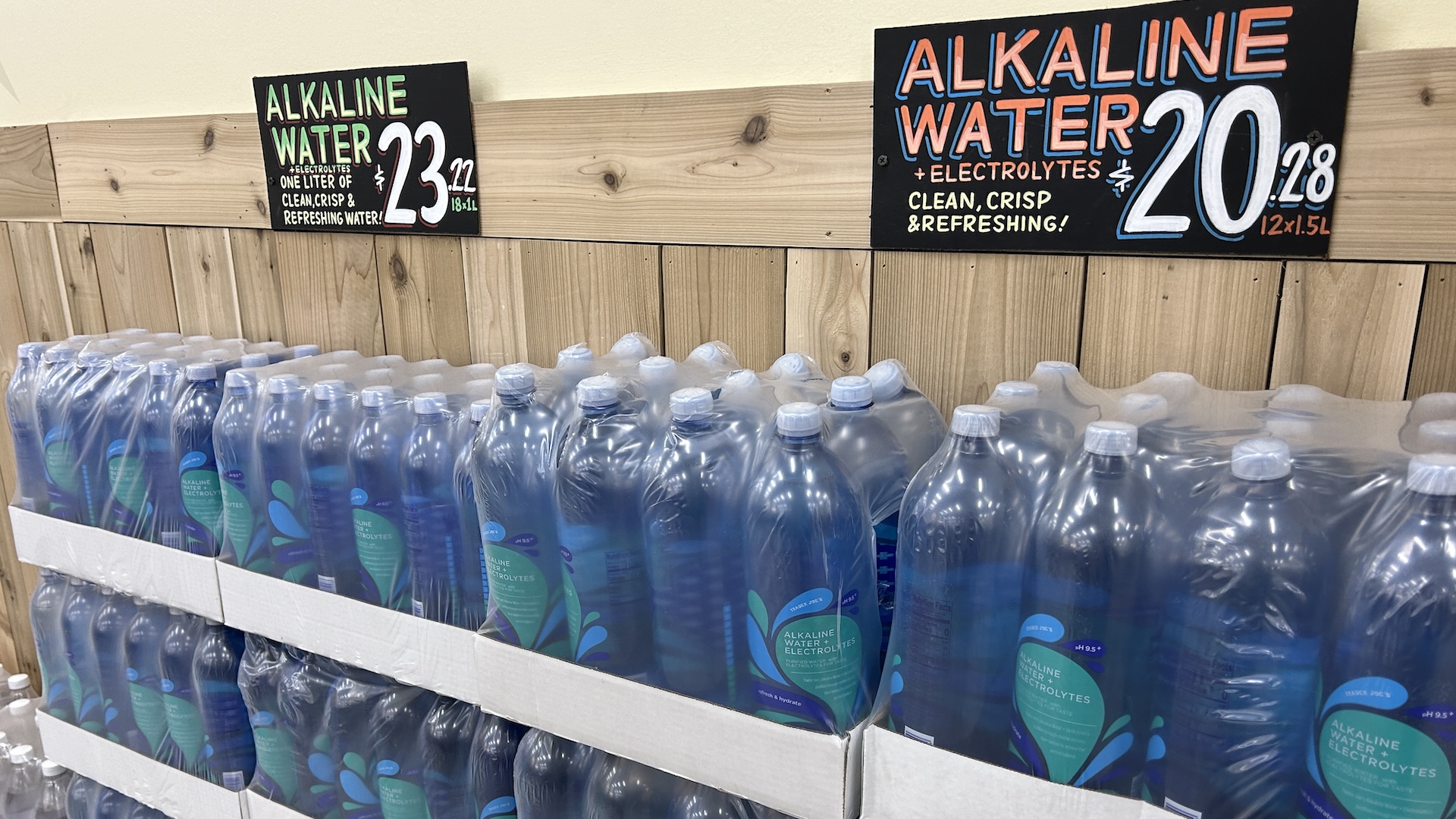
The U.S. Environmental Protection Agency sets guidelines for drinking water pH (usually 6.5 to 8.5), but this is primarily to prevent pipe corrosion. While some studies suggest alkaline water may help with acid reflux by deactivating pepsin (a stomach enzyme), there is no high-quality clinical evidence that it prevents cancer, bone loss, or other chronic diseases better than standard filtered water.
Why do some people use baking soda for heartburn?
Baking soda (sodium bicarbonate) is a mild alkali. When swallowed, it reacts chemically with the hydrochloric acid in the stomach to produce salt, water, and carbon dioxide gas. This neutralization reaction provides rapid, temporary relief from the burning sensation of acid reflux.
Is a pH of 7 considered alkaline?
No, a pH of 7.0 is considered perfectly neutral. It represents an exact balance between hydrogen and hydroxyl ions. Anything even slightly above 7.0 (e.g., 7.1) is technically alkaline, while anything below 7.0 is acidic.
Practical Recommendations
If you are managing the alkalinity of a system—whether it is a backyard pool, a home aquarium, or garden soil—your focus should be on stability rather than just hitting a specific number.
- For Water Owners: Regularly test both pH and "Total Alkalinity." If your pH is constantly fluctuating, your alkalinity (buffering capacity) is likely too low. Adding a buffer like sodium bicarbonate can stabilize the environment.
- For Gardeners: Perform a soil test before adding amendments. Most plants prefer a pH near 6.5, but "alkaline-loving" plants like lilacs or clematis will thrive in soil up to pH 7.5.
- For Health: Focus on a balanced diet rich in minerals rather than attempting to manipulate your body's pH. Your kidneys and lungs are highly efficient at maintaining the necessary alkaline balance for survival.
Image Gallery