What Is the Meaning of Intellectual Property Rights? A Complete Legal Guide
Intellectual property rights are legal rights that grant creators, inventors, and businesses exclusive authority over their intangible human creations. These rights allow rights holders to control the commercial use, reproduction, dist...
Intellectual property rights are legal rights that grant creators, inventors, and businesses exclusive authority over their intangible human creations. These rights allow rights holders to control the commercial use, reproduction, distribution, and licensing of their inventions, original artistic works, brand identifiers, and confidential business processes, preventing unauthorized use by third parties.
Contents
Defining Intellectual Property Rights (IPR)
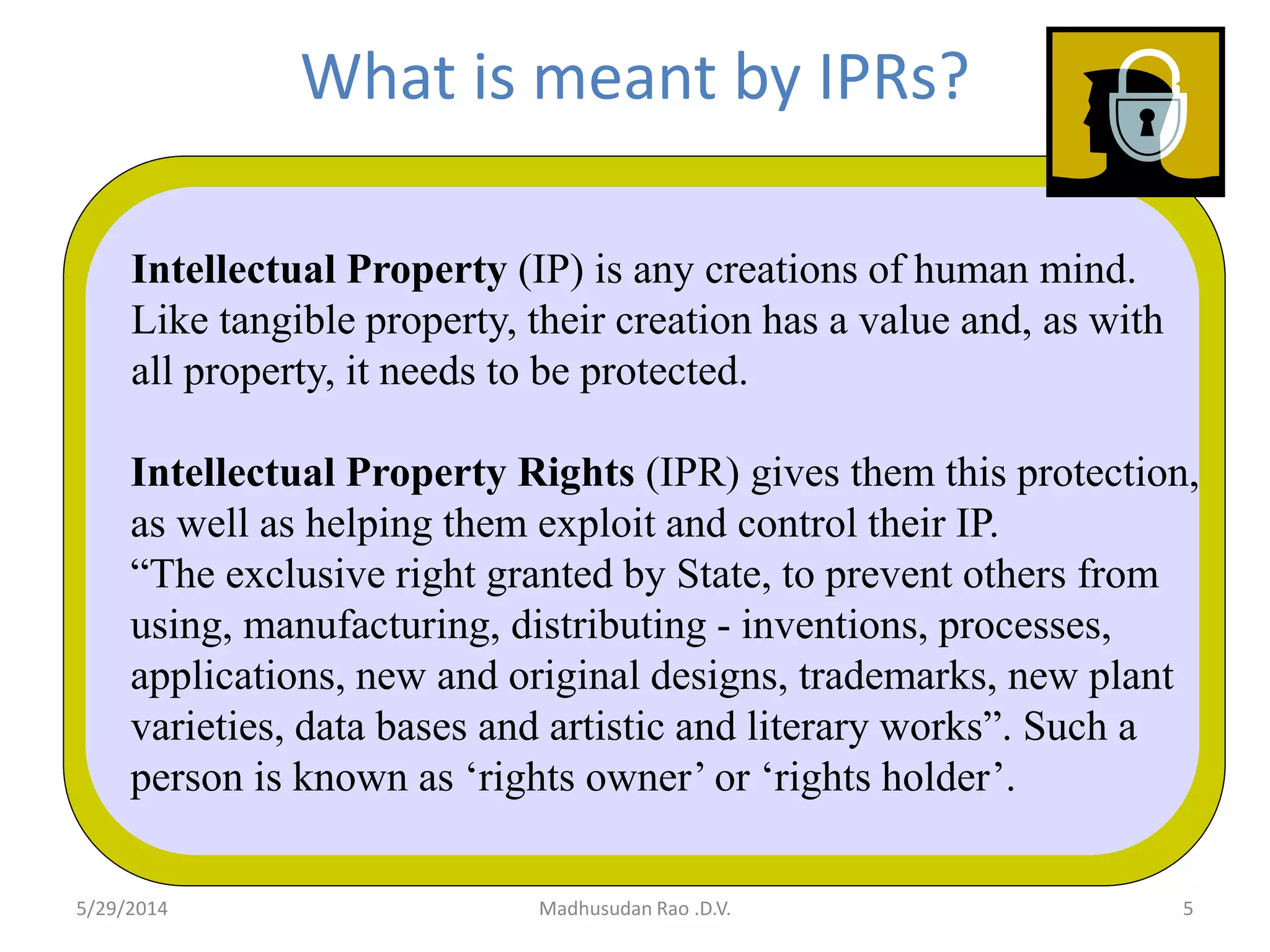
Intellectual property (IP) refers to creations of the mind—inventions, literary and artistic works, designs, symbols, names, and images used in commerce. Unlike physical property such as real estate or machinery, intellectual property consists of intangible assets. Intellectual property rights (IPR) are the statutory and common-law mechanisms that transform these intangible creations into enforceable legal assets.
The legal philosophy underlying intellectual property rights balances two competing public interests:
- Incentivizing Innovation and Creativity: By granting creators a temporary monopoly over their innovations, society ensures that individuals and corporations receive financial rewards and recognition for investing time, capital, and intellectual effort.
- Promoting Public Knowledge and Economic Progress: In exchange for exclusive rights, creators must publicly disclose their inventions or allow their works to enrich the cultural commons after a designated statutory period expires.
Without statutory protections, competitors could freely copy, replicate, or market a novel technology or creative work without incurring the underlying research and development costs. This market failure would drastically reduce private investment in technological advancement, pharmaceutical development, literature, and branding.
Disclaimer: This guide provides general educational information regarding intellectual property principles. Intellectual property laws are subject to jurisdictional variations and statutory updates. For legal counsel regarding specific patents, trademarks, copyrights, or trade secrets, consult a licensed intellectual property attorney.
The Four Primary Categories of Intellectual Property Rights
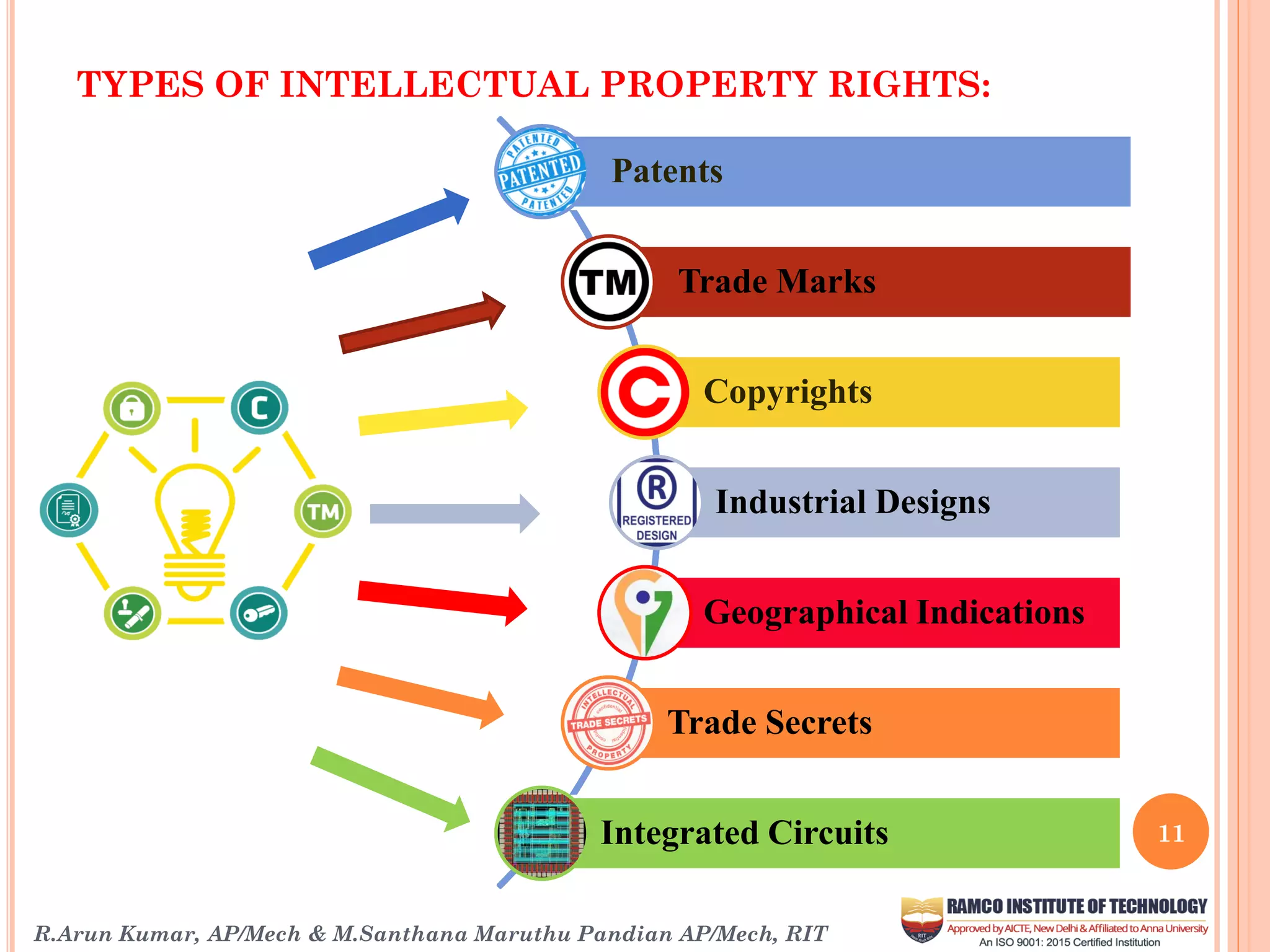
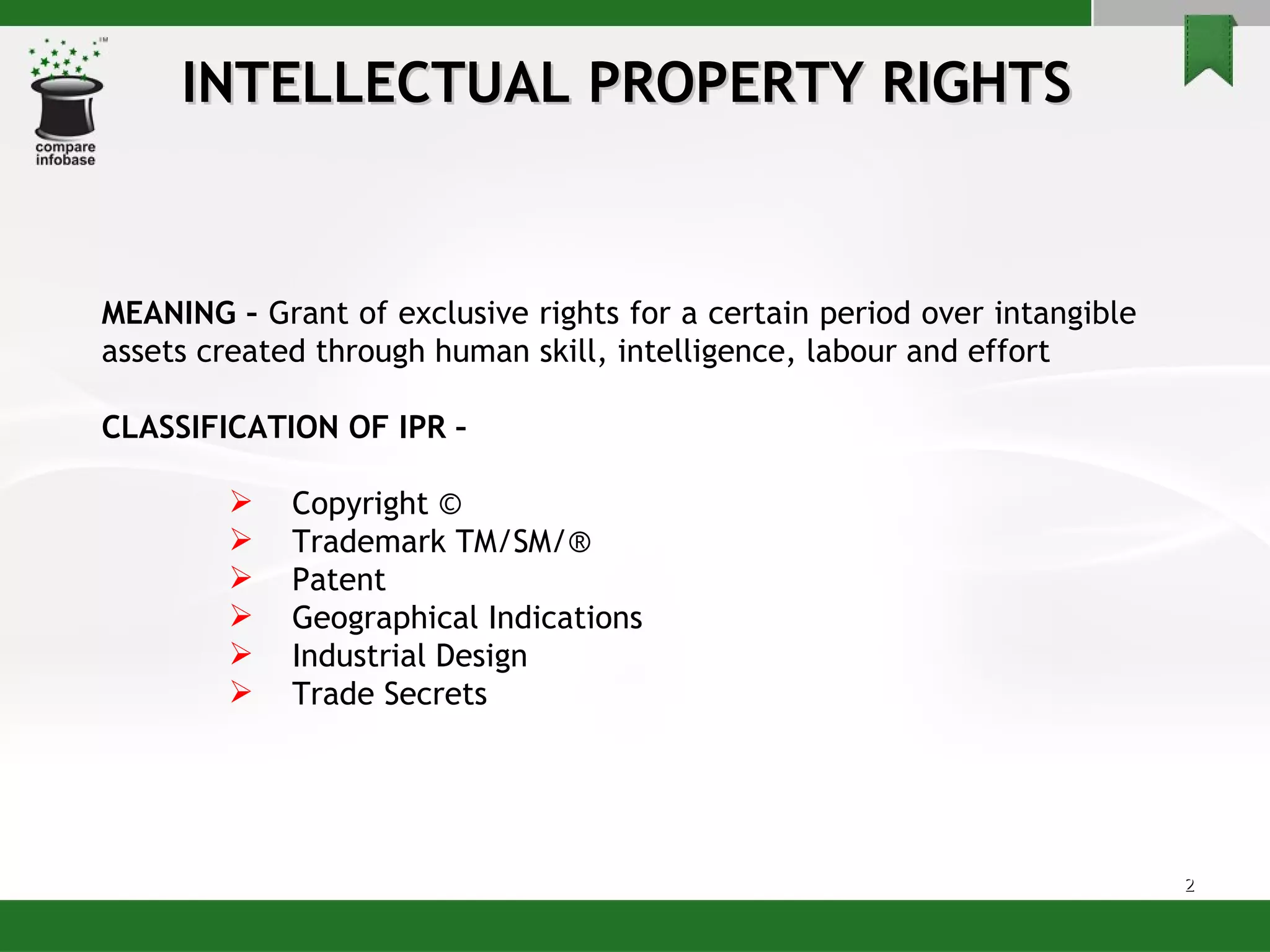
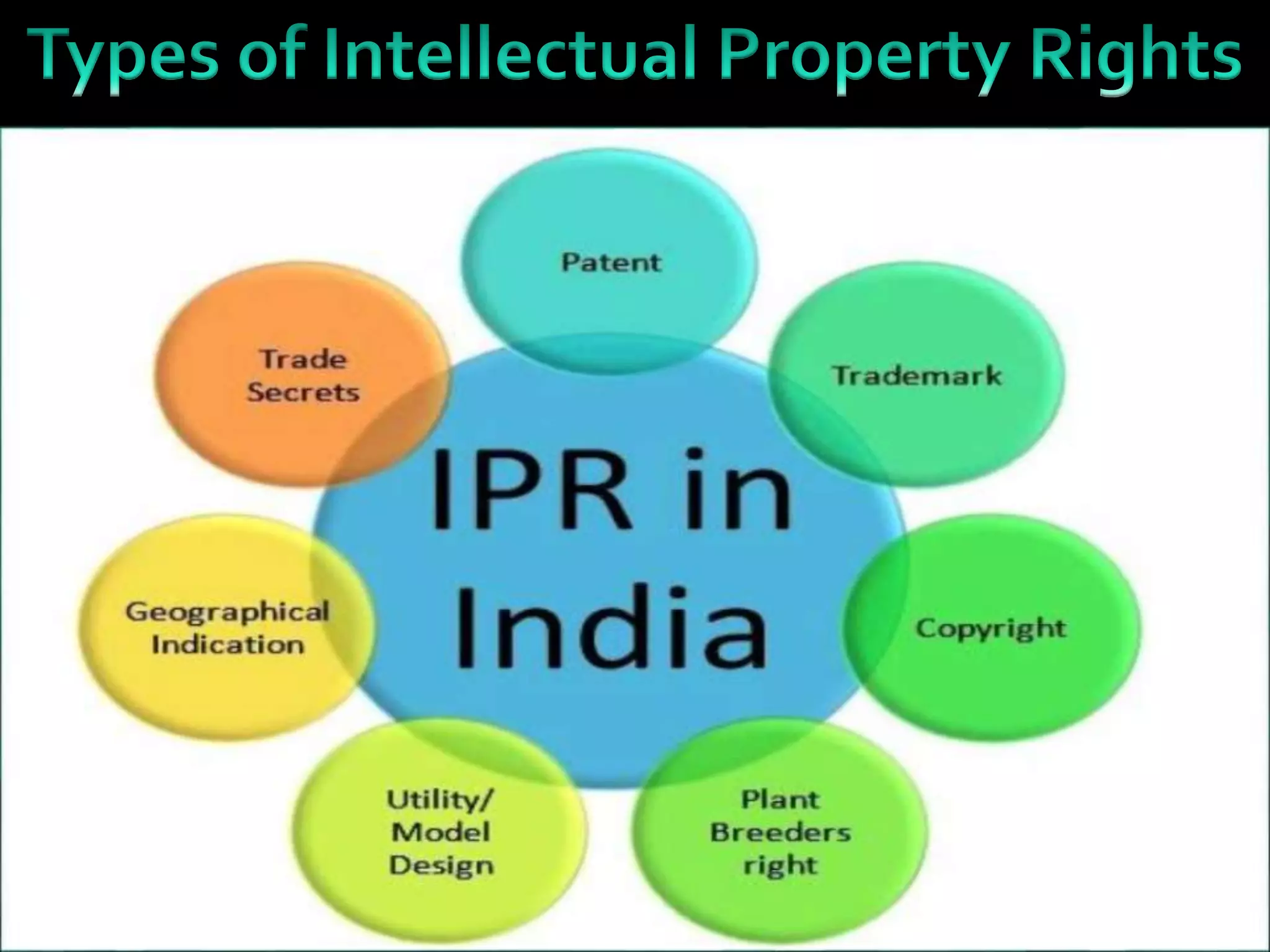
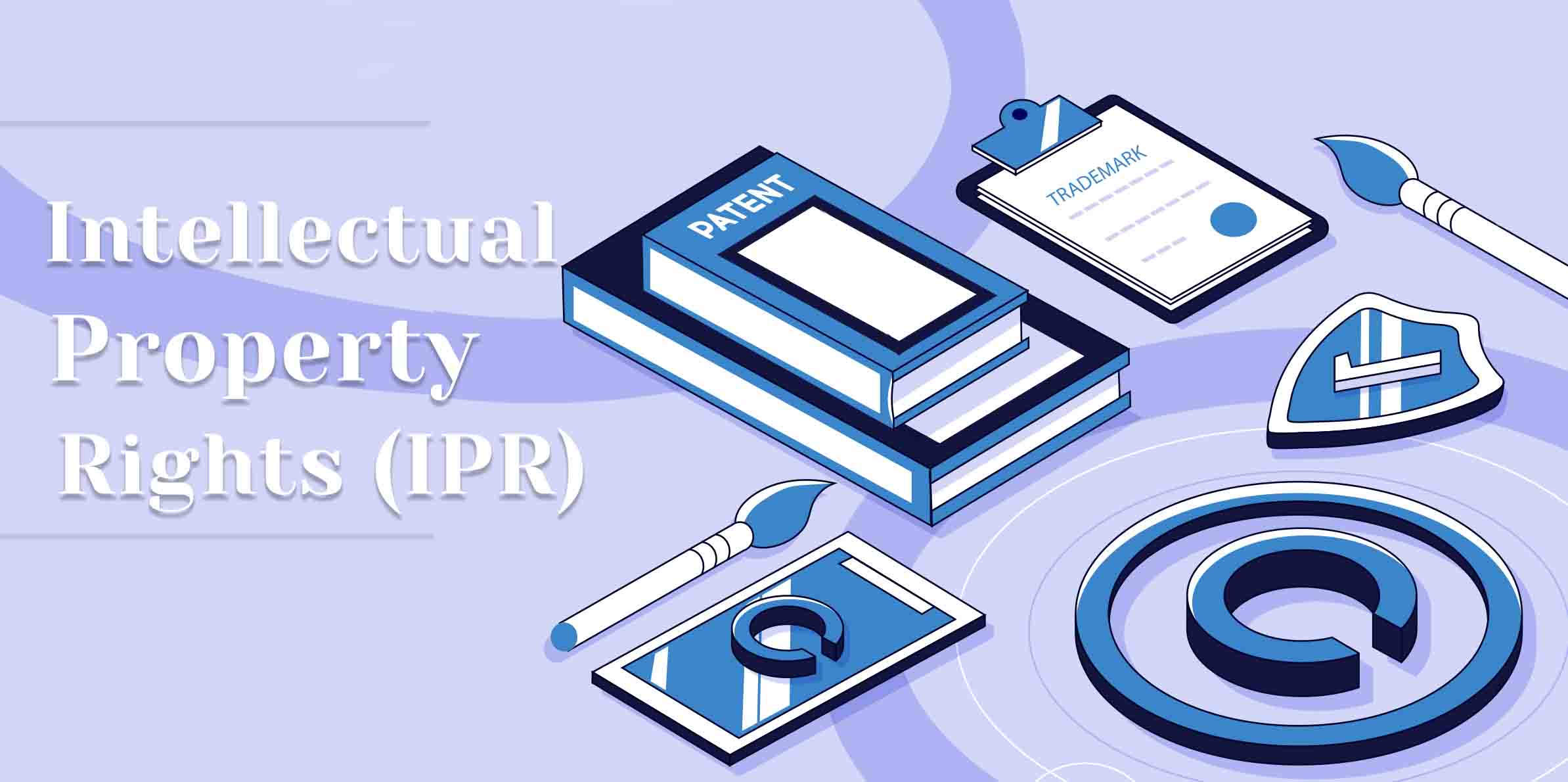
Intellectual property is not a single unified right; rather, it is an umbrella term encompassing distinct statutory frameworks tailored to different forms of human ingenuity. The four primary pillars of intellectual property rights are patents, copyrights, trademarks, and trade secrets.
- Intellectual Property Rights
- Patents: Inventions & Technological Processes
- Copyrights: Original Works of Authorship (Arts/Code)
- Trademarks: Brand Names, Logos, & Slogans
- Trade Secrets: Confidential Formulae & Processes
1. Patents
A patent is an exclusive right granted by a governmental authority for an invention, which is a product or a process that provides a new way of doing something or offers a new technical solution to a problem.
To qualify for patent protection, an invention must satisfy four basic legal criteria:
- Patentable Subject Matter: The creation must fall within statutory categories, such as a process, machine, manufacture, or composition of matter.
- Novelty: The invention must be entirely new and not disclosed in any public domain ("prior art") anywhere in the world prior to the filing date.
- Non-Obviousness: The invention must represent a non-trivial step forward that would not be obvious to a person having ordinary skill in the relevant technical field.
- Utility: The invention must have a practical, operating application.
Patents generally fall into three distinct types:
- Utility Patents: Protect novel machines, industrial processes, manufactured goods, and chemical compositions. In most jurisdictions, utility patents last for 20 years from the initial filing date, subject to maintenance fees.
- Design Patents: Protect novel, non-functional, ornamental designs embodied in or applied to an article of manufacture. In the United States, design patents granted from applications filed on or after May 13, 2015, have a 15-year term from grant.
- Plant Patents: Protect distinct and new varieties of plants that have been invented or discovered and asexually reproduced.
During the patent term, the owner possesses the right to exclude others from making, using, offering for sale, selling, or importing the patented invention without permission. Inventors can verify filing procedures and search databases through the United States Patent and Trademark Office (USPTO).
2. Copyrights
Copyright is a legal term used to describe the rights that creators have over their original literary and artistic works. Copyright coverage extends automatically upon the fixation of an original work in a tangible medium of expression (such as written on paper, recorded on audio, or saved to a digital hard drive).
Works protected by copyright include:
- Literary works (novels, articles, software source code, training manuals)
- Musical compositions and sound recordings
- Dramatic works (plays, screenplays, choreography)
- Visual arts (paintings, photographs, sculptures, architectural designs)
- Audiovisual works (motion pictures, television shows, online videos)
Copyright protects the expression of an idea, not the idea itself. For example, copyright law protects the specific text and structural arrangement of a software manual, but it does not prevent a competitor from writing an original manual about the same software principles.
Under standard international agreements, such as the Berne Convention, copyright protection lasts for the life of the author plus 70 years. For anonymous works, pseudonymous works, or works made for hire, the term is typically 95 years from publication or 120 years from creation, whichever is shorter. Formal registration with national registries, such as the U.S. Copyright Office, is not mandatory for protection to exist, but registration is often a prerequisite for bringing an infringement lawsuit in court.
3. Trademarks
A trademark is a sign, symbol, word, phrase, logo, or combination thereof capable of distinguishing the goods or services of one enterprise from those of other enterprises. Trademarks protect brand identity and commercial goodwill, functioning primarily to prevent consumer confusion in the marketplace.
Key aspects of trademark law include:
- Distinctiveness: To receive strong legal protection, a mark must be distinctive. Marks range along a spectrum from arbitrary or fanciful (strongest, e.g., "Kodak" or "Apple" for computers) and suggestive (e.g., "Netflix" for streaming), to descriptive (weak, requiring proof of acquired distinctiveness) and generic (unprotectable, e.g., "Computer" for computers).
- Service Marks: Trademarks specifically applied to services rather than physical products (though often governed by identical rules).
- Trade Dress: Protects the overall visual appearance and packaging of a product or business environment (such as the distinct interior architecture of a retail store chain) if it functions as a source identifier.
Unlike patents and copyrights, trademark rights do not expire after a set number of years. As long as the trademark owner continues to use the mark in commerce and submits required administrative filings demonstrating ongoing commercial use, trademark protection can endure indefinitely.
4. Trade Secrets
A trade secret consists of any confidential business information that derives independent economic value from not being generally known or readily ascertainable by competitors, and which is subject to reasonable efforts by the owner to maintain its secrecy.
Common examples of trade secrets include:
- Secret formulas (such as beverage recipes)
- Proprietary algorithms and data structures
- Specialized manufacturing technique lists
- Strategic customer lists and pricing structures
Unlike patents, trade secret protection requires no public filing or government registration. In fact, public filing destroys trade secret status. Protection continues indefinitely as long as the information remains secret and the business exerts reasonable measures to protect it—such as non-disclosure agreements (NDAs), encrypted databases, restricted physical access, and strict internal access controls.
If a trade secret is improperly acquired, disclosed, or used by a competitor (misappropriation), the owner can seek injunctive relief and monetary damages under applicable state laws or statutes like the U.S. Defend Trade Secrets Act (DTSA).
Comparative Breakdown of Intellectual Property Protections
Selecting the correct form of protection depends on the asset's nature, commercial goals, and budget. The following table summarizes the operational distinctions among the four core categories:
| Feature | Patent | Copyright | Trademark | Trade Secret |
|---|---|---|---|---|
| Primary Subject Matter | Inventions, machines, processes, designs | Original artistic, literary, and software works | Brand names, logos, slogans, trade dress | Confidential formulas, business methods, data |
| Core Requirement | Novelty, non-obviousness, utility | Originality fixed in a tangible medium | Distinctiveness; source identifier in commerce | Economic value derived from secrecy |
| Registration Required? | Yes, mandatory government grant | No (automatic upon creation; registration needed for litigation) | No (common law rights exist, but registration grants national protection) | No (registration is impossible; public disclosure voids protection) |
| Standard Duration | Typically 20 years from filing (utility); 15 years from grant (design) | Author's life + 70 years (or 95 years for corporate work) | Renewable indefinitely as long as used in commerce | Indefinite (as long as secrecy is maintained) |
| Public Disclosure | Full public disclosure required in application | Publicly accessible upon registration | Publicly used in market | Must strictly avoid public disclosure |
| Infringement Standard | Making, using, or selling claimed invention without license | Unlawful copying, distribution, or public performance | Likelihood of consumer confusion | Misappropriation via breach of duty, theft, or industrial espionage |
The International Legal Framework for Intellectual Property
Intellectual property rights are territorial by nature. A patent or trademark registered in the United States does not automatically grant protection in Europe, Asia, or South America. However, international treaties and international organizations harmonize IP laws across global markets.
Key International Organizations and Treaties
- World Intellectual Property Organization (WIPO): A specialized agency of the United Nations headquartered in Geneva. WIPO administers international treaties, facilitates global IP registration systems, and provides legal infrastructure for cross-border dispute resolution. Explore global IP standards through the World Intellectual Property Organization.
- The TRIPS Agreement: The Agreement on Trade-Related Aspects of Intellectual Property Rights, administered by the World Trade Organization (WTO), sets baseline standards for IP regulation across member states. TRIPS integrates IP standards into the international trading system, covering copyright, trademarks, geographical indications, industrial designs, patents, and undisclosed information.
- The Paris Convention for the Protection of Industrial Property: Established in 1883, this convention allows creators to claim a "priority date" when filing patent or trademark applications in foreign member nations within a specified window (typically 12 months for patents, 6 months for trademarks) after the initial national filing.
- The Berne Convention for the Protection of Literary and Artistic Works: Ensures automatic cross-border protection for copyrighted works without requiring formal registration in each signatory nation.
- The Patent Cooperation Treaty (PCT): Provides a unified procedure for filing patent applications to protect inventions across more than 150 contracting states through a single international application.
How Businesses Commercialize and Enforce IP Rights
Securing intellectual property rights creates economic leverage. Asset owners extract value from their portfolio through direct commercialization, strategic partnerships, or defensive enforcement.
- Commercializing IP Assets
- Licensing: Grant permission for royalties while retaining title
- Assignment: Permanent transfer or sale of legal ownership title
- Franchising: Package rights (trademark, secret system) to operators
Monetization Strategies
- Licensing: The IP owner (licensor) retains title to the asset while granting contractual permission to another party (licensee) to use, manufacture, or distribute the technology or brand in exchange for royalty payments or upfront fees.
- Assignment: The complete, permanent transfer of ownership rights from the creator to another individual or corporate entity, typically executed through an assignment contract recorded with relevant IP registries.
- Franchising: A commercial arrangement where a franchisor licenses a comprehensive business model, incorporating trademarks, trade secrets, operational software, and proprietary processes, to an independent franchisee.
Enforcement Remedies for Infringement
When unauthorized third parties violate exclusive IP rights, the rights holder can pursue several legal remedies:
- Cease-and-Desist Letters: Formal demand letters putting an infringer on notice of illegal activity, requiring them to halt unauthorized use immediately or face litigation.
- Injunctions: Preliminary or permanent court orders requiring the infringing party to stop manufacturing, selling, or distributing the unauthorized products.
- Monetary Damages: Financial awards designed to compensate the IP owner for lost profits, actual damages, or statutory damages (often available in copyright and trademark litigation). In cases of willful patent or trademark infringement, courts may award enhanced or treble damages.
- Customs Enforcement: Rights holders can register registered trademarks and copyrights with border control agencies (such as U.S. Customs and Border Protection) to seize counterfeit goods before entry into national commerce.
Common Pitfalls in Managing Intellectual Property
Misunderstanding statutory requirements can lead to irreversible loss of exclusive rights. Organizations and independent creators frequently commit several avoidable mistakes:
1. Public Disclosure Prior to Patent Filing
In many foreign jurisdictions, any public disclosure, sale, or demonstration of an invention prior to filing a formal patent application immediately destroys novelty, invalidating future patent protection ("absolute novelty rule"). While the United States provides a limited 1-year grace period for disclosures made by the inventor, relying on this grace period forfeits international filing rights in absolute-novelty countries.
2. Failure to Perform Adequate Clearance Searches
Launching a product line, corporate rebrand, or software tool without comprehensive clearance searches can result in costly trademark or patent infringement litigation. A trademark clearance search evaluates existing registered and unregistered marks to avoid likelihood-of-confusion claims, while a patent "freedom-to-operate" (FTO) analysis ensures an invention does not step on existing active patent claims.
3. Neglecting Reasonable Secrecy Measures
Trade secret status requires active internal protection protocols. Courts consistently deny trade secret protection to companies that fail to implement basic administrative and technical controls, such as requiring non-disclosure agreements (NDAs) for external contractors, limiting access to proprietary databases, and enforcing strict password policies.
4. Incorrect Ownership Allocation for Independent Contractors
Under general copyright principles, works created by independent contractors do not automatically belong to the paying company unless a written contract explicitly specifies that the work is a "work made for hire" or contains an express written assignment of copyright ownership. Relying on verbal agreements or simple payment receipts often leaves legal title with the outside developer, designer, or agency.
Frequently Asked Questions
What is the main purpose of intellectual property rights?
The main purpose of intellectual property rights is to encourage innovation and artistic expression by providing creators and businesses exclusive legal control over their creations for a limited time. This exclusive control allows creators to monetize their investments, while requiring public disclosure or eventual dedication to the public domain to foster ongoing economic and cultural advancement.
How do I register an intellectual property right?
Registration steps depend on the specific type of intellectual property:
- Patents: Require submitting detailed technical specifications, drawings, and legal claims to a national patent authority (like the USPTO) for rigorous examination.
- Trademarks: Require filing an application with a national trademark office, specifying the mark and the specific goods or services classes associated with its commercial use.
- Copyrights: Exist automatically upon creation, but formal registration requires submitting an application, fee, and copy of the work to the national copyright registry.
- Trade Secrets: Cannot be registered; protection is maintained entirely through strict internal security and confidentiality practices.
Can an idea itself be protected by intellectual property rights?
No. Intellectual property law does not protect abstract ideas, concepts, or raw principles. Protection requires tangible application or execution. Copyright protects the specific expression of an idea, patents protect practical inventions or processes implementing an idea, and trade secrets protect specific confidential data or formulas. An idea must be reduced to an enabling process, written work, brand mark, or confidential system to qualify for legal protection.
What is the difference between a trademark and a patent?
A patent protects practical inventions, technological designs, and industrial processes, preventing others from making, using, or selling the technical innovation. A trademark protects brand identifiers—such as names, logos, slogans, and symbols—used to distinguish products or services in the marketplace, preventing consumer confusion regarding the source of goods.
How long do intellectual property rights last?
Duration varies by category:
- Utility Patents: Typically 20 years from the original application filing date.
- Design Patents: Usually 15 years from the grant date (in the U.S.).
- Copyrights: Generally the author's lifetime plus 70 years, or up to 95-120 years for corporate works.
- Trademarks: Indefinite, provided the owner continues active commercial use and completes timely maintenance filings.
- Trade Secrets: Indefinite, as long as the information remains confidential and economically valuable.
Strategic Next Steps for Protecting Your Intellectual Creations
Effectively managing intellectual property requires proactive steps aligned with your commercial roadmap:
- Conduct an IP Audit: Catalog all intangible assets, including proprietary software code, brand assets, unique technical designs, client lists, and specialized internal procedures.
- Establish Clear Ownership Agreements: Ensure all employment agreements, contractor contracts, and vendor terms include clear assignment clauses for intellectual property and robust confidentiality obligations.
- Perform Clearance and Prior Art Searches: Prior to launching new commercial products or branding initiatives, complete clearance searches to confirm your asset does not infringe on existing active patents or registered trademarks.
- Implement Technical and Operational Controls: Protect trade secrets by implementing zero-trust access controls, network encryption, physical access restrictions, and standardized non-disclosure agreements for all third-party interactions.
- Develop a Tiered Filing Strategy: Work with an accredited intellectual property attorney to prioritize national and international patent, trademark, and copyright applications based on core business markets and revenue projections.
Image Gallery