Physicians Mutual Life Insurance Claims Form Explained: A Step-by-Step Guide
Filing a Physicians Mutual life insurance claim involves submitting a completed Claimant's Statement, a certified copy of the death certificate, and policy identification details. Understanding how to properly fill out each section—fro...
Filing a Physicians Mutual life insurance claim involves submitting a completed Claimant's Statement, a certified copy of the death certificate, and policy identification details. Understanding how to properly fill out each section—from payment choices to beneficiary tax identification—helps avoid unnecessary administrative delays and accelerates the payout process for surviving loved ones.
Contents
Physicians Mutual Insurance Company and its subsidiary, Physicians Life Insurance Company, have provided financial protection to policyholders since 1902. When a policyholder passes away, the beneficiary must submit a formal claim package to initiate the payout process. While the emotional weight of settling a loved one's affairs can feel overwhelming, navigating the Physicians Mutual life insurance claims form becomes manageable when broken down section by section.
This guide provides a comprehensive overview of the claims form requirements, necessary supporting documentation, common pitfalls to avoid, and expectations for processing timelines in 2026.
Essential Prerequisites and Documentation Checklist
Before attempting to fill out the Physicians Mutual Claimant’s Statement, gathering all supporting documentation ensures the submission is complete on the first attempt. Insurance carriers require specific legal proof before releasing death benefits.
1. Certified Death Certificate
The insurer requires an official, certified copy of the death certificate issued by the vital statistics office in the city, county, or state where the death occurred.
- Requirements: It must bear an official raised seal, stamp, or verifiable electronic security mark.
- Manner of Death: Ensure the death certificate lists both the immediate cause of death and the manner of death (e.g., natural, accidental, homicide, suicide). If the cause of death is marked "pending," the carrier cannot finalize the claim payout until a finalized certificate is submitted.
2. Policy Information and Document
Having the physical policy document helpful, but if it has been lost or misplaced over time, knowing the policy number, full legal name, date of birth, and Social Security number of the deceased policyholder is sufficient to begin. If the paper contract cannot be found, Physicians Mutual allows beneficiaries to complete a standard Lost Policy Declaration within the claim form packet.
3. Government-Issued Identification
To verify the identity of the beneficiary and prevent fraudulent claims, submit a copy of a valid government-issued photo ID, such as a state driver’s license, passport, or military ID.
Section-by-Section Breakdown of the Claims Form
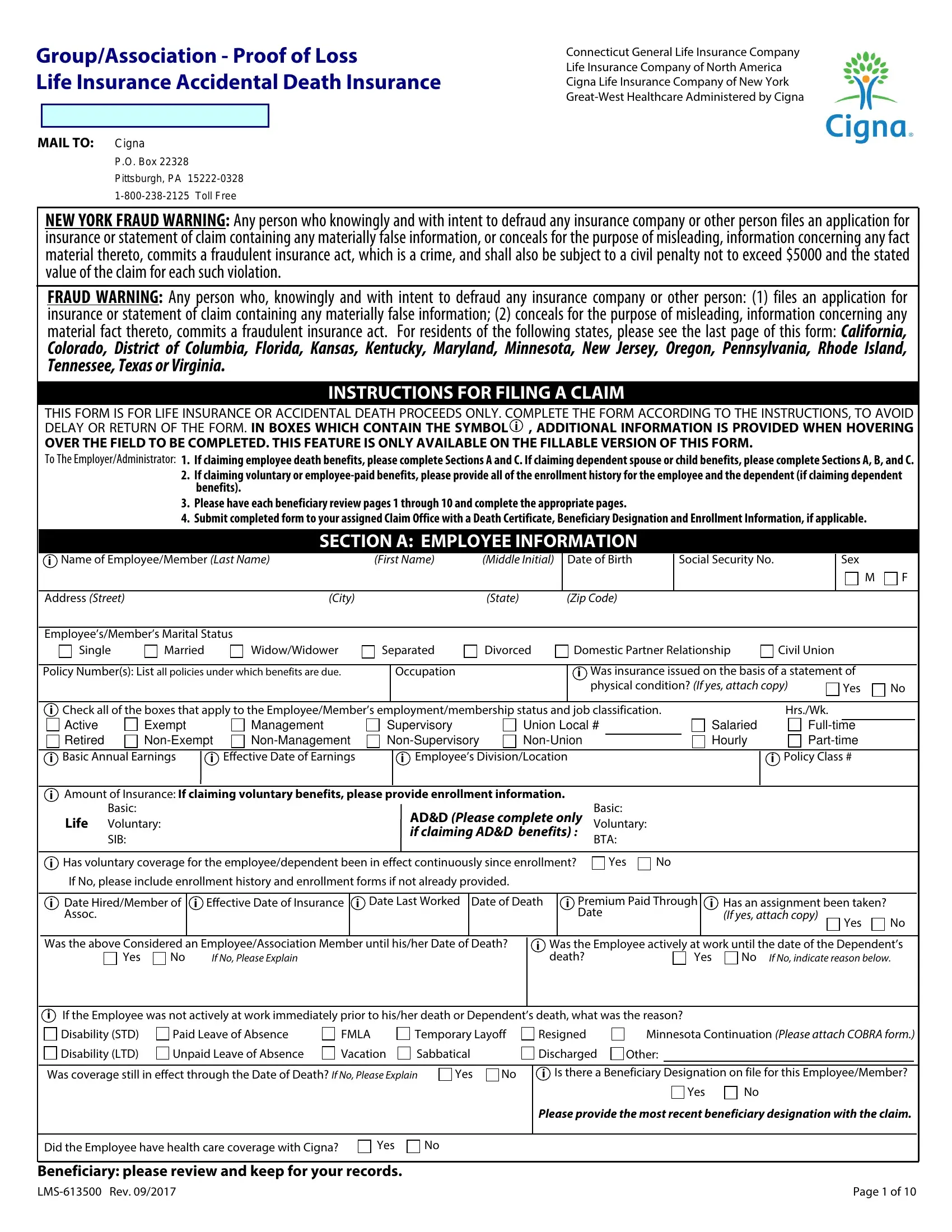
The Physicians Mutual life insurance claim packet—often designated as the Claimant’s Statement or Proof of Death form—is divided into clear modules. Filling out each section accurately prevents the insurer from returning the paperwork for clarification.
Section 1: Deceased Policyholder Information
This section establishes the identity of the insured individual and links the claim to the active policy in the company's database.
- Full Legal Name: Enter the exact name of the insured as it appears on the insurance contract (including suffixes like Jr., Sr., or III). If the insured used an alias or maiden name, note it here.
- Date of Birth and Date of Death: Verify that these dates match the birth date listed on the original policy and the death date shown on the certified death certificate.
- Social Security Number (SSN): Required for policy matching and tax compliance verification.
- Policy Number(s): List all policy numbers held by the deceased. If the insured held both a whole life policy and a supplemental accidental death rider, listing all numbers ensures all covered benefits are evaluated simultaneously.
- Residence Address: The primary residence of the deceased at the time of death.
Section 2: Beneficiary / Claimant Details
This section identifies who is legally entitled to receive the policy proceeds.
- Claimant’s Name and Relationship: State your full legal name and your relationship to the deceased (e.g., spouse, child, sibling, trustee).
- Taxpayer Identification Number (TIN) or SSN: The Internal Revenue Service (IRS) requires insurance carriers to collect tax identification data for all beneficiaries receiving funds, even if the primary death benefit is tax-free.
- Contact Details: Provide a current mailing address, phone number, and secure email address so claims examiners can communicate updates or request missing information.
- Multiple Beneficiaries: If the policy names multiple primary beneficiaries, each beneficiary must complete their own separate Claimant’s Statement, unless a designated primary claimant holds a valid legal Power of Attorney or court appointment that permits single-form filing.
Section 3: Payout and Settlement Options
Physicians Mutual offers different methods for distributing the policy proceeds. Selecting the appropriate payment vehicle depends on your immediate liquidity needs and financial goals.
- Lump-Sum Payment: A single check or direct deposit (ACH transfer) sent directly to the beneficiary. This is the most common selection.
- Retained Asset Account / Interest Income: The death benefit is placed into an interest-bearing account managed by the insurer, allowing the beneficiary to write drafts (checks) against the balance as needed while earning interest on the remaining funds.
- Annuity / Installment Options: The payout is structured into monthly, quarterly, or annual fixed payments over a set duration or for the lifetime of the beneficiary.
Section 4: Accidental Death Details (If Applicable)
If the claim involves an accidental death rider or if the policy was issued as an Accidental Death & Dismemberment (AD&D) contract, additional fields must be completed.
- Date, Time, and Location of Accident: Details regarding where and how the event occurred.
- Narrative of Events: A concise description of the circumstance leading to the injury or death.
- Official Reports: For accidental deaths, insurance carriers usually require attached copies of the official police investigation report, toxicology report, and coroner’s autopsy report.
Section 5: Tax Certifications and State Fraud Warnings
Insurance fraud is a crime prosecuted under state law. This section includes mandatory legal disclosures.
- Substitute Form W-9: You must certify under penalty of perjury that the Social Security number provided is correct and indicate whether you are subject to federal backup withholding.
- State Fraud Declarations: Beneficiaries must sign beneath explicit legal warnings stating that knowingly presenting false, incomplete, or misleading information on a claim form constitutes insurance fraud.
Section 6: Authorizations, Signatures, and Notarization
The final section renders the document a legally binding request for payment.
- Claimant Signature: The beneficiary must sign and date the form in ink (or via an approved, secure digital signature portal if submitting electronically).
- Notarization: Notarization is not required for all standard claims, but Physicians Mutual may require a notarized signature if the death benefit exceeds a specific monetary threshold, if the claim is filed by an estate executor, or if the original policy contract is lost.
Comparative Overview: Settlement Payout Options
Choosing how to receive life insurance proceeds impacts your financial planning and potential tax obligations on accrued interest.
| Settlement Option | How It Works | Primary Advantage | Key Considerations |
|---|---|---|---|
| Lump-Sum Check / ACH | Proceeds are paid entirely at once via check or direct deposit. | Immediate access to 100% of the funds; total financial flexibility. | Requires personal financial discipline to manage large lump sums. |
| Retained Asset Account | Funds are held in a draft account earning competitive interest. | Provides liquidity via checkbook while earning interest on unspent funds. | Interest earned above the principal death benefit is taxable income. |
| Fixed Period Installments | Capital and interest are distributed in set payments over a chosen number of years. | Creates a predictable income stream for surviving family members. | Annuity payment structures cannot easily be reversed once initiated. |
| Life Income Option | Converts proceeds into a guaranteed lifetime payout for the beneficiary. | Protects against outliving financial resources. | Payout amounts depend heavily on the beneficiary's age at policy settlement. |
Handling Complex Claim Scenarios
Not all life insurance claims follow a standard path. Certain scenarios require extra documentation to satisfy legal and contractual obligations.
- Submit Initial Claim Package (Claim Form + Certified Death Cert.)
- Does the policy fall within the two-year contestability period?
- YES: Insurance Carrier Requests Medical Records & Attending Physician Statement (HIPAA Release Form Required)
- NO: Standard Review Period (Verification of beneficiary ID & payment preference)
- Final Claim Decision & Benefit Payout
Claims Within the Two-Year Contestability Period
Under standard insurance rules recognized by state insurance departments and modeled after National Association of Insurance Commissioners (NAIC) guidelines, life insurance policies feature a two-year contestability clause.
If the policyholder dies within the first two years after the policy issuance date, Physicians Mutual has the legal right to review the original application for material misrepresentations.
- Required Extra Form: The carrier will issue an Attending Physician’s Statement (APS) and a HIPAA Medical Authorization Form.
- Purpose: The beneficiary must sign the HIPAA authorization, allowing the company to review the deceased's medical history to confirm that pre-existing conditions were accurately disclosed when applying.
Minor Beneficiaries
Life insurance companies cannot pay funds directly to a legal minor (typically anyone under age 18 or 21, depending on state law). If a minor is named as a primary beneficiary:
- Proceeds may be paid to a court-appointed legal guardian of the minor’s estate.
- Funds can be transferred to a custodian managed under the state’s Uniform Transfers to Minors Act (UTMA) or Uniform Gifts to Minors Act (UGMA) if permitted by the policy terms.
- The benefit can be deposited into a court-supervised account until the minor reaches the legal age of majority.
Estate or Trust as Beneficiary
If the policy names "The Estate of the Insured" or a specific Revocable/Irrevocable Living Trust as the beneficiary:
- For Estates: The court-appointed Executor or Administrator must sign the claim form and attach official Letters Testamentary or Letters of Administration issued by the probate court, along with the Estate's Federal Employer Identification Number (EIN).
- For Trusts: The active Trustee must sign the claim form and provide a copy of the Trust Agreement (or Certification of Trust) alongside the Trust's EIN.
How to Submit the Completed Claim Package
Physicians Mutual provides multiple channels for submitting completed claim paperwork. To minimize delays, confirm that every page of the Claimant’s Statement is completed, signed, and dated.
By Mail (Standard & Express)
Send the original certified death certificate, signed claim forms, and supplementary documents to the official claims address:
- Physicians Life Insurance Company
- Attn: Life Claims Department
- 2600 Dodge Street
- Omaha, NE 68131
Tip: Use certified mail with tracking or a national courier service (such as FedEx or UPS) to track delivery.
Phone & Digital Support
Before mailing, you can contact the customer service and claims department directly to initiate a claim file or request assistance with form fields:
- Direct Claims Phone: 1-800-228-9100
- Official Website Portal: Physicians Mutual Official Site
Processing Timelines, Common Delays, and Troubleshooting
Once Physicians Mutual receives the complete claim package, standard, uncontested claims are generally processed and paid within 10 to 30 calendar days. However, specific issues can stall the evaluation:
- Incomplete Form Fields: Leaving sections blank—such as omitting a Social Security number or forgetting to select a settlement option—forces the claims examiner to return the paperwork. Write "N/A" (Not Applicable) if a field does not apply to your situation.
- Uncertified Death Certificates: Submitting a standard photocopy instead of an official certified copy with a raised or legal seal is the single most common cause of processing delays.
- Discrepancies in Names: If the beneficiary's legal name on their photo ID differs from the name written on the original policy policy (e.g., due to marriage or divorce), attach supporting legal documentation such as a marriage certificate or legal name change court order.
- Contestable Cause of Death Investigation: Claims filed during the two-year contestability window or claims resulting from accidents requiring prolonged police/toxicology reports can take several weeks or months to finalize while third-party records are gathered.
Frequently Asked Questions
How long do I have to file a life insurance claim with Physicians Mutual?
There is generally no strict statutory deadline that voids a valid life insurance claim if you do not file immediately. However, filing promptly is strongly recommended. If a policy remains unclaimed for an extended period of years, state laws require insurance companies to surrender unclaimed proceeds to the state treasury’s unclaimed property department under escheatment laws.
What happens if I cannot find the original policy document?
Losing the paper contract does not invalidate your right to claim the benefit. Simply notify Physicians Mutual when requesting the claims packet. You will complete a brief Lost Policy Statement within the claim form declaring that the original policy is lost and agreeing to surrender it if found later.
Are life insurance claims payouts from Physicians Mutual taxable?
Under federal law (26 U.S. Code § 101), life insurance death benefits paid to a beneficiary are generally excluded from gross income and are not subject to federal income tax. However, any interest earned on the payout after the date of death—such as interest generated within a Retained Asset Account—is taxable and must be reported on your income tax return.
Can multiple beneficiaries complete one Physicians Mutual claims form?
No. Every designated beneficiary must fill out, sign, and submit their own separate Claimant's Statement. This ensures that individual tax identification numbers, payment method selections, and identity verifications are documented separately for each recipient.
What is the contestability period for a Physicians Mutual policy?
The contestability period lasts for two years from the effective date of the policy. If the insured passes away within this timeframe, the insurer reserves the legal right to review the original medical and personal disclosures made on the policy application before releasing the death benefit.
Next Steps for Beneficiaries
Filing a life insurance claim requires attention to detail during a difficult time. To keep the submission moving forward smoothly:
- Obtain 3–5 certified copies of the death certificate from the funeral director or state vital statistics office.
- Contact Physicians Mutual customer service at 1-800-228-9100 to report the death and request the formal life claim packet.
- Carefully read each section of the Claimant’s Statement, selecting your preferred payment method and verifying all Social Security numbers.
- Make copies of every document for your personal records before mailing the package via a trackable delivery method.
Disclaimer: This guide is intended for informational purposes only and does not constitute legal, tax, or financial advice. Beneficiaries navigating complex estate matters or tax obligations should consult a qualified attorney or certified public accountant.
Image Gallery