Earning an Associate Degree in Retail Management: A Path to Career Advancement
An associate degree in retail management provides a foundational education in business operations, customer service, supply chain logistics, and personnel leadership. This two-year undergraduate program equips students with the special...
An associate degree in retail management provides a foundational education in business operations, customer service, supply chain logistics, and personnel leadership. This two-year undergraduate program equips students with the specialized skills required to manage retail outlets, oversee inventory systems, and implement marketing strategies, serving as a direct pathway to entry-level supervisory roles in the commerce sector.
Contents
Understanding the Associate Degree in Retail Management
The retail landscape has evolved significantly by 2026, transitioning from traditional brick-and-mortar operations to complex omnichannel environments. An associate degree in retail management—typically an Associate of Science (AS) or Associate of Applied Science (AAS)—is designed to bridge the gap between basic sales floor experience and professional management.
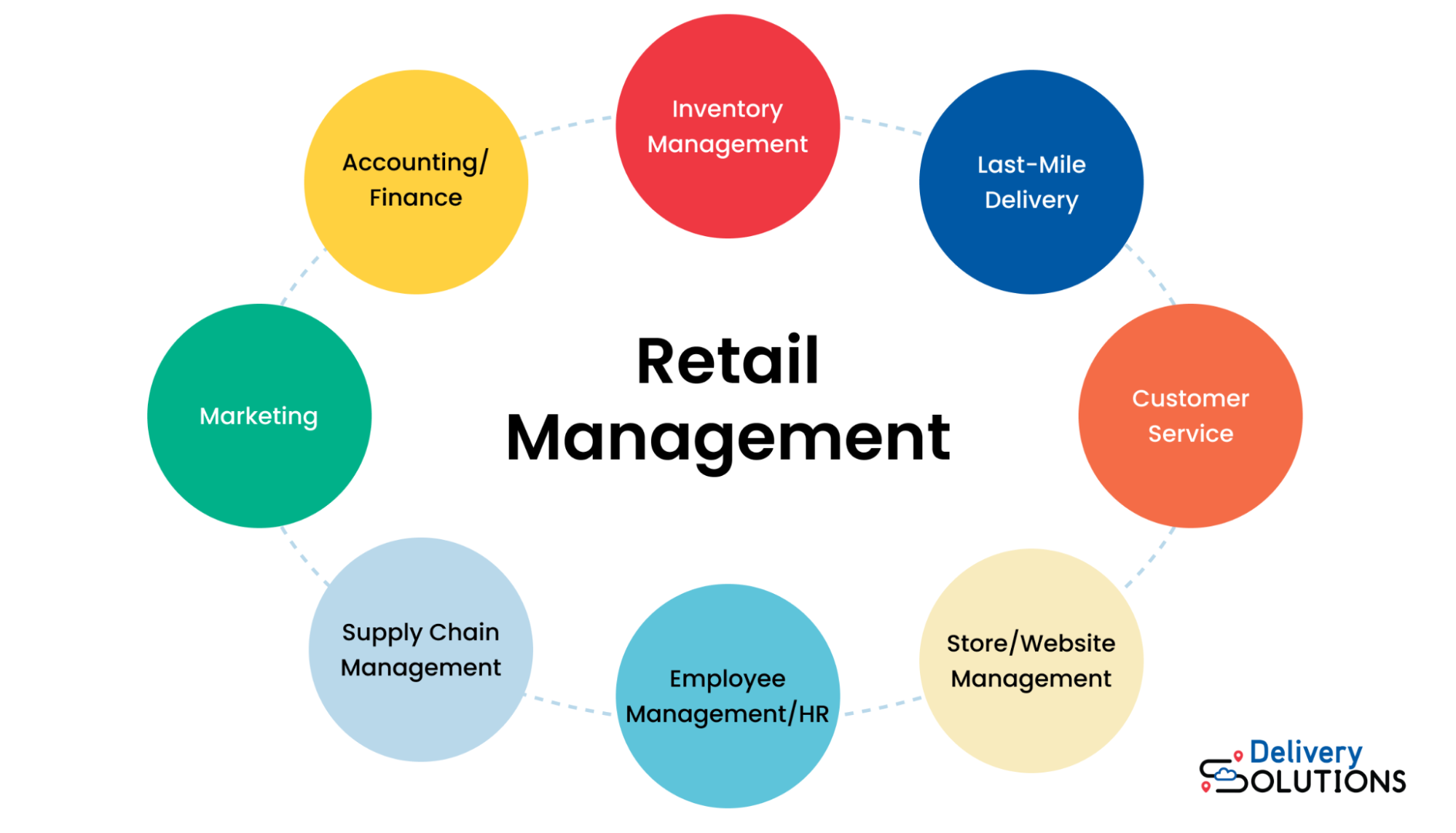
Unlike a general business degree, which offers a broad survey of accounting, finance, and economics, this degree focuses specifically on the retail lifecycle. Students examine the mechanics of consumer behavior, the nuances of point-of-sale (POS) technology, and the complexities of human resource management within high-turnover industries. The curriculum is balanced between theoretical management concepts and applied operational skills, ensuring graduates can step into roles like assistant store manager, department lead, or visual merchandiser with confidence.
Core Curriculum and Skill Development
Most accredited institutions structure their retail management programs to cover the essential pillars of the commerce industry. While specific course titles may vary, the core requirements usually include:
- Principles of Management: Learning the fundamentals of organizational structure, leadership styles, and conflict resolution in professional settings.
- Retail Operations: A technical overview of store layout, inventory control, loss prevention, and the daily logistics of maintaining a functional store.
- Marketing and Merchandising: Understanding how to display products effectively, pricing strategies, and the psychology behind consumer purchasing decisions.
- Customer Relationship Management (CRM): Mastering the tools and soft skills necessary to build customer loyalty, handle complaints, and manage public relations.
- Business Communication: Developing the ability to convey policies to staff, report data to corporate stakeholders, and communicate effectively with vendors.
Beyond these core subjects, many programs now include modules on digital commerce and data analytics. As retail shifts toward integrated online and offline experiences, understanding how to interpret key performance indicators (KPIs)—such as conversion rates, average transaction value, and inventory turnover ratios—is essential for modern retail managers.
Comparative Academic Pathways
When evaluating your educational options, it is important to distinguish between various credential levels to ensure your choice aligns with your professional goals.
| Degree Type | Duration | Focus Area | Career Objective |
|---|---|---|---|
| Certificate | 6–12 Months | Specific Skill | Quick entry-level promotion |
| Associate | 2 Years | Applied Management | Store/Department Supervisor |
| Bachelor’s | 4 Years | Strategic Leadership | Corporate/Regional Management |
| MBA | 6+ Years | Executive Theory | C-Suite/High-level Logistics |
While a bachelor’s degree is often a requirement for corporate headquarters roles, an associate degree is frequently the "sweet spot" for operational management. It provides a credible academic credential that demonstrates commitment and competency without the time and cost investment of a four-year program.
Enrollment Requirements and Admissions
To enroll in an associate degree program, applicants must generally possess a high school diploma or a General Educational Development (GED) equivalent. Admission processes vary significantly depending on whether the institution is a public community college, a private vocational school, or an online university.
- Application: Most institutions require an online application and a modest processing fee.
- Transcripts: Submission of academic records from high school or any previous college-level coursework is standard.
- Placement Testing: Many community colleges use tests like the ACCUPLACER to determine if a student requires remedial coursework in mathematics or English.
- Financial Aid: Students should complete the Free Application for Federal Student Aid (FAFSA) if they are in the United States to determine eligibility for grants, loans, or work-study opportunities.
For working professionals, many institutions now offer asynchronous online programs. These are particularly beneficial for those currently employed in retail, as they allow students to balance shift work with academic requirements. When choosing an online provider, prioritize programs that are regionally accredited, as this is a key factor for transferability and employer recognition.
Practical Benefits and Career Outcomes
The primary value of this degree lies in its immediate applicability. A retail manager who understands labor laws, inventory accounting, and psychological marketing strategies is significantly more valuable to an employer than a peer who lacks formal training. Graduates are prepared to address common industry pain points, such as:
- Loss Prevention: Implementing security measures that reduce shrinkage without impeding the customer experience.
- Inventory Optimization: Utilizing software to manage stock levels, reducing the costs associated with overstocking or the lost revenue of stockouts.
- Team Performance: Applying motivational frameworks to improve employee retention, a critical metric in the high-turnover retail environment.
Career paths for graduates extend beyond the standard department store. Graduates frequently find opportunities in grocery chains, luxury boutique management, specialty supply stores, and logistics-heavy operations like distribution centers.
Common Mistakes to Avoid
Pursuing an associate degree is a significant investment of time and money. To maximize your return, avoid the following common pitfalls:
- Choosing Non-Accredited Programs: Always verify the institution’s accreditation status through official databases (such as those managed by the U.S. Department of Education for American institutions). Degrees from non-accredited "degree mills" are rarely recognized by employers.
- Ignoring Technical Proficiency: Retail is increasingly technology-driven. If a program does not cover current POS systems, inventory management software, or basic data analytics, consider it a red flag.
- Underestimating the Load: While associate degrees are shorter than bachelor’s degrees, they are academically rigorous. Balancing a full-time retail job with a full-time course load requires excellent time management. Many students find success by taking a reduced course load over a longer period.
Frequently Asked Questions
Is an associate degree in retail management enough to get promoted to store manager? In many cases, yes. While some larger corporations have strict requirements for four-year degrees for district-level positions, an associate degree combined with verified, hands-on experience is often sufficient for store-level management in mid-sized or regional chains.
Can I transfer my credits to a bachelor's program later? Yes. Most associate degrees in retail management are designed as "transfer-friendly." If you attend a regionally accredited institution, your general education credits (like English and math) and many of your business-core credits will usually transfer to a four-year institution if you decide to pursue a Bachelor of Science in Business Administration.
Do I need work experience before applying? Most programs do not require prior experience, as the curriculum is designed to teach you the fundamentals. However, having prior retail experience provides context that makes the academic theories much easier to grasp and apply.
How long does it take to complete the program if I study part-time? A typical full-time associate program takes four semesters (two years). If you study part-time, most programs allow you up to four to five years to complete the degree requirements, depending on the school's policy.
What is the difference between a retail management degree and a business administration degree? Business administration is broad and covers finance, economics, and corporate strategy. Retail management is a specialized track that focuses on the specific operational, logistical, and customer-facing challenges unique to the retail sector.
Next Steps for Prospective Students
If you are currently working in retail and considering this degree, your first step should be to speak with your current human resources department. Many large retailers offer tuition reimbursement programs or partnerships with specific online universities that can significantly reduce your out-of-pocket costs.
Once you have investigated potential employer benefits, research three local or reputable online community colleges. Request their course catalogs and look specifically for classes in "Retail Math," "Operations Management," and "Consumer Behavior." If these courses are present, you are likely looking at a program that will provide the tangible skills needed to advance your career in 2026 and beyond. Begin your formal application process by scheduling an appointment with an academic advisor at your chosen institution to map out a credit transfer plan or an accelerated graduation timeline.
Image Gallery