Why Raynor Marketing Fails Most Small Firms
Small firms often invest in agency-driven campaigns only to watch their budgets deplete without driving sustainable revenue, a systemic issue that frequently stems from misaligned enterprise-level strategies, unrealistic timelines, and...
Small firms often invest in agency-driven campaigns only to watch their budgets deplete without driving sustainable revenue, a systemic issue that frequently stems from misaligned enterprise-level strategies, unrealistic timelines, and a fundamental mismatch between broad-market lead generation and localized conversion dynamics.
Contents
Understanding the Small Firm Marketing Dilemma
For small and mid-sized enterprises (SMEs), every dollar allocated to customer acquisition carries direct operational weight. When owners engage marketing operations resembling those deployed by the entity commonly analyzed under corporate marketing assessments—frequently associated with broad umbrella terms like Raynor marketing—they often encounter high-cost frameworks built for enterprise scalability rather than localized viability.
Small firms generally operate with constrained cash flows, localized or niche target audiences, and limited internal bandwidth to manage complex lead-nurturing funnels. When an agency applies generalized outbound blasts, top-of-funnel traffic generation without mid-funnel content, or massive ad-spend models designed for national brands, the structure inevitably fractures. The failure is rarely about a single bad graphic or an ineffective headline; rather, it is a structural incompatibility between the marketing machinery and the operational reality of a lean business.
Structural Disconnects Between Strategy and Execution
To understand why traditional or generalized growth campaigns falter for smaller organizations, one must examine the mechanics of campaign design, resource allocation, and audience targeting. Large corporate entities absorb months of brand awareness spending without immediate ROI; a local firm or boutique professional services provider cannot survive a quarter of pure branding exercises without immediate pipeline velocity.
Misalignment of Top-Funnel Metrics vs. Bottom-Line Revenue
A primary failure point involves the metrics used to define success. Agencies often report on impressions, clicks, cost-per-click (CPC), and raw lead volume. However, for a small firm, a lead is worthless if it lacks purchasing authority, geographic relevance, or immediate intent.
- Vanity Metrics: High click-through rates do not correlate with closed contracts.
- Unqualified Inquiries: Broad-match paid search campaigns frequently attract bargain hunters or DIY researchers rather than paying clients.
- Lack of Lead Scoring: Small firms rarely have the automated customer relationship management (CRM) infrastructure required to filter out low-quality leads before they consume billable hours from the sales team.
Capital Burn Rate and Cash Flow Friction
Enterprise marketing models assume a predictable lifetime value (LTV) and high customer acquisition cost (CAC) tolerance backed by venture capital or retained earnings. Small firms operate on monthly operating cash flows. When a marketing program demands a heavy upfront retainer combined with aggressive ad spend before generating validated traction, it creates severe financial friction. If a firm spends three months and thousands of dollars on a campaign that yields zero closed deals, the business absorbs an existential threat rather than a minor line-item variance.
| Strategy Dimension | Enterprise Approach | Small Firm Reality | Resulting Failure Mode |
|---|---|---|---|
| Budget Horizon | 12 to 36-month brand equity building | 30 to 90-day immediate pipeline generation | Premature cancellation due to cash flow depletion |
| Target Audience | Mass market, broad demographic segments | Niche, hyper-local, or highly specialized B2B | High waste in ad spend reaching irrelevant users |
| Sales Funnel | Multi-tiered automation with dedicated SDR teams | Direct owner-led sales or small generalist team | Leads drop off due to slow manual follow-up times |
| Attribution Model | Multi-touch attribution across software suites | Last-click or anecdotal attribution | Inaccurate assessment of channel effectiveness |
The Danger of Cookie-Cutter Templates and Automation Overload
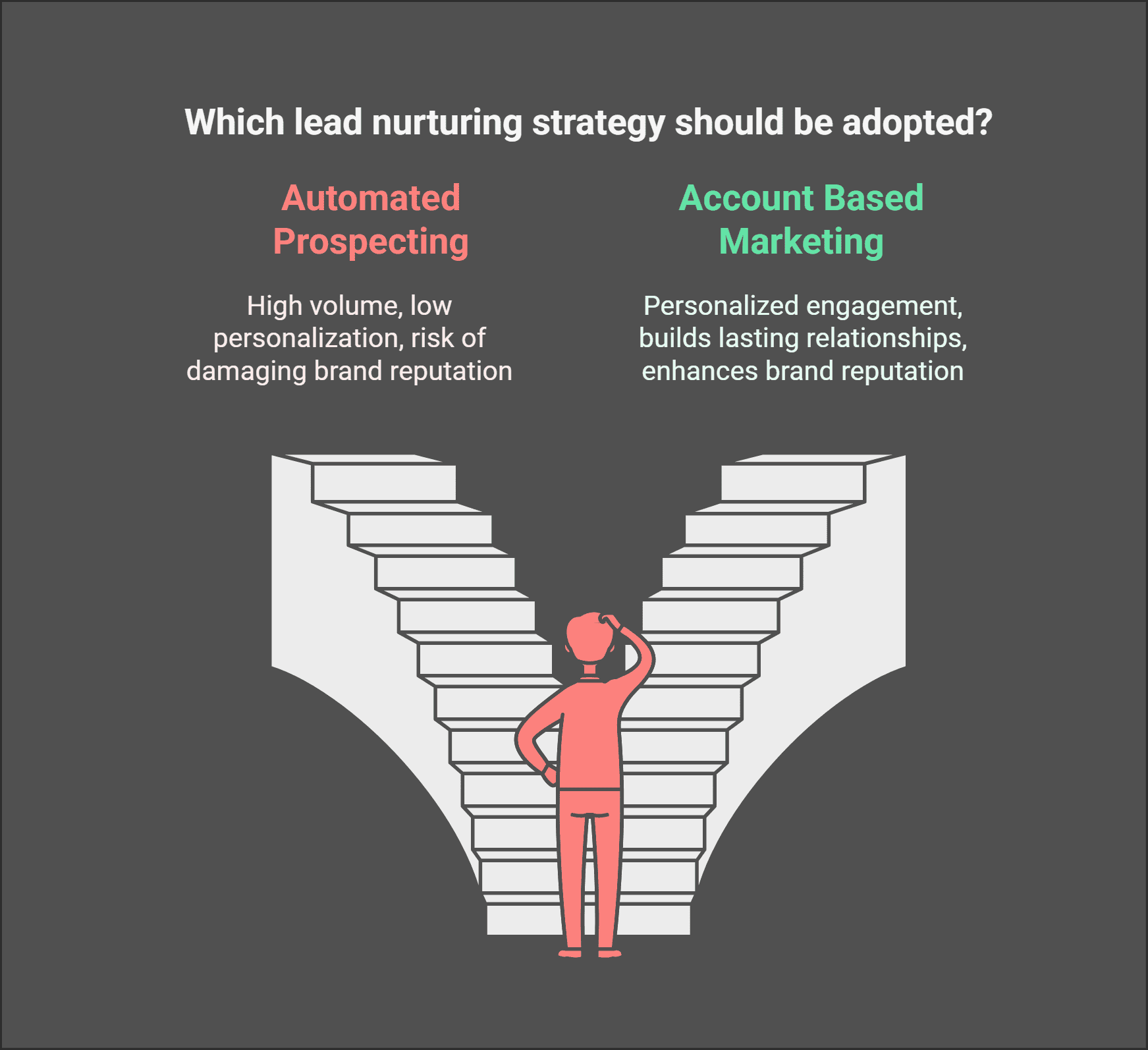
Another critical vulnerability lies in the uncritical adoption of standardized marketing playbooks. Agencies managing dozens of accounts frequently rely on automated templates, cookie-cutter social media content calendars, and standardized email sequences. While efficient for the agency's profit margins, this approach strips away the nuanced value proposition that makes a small firm unique.
Commoditization of Professional and Local Services
When a small firm adopts generic messaging, it blends into the background of its market. Clients choose small businesses for specialized expertise, personalized attention, and agility. Automated, templated campaigns sanitize these attributes, presenting the firm as a faceless commodity. When prospective clients cannot discern a distinct competitive advantage, buying decisions default to price competition—a race to the bottom that small firms rarely win against larger competitors with economies of scale.
The Breakdown of Local and Relational Trust
In niche markets and local economies, business is driven by reputation, word-of-mouth, and deep-seated trust. Automated marketing funnels that rely on high-pressure digital sales tactics often alienate sophisticated buyers. If a prospective client receives an aggressive, multi-step automated email sequence that feels detached from the actual practitioners running the firm, it signals a lack of authenticity and damages brand equity.
Resource Constraints and Internal Operational Bottlenecks
Marketing does not operate in a vacuum; it requires operational support. Even the most expertly designed campaign will fail if the internal machinery of the small firm cannot support the output.
The Follow-Up Gap
Speed-to-lead is a critical determinant of conversion success. Studies across B2B and local service sectors indicate that responding to an inbound inquiry within minutes dramatically increases conversion rates. In most small firms, however, the person responsible for answering inquiries is also managing client delivery, administrative overhead, or operations. Consequently, leads sit untouched for hours or days, by which time the prospect has engaged a competitor.
Absence of Dedicated Marketing Leadership
Small firms rarely employ a dedicated Chief Marketing Officer (CMO) or an internal marketing director. Instead, marketing oversight falls to an operational partner, an office manager, or the business owner. Without specialized oversight, the firm cannot properly audit agency performance, evaluate technical SEO reports, or optimize paid media bids. They rely entirely on the agency's self-reporting, creating a principal-agent problem where the agency has an incentive to justify continued spending rather than campaign restructuring.
Step-by-Step Path to Restructuring Small Firm Marketing
To overcome the pitfalls that cause traditional marketing frameworks to fail small businesses, firms must transition from speculative spending to disciplined, measurable execution.
- Conduct a Comprehensive Unit Economics Audit: Calculate exact customer acquisition costs, historical lifetime values, and the precise profit margins required per closed deal before allocating capital to external campaigns.
- Narrow the Target Parameters: Eliminate broad-match advertising. Restrict targeting to hyper-specific geographic boundaries, verified buyer personas, or explicit keyword intent that signals active commercial readiness.
- Establish Internal Response Protocols: Implement a CRM system with instant lead-routing alerts. Ensure that internal staff or dedicated virtual assistants have explicit SLAs to respond to inbound inquiries within fifteen minutes.
- Demand Transparent, Revenue-Based Reporting: Require marketing partners to report on pipeline velocity, cost-per-acquisition, and closed revenue rather than impressions, reach, or raw lead counts.
- Phase the Investment: Structure marketing agreements with milestone-based checkpoints. Begin with low-capital diagnostic audits and pilot campaigns before committing to long-term retainers or massive ad spends.
Frequently Asked Questions
Why do small firms struggle more with marketing agencies than large corporations do?
Small firms lack the financial runway to absorb months of exploratory testing and brand awareness campaigns. Additionally, they often lack internal marketing executives to audit agency performance, making them vulnerable to misaligned strategies that prioritize agency billable hours over client revenue.
What is the most common metric trap in small firm marketing?
Focusing on lead volume or cost-per-click rather than closed-deal revenue. Generating hundreds of cheap, unqualified leads wastes internal sales time and creates a false sense of campaign success while draining operating capital.
How can a small firm improve its speed-to-lead without hiring a full-time sales team?
Firms can deploy automated acknowledgment tools combined with mobile notification apps that alert operational staff immediately when an inbound form is completed. Establishing a clear internal rotation for prompt personal follow-up is critical for conversion.
Are generic marketing templates completely useless for small businesses?
Templates provide a useful starting point for structural organization, but they fail when used without customization. Small firms must inject proprietary expertise, local proof points, and authentic brand voice into every asset to avoid commoditization.
What budget proportion should a small service firm allocate to marketing?
While allocations vary by industry, growing service firms typically invest between 7% and 12% of gross revenue into marketing and customer acquisition. However, the exact percentage depends heavily on profit margins, sales cycles, and existing word-of-mouth pipeline strength.
Image Gallery