Publicly Traded Telehealth Companies: A Comprehensive 2026 Market Analysis
Publicly traded telehealth companies represent a maturing sector of the healthcare technology market, transitioning from rapid pandemic-era expansion to a focus on sustainable profitability and integrated chronic care. As of 2026, the...
Publicly traded telehealth companies represent a maturing sector of the healthcare technology market, transitioning from rapid pandemic-era expansion to a focus on sustainable profitability and integrated chronic care. As of 2026, the primary players include diversified giants like Teladoc Health, platform providers like Amwell, and consumer-focused specialists such as Hims & Hers and Talkspace.
Contents
The landscape for virtual care has shifted dramatically over the last several years. What was once a niche service used primarily for urgent care "sniffles and coughs" has evolved into a multi-modal ecosystem encompassing primary care, mental health, specialty chronic disease management, and remote patient monitoring (RPM). For investors and healthcare stakeholders, understanding the publicly traded entities in this space requires a look beyond simple stock tickers and into the specific business models—ranging from Direct-to-Consumer (DTC) subscriptions to Enterprise-level Software-as-a-Service (SaaS) for massive hospital systems.
The Evolution of the Telehealth Market into 2026
To understand the current status of publicly traded telehealth companies, one must recognize the "Great Consolidation" that occurred between 2022 and 2025. Following the 2021 market peak, many speculative firms were delisted or acquired. The companies remaining on the NYSE and NASDAQ in 2026 are those that successfully integrated "whole-person care" into their offerings.
In the current 2026 fiscal year, telehealth is no longer viewed as a separate vertical but as a foundational delivery mechanism for all healthcare. Publicly traded firms have largely moved away from reporting only "total visits" as their primary success metric. Instead, they now emphasize "integrated members," "lives under capitated risk," and "average revenue per member" (ARPM). This shift reflects a deeper integration with insurance payers and employers who demand measurable health outcomes rather than just convenience.
Major Publicly Traded Telehealth Companies
Teladoc Health, Inc. (NYSE: TDOC)
Teladoc remains the largest and most recognizable name in the sector. By 2026, the company has largely moved past the massive goodwill impairments related to its 2020 acquisition of Livongo, focusing instead on its Integrated Care and BetterHelp segments.
Teladoc’s strength lies in its scale. It serves over half of the Fortune 500 and has a massive footprint in the international market. Their 2026 strategy centers on "Chronic Care Management," utilizing the data from millions of connected devices (glucose monitors, blood pressure cuffs) to provide proactive interventions. For investors, the focus is on the company’s ability to achieve GAAP (Generally Accepted Accounting Principles) profitability, a milestone that has been the central narrative for the firm over the past two fiscal years.
American Well Corp (Amwell) (NYSE: AMWL)
Amwell distinguishes itself by being a "technology first" partner to health systems and insurers. Unlike Teladoc, which provides its own clinical network, Amwell’s Converge platform is designed to be the digital spine for a hospital's own doctors.
In 2026, Amwell’s revenue is increasingly driven by recurring software subscriptions rather than per-visit fees. This model provides more predictable cash flows but makes the company dependent on the capital expenditure budgets of large hospital systems. Their primary value proposition is interoperability—ensuring that a virtual visit seamlessly updates a patient’s electronic health record (EHR) within systems like Epic or Cerner.
Hims & Hers Health, Inc. (NYSE: HIMS)
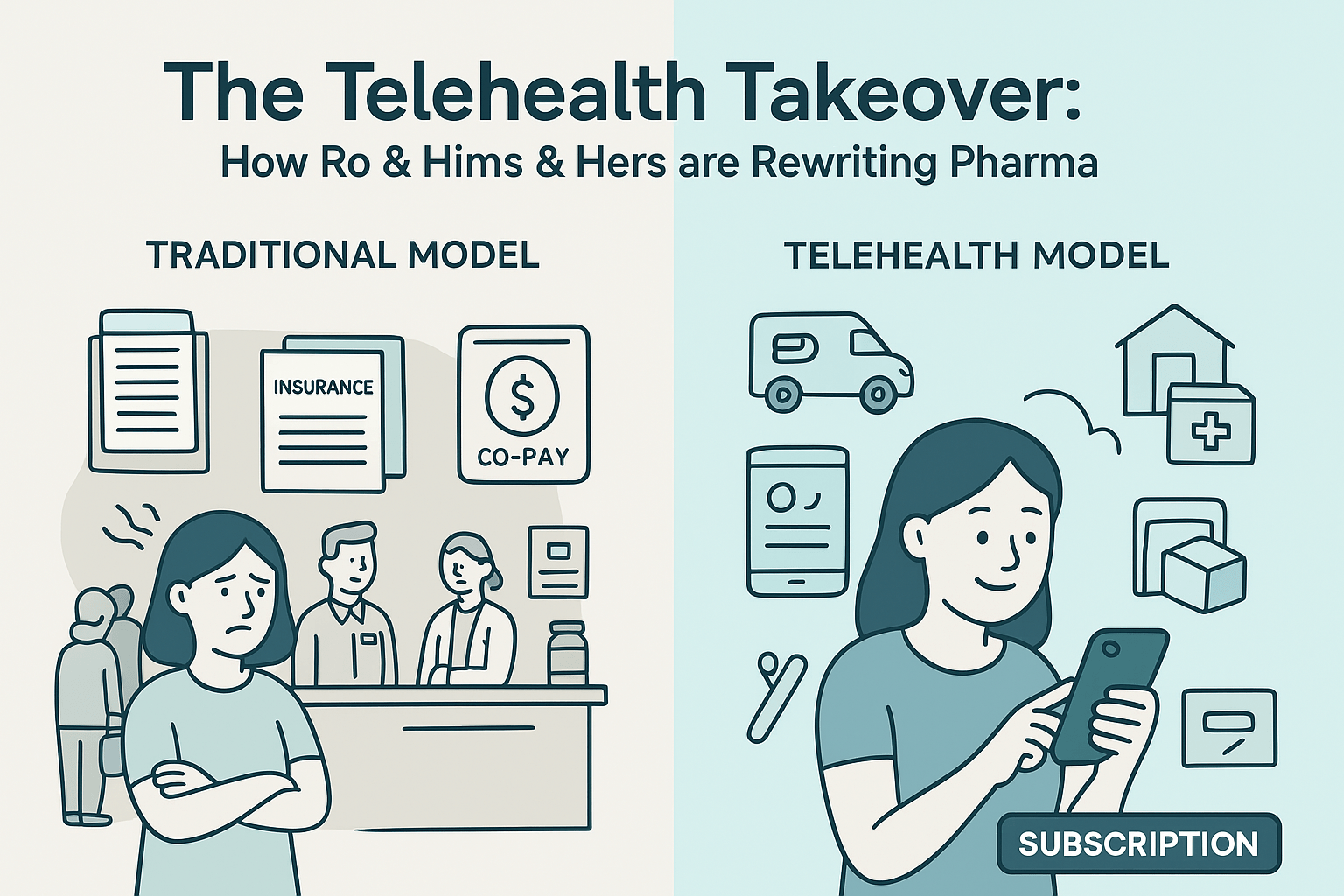
Hims & Hers represents the successful intersection of telehealth, e-commerce, and personalized medicine. While they started in sensitive health categories (hair loss, sexual health), by 2026, they have expanded significantly into weight management (GLP-1 programs) and cardiovascular health.
Their business model is almost entirely Direct-to-Consumer (DTC) and subscription-based. This gives them higher margins than many enterprise-facing peers, though it also requires significant marketing spend to maintain customer acquisition. In 2026, the company is often analyzed more like a high-growth consumer brand than a traditional healthcare provider, reflecting its focus on the "patient-as-consumer" experience.
Doximity, Inc. (NYSE: DOCS)
While often categorized as a social network for doctors, Doximity is a powerhouse in the telehealth space through its Divorce and Dialer tools. Doximity provides the digital workflow that allows physicians to conduct virtual visits from their own smartphones while maintaining privacy and HIPAA compliance.
Doximity is unique among publicly traded telehealth companies because of its high profitability and "asset-light" model. They do not employ a massive fleet of clinicians; instead, they sell marketing and productivity tools to pharmaceutical companies and health systems. In 2026, they remain a top pick for investors looking for exposure to healthcare digitization without the high overhead of direct clinical delivery.
Talkspace, Inc. (NASDAQ: TALK)
Talkspace focuses exclusively on behavioral health. After a period of management turnover and strategic shifts, the company entered 2026 with a reinforced focus on B2B (Business-to-Business) partnerships. They have pivoted from being a purely out-of-pocket consumer app to being a covered benefit for millions of insured members. This transition to "in-network" status has been the primary driver of their volume growth over the last 24 months.
Comparative Analysis of Market Leaders (2026 Data)
The following table compares the primary publicly traded telehealth entities based on their core business models and primary revenue drivers.
| Company | Ticker | Primary Business Model | Target Audience | Key 2026 Focus Area |
|---|---|---|---|---|
| Teladoc Health | TDOC | Integrated Whole-Person Care | Enterprises & Insurers | Chronic Condition Mgmt |
| Amwell | AMWL | Hybrid SaaS Platform | Health Systems & Payers | Platform Interoperability |
| Hims & Hers | HIMS | Direct-to-Consumer (DTC) | Individual Consumers | Personalized Med/Weight Loss |
| Doximity | DOCS | Digital Workflow/Marketing | Healthcare Professionals | Physician Productivity AI |
| Talkspace | TALK | Behavioral Health | B2B & Insured Members | Managed Care Integration |
Key Financial Metrics and Evaluation Criteria
When evaluating publicly traded telehealth companies in 2026, traditional metrics like "Price-to-Earnings" (P/E) are often less useful than sector-specific Key Performance Indicators (KPIs). Investors typically focus on the following:
- Member Engagement/Utilization: A high number of "covered lives" is meaningless if those members never use the service. Analysts look for "utilization rates"—the percentage of the total member base that completes at least one visit per year.
- Customer Acquisition Cost (CAC) vs. Lifetime Value (LTV): Especially for DTC companies like Hims & Hers, the ratio of how much it costs to gain a customer versus the total profit that customer generates over time is the most critical indicator of long-term viability.
- Gross Margins: SaaS-based models (like Amwell) typically command 70-80% margins, whereas clinical-delivery models (like Teladoc) have lower margins (40-55%) due to the cost of paying the doctors who perform the consultations.
- Regulatory Dependency: The "telehealth cliff"—the risk of reimbursement rates being slashed by the Centers for Medicare & Medicaid Services (CMS)—is a constant factor. Companies that have diversified revenue streams outside of government-reimbursed Medicare are often viewed as more stable.
Regulatory and Reimbursement Trends in 2026
The regulatory environment in 2026 has largely stabilized following the permanent adoption of many "emergency" measures from years prior. The Telehealth Expansion Act (and subsequent renewals) has ensured that virtual care remains a reimbursable expense for Medicare and Medicaid.
However, two major regulatory hurdles remain for these companies:
- Cross-State Licensure: While some progress has been made via state compacts, the inability for a doctor in New York to treat a patient in California without specific licensing remains a logistical bottleneck for national telehealth firms.
- Prescribing Restrictions: The DEA (Drug Enforcement Administration) continues to adjust rules regarding the virtual prescription of controlled substances. This particularly affects behavioral health firms (like Talkspace) and those dealing with weight loss or ADHD treatments.
The Role of Artificial Intelligence in 2026 Telehealth
Artificial Intelligence (AI) is no longer a future concept but a core operational component for these companies in 2026. Publicly traded firms are utilizing AI in three primary ways to improve their bottom lines:
- Administrative Automation: AI scribes (like those integrated into Doximity and Teladoc) automatically summarize doctor-patient conversations, reducing the "documentation burden" and allowing doctors to see more patients per hour.
- Predictive Triage: Algorithms now analyze patient data in real-time to identify which individuals are at high risk of a "cardiac event" or "diabetic crisis," prompting the telehealth provider to reach out before an expensive ER visit is required.
- Operational Efficiency: AI is used to predict "peak times" for virtual visits, allowing companies to staff their physician networks more efficiently and reduce wait times for patients.
Risks and Challenges for the Sector
Despite the maturity of the market, publicly traded telehealth companies face significant headwinds in 2026. The most prominent is the entry of "Big Tech" and "Big Retail" into the space. Amazon Clinic and Walmart Health (despite various strategic pivots) continue to put downward pressure on pricing.
Furthermore, "Cybersecurity and Data Privacy" remains a top-tier risk. As telehealth companies house some of the most sensitive patient data in existence, any significant breach could lead to catastrophic legal liabilities and a permanent loss of consumer trust. Investors closely monitor the "Cybersecurity Spend" as a percentage of revenue for these firms.
FAQs About Publicly Traded Telehealth Companies
Which telehealth company has the most users?
As of 2026, Teladoc Health maintains the largest user base, with over 90 million members in the United States alone. Their dominance is rooted in their long-standing relationships with major health insurance providers and Fortune 500 employers who offer the service as a standard employee benefit.
Are telehealth stocks considered "growth" or "value" investments?
In 2026, the sector is in a transition phase. While firms like Hims & Hers are still viewed as growth stocks due to their aggressive expansion into new product categories, Teladoc and Doximity are increasingly analyzed as value stocks or "GARP" (Growth at a Reasonable Price) investments, focusing on cash flow and market stability rather than triple-digit revenue growth.
How do telehealth companies make money?
Most publicly traded telehealth firms use a "Per Member Per Month" (PMPM) subscription fee charged to employers or insurers, plus a "per-visit" fee. Direct-to-consumer companies (like Hims & Hers) rely on monthly subscription fees for medications and consultations, while platform providers (like Amwell) charge annual licensing fees for their software.
Is Doximity a telehealth company or a social network?
It is both. While Doximity is often called "LinkedIn for Doctors," it earns a significant portion of its revenue from its telehealth tools (Dialer) and its "Hospitals and Health Systems" segment, which helps institutions manage their digital workflows and physician recruitment.
What happened to the smaller telehealth stocks from 2021?
Many smaller, specialized telehealth firms that went public via SPACs (Special Purpose Acquisition Companies) in 2020-2021 have since been acquired by larger healthcare conglomerates or have private-equity-backed "take-privates" after failing to reach profitability in the high-interest-rate environment of the mid-2020s.
Next Actions for Research
For those looking to deepen their understanding of these companies, the most reliable next step is to examine the Form 10-K (Annual Report) and Form 10-Q (Quarterly Report) filed with the U.S. Securities and Exchange Commission (SEC). These documents provide audited financial data and detailed "Risk Factors" that are essential for any technical evaluation. Additionally, monitoring the CMS Physician Fee Schedule updates will provide insight into the reimbursement trends that will dictate the revenue potential for these firms in the coming fiscal years.
Image Gallery