Why the Right Dog Training Ad Matters for Your Home
Selecting the ideal promotional material or service listing for canine behavioral guidance directly influences household harmony, safety, and the daily quality of life for every family member. When a pet owner evaluates dog training pr...
Selecting the ideal promotional material or service listing for canine behavioral guidance directly influences household harmony, safety, and the daily quality of life for every family member. When a pet owner evaluates dog training promotions, they are not merely looking at marketing copy; they are screening for methodologies that align with their domestic environment, ethical standards, and safety requirements.
Contents
Understanding the Impact of Dog Training Advertisements on the Domestic Sphere
Advertising in the pet services industry has evolved from simple classified columns in local newspapers to highly targeted digital campaigns across social media, search engines, and community boards. For a homeowner, the ads they encounter set expectations for how behavioral problems will be addressed within their living space. A poorly constructed ad might promise overnight miracles through coercive techniques, while a professional, well-crafted advertisement emphasizes structured learning, positive reinforcement, and realistic behavioral modification timelines.
When dog owners bring a new puppy or an adult rescue into their residence, the immediate environment changes. Furniture, personal space, schedules, and interactions with guests require rapid adjustment. An effective training advertisement communicates clearly whether the practitioner understands these domestic pressures. It establishes trust before any financial transaction occurs, ensuring that the methodologies introduced into the home respect the safety and psychological well-being of both the animal and human occupants.
Furthermore, the right advertisement helps filter out unqualified practitioners. The pet training industry lacks universal regulatory oversight in many jurisdictions, meaning anyone can market themselves as a behaviorist. Advertisements that feature verified credentials, transparent pricing structures, and detailed descriptions of their training philosophies protect homeowners from ineffective or harmful interventions that could exacerbate aggression or anxiety indoors.
Core Elements of Quality Dog Training Advertisements
Discerning pet owners must look past flashy graphic design and emotional appeals to identify the substance behind a service provider's marketing. High-quality advertisements share specific traits that reflect professional competence and operational integrity.
Transparency in Methodology
A trustworthy advertisement explicitly states whether the trainer utilizes positive reinforcement, reward-based shaping, or a balanced approach that incorporates aversive tools. Vague terminology such as "guaranteed results" or "proprietary methods" often masks outdated or harsh techniques that can create fear-based reactions in a home environment. Clear descriptions allow homeowners to vet practices against modern behavioral science standards.
Credentials and Professional Affiliations
Reputable trainers proudly display their certifications from recognized bodies such as the Certification Council for Professional Dog Trainers (CCPDT) or the International Association of Animal Behavior Consultants (IAABC). An advertisement that highlights ongoing continuing education and formal testing demonstrates a commitment to ethical, up-to-date practices.
Scope of Service and Location Suitability
Homeowners must determine whether an advertised service is offered via private in-home consultations, board-and-train programs, or group classes held at a facility. The ideal ad specifies the geographic service area and details how the training integrates directly into the living spaces where behavioral issues actually occur—such as doorways, kitchens, and yards.
| Advertising Element | What to Look For | Red Flags to Avoid |
|---|---|---|
| Methodology | Positive reinforcement, science-based conditioning, clear explanations. | "Guaranteed results," heavy reliance on fear or pain, vague techniques. |
| Credentials | CCPDT, IAABC, certified veterinary behaviorist affiliations. | Self-proclaimed titles without verifiable testing or peer-reviewed backing. |
| Pricing & Scope | Transparent package tiers, clear travel fees, itemized services. | Hidden costs, extreme pressure for upfront lifetime commitments. |
| Location Focus | In-home customization or structured facility transitions. | Unclear drop-off locations, lack of safety protocols for private property. |
How the Right Ad Prevents Common Household Conflicts
Behavioral challenges inside a home—such as resource guarding, destructive chewing, separation anxiety, and inappropriate elimination—create significant stress for residents. Choosing a training service based on a superficial or misleading advertisement can worsen these issues, turning minor obedience hurdles into severe safety hazards.
When an advertisement accurately reflects a trainer's specialization, homeowners avoid the mismatch of hiring a basic obedience instructor for a complex aggression case. Specialized advertising ensures that the practitioner arriving at the front door possesses the targeted expertise required to manage multi-pet households, rescue dogs with trauma histories, or working breeds with high mental stimulation needs.
Moreover, clear promotional communication sets realistic boundaries regarding human participation. Effective in-home training requires the primary residents to alter their own habits, body language, and environmental management strategies. An ad that frames training as a collaborative educational process for the entire household prepares owners for active participation, whereas misleading ads that claim to "fix" a dog independently often result in regression once the animal returns to an unchanged home environment.
Evaluating Financial and Logistical Commitments
Investing in professional canine education involves financial resource allocation and schedule management. Advertisements serve as the first contract of expectations regarding cost, duration, and accessibility.
Understanding Package Structures and Value
Comprehensive advertisements outline what is included in a service package—such as follow-up support, digital resource libraries, or direct communication channels between sessions. Homeowners should look for structured progression pathways rather than open-ended, unstructured hourly billing that lacks measurable milestones.
Assessing Time Investment for Residents
In-home training requires consistent daily practice between formal sessions. Ads that clearly articulate the required time commitment per day enable families to assess whether their work schedules and domestic routines can support the training plan successfully.
Related Considerations for Homeowners
- Insurance and Liability: Verifying whether the training provider carries professional liability insurance protects homeowners in the unlikely event of property damage or injury during a session.
- Veterinary Clearance: Reputable trainers often request veterinary sign-offs to rule out underlying medical conditions causing sudden behavioral changes before beginning intensive behavior modification plans.
- Family Integration: Ensuring all members of the household, including children, are aligned with the training protocols presented in the service provider's intake materials.
Frequently Asked Questions
What should I look for first in a dog training advertisement?
Prioritize transparency regarding training methodologies and verifiable professional certifications. An ad that immediately details how the trainer handles behavioral issues without resorting to vague promises or fear-based tactics indicates a trustworthy provider.
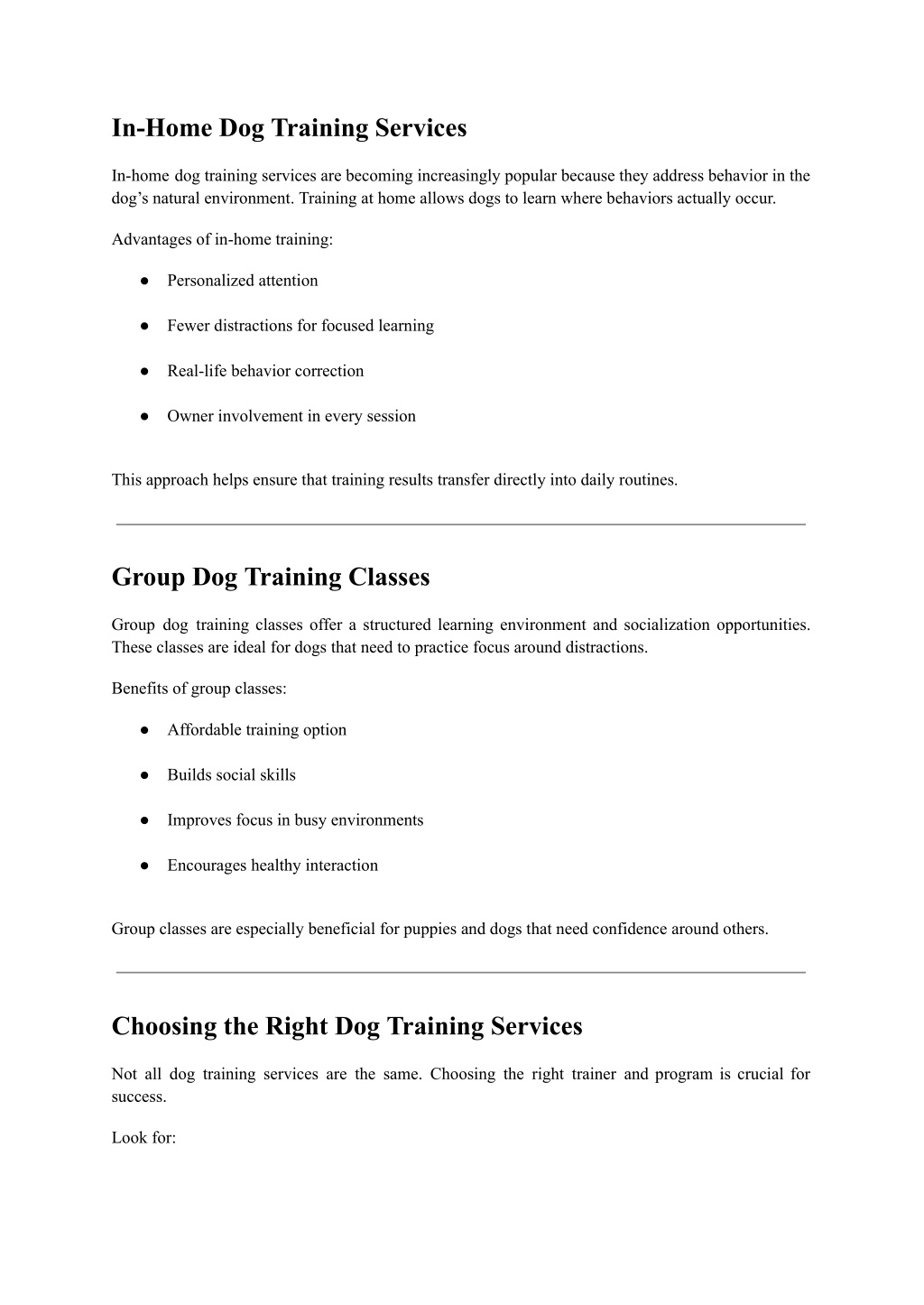
Why are in-home training ads different from facility-based ads?
In-home training ads focus on managing and modifying behaviors where they actually occur—inside your living space, yard, and neighborhood. Facility-based ads typically emphasize socialization and distraction-proofing in controlled environments, which may require an extra step to generalize behaviors back to the home.
Are guarantees in dog training ads reliable?
No reputable animal behavior professional can guarantee a living animal's behavior 100% because behavioral outcomes depend heavily on consistent human execution and the dog's individual psychological profile. Ads promising absolute guarantees should be approached with caution.
How do I verify the credentials listed in an ad?
You can cross-reference certifications by visiting the official registries of organizations like the Certification Council for Professional Dog Trainers or the International Association of Animal Behavior Consultants to confirm the practitioner's active standing.
Does the cost of the training service reflect its effectiveness?
Price alone does not dictate quality. However, extremely low rates often indicate uncertified practitioners or large-group settings that lack individual attention, while excessively high rates should be justified by specialized behavioral credentials and comprehensive support structures.
Conclusion and Next Actions
Selecting the appropriate service based on a well-evaluated dog training advertisement protects your financial investment, ensures domestic peace, and safeguards the emotional well-being of your pet. Begin your search by identifying your specific behavioral goals, verifying professional credentials through independent registries, and scheduling an initial consultation to discuss customized in-home strategies before signing any long-term service agreements.
Image Gallery