Understanding the Law for Self Defense: A Comprehensive Legal Framework
Understanding the law for self-defense requires recognizing that force is only legally permissible when it is immediately necessary, proportional to the threat, and used by someone who reasonably fears imminent bodily harm. It is an af...
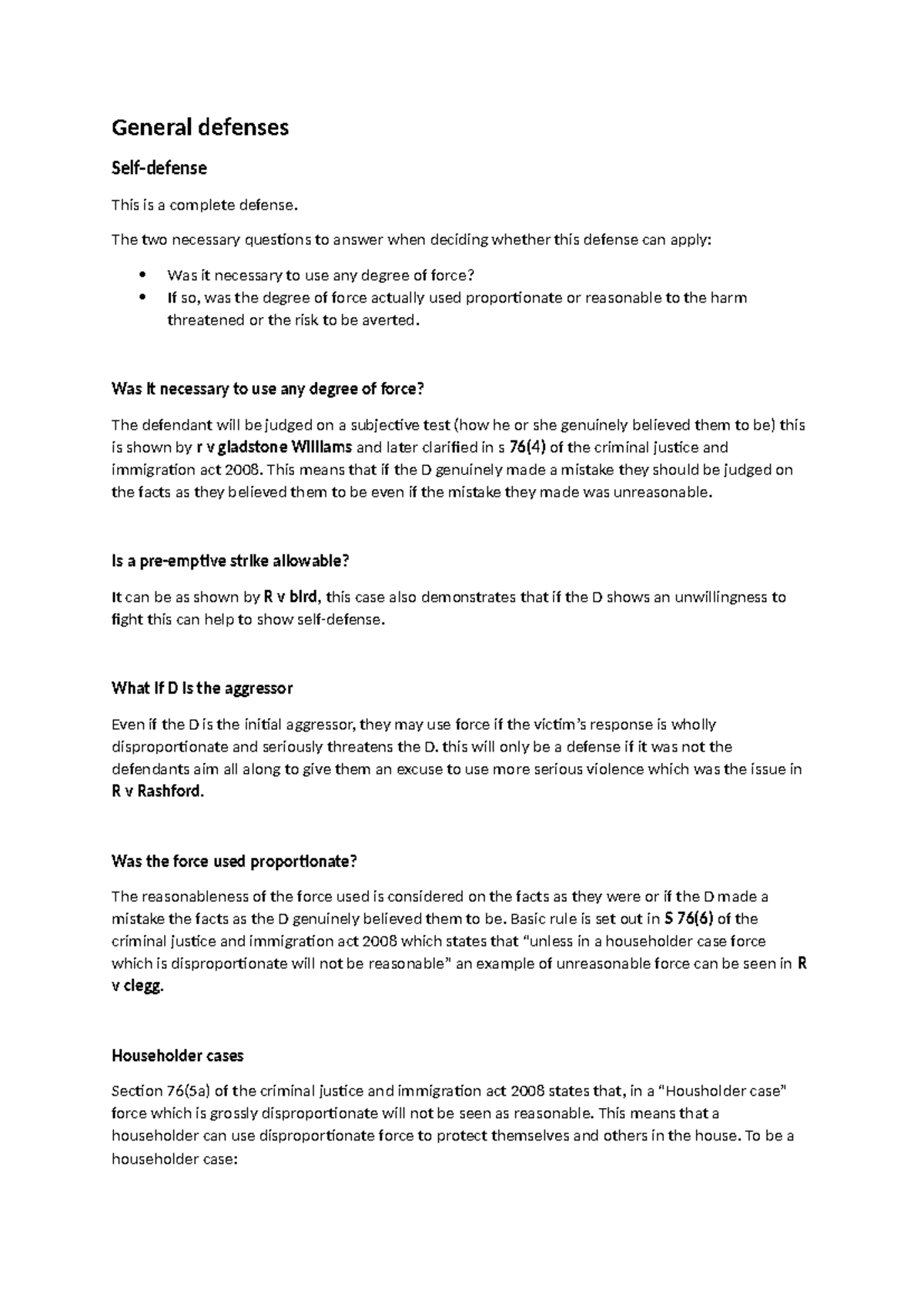
Understanding the law for self-defense requires recognizing that force is only legally permissible when it is immediately necessary, proportional to the threat, and used by someone who reasonably fears imminent bodily harm. It is an affirmative defense, meaning you admit to the act of force but argue it was legally justified under specific statutory requirements.
Contents
Self-defense law is not a singular set of rules but a complex tapestry of statutes, common law principles, and judicial precedents that vary significantly by jurisdiction. As of 2026, while many core principles remain consistent, the application of these laws in a courtroom depends heavily on the specific facts of an encounter and the local legal standards. This article examines the fundamental pillars of self-defense law, the distinction between different legal doctrines, and the practical realities of the legal system following a defensive encounter.
The Four Pillars of Legal Self-Defense
To successfully claim self-defense, a defendant’s actions must typically satisfy four core legal requirements. If any of these pillars are absent, the claim of self-defense may fail, potentially leading to criminal convictions for assault, manslaughter, or murder.
1. Imminence
The threat must be happening "right now." Legal self-defense does not permit "pre-emptive strikes" for a threat that might happen in the future, nor does it allow for "retaliation" for an event that happened in the past. If an aggressor threatens to return tomorrow with a weapon, the threat is not imminent, and the potential victim is expected to contact law enforcement rather than use force. The window of justification opens when the threat is immediate and closes the moment the threat ceases (e.g., when the attacker turns to flee).
2. Necessity
The use of force must be necessary to prevent the harm. If there are clear, safe alternatives to using force—such as locking a door or, in some jurisdictions, retreating—the legal system may determine that the use of force was not necessary. Necessity is the threshold that determines whether the state’s monopoly on violence can be temporarily bypassed by a private citizen.
3. Proportionality
The level of force used must match the level of the threat. One cannot legally use deadly force to repel a non-deadly threat. For example, if someone pushes you in a crowded hallway, responding with a firearm is a disproportionate use of force. Deadlier force is generally reserved for situations where the defender reasonably fears "great bodily harm" or death.
4. Reasonableness
The "reasonable person" standard is the most critical and often the most debated aspect of self-defense law. The jury must decide if a hypothetical, objective, and reasonable person, knowing what the defendant knew and being in the same situation, would have acted in the same way. This takes into account the "totality of the circumstances," including the size, age, and physical capabilities of both the defender and the attacker.
Duty to Retreat vs. Stand Your Ground
One of the most significant divides in self-defense law is the distinction between the "Duty to Retreat" and "Stand Your Ground" (SYG) statutes. As of 2026, the majority of U.S. states have adopted some form of Stand Your Ground legislation, but the nuances remain critical for legal protection.
Duty to Retreat
In jurisdictions that observe a duty to retreat, a person who is being threatened with force is required to exhaust all safe avenues of retreat before using deadly force. If you can move away from the danger with complete safety to yourself and others, you are legally obligated to do so. Failure to retreat when it was safely possible can result in the loss of a self-defense claim.
Stand Your Ground
Stand Your Ground laws remove the duty to retreat. Under these statutes, if you are in a place where you have a legal right to be (such as a public sidewalk, a park, or a place of business) and you are not engaged in illegal activity, you may use justifiable force—including deadly force—to defend yourself without trying to run away first. Proponents argue this honors the individual's right to safety, while critics argue it can escalate avoidable conflicts.
The Castle Doctrine
Almost every jurisdiction in the United States recognizes the "Castle Doctrine." This is a legal principle that stems from the English common law idea that "a man’s home is his castle." It establishes that there is no duty to retreat when a person is inside their own home (and in some states, their workplace or vehicle). The law presumes that an intruder who enters a dwelling forcefully and unlawfully intends to commit a violent felony, justifying the occupant's use of force.
| Feature | Duty to Retreat | Stand Your Ground | Castle Doctrine |
|---|---|---|---|
| Location | Anywhere outside the home | Anywhere you are legally allowed to be | Inside your home/dwelling |
| Requirement | Must attempt to flee if safe | No requirement to flee | No requirement to flee |
| Deadly Force | Only if retreat is impossible | If threat is deadly/imminent | Presumed justified against intruders |
| Primary Goal | Minimize violence/loss of life | Protect individual rights/standing | Protect the sanctity of the home |
Justifying the Use of Lethal Force
The legal threshold for using lethal force is significantly higher than for non-lethal force. To be legally justified, the defender must have a "reasonable fear of imminent death or great bodily harm."
Great Bodily Harm
This term is defined differently across states but generally includes injuries that create a substantial risk of death, cause serious permanent disfigurement, or result in long-term loss or impairment of the function of any bodily member or organ. Examples include broken bones, internal organ damage, or loss of consciousness.
Disparity of Force
In some cases, a defender may be justified in using a weapon against an unarmed attacker if there is a significant "disparity of force." This occurs when the physical advantage of the attacker is so great that their hands and feet effectively become deadly weapons. Factors contributing to disparity of force include:
- Numbers: Multiple attackers against a single person.
- Size/Strength: A significantly larger and stronger person attacking a smaller, weaker person.
- Ability: A trained professional fighter attacking an untrained individual.
- Position of Disadvantage: An attacker striking someone who is pinned to the ground or otherwise incapacitated.
The "Reasonable Person" Standard and Subjective Belief
The law distinguishes between a subjective belief (what the person actually thought at the moment) and an objective belief (what a reasonable person would have thought).
If a person suffers from a delusion and believes they are being attacked by a monster, their subjective belief is that they are in danger. However, an objective "reasonable person" would not share that belief. Therefore, the use of force would not be legally justified. The legal system focuses on whether the defender’s fear was "objectively reasonable" given the facts available at the time. This is why "mistake of fact" cases are so complex—such as when a defender shoots someone holding a cell phone they mistakenly believed was a gun. If the jury decides a reasonable person could have made the same mistake, the defense may stand.
Defense of Property vs. Defense of Life
A common misconception in self-defense law is the right to use force to protect property. In the vast majority of jurisdictions, deadly force is never justified solely to protect property.
While you may be allowed to use "reasonable, non-deadly force" to prevent someone from stealing your bicycle or car, you cannot shoot them to stop the theft. The law values human life—even the life of a criminal—above the value of material possessions. Deadly force only becomes an option if the property crime escalates into a threat against a person. For example, if a carjacker threatens you with a knife to take your vehicle, you are defending your life, not just the car.
Practical Steps After a Self-Defense Incident
The moments following a defensive encounter are as legally critical as the encounter itself. Decisions made in a state of high adrenaline can have lifelong consequences.
- Secure the Scene: Ensure the threat is truly over. Do not "finish off" an incapacitated attacker, as this moves from defense to homicide.
- Call 911 Immediately: Be the first to report the incident. This establishes you as the "complainant" rather than the "suspect." State your location, that you were attacked, and that you require medical assistance for all parties.
- The "Active Listener" Statement: When police arrive, provide basic information: "I was attacked, I feared for my life, there is the evidence/weapon, and I will cooperate fully after I have spoken with my attorney."
- Avoid Detailed Statements: Adrenaline causes physiological changes that can distort memory. Detailed statements given immediately after a trauma are often inaccurate, and any inconsistencies can be used by prosecutors to undermine your credibility later.
- Seek Legal Representation: Self-defense is an affirmative defense. You will need an attorney to help you navigate the process of proving your actions met the statutory requirements for justification.
Frequently Asked Questions
Does a "Stand Your Ground" law mean I can shoot anyone who threatens me?No. Stand Your Ground only removes the duty to retreat; it does not change the other requirements of self-defense. You must still prove that you faced an imminent threat of death or great bodily harm, that your use of force was necessary, and that your actions were objectively reasonable.
What happens if I accidentally hurt a bystander while defending myself?This falls under the legal doctrine of "transferred intent" or "negligence." While the initial use of force against the attacker may be justified, you can still be held civilly or criminally liable for harm to a bystander if your actions were deemed reckless or negligent.
Can I claim self-defense if I started the argument?Generally, no. Most jurisdictions have "initial aggressor" rules. If you provoke a fight or are the first to use or threaten force, you forfeit the right to claim self-defense unless you clearly withdraw from the conflict and communicate that withdrawal to the other party, yet they continue to attack.
Is self-defense law the same in every state?No. While the basic principles (imminence, necessity, proportionality) are common, specific statutes regarding the duty to retreat, the definition of "dwelling," and the burden of proof vary significantly. Always check the specific statutes in your local jurisdiction.
What is the "Burden of Proof" in a self-defense case?In many jurisdictions, once the defendant provides "some evidence" of self-defense, the burden shifts to the prosecution to disprove self-defense "beyond a reasonable doubt." However, in a few states, the defendant must prove they acted in self-defense by a "preponderance of the evidence."
Practical Recommendation: To truly understand the law for self-defense in your specific area, you should consult with a local attorney specializing in criminal defense or attend a certified use-of-force legal seminar. Laws are subject to change by legislative sessions or high-court rulings, and staying informed is a prerequisite for responsible self-protection.
Disclaimer: This article is for informational purposes only and does not constitute legal advice. Laws regarding self-defense vary by jurisdiction and are subject to change. Consult with a qualified legal professional for advice regarding your specific situation.
Image Gallery