Top 5 Law Schools in England: 2026 Rankings and Admissions Guide
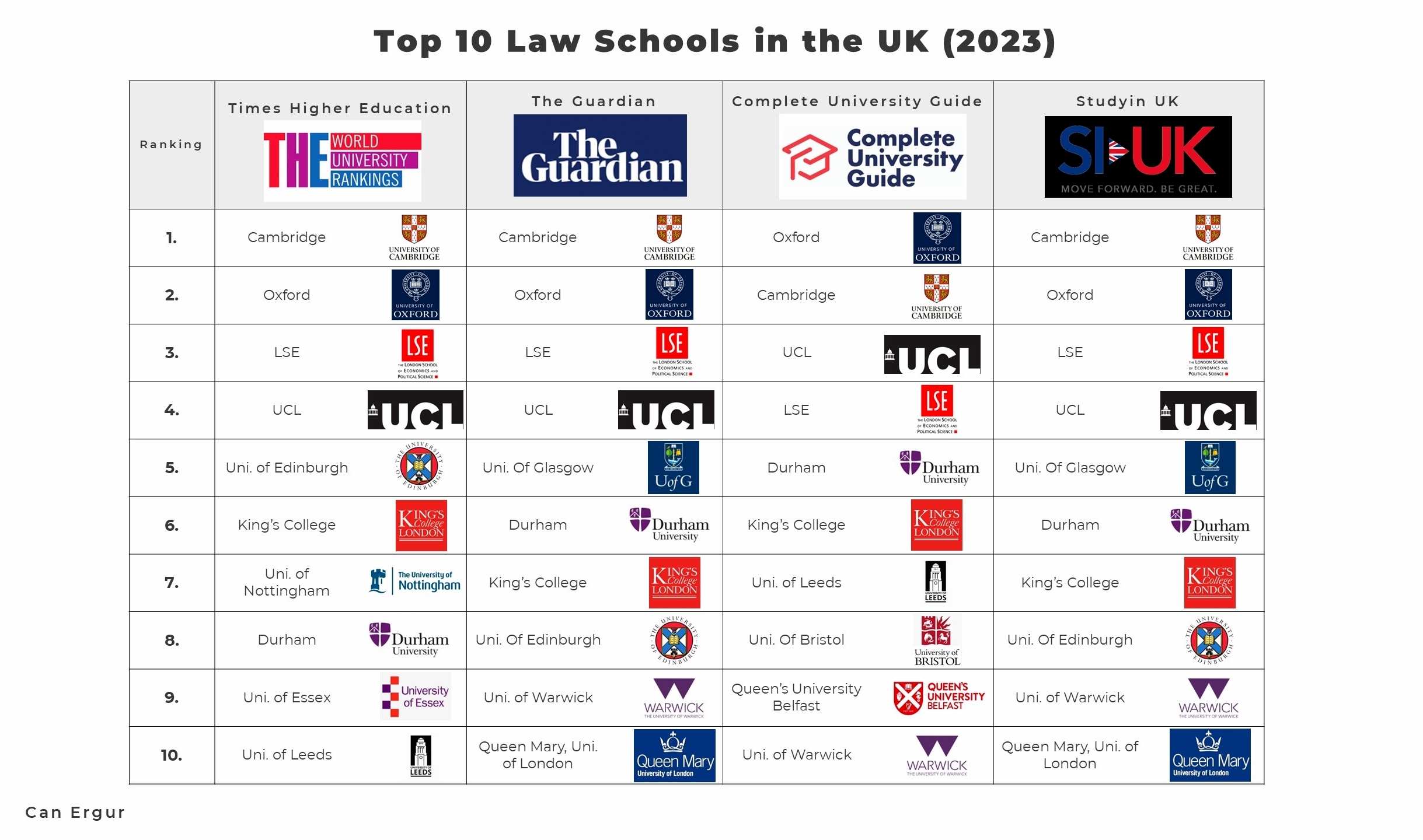
As of 2026, the top five law schools in England are the University of Oxford, the University of Cambridge, the London School of Economics and Political Science (LSE), University College London (UCL), and King’s College London (KCL). Th...
As of 2026, the top five law schools in England are the University of Oxford, the University of Cambridge, the London School of Economics and Political Science (LSE), University College London (UCL), and King’s College London (KCL). These institutions consistently lead global rankings based on academic reputation, research impact, and elite graduate employability within the international legal sector.
Contents
Selecting a law school in England requires a nuanced understanding of more than just prestige. Prospective students must weigh the pedagogical differences between the traditional collegiate systems of Oxbridge and the specialized, commercially-focused environments of the London-based "Golden Triangle" institutions. In 2026, these five schools remain the primary targets for "Magic Circle" and "Silver Circle" law firms, offering robust preparation for the Solicitors Qualifying Examination (SQE) and the Bar Practice Course (BPC).
1. University of Oxford: Faculty of Law
The University of Oxford continues to hold its position as the premier institution for legal studies in England. The Oxford Faculty of Law is unique for its size and the depth of its tutorial system, which provides students with personalized, rigorous intellectual engagement.
The Tutorial System and Academic Rigour
At the heart of the Oxford LLB (known as the BA in Jurisprudence) is the tutorial system. Unlike many global institutions that rely heavily on large-scale lectures, Oxford requires students to produce weekly essays which are then defended in groups of two or three with a senior academic. This develops an unparalleled level of critical thinking and oral advocacy. By 2026, Oxford has further integrated digital research modules into its curriculum, ensuring that while the focus remains on "black-letter law," students are proficient in modern legal tech.
Post-Graduate Prestige: The BCL
For those looking beyond undergraduate study, the Bachelor of Civil Law (BCL) at Oxford is widely regarded as the most prestigious master’s-level law degree in the common law world. It is famously demanding and serves as a significant differentiator for those seeking careers in the upper echelons of the commercial bar or academia.
2. University of Cambridge: Faculty of Law
The University of Cambridge consistently rivals Oxford for the top spot. The Cambridge Law Faculty is housed in the iconic, Foster-designed building at the Sidgwick Site, providing one of the most advanced legal research environments in Europe.
The Tripos System
Cambridge operates under the "Tripos" system, which allows for a degree of flexibility in how students structure their three-year degree. While the core "Foundations of Legal Knowledge" required for professional exemptions are mandatory, Cambridge offers a vast array of specialized papers ranging from Roman Law to modern Information Law. The 2026 curriculum places a heightened emphasis on Comparative Law, reflecting the increasingly globalized nature of legal disputes.
Research Excellence and the Squire Law Library
Cambridge is home to the Squire Law Library, one of the largest and most comprehensive collections of legal materials in the UK. The faculty’s research centers, such as the Lauterpacht Centre for International Law, provide undergraduate students with exposure to world-leading scholarship, often involving current members of the International Law Commission and the International Court of Justice.
3. London School of Economics and Political Science (LSE)
LSE Law School stands as the leading institution for students specifically interested in the intersection of law, economics, and social sciences. Located in the heart of London, its proximity to the Royal Courts of Justice and the City of London provides an unmatched professional atmosphere.
Commercial and Financial Law Focus
LSE is the primary feeder for international corporate law firms. Its curriculum is notably more "internationalist" than the traditional Oxbridge models. In 2026, LSE has pioneered new modules in Financial Regulation and Fintech Law, acknowledging the evolving needs of the London legal market. For students aiming for the "Magic Circle" (Linklaters, Freshfields, etc.), LSE’s networking opportunities and career-specific seminars are significant advantages.
Diversity and Global Outlook
LSE prides itself on having one of the most diverse student bodies in the world. This diversity is reflected in the classroom, where legal problems are analyzed through various jurisdictional lenses. This prepares graduates for the reality of modern practice, where cross-border transactions are the norm.
4. University College London (UCL): Faculty of Laws
UCL Faculty of Laws, located in the historic Bentham House, is renowned for its progressive approach to legal education. It was the first law school in England to admit students regardless of their religious background and has maintained a commitment to social justice and reform.
Integrated Professional Development
By 2026, UCL has refined its "Integrated Legal Education" model, which blends academic theory with practical application. The faculty’s pro bono program is among the most active in the country, allowing students to work on real-world cases under the supervision of qualified solicitors and barristers. This is particularly beneficial for students preparing for the SQE2 (the skills-based portion of the solicitor qualification).
Key Strengths in Jurisprudence and Public Law
UCL remains a powerhouse for legal theory and public law. Its faculty includes some of the most cited legal scholars in the UK. For students who wish to explore the "Why" behind the law—the philosophical and political justifications for legal structures—UCL offers a curriculum that is both intellectually taxing and socially relevant.
5. King’s College London (KCL): The Dickson Poon School of Law
King’s College London rounds out the top five, largely due to the massive investment and transformation of the Dickson Poon School of Law. Located in Somerset House, KCL offers one of the most prestigious legal educations in the world, with a strong focus on transnational law.
The Dickson Poon Scholarships and Global Focus
KCL is famous for its generous scholarship programs and its commitment to tackling "global challenges." The curriculum in 2026 includes a mandatory focus on Transnational Law, preparing students to handle legal issues that span multiple countries and legal systems. This makes KCL graduates particularly attractive to US-based firms in London and international NGOs.
Specialization in Medical Law and IP
KCL is a recognized leader in specialized fields such as Medical Law, Ethics, and Intellectual Property. Its partnerships with major London hospitals and tech hubs provide students with unique internship opportunities that are rarely available at more traditional universities.
Comparative Overview of the Top 5 Law Schools (2026 Data)
| University | Typical A-Level Offer | LNAT Required? | Primary Strength | Location |
|---|---|---|---|---|
| Oxford | A*AA | Yes | Tutorial System / Jurisprudence | Oxford |
| Cambridge | A*AA | Yes | Research / Private Law | Cambridge |
| LSE | A*AA | Yes | Corporate & Financial Law | London (Holborn) |
| UCL | A*AA | Yes | Public Law / Social Justice | London (Bloomsbury) |
| KCL | A*AA | Yes | Transnational / Medical Law | London (Strand) |
Admissions and the LNAT in 2026
All five of the top law schools in England require the Law National Aptitude Test (LNAT). This is not a test of legal knowledge but of logical reasoning, reading comprehension, and essay-writing ability.
- Section A: Multiple-choice questions that test your ability to identify assumptions, evaluate evidence, and draw conclusions.
- Section B: An essay where you must argue a point of view on a controversial topic. While this isn't marked by the LNAT center, it is sent directly to the admissions tutors at the universities you apply to.
In 2026, the average LNAT score for successful applicants to these five schools typically falls between 27 and 32. However, the essay is often the deciding factor for admissions tutors at Oxford and LSE, who use it to gauge a student’s ability to construct a coherent, persuasive argument under pressure.
Career Pathways: The SQE and Beyond
For students graduating in 2026, the route to becoming a solicitor in England and Wales is governed by the Solicitors Qualifying Examination (SQE). While a law degree from a top-five school is no longer a strict legal requirement to sit the SQE, the depth of training provided by these institutions is essential for passing the rigorous exams.
- SQE1: Focuses on Functioning Legal Knowledge (FLK). The core modules at Oxford, Cambridge, LSE, UCL, and KCL are designed to cover this syllabus comprehensively.
- SQE2: Focuses on practical legal skills. Institutions like UCL and KCL have integrated more "skills-based" learning into their third-year electives to assist with this transition.
Furthermore, these top five schools have established "preferred provider" relationships with major law firms. This means that if a student secures a training contract, the firm will often pay for their specialized SQE preparation courses at a provider like BPP or the University of Law, following their graduation from the academic degree.
FAQs
Is it harder to get into Oxford or Cambridge for Law?
Both are exceptionally competitive, with success rates often hovering around 10-15%. Oxford requires the LNAT, whereas Cambridge has traditionally used the Cambridge Law Test but, as of 2026, most colleges have aligned with the LNAT. The choice often comes down to the specific college environment and the slight differences in the course structure (Oxford’s Jurisprudence vs. the Cambridge Tripos).
Can international students practice in England after graduating?
Yes. International students graduating in 2026 can utilize the Graduate Visa route, which allows them to stay and work in the UK for two years (or three years for PhD students) after graduation. To practice as a solicitor or barrister, they must still pass the relevant professional exams (SQE or BPC) and secure a training contract or pupillage.
Do I need to study Law at A-level to apply to these schools?
No. In fact, many admissions tutors at the top five schools prefer subjects that develop rigorous analytical skills, such as History, English Literature, Mathematics, or Philosophy. Law A-level is neither an advantage nor a disadvantage, provided your other subjects show breadth and depth.
How much are the tuition fees for Law in 2026?
For "Home" students, fees remain capped at approximately £9,250 per year, though this is subject to annual government review. For international students, fees at these top five institutions typically range from £28,000 to £42,000 per year, depending on the university and any college fees (at Oxford and Cambridge).
Is the LSE better than Oxbridge for Corporate Law?
"Better" is subjective, but LSE is often perceived as more "plugged into" the City of London. Its careers service and the sheer volume of networking events with corporate firms are tailored specifically toward commercial practice. However, Oxford and Cambridge graduates are equally sought after by the same firms due to their demonstrated intellectual stamina.
Final Recommendation
For prospective students in 2026, the "best" law school depends on your career objectives. If you seek a career in academia or at the Chancery Bar, the traditional rigor of Oxford or Cambridge is unparalleled. If your goal is a high-octane career in a global corporate firm, LSE provides the most direct environment. For those who want a balance of elite academics and practical social engagement, UCL and King’s College London offer the most modern and flexible pathways. Ensure you sit the LNAT early and focus your personal statement on demonstrating a "legal mind"—the ability to analyze complex rules and apply them to facts with precision.
Image Gallery