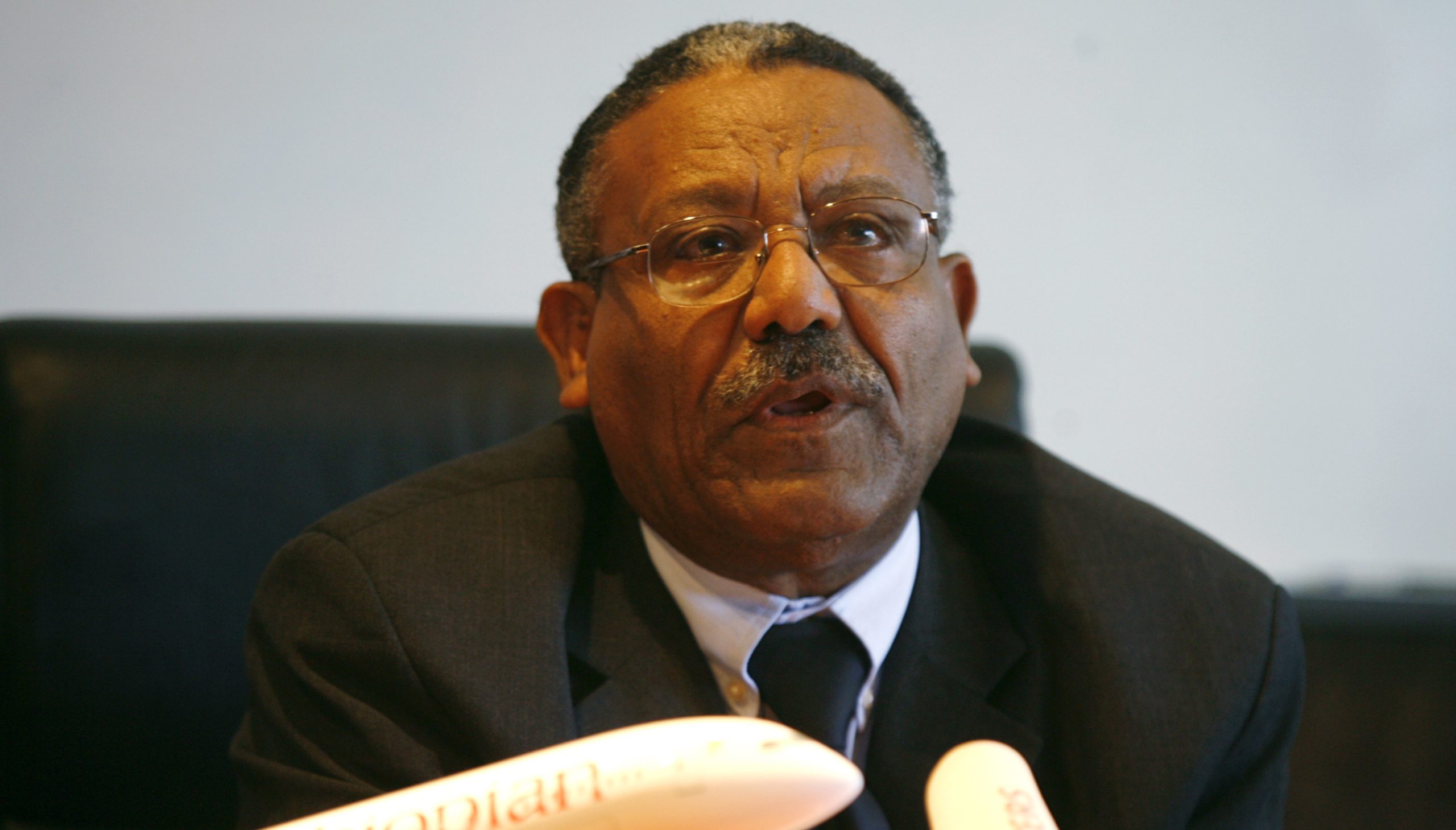
The Role of Girma Wolde-Giorgis in the Ethiopian Parliament: Duties, Powers, and Legacy
Girma Wolde-Giorgis served as the President of Ethiopia from 2001 to 2013, acting as the formal Head of State within the nation’s parliamentary republic. His role in the Ethiopian Parliament primarily involved ceremonial and symbolic d...
Girma Wolde-Giorgis served as the President of Ethiopia from 2001 to 2013, acting as the formal Head of State within the nation’s parliamentary republic. His role in the Ethiopian Parliament primarily involved ceremonial and symbolic duties, such as opening joint sessions of the House of Peoples' Representatives and the House of Federation, and the formal promulgation of laws passed by the legislature.
Contents
The Constitutional Framework of the Ethiopian Parliament
To understand the role of Girma Wolde-Giorgis, one must first analyze the structure of the Ethiopian government established by the 1995 Constitution of the Federal Democratic Republic of Ethiopia (FDRE). Ethiopia operates under a parliamentary system where executive power is vested in the Prime Minister and the Council of Ministers. The President serves as a symbolic figurehead, representing the unity and sovereignty of the nation.
The Ethiopian Parliament is bicameral, consisting of:
- The House of Peoples' Representatives (HoPR): The highest authority of the federal government, responsible for passing laws and overseeing the executive.
- The House of Federation (HoF): The upper house, which deals with constitutional interpretation and federal-regional issues.
As President, Girma Wolde-Giorgis was elected by a joint session of both houses. His position required him to remain strictly non-partisan, resigning from any political party affiliations upon taking office. This neutrality was essential for his role in the parliament, as he functioned as the "moral compass" and the formal face of the legislative process rather than a political actor.
Formal Duties Within the Legislative Process
The role of Girma Wolde-Giorgis in the Ethiopian Parliament was defined by specific constitutional mandates. While he did not draft legislation or participate in floor debates, his involvement was a prerequisite for the legal validity of the state's actions.
1. Opening Joint Sessions
Every year, the President is responsible for opening the joint session of the House of Peoples' Representatives and the House of Federation. This event marks the beginning of the annual legislative calendar. During these sessions, Girma Wolde-Giorgis would deliver a "State of the Nation" style address. This speech, while often prepared in consultation with the Prime Minister's office, set the tone for the legislative agenda, highlighting key priorities in economic development, social welfare, and international relations.
2. Promulgation of Laws
Under Article 57 and Article 71 of the FDRE Constitution, the President has the duty to sign and proclaim laws passed by the House of Peoples' Representatives. Once the HoPR approves a bill, it is sent to the President for his signature. Girma Wolde-Giorgis held the responsibility of signing these bills within 15 days. If the President fails to sign within this period, the law automatically becomes effective. This mechanism ensures that while the President’s role is formal, he cannot unilaterally veto legislation passed by the representatives of the people.
3. Diplomatic and Institutional Appointments
The President’s role extends to the formal appointment of high-ranking officials whose candidates are initially selected or recommended by the Parliament or the Prime Minister. This includes:
- Ambassadors and Envoys: Formalizing the credentials of Ethiopia’s diplomatic corps.
- Judges: Signing the appointments of Federal Supreme Court judges after their approval by the HoPR.
- Commissioners: Appointing heads of various independent commissions as mandated by law.
Historical Perspective: Girma’s Pre-Presidency Parliamentary Role
While many focus on his tenure as President (2001–2013), Girma Wolde-Giorgis had a significantly more "active" legislative role decades earlier. During the Imperial regime of Emperor Haile Selassie, Girma was a prominent figure in the Chamber of Deputies, which was the lower house of the then-Parliament.
In 1961, he was elected as the President (Speaker) of the Chamber of Deputies. In this capacity, his role was vastly different from his later ceremonial presidency. As Speaker, he managed parliamentary debates, oversaw the legislative procedure, and acted as a liaison between the parliament and the Emperor. His experience in the 1960s provided him with a deep understanding of parliamentary protocol, which he later utilized to maintain the dignity and stability of the office of the President under the modern federal system.
The Power of the "Non-Executive" President
Though the Ethiopian system is designed to limit the President's power to prevent the rise of an autocrat, Girma Wolde-Giorgis used the visibility of his role in parliament to champion specific causes. He was widely known for his environmental advocacy.
By utilizing his annual addresses to the joint houses of parliament, Girma consistently pushed for stronger environmental legislation. His influence was felt in the passage of various forestry and conservation laws. He effectively demonstrated that even a "ceremonial" role could exert "soft power" by bringing national attention to issues that might otherwise be sidelined by the immediate political concerns of the Prime Minister and the Cabinet.
Comparison of Roles in the Ethiopian Parliamentary System
The following table outlines the distribution of power between the key figures in the Ethiopian parliamentary structure during Girma Wolde-Giorgis's tenure.
| Feature | President (Girma Wolde-Giorgis) | Prime Minister (Meles Zenawi/Hailemariam Desalegn) | Speaker of the House (HoPR) |
|---|---|---|---|
| Source of Power | Elected by Joint Session of Parliament | Leader of the Majority Party/Coalition | Elected by Members of the HoPR |
| Primary Role | Head of State (Ceremonial) | Head of Government (Executive) | Legislative Management |
| Legislative Task | Signing bills into law (Promulgation) | Drafting and proposing legislation | Presiding over debates and voting |
| Military Role | Commander-in-Chief (Nominal) | Actual operational control | No military role |
| Political Status | Must be Non-Partisan | Active Political Leader | Partisan (usually majority member) |
| Term Limit | Two six-year terms | No constitutional limit (at that time) | Term of the Parliament (5 years) |
Legislative Interaction and Symbolic Authority
Girma Wolde-Giorgis's relationship with the Parliament was characterized by stability. During his two terms, he oversaw the transition of power and the growth of the Ethiopian Peoples' Revolutionary Democratic Front (EPRDF) dominance in the legislature.
His role was crucial during moments of national mourning or celebration. When the Parliament met to discuss issues of national security or to honor fallen heroes, it was the President who provided the unifying voice. This symbolic authority was vital in a multi-ethnic federation where the Parliament serves as the primary forum for ethnic and regional representation. His background as an Oromo who had served in various capacities across different regimes allowed him to act as a bridge between the old and the new, and between different regional interests represented in the House of Federation.
Frequently Asked Questions
Did Girma Wolde-Giorgis have the power to veto laws passed by Parliament?
No. Under the Ethiopian Constitution, the President does not have a substantive veto power. While he is required to sign laws passed by the House of Peoples' Representatives, if he chooses not to sign a bill within 15 days, it automatically becomes law. His role is to verify the legal process rather than to challenge the political will of the legislature.
How was Girma Wolde-Giorgis elected to his role in Parliament?
The President is elected by a joint session of the House of Peoples' Representatives and the House of Federation. A two-thirds majority vote is required for election. Girma was first elected in 2001 and re-elected for a second term in 2007.
What was his role during the annual opening of Parliament?
His primary task was to deliver the opening speech to the joint houses. This speech outlines the government's policies and legislative goals for the coming year. While the executive branch usually drafts the content, the President's delivery gives the agenda the official seal of the State.
Could the President dissolve the Parliament?
The President can formally dissolve the House of Peoples' Representatives for the purpose of holding new elections, but only upon the recommendation of the Prime Minister and in specific circumstances defined by the Constitution (such as a loss of a confidence vote or a deadlock in the formation of a government). He cannot dissolve the parliament on his own initiative.
How did his previous role as Speaker in the 1960s differ from his Presidency?
As Speaker of the Chamber of Deputies in the 1960s, Girma was a direct participant in legislative management, controlling the flow of debate and procedural rules. As President in the 2000s, his role was elevated to the Head of State, shifting from an "actor" within the parliament to the "guardian" of the parliamentary process and national unity.
Conclusion and Recommendations
Girma Wolde-Giorgis's tenure remains a definitive period for the Ethiopian Presidency. His role in the Ethiopian Parliament serves as a prime example of how a ceremonial Head of State functions within a federal parliamentary republic. He provided a consistent, non-partisan presence that balanced the highly political nature of the House of Peoples' Representatives.
For those researching Ethiopian political history or constitutional law, it is recommended to study the transcripts of Girma’s annual addresses to the joint houses (2001–2013). These documents provide a clear record of the nation’s shifting priorities and the evolution of its legislative focus during a decade of rapid economic growth. Understanding his role requires distinguishing between his lack of executive power and his significant symbolic influence, which helped stabilize the fledgling parliamentary system following the 1995 transition.
Image Gallery