He Was a Quiet Man Trailer: Shifts in Reception and Ongoing Debates
The 2007 film He Was a Quiet Man remains a complex subject of cinematic study due to a trailer that marketed it as a conventional psychological thriller, contrasting sharply with the film’s surrealist dark comedy. In 2026, reception ha...
The 2007 film He Was a Quiet Man remains a complex subject of cinematic study due to a trailer that marketed it as a conventional psychological thriller, contrasting sharply with the film’s surrealist dark comedy. In 2026, reception has shifted toward analyzing its prescient themes of social isolation, workplace toxicity, and mental health.
Contents
Released nearly two decades ago, He Was a Quiet Man, directed by Frank Cappello and starring Christian Slater, occupies a unique space in independent cinema. To understand the ongoing debates surrounding the film, one must first examine the "He Was a Quiet Man trailer" and how its initial marketing strategy created a disconnect that continues to fuel discussion among film historians and casual viewers alike. This article explores the evolution of the film’s reputation, the technical aspects of its misleading marketing, and the socio-political debates it triggers in a modern context.
The Disconnect: Analyzing the Original Trailer
The marketing of He Was a Quiet Man is often cited in film school curricula as a primary example of "tonal misalignment." In 2007, the trailer was designed to capitalize on the success of gritty, high-stakes psychological dramas. It utilized fast-paced editing, a high-tension musical score, and a narrative structure that suggested a standard "hero’s journey" born out of a tragedy.
Marketing as a Thriller
The trailer prominently features Bob Maconel (Christian Slater) holding a revolver in his office cubicle, interspersed with flashes of Elisha Cuthbert and William H. Macy. For a viewer in the mid-2000s, these visual cues signaled a predictable plot: a disgruntled employee is pushed too far, finds redemption through a sudden act of violence or heroism, and eventually finds a romantic connection. By leaning into these tropes, the trailer ignored the film's deep-seated surrealism and its pitch-black satirical heart.
The Omission of Surrealism
What the trailer omitted was the film’s most defining characteristic: its subjective reality. The movie frequently dips into Bob’s hallucinations, featuring talking hummingbirds and shifting architectural landscapes that represent his deteriorating mental state. By stripping these elements from the promotional material, the distributors aimed for a broader commercial appeal but ultimately alienated the audience that actually showed up for the film.
Initial Reception: Confusion and Polarization
Upon its release, the film received mixed reviews, largely because audiences felt "tricked." Critics in 2007 struggled to categorize the movie. Was it a workplace satire like Office Space? A character study like Taxi Driver? Or a surrealist nightmare?
- Critical Backlash: Early reviews often criticized the film for its tonal shifts. Some found the transition from a potential mass shooting to a romantic subplot jarring and "distasteful."
- Performance Praise: Despite the narrative confusion, Christian Slater’s performance was universally lauded. His physical transformation—complete with a receding hairline, thick glasses, and a hunched posture—was a departure from his "cool guy" persona of the 1980s and 90s.
- Box Office Performance: Because the "He Was a Quiet Man trailer" promised a different kind of movie, word-of-mouth was hampered. The film saw a limited theatrical run and found its primary audience later through DVD sales and streaming platforms.
The Shift: Why the Film Resonates in 2026
As we look at the film from the vantage point of 2026, the reception has undergone a significant transformation. What was once seen as "jarring" is now viewed as "prescient." The debates have shifted from the quality of the marketing to the accuracy of its social commentary.
Social Isolation and the "Incel" Discourse
While the term "incel" (involuntary celibate) was not in the common lexicon in 2007, modern audiences frequently apply this lens to Bob Maconel. The film’s exploration of a man who feels invisible to society, harbors deep-seated resentment toward his peers, and oscillates between fantasies of violence and fantasies of being a savior, feels uncomfortably relevant. In 2026, the film is often debated in the context of digital radicalization and the psychological impact of extreme social alienation.
Workplace Toxicity and Corporate Futility
The depiction of the "Cubicle Farm" in the film has aged remarkably well. In an era where "quiet quitting" and "burnout" are mainstream topics, Bob’s internal monologue regarding the pointlessness of his corporate existence strikes a chord. The film’s exaggerated, almost Kafkaesque office environment serves as a metaphor for the dehumanization inherent in modern capitalistic structures.
| Feature | 2007 Trailer Interpretation | 2026 Film Analysis |
|---|---|---|
| Genre | Action-Thriller / Hero’s Journey | Surrealist Satire / Psychological Drama |
| Main Character | An underdog finding his voice | A deeply disturbed man losing his grip on reality |
| Tone | Tense, Fast-Paced, Commercial | Melancholic, Absurdist, Introspective |
| Central Conflict | Stopping a shooter / Saving the girl | Internal struggle with identity and invisibility |
| Ending Perception | A standard "twist" ending | A tragic commentary on the cycle of delusion |
Technical Depth: The Visual Language of Delusion
To understand why the "He Was a Quiet Man trailer" failed to capture the film's essence, one must look at the technical choices made by director Frank Cappello and cinematographer Brandon Trost.
Color Grading and Saturation
The film uses distinct color palettes to separate Bob’s mundane reality from his vibrant delusions. His office is bathed in sterile, washed-out grays and blues. Conversely, his interactions with Vanessa (Elisha Cuthbert) and his internal fantasies are high-contrast and saturated. The trailer often blended these together, losing the visual cues that indicate Bob’s departure from reality.
The Role of Surrealism
The use of CGI hummingbirds and shifting perspectives was pioneering for a low-budget independent film of that era. These elements are not just "quirks"; they are vital for understanding that the narrator is unreliable. The ongoing debate in 2026 often centers on whether the ending is "real" or just another layer of Bob's fractured psyche. Without the trailer's misleading framing, viewers are better equipped to engage with these complex visual metaphors.
Ongoing Debates: Heroism vs. Villainy
The most persistent debate surrounding the film is the morality of the protagonist. Because the trailer positioned Bob as a "quiet man" who finally does something "right," it set up a moral framework that the film itself seeks to deconstruct.
The "Hero" Narrative
In the film, Bob plans to kill his coworkers but is beaten to the punch by another shooter. Bob then shoots that gunman, becoming an accidental hero. Modern critics argue that the film is a critique of the "Good Man with a Gun" trope. Bob is not a hero; he is a man who happened to have the same violent impulses as the villain but was simply slower to act.
The Ethics of the Romance
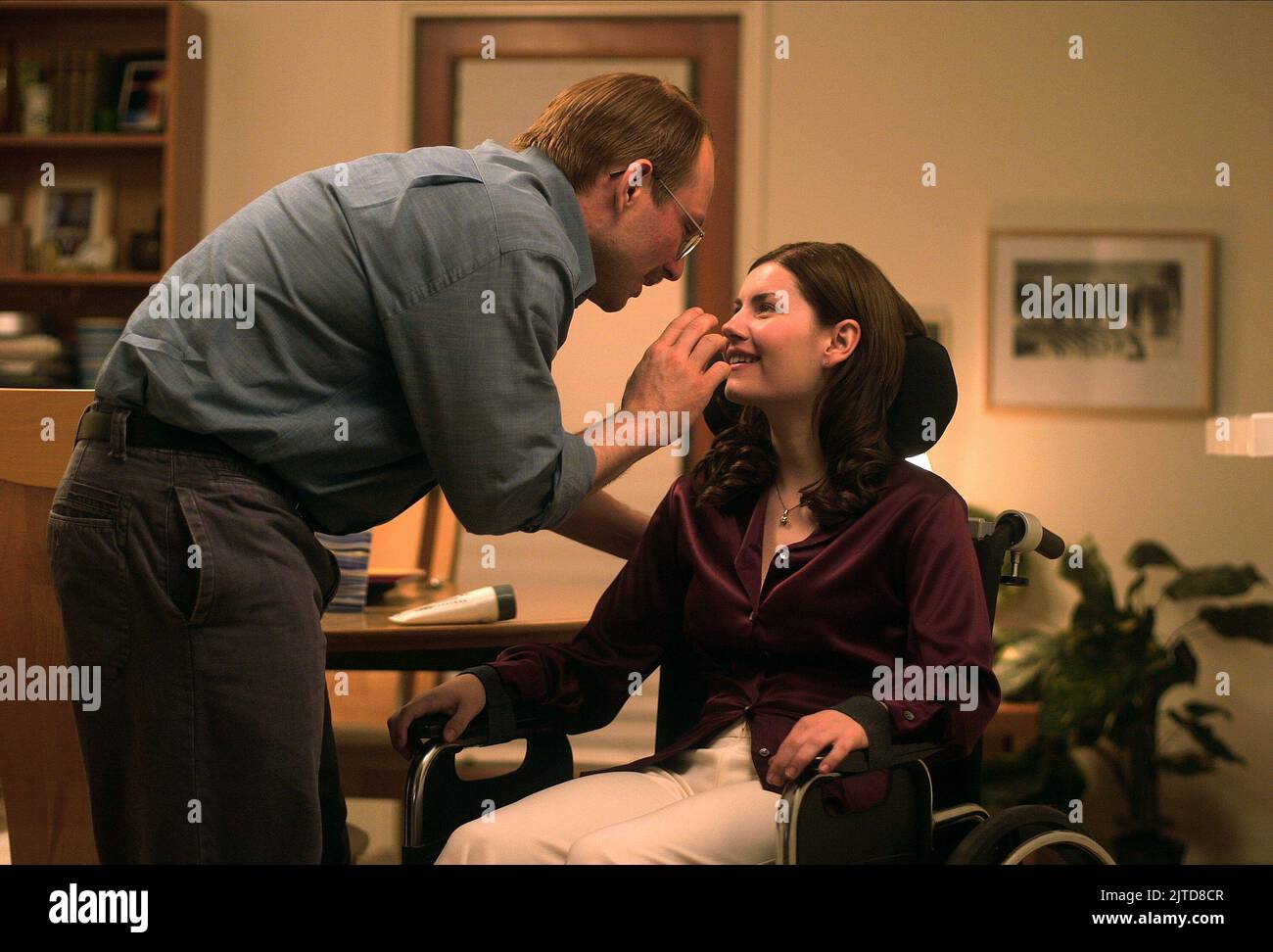
The relationship between Bob and Vanessa is a major point of contention. Vanessa, paralyzed after the shooting, becomes the object of Bob's care—and his obsession. In 2026, many viewers find this dynamic predatory, whereas earlier audiences often saw it as a touching, if unconventional, love story. This shift reflects broader societal changes in how we view power dynamics and consent in cinema.
FAQs
Why was the "He Was a Quiet Man" trailer so different from the movie?
The trailer was created by distributors who believed the film's actual genre—a surrealist dark comedy—was too niche for a wide audience. They opted to market it as a standard psychological thriller to attract fans of Christian Slater’s previous work and mainstream thrillers, leading to a significant gap between expectation and reality.
Is "He Was a Quiet Man" based on a true story?
No, the film is a fictional work written and directed by Frank Cappello. While it draws on the very real phenomenon of workplace violence and social isolation, the characters and the specific events of the film are entirely imagined.
Is the film a comedy or a drama?
It is best classified as a dark comedy with strong elements of surrealism and psychological drama. It uses humor to highlight the absurdity of Bob’s situation, but the underlying themes are tragic and serious, particularly regarding mental health.
What is the significance of the "Quiet Man" title?
The title refers to the common media trope where, after a violent incident, neighbors describe the perpetrator as "a quiet man who kept to himself." The film explores the internal life of that person, suggesting that silence is often a mask for profound psychological distress.
Does the film have a "twist" ending?
While many perceive the ending as a twist, it is more of a thematic culmination. The final scenes suggest a cyclical nature to Bob’s delusions, leaving the audience to question how much of the preceding narrative actually occurred in the physical world versus Bob’s mind.
Final Recommendation for Viewers
For those coming to He Was a Quiet Man in 2026, it is vital to discard the expectations set by the original trailer. To get the most out of the experience, view it as a character study of isolation rather than a thriller. Pay close attention to the visual transitions and the performance of Christian Slater, which remains a career high. The film is best suited for viewers who enjoy surrealist narratives and are comfortable with moral ambiguity and dark, uncomfortable satire.
Image Gallery