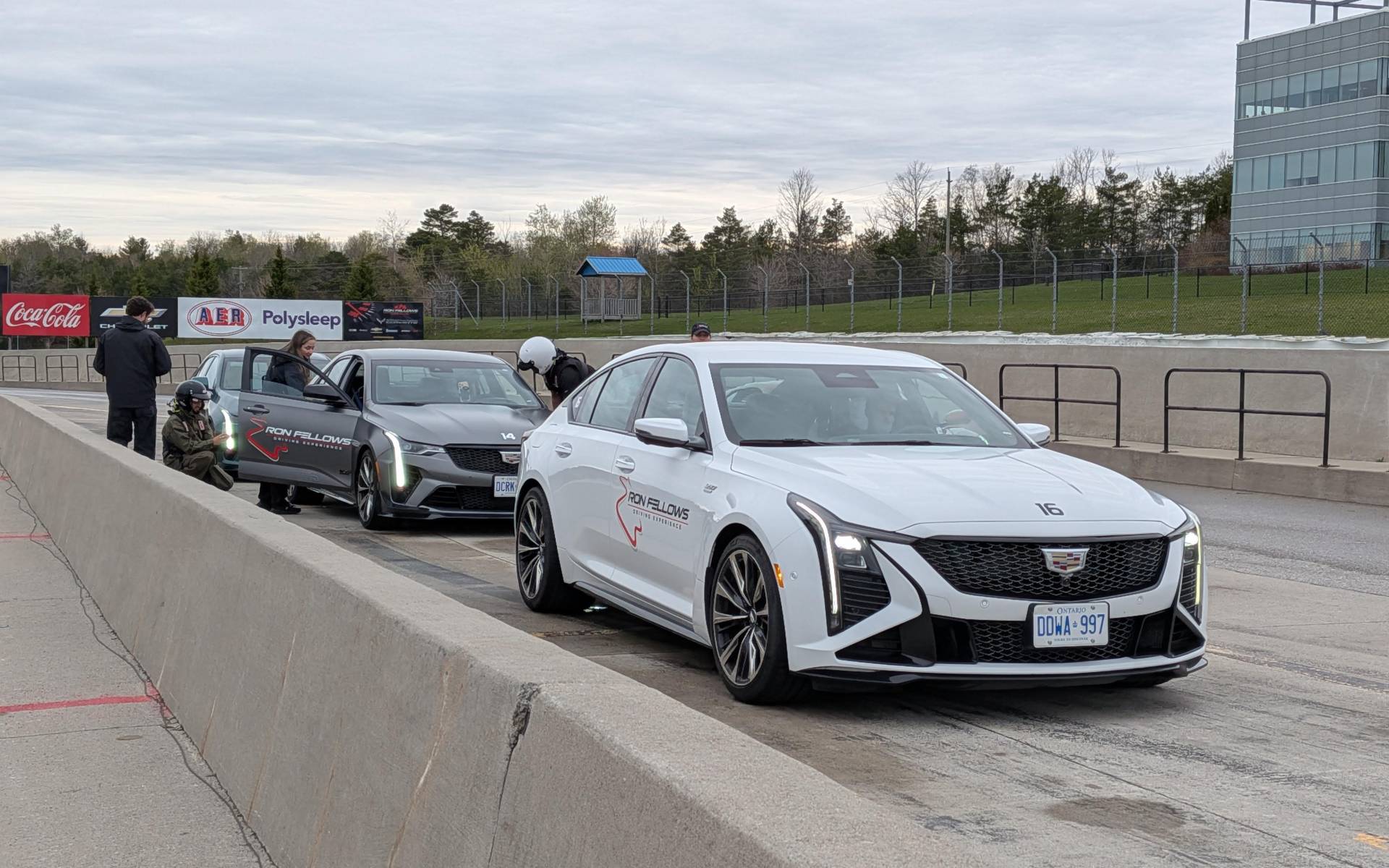
Cadillac V-Series Horsepower: A Comprehensive Technical Overview
Cadillac V-Series horsepower ranges from 325 hp in the entry-level CT4-V to a staggering 682 hp in the Escalade-V. This performance hierarchy is achieved through diverse forced-induction strategies, including dual-volute turbocharging...
Cadillac V-Series horsepower ranges from 325 hp in the entry-level CT4-V to a staggering 682 hp in the Escalade-V. This performance hierarchy is achieved through diverse forced-induction strategies, including dual-volute turbocharging for rapid response and high-displacement supercharging for peak output, defining Cadillac’s modern engineering era as it transitions toward high-output electrification.
Contents
The Architectural Philosophy of V-Series Power
Since its inception in 2004, the Cadillac V-Series has served as the high-performance laboratory for General Motors. By 2026, the division has bifurcated its power delivery into two distinct tiers: the standard V-Series and the track-oriented V-Series Blackwing. The technical objective for these engines is not merely high peak horsepower, but a broad, usable torque curve that maintains thermal stability under sustained lateral loads.
The engineering shift toward forced induction—specifically twin-turbocharging and supercharging—allows Cadillac to maintain executive-level refinement during low-load cruising while providing instantaneous manifold pressure when the driver demands it. This balance is managed through sophisticated Engine Control Modules (ECMs) that monitor thousands of variables per second, including ambient air temperature, humidity, and fuel octane, to optimize ignition timing and boost pressure.
Detailed Horsepower Specifications by Model
The horsepower figures for the 2026 V-Series lineup represent a diverse range of internal combustion and electric propulsion technologies. Each powertrain is specifically tuned to the vehicle's mass, intended use case, and aerodynamic profile.
| Model | Engine Type | Horsepower (hp) | Torque (lb-ft) | Induction System |
|---|---|---|---|---|
| CT4-V | 2.7L Dual-Volute I4 | 325 | 380 | Dual-Volute Turbo |
| CT5-V | 3.0L Twin-Turbo V6 | 360 | 405 | Twin-Turbocharged |
| CT4-V Blackwing | 3.6L Twin-Turbo V6 | 472 | 445 | Twin-Turbocharged |
| CT5-V Blackwing | 6.2L Supercharged V8 | 668 | 659 | 1.7L Eaton Supercharger |
| Escalade-V | 6.2L Supercharged V8 | 682 | 653 | 2.65L Eaton Supercharger |
| LYRIQ-V (2026) | Dual-Motor EV | ~550+ | ~525+ | Electric AWD |
The 2.7L Dual-Volute Turbocharger: Entry-Level Precision
The CT4-V utilizes a unique 2.7L four-cylinder engine. Unlike standard turbochargers, the dual-volute design features two separate chambers in the turbine housing. This allows the exhaust pulses from cylinders 1 and 4 to remain separate from cylinders 2 and 3 until they reach the turbine wheel. Technically, this reduces "turbo lag" by ensuring a more consistent flow of kinetic energy to the turbine, resulting in a horsepower peak that arrives early in the RPM range and stays flat.
The 3.0L and 3.6L Twin-Turbocharged V6 Variants
The CT5-V and CT4-V Blackwing represent two different philosophies of V6 performance. The CT5-V uses a 3.0L LGY engine focused on effortless "grand touring" power, while the CT4-V Blackwing uses the LF4 3.6L engine. The LF4 is distinguished by its use of low-inertia titanium-aluminide turbine wheels and vacuum-actuated wastegates. These components allow the turbos to spool faster, producing 472 horsepower and a high-revving character that mimics a larger naturally aspirated engine.
The Engineering of the 6.2L Supercharged LT4 and LTS
The pinnacle of Cadillac horsepower is found in the hand-built 6.2L V8 engines. While the CT5-V Blackwing and the Escalade-V share the same displacement, their supercharging hardware and horsepower outputs differ significantly due to their distinct cooling and airflow requirements.
The CT5-V Blackwing (LT4)
The LT4 engine in the CT5-V Blackwing utilizes a 1.7L Eaton TVS supercharger. To achieve 668 horsepower, engineers focused on volumetric efficiency. The supercharger rotors are smaller and can spin at higher RPMs (up to 20,000 RPM), which generates boost more quickly. The system includes an integrated charge air cooler (intercooler) located between the supercharger and the intake ports, which drops the temperature of the compressed air by nearly 100 degrees Fahrenheit to ensure maximum oxygen density.
The Escalade-V (LTS)
The Escalade-V holds the title for the highest horsepower production Cadillac at 682 hp. To move a vehicle of this mass, engineers utilized a larger 2.65L R2650 TVS supercharger. The increased displacement of the supercharger allows it to move more air per revolution, which is necessary to maintain high boost levels across a heavy-duty drivetrain. This engine also features a unique exhaust system tuned to manage backpressure while producing the signature "V" acoustic profile.
Drivetrain Integration and Power Loss Mitigation
Horsepower at the crankshaft is of little use if it cannot be efficiently transferred to the pavement. Cadillac employs several technical strategies to minimize parasitic loss and maximize "wheel horsepower."
- Transmission Efficiency: The 10-speed automatic (10L80/10L90) is designed with a wide gear ratio spread. The lower gears are aggressive to utilize the engine's torque, while the upper gears reduce RPMs for cruising. In the Blackwing models, the available Tremec 6-speed manual features its own dedicated oil cooler and "No-Lift Shift" programming, allowing drivers to maintain boost pressure during gear changes.
- Magnetic Ride Control (MRC) 4.0: While not a power-generating component, MRC 4.0 is critical for horsepower application. By adjusting damper stiffness every millisecond, the system keeps the tires in optimal contact with the road, preventing the traction control system from cutting power during acceleration on uneven surfaces.
- Electronic Limited-Slip Differential (eLSD): The eLSD is integrated into the vehicle's Performance Traction Management (PTM) system. It can vary the locking torque between the rear wheels to ensure that horsepower is directed to the wheel with the most grip, preventing "one-wheel peel" and improving exit speeds out of corners.
Thermal Management: Sustaining High Output
A major challenge in high-horsepower technical design is heat soak. When an engine produces 600+ horsepower, it generates immense thermal energy that can degrade performance.
Cadillac addresses this through a multi-radiator cooling circuit. The Blackwing models, for instance, feature up to five different heat exchangers. These include the primary engine radiator, two auxiliary radiators for engine coolant, a dedicated intercooler radiator for the supercharger, and a transmission/differential oil cooler. By separating these circuits, the intake air temperature (IAT) remains independent of the engine's operating temperature, allowing the car to maintain its full horsepower rating even after multiple laps on a racetrack.
The Transition to Electric V-Series Horsepower
As of 2026, the definition of V-Series horsepower is expanding to include Electric Vehicles (EVs). Models like the LYRIQ-V utilize dual-motor configurations where horsepower is governed by the discharge rate of the Ultium battery cells and the thermal capacity of the silicon carbide inverters.
In these systems, horsepower is "instantaneous," meaning peak torque is available at 0 RPM. The technical challenge shifts from managing gear ratios and boost pressure to managing current density and motor cooling. EV V-Series models utilize oil-cooled motors to prevent magnets from demagnetizing under high-load, high-horsepower scenarios.
FAQ: Cadillac V-Series Technical Specifications
What is the most powerful Cadillac V-Series engine ever produced?
The 6.2L supercharged V8 in the Escalade-V is the most powerful, producing 682 horsepower. While the CT5-V Blackwing uses a similar engine, the Escalade's larger 2.65L supercharger allows for a higher peak output to accommodate the vehicle's larger mass and cooling capacity.
What is the difference between V-Series and V-Series Blackwing?
The standard V-Series (e.g., CT4-V, CT5-V) acts as a high-performance daily driver with balanced power and efficiency. The Blackwing designation is reserved for "track-capable" models that feature higher horsepower engines, upgraded cooling systems, specialized suspension tuning, and high-performance braking systems (often carbon-ceramic).
Does Cadillac use a different horsepower measurement standard?
Cadillac follows the SAE J1349 certified power standards. This ensures that the advertised horsepower and torque figures are verified through independent testing procedures, accounting for all engine accessories, intake systems, and exhaust components as they would be installed in the vehicle.
How does fuel octane affect V-Series horsepower?
V-Series engines are optimized for 91 or 93 octane premium fuel. Using lower octane fuel will cause the ECM to detect "knock" or pre-ignition, triggering a "low-octane map" that retards ignition timing and reduces boost pressure. This can result in a loss of 20 to 50 horsepower depending on the model and environmental conditions.
Can V-Series horsepower be increased through aftermarket tuning?
Yes, particularly in the turbocharged and supercharged models. Increasing the boost pressure (via a pulley swap on the supercharger or software maps for the turbos) can yield significant gains. However, this often requires upgrades to the fueling system and heat exchangers to prevent engine damage and maintain thermal stability.
Expert Recommendation for Prospective Owners
When evaluating Cadillac V-Series horsepower, it is essential to look beyond the peak numbers. For drivers seeking a precision instrument for technical circuits, the CT4-V Blackwing offers the best power-to-weight balance despite having lower horsepower than its V8 siblings. For those prioritizing raw acceleration and a classic American exhaust note, the CT5-V Blackwing remains the benchmark for rear-wheel-drive performance sedans. Always ensure that any used V-Series model has a documented history of cooling system maintenance, as the high thermal loads of these engines require strictly timed fluid intervals to preserve peak output.
Image Gallery