The Supreme Court Decision on the Gay Cake Case: Legal Analysis and Impact
The Supreme Court decisions regarding the "gay cake" cases—most notably Masterpiece Cakeshop v. Colorado Civil Rights Commission in the United States and Lee v Ashers Baking Company Ltd in the United Kingdom—primarily established that...
The Supreme Court decisions regarding the "gay cake" cases—most notably Masterpiece Cakeshop v. Colorado Civil Rights Commission in the United States and Lee v Ashers Baking Company Ltd in the United Kingdom—primarily established that while anti-discrimination laws are vital, the government must remain neutral toward religious beliefs and cannot compel individuals to express messages that violate their conscience.
Contents
Understanding the Context of the "Gay Cake" Legal Battles
The phrase "gay cake case" has become a cultural and legal shorthand for two landmark lawsuits that reached the highest courts in the United States and the United Kingdom. While the specific legal frameworks differ between the two nations, the core conflict remains identical: the tension between a citizen's right to be free from discrimination in the marketplace and a business owner's right to freedom of religion and expression.
As of 2026, these cases continue to serve as the foundational precedents for how "public accommodation" laws are applied to creative professionals. These disputes do not typically involve a business refusing to serve a person because of their sexual orientation; rather, they involve a business refusing to create a specific product that conveys a message celebrating or promoting a specific viewpoint—in these cases, same-sex marriage.
To understand the current legal landscape, one must analyze the specific findings of both the U.S. Supreme Court (SCOTUS) and the UK Supreme Court (UKSC), as they reached similar conclusions through different constitutional and statutory pathways.
Masterpiece Cakeshop v. Colorado Civil Rights Commission (United States)
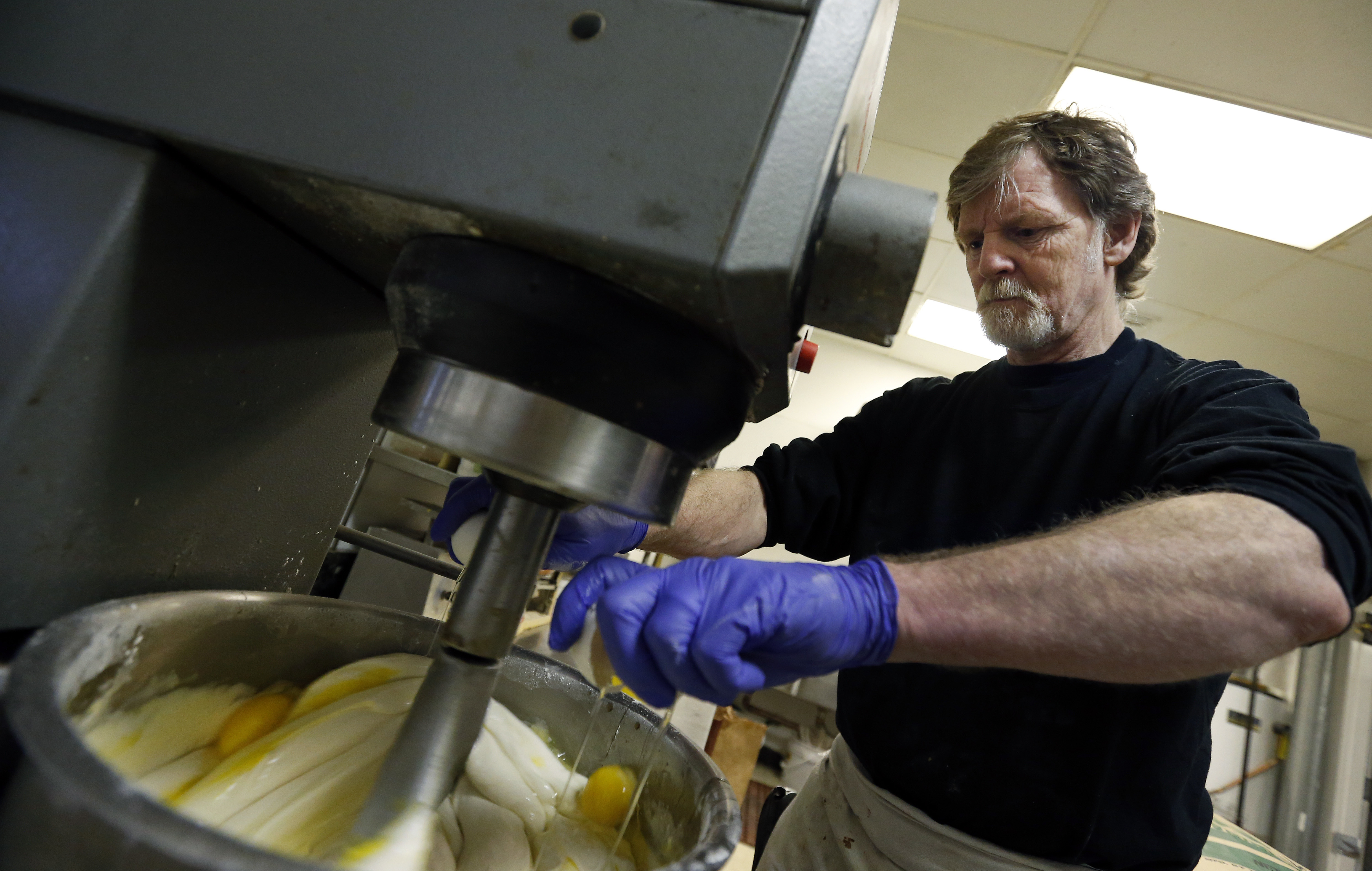
The American "gay cake case" began in 2012 when Charlie Craig and David Mullins visited Masterpiece Cakeshop in Lakewood, Colorado, to order a custom wedding cake for their same-sex marriage. The shop's owner, Jack Phillips, a devout Christian, declined the request. He stated that while he would sell the couple any pre-made goods in the shop, he could not design a custom cake that celebrated a same-sex wedding, as it would conflict with his religious opposition to such unions.
The Core Dispute: Religious Liberty vs. Anti-Discrimination
The Colorado Civil Rights Commission initially ruled that Phillips had violated the Colorado Anti-Discrimination Act (CADA), which prohibits businesses open to the public from discriminating based on sexual orientation. Phillips appealed, arguing that his cakes were a form of artistic expression protected by the First Amendment’s Free Speech and Free Exercise clauses.
The Supreme Court’s 7-2 Ruling
In 2018, the U.S. Supreme Court issued a 7-2 decision in favor of Jack Phillips. However, the ruling was notably narrow. Justice Anthony Kennedy, writing for the majority, did not grant business owners a broad right to discriminate. Instead, the Court focused on the conduct of the Colorado Civil Rights Commission during the initial hearings.
The Court found that the Commission had displayed "clear and impermissible hostility" toward Phillips' religious beliefs. Specifically, commissioners had compared Phillips’ religious arguments to defenses of slavery and the Holocaust. This lack of religious neutrality violated the Free Exercise Clause, which requires the state to treat religious objections with neutrality and respect rather than animus.
Why the Ruling Was Narrowly Tailored
Because the Court decided the case based on the Commission's bias, it avoided making a definitive ruling on whether a baker’s "artistic" cake constitutes protected speech. This left many questions unanswered for several years. It was not until the 2023 decision in 303 Creative LLC v. Elenis that the U.S. Supreme Court explicitly ruled that the government cannot compel a creative professional (like a website designer or a custom baker) to speak a message they disagree with, effectively completing the legal arc started by the Masterpiece case.
Lee v Ashers Baking Company Ltd (United Kingdom)
Parallel to the U.S. conflict, the United Kingdom dealt with its own "gay cake case" involving Ashers Baking Company in Northern Ireland. In 2014, Gareth Lee, a gay rights activist, ordered a cake featuring the logo of a campaign group called "Queerspace" and the slogan "Support Gay Marriage." The McArthur family, who owned the bakery, initially accepted the order but later canceled it and refunded the money, citing their religious opposition to same-sex marriage.
The Message vs. The Person
The UK Supreme Court (UKSC) issued its unanimous ruling in October 2018. The central question was whether the refusal to bake the cake constituted "direct discrimination" based on sexual orientation or political opinion.
The Court ruled in favor of the bakery. Lord Nicholls’ previous legal logic was applied, stating that the McArthurs did not refuse to serve Mr. Lee because he was gay. In fact, they had served him before and would likely have served him again. They refused to bake the cake because they objected to the message requested on it.
The Findings on Forced Speech
The UKSC emphasized that the law cannot compel a person to express a political or religious opinion they do not hold. Under Article 10 of the European Convention on Human Rights (which protects freedom of expression), the right to freedom of speech includes the right not to be forced to express a particular view. The Court concluded that the bakery’s refusal was a refusal of the message, not a refusal to serve the person, and thus was not discriminatory.
Comparative Analysis of the US and UK Decisions
While the cases originated in different legal systems, the outcomes share significant commonalities regarding the limits of state power over individual conscience.
| Feature | Masterpiece Cakeshop (US) | Ashers Baking Company (UK) |
|---|---|---|
| Primary Legal Basis | First Amendment (Free Exercise) | Human Rights Act / ECHR (Article 10) |
| Final Ruling | In favor of the Baker (7-2) | In favor of the Baker (Unanimous) |
| Key Reason for Decision | Hostility of the government agency | Right not to be compelled to speak |
| Scope of Ruling | Narrow (focused on procedural bias) | Broad (focused on the nature of the message) |
| Distinction Made | Person vs. Religious Conscience | Person vs. Message on Product |
| Long-term Precedent | Established the need for state neutrality | Established that service != endorsement |
Legal Precedents and Long-term Implications
By 2026, the legacy of these "gay cake" cases has solidified into several key legal principles that govern how small businesses interact with civil rights laws.
- The "Message vs. Identity" Distinction: Courts now consistently distinguish between a business refusing service to a protected group (illegal) and a business refusing to create a specific message (protected). For example, a florist cannot refuse to sell a pre-arranged bouquet to a customer because they are gay, but they may have a right to refuse to create a custom arrangement with specific signage celebrating a same-sex ceremony if it violates their core beliefs.
- State Neutrality Requirements: Government agencies tasked with enforcing anti-discrimination laws must act with extreme caution to avoid appearing hostile to religion. Any sign of bias in the adjudicative process can invalidate a ruling, as seen in the Masterpiece case.
- Compelled Speech Doctrine: The UK case and the subsequent 303 Creative case in the US have strengthened the "compelled speech" doctrine. This doctrine prevents the state from using public accommodation laws to force artists, writers, and creators to generate content that contradicts their personal convictions.
Common Misconceptions About the Rulings
There are several persistent myths regarding these Supreme Court decisions that often lead to confusion for both consumers and business owners.
Myth 1: These rulings allow businesses to turn away gay customers. This is incorrect. In both the US and the UK, it remains illegal for a business to refuse service based on the identity or sexual orientation of the customer. If a bakery sells cupcakes to the general public, they cannot refuse to sell those same cupcakes to a gay couple. The "gay cake" rulings only apply to custom-created products that involve expressive or artistic elements.
Myth 2: Any business can now claim a religious exemption to any law. The rulings are specifically tied to the First Amendment (US) and Human Rights Act (UK) protections of expression and religion. They do not provide a "blanket" exemption for all business types. A hardware store or a dry cleaner, for example, would likely have no grounds to claim that their services constitute "expressive speech."
Myth 3: The US Supreme Court ruled that same-sex marriage is invalid. The Masterpiece decision did nothing to undermine the legality of same-sex marriage established in Obergefell v. Hodges (2015). It specifically addressed the procedural fairness of a civil rights commission hearing.
Guidance for Small Business Owners and Consumers
Navigating the intersection of civil rights and religious freedom requires a clear understanding of where "conduct" ends and "speech" begins.
For Business Owners
If your business involves "expressive" work—such as photography, custom baking, website design, or writing—you generally have the right to refuse commissions that require you to convey messages you disagree with. However, you must ensure that your refusal is based on the content of the request and not the identity of the customer. It is advisable to have a clear, written policy regarding the types of custom messages you do or do not produce, applied consistently to all customers.
For Consumers
Consumers should be aware that while they are protected from discrimination based on who they are, they do not necessarily have the legal right to demand that a specific artist or creator produce a specific message. Most marketplace conflicts can be resolved by seeking out businesses that align with the consumer’s values or by purchasing standard, non-customized goods which are subject to stricter anti-discrimination enforcement.
Professional Advice Limitation: This article provides a summary of legal history and judicial decisions for educational purposes. It does not constitute legal advice. Laws regarding public accommodations and civil rights vary by jurisdiction and are subject to ongoing legislative changes. For specific legal guidance, consult a qualified attorney in your region.
Image Gallery