Vero Beach Auto Insurance Myth vs Fact: Navigating Florida’s 2026 Coverage Realities
In Vero Beach, navigating auto insurance requires separating long-standing myths from the legal realities of Florida’s no-fault system. While many drivers believe vehicle color or "full coverage" labels dictate their protection, the tr...
In Vero Beach, navigating auto insurance requires separating long-standing myths from the legal realities of Florida’s no-fault system. While many drivers believe vehicle color or "full coverage" labels dictate their protection, the truth lies in specific state mandates, Indian River County’s unique environmental risks, and the technical structure of Personal Injury Protection (PIP).
Contents
Understanding the distinction between insurance myths and facts is essential for every driver in Vero Beach, Florida. Whether you are commuting along State Road 60, driving across the Barber Bridge to the barrier island, or navigating the residential streets of Indian Ridge, your policy needs to reflect the actual risks of the 2026 Florida driving environment. Misinformation often leads to expensive coverage gaps or unnecessary premiums.
The Reality of Florida’s "No-Fault" System
One of the most persistent myths in Vero Beach is that "No-Fault" insurance means no one is held responsible for an accident. In reality, Florida's no-fault law refers specifically to how medical expenses are handled initially.
Myth: If I am not at fault in an accident, the other person’s insurance pays my medical bills immediately.
Fact: Under Florida’s no-fault system, your own Personal Injury Protection (PIP) coverage is the primary payer for your medical treatment, regardless of who caused the accident. In 2026, Florida law continues to require a minimum of $10,000 in PIP. This coverage is designed to reduce the burden on the court system by ensuring that injured parties can seek immediate medical attention without waiting for a legal determination of fault.
However, PIP only covers 80% of "reasonable" medical expenses and 60% of lost wages, up to the $10,000 limit. If your injuries are "permanent" or exceed this threshold, you may then pursue a claim against the at-fault driver’s Bodily Injury Liability (BI) coverage. It is a common misconception that everyone carries BI; in Florida, BI is not a state mandate for all private passenger vehicles, though it is highly recommended.
Myth: No-fault insurance covers my vehicle damage if someone else hits me.
Fact: No-fault applies only to bodily injuries. For vehicle damage, the at-fault driver is still responsible. Florida requires Property Damage Liability (PDL), which pays for damage you cause to someone else's property. If your vehicle is damaged by another driver in Vero Beach, their PDL coverage should pay for your repairs. Conversely, if you are at fault, your PDL pays for their repairs, but it does not pay for your own car—that requires Collision coverage.
Does Vehicle Color and Model Really Affect Your Rate?
Vero Beach drivers often hear that choosing a bright color, particularly red, will spike their insurance premiums. This is one of the most durable myths in the industry.
Myth: Red cars cost more to insure because they are associated with speeding and high-risk behavior.
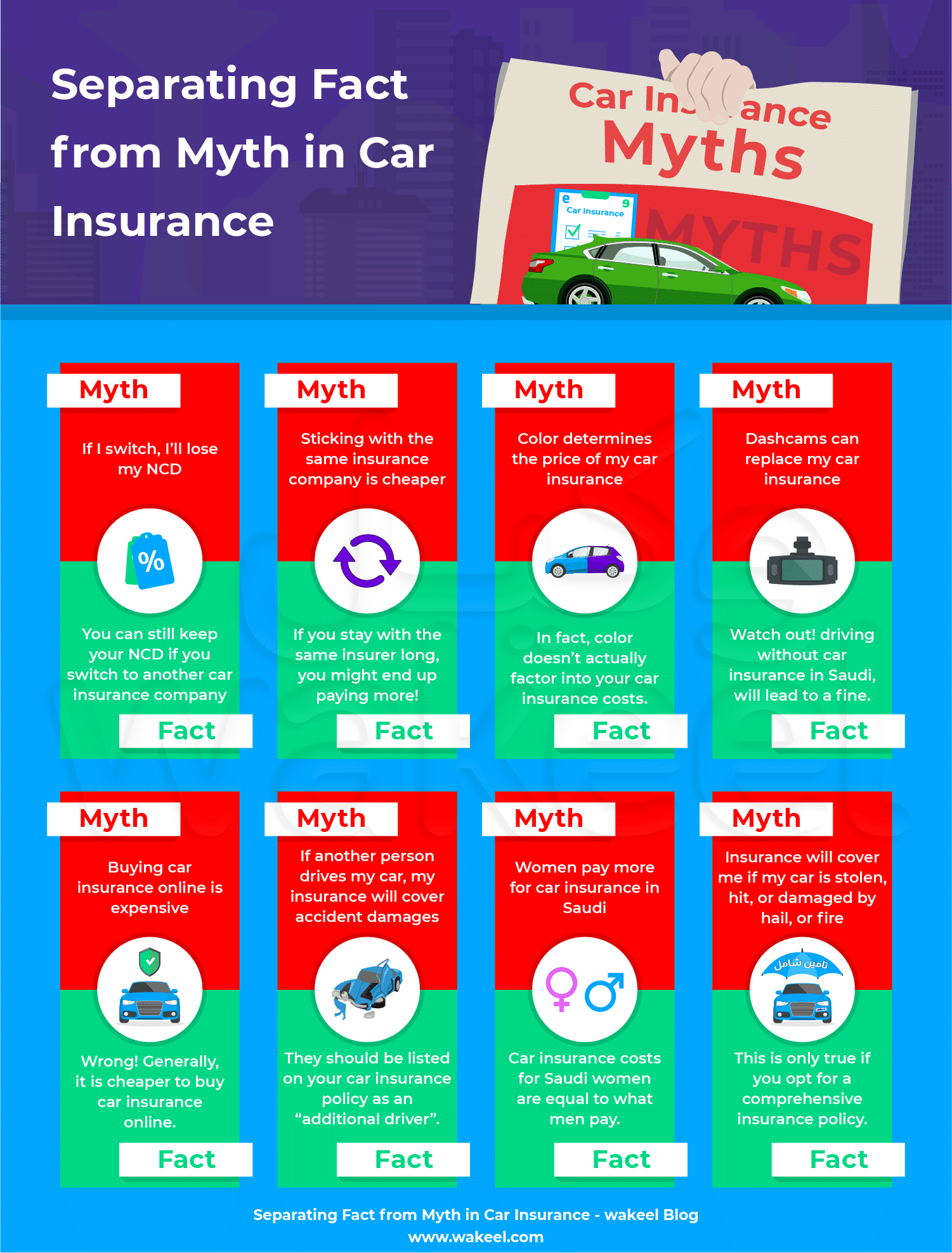
Fact: Insurance companies do not ask for the color of your vehicle when generating a quote. When an agent or online portal asks for your Vehicle Identification Number (VIN), it provides data on the make, model, engine size, safety features, and year of the car. These are the factors that determine the rate. A red minivan will almost always be cheaper to insure than a white high-performance sports car because the actuarial data shows the minivan is less likely to be involved in high-speed collisions.
Myth: Older cars don't need comprehensive or collision coverage.
Fact: Whether an older car needs "physical damage" coverage depends on its actual cash value (ACV) and your financial ability to replace it. In 2026, with the cost of used vehicles remaining high, even a ten-year-old car may have significant value. However, the "fact" here is a calculation: if the annual cost of comprehensive and collision coverage exceeds 10% of the car's total value, some experts suggest dropping it. In Vero Beach, where flooding is a localized risk, many drivers choose to keep Comprehensive coverage even on older vehicles to protect against storm-related water damage.
Decoding "Full Coverage" in Indian River County
Many policyholders in Vero Beach request "full coverage" from their agents, believing this provides a safety net for every possible scenario.
Myth: "Full coverage" means I am protected against everything.
Fact: There is no such thing as a "full coverage" policy in a legal or technical sense. When people use this term, they usually mean a policy that includes PIP, PDL, Bodily Injury Liability, Uninsured Motorist, Comprehensive, and Collision. Even with all of these, you might still lack:
- Gap Insurance: Covers the difference between what you owe on a loan and the car's value if it's totaled.
- Rental Reimbursement: Pays for a rental car while yours is in the shop.
- Towing and Labor: Covers roadside assistance.
Drivers in Vero Beach should review their "Declarations Page" to see exactly which coverages are active rather than relying on the "full coverage" label.
Localized Risks: Vero Beach Weather and Wildlife
Vero Beach’s geography introduces specific insurance considerations that differ from inland states.
Myth: Standard liability coverage will pay for my car if a palm tree falls on it during a hurricane.
Fact: Liability coverage (PIP and PDL) only covers injuries to you and damage you cause to others. To be protected against falling trees, hurricane winds, or the "Vero Beach flood" scenarios common during the rainy season, you must have Comprehensive coverage. This is often called "other than collision" coverage.
In 2026, as climate patterns continue to fluctuate, insurance carriers are more stringent about when you can add this coverage. You generally cannot add or increase comprehensive coverage once a hurricane watch or warning has been issued for Indian River County.
Myth: If I hit a deer on State Road 60 or an alligator near the canal, my collision insurance handles it.
Fact: While it seems like a collision, striking an animal is actually a Comprehensive claim. This is a vital distinction because comprehensive deductibles are often lower than collision deductibles. If you only have collision and liability, you might find yourself paying for the animal damage entirely out of pocket.
2026 Requirements and Comparisons
To clarify what is required versus what is optional for a Vero Beach resident, the following table breaks down the 2026 landscape.
| Coverage Type | Required by FL Law? | What it Protects | Recommended for Vero Beach? |
|---|---|---|---|
| Personal Injury Protection (PIP) | Yes | 80% of your medical bills up to $10k. | Required. |
| Property Damage Liability (PDL) | Yes | Damage you cause to others' property. | Required. |
| Bodily Injury Liability (BI) | No (Usually) | Legal defense and payouts for others' injuries. | Highly Recommended due to high litigation costs. |
| Uninsured Motorist (UM) | No | Your injuries if hit by someone without insurance. | Essential; Florida has high uninsured rates. |
| Comprehensive | No | Theft, fire, flood, storm, and animal strikes. | Highly Recommended for coastal areas. |
| Collision | No | Damage to your car from an accident. | Recommended unless the car has very low value. |
The Impact of Credit and Residence on Your Premium
It is a common belief that your driving record is the only thing that dictates your insurance costs in Vero Beach.
Myth: My credit score has nothing to do with my car insurance rate.
Fact: In Florida, insurers heavily utilize credit-based insurance scores. Statistical data suggests a correlation between financial responsibility and driving safety. Drivers in Vero Beach with higher credit scores typically pay significantly lower premiums than those with poor credit, even if both drivers have clean driving records.
Myth: It doesn't matter if I live in 32960 or 32963; the rates are the same for Vero Beach.
Fact: Zip codes matter. The 32963 zip code, which covers the barrier island, may have different rates than 32960 or 32966 on the mainland. These differences are based on "territory ratings," which account for local traffic density, historical claim frequencies in those neighborhoods, and the risk of storm surges or flood events.
Common Mistakes and Next Actions
One of the biggest mistakes Vero Beach drivers make is failing to update their policies when their usage changes.
- The "Work-from-Home" Oversight: If you have shifted to a remote work model at a company in the Vero Beach area, your "annual mileage" has likely dropped. Failing to report this means you are paying a premium based on a commute that no longer exists.
- The Delivery Gap: With the continued rise of gig-economy apps in 2026, many drivers use their personal vehicles for food or grocery delivery. A major myth is that your personal policy covers you during these tasks. In fact, most personal policies specifically exclude commercial use, meaning an accident while delivering could result in a denied claim and a cancelled policy.
Verifying Your Coverage
To ensure you are properly protected, follow these steps:
- Request a "LexisNexis" Report: This shows you what insurance companies see regarding your claims history.
- Verify the 14-Day Rule: Remember that in Florida, you must seek medical treatment within 14 days of an accident to qualify for PIP benefits.
- Check for "Stacking": If you own multiple vehicles in Vero Beach, ensure you understand if your Uninsured Motorist coverage is "stacked" (combining limits across vehicles) or "non-stacked."
Frequently Asked Questions
Does my insurance cover me if I let a friend borrow my car in Vero Beach?
In Florida, insurance generally follows the car, not the driver. If you give someone permission to drive your vehicle, your insurance is usually the primary coverage in the event of an accident. However, if that person lives in your household and is not listed on your policy, the claim could be denied.
How long does an accident or ticket stay on my record in Florida?
Most insurance companies in Florida look at the last three to five years of your driving history. While the Florida Department of Highway Safety and Motor Vehicles (FLHSMV) may keep points on your license for longer, the "surcharge" period for premiums typically peaks after three years and fades after five, provided no new incidents occur.
Does Vero Beach have higher insurance rates than other Florida cities?
Generally, Vero Beach and Indian River County enjoy lower rates than South Florida hubs like Miami or Fort Lauderdale. However, rates are higher than in some inland rural counties due to the coastal risks and the higher percentage of high-value vehicles in the area.
Can my insurance company cancel my policy because of a hurricane claim?
Florida law prevents insurers from canceling or non-renewing a policy solely because of a "no-fault" claim, such as a comprehensive claim for storm damage. However, they can adjust overall rates for a region based on total losses incurred.
What is the "14-day rule" for PIP in Vero Beach?
To access your $10,000 PIP benefits, you must receive initial medical care from a qualified provider (like an ER, a primary care physician, or a chiropractor) within 14 days of the motor vehicle accident. If you wait 15 days, your insurer can legally deny the medical portion of your PIP claim.
Practical Recommendation
For drivers in Vero Beach, the most effective way to manage insurance costs in 2026 is to conduct an annual "Policy Audit" with an independent agent who understands the Indian River County market. Avoid the trap of "minimum coverage" just to save money; in a high-litigation state like Florida, the lack of Bodily Injury or Uninsured Motorist coverage can lead to financial ruin. Prioritize Comprehensive coverage to protect against the specific environmental threats of the Florida coast, and always disclose any business use of your vehicle to ensure your claims are honored.
Image Gallery