Emergency Exit Seats on Planes: Requirements, Benefits, and Safety Responsibilities
Emergency exit seats on planes are located adjacent to the aircraft's emergency exits and offer significantly more legroom than standard economy rows. In exchange for this extra space, passengers must meet strict physical and cognitive...
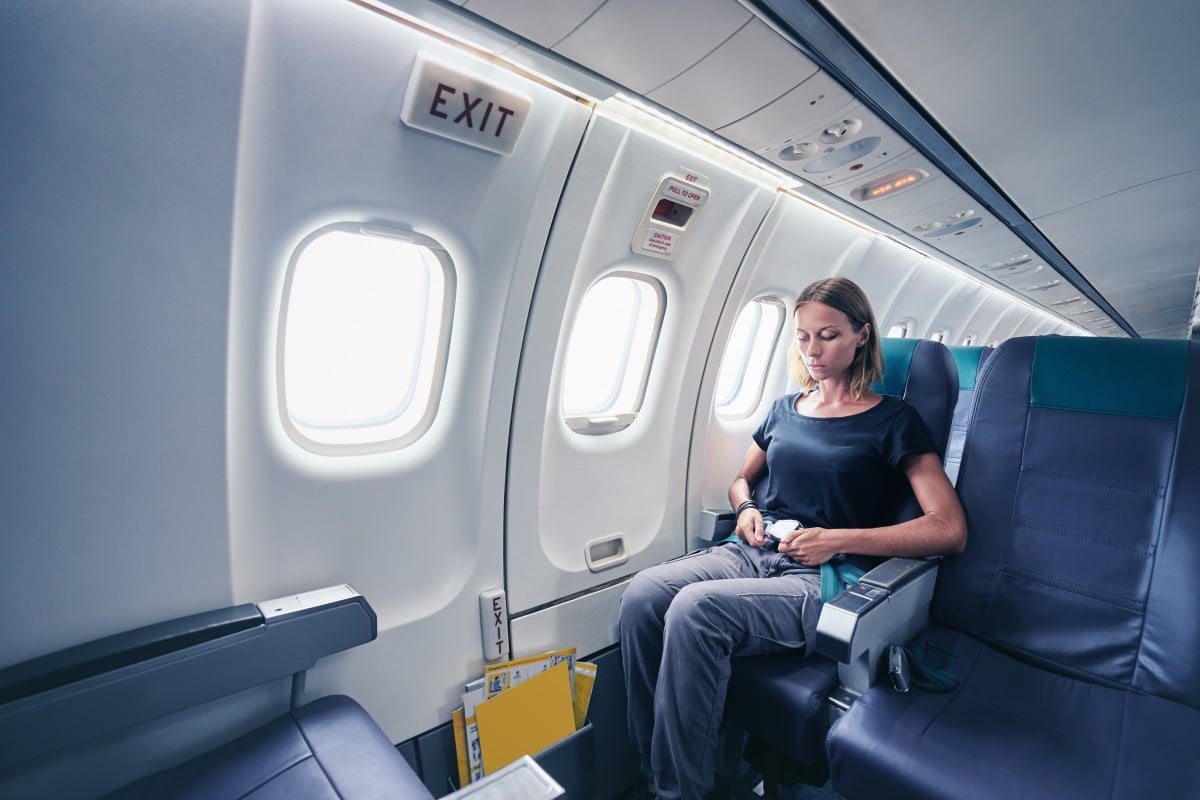
Emergency exit seats on planes are located adjacent to the aircraft's emergency exits and offer significantly more legroom than standard economy rows. In exchange for this extra space, passengers must meet strict physical and cognitive criteria, as they are legally required to assist the crew in the event of an emergency evacuation.
Contents
As of 2026, air travel continues to evolve with more dense cabin configurations, making the coveted emergency exit row one of the most sought-after locations for comfort-seeking travelers. However, these seats are more than just a "free upgrade" for legroom; they are a critical component of the aircraft's safety infrastructure. Choosing an exit row seat involves a trade-off between physical comfort and a serious commitment to passenger safety. This guide explores the regulatory requirements, the pros and cons of these seats, and the specific duties you must be prepared to perform if you occupy one.
The Regulatory Framework of Exit Row Seating
The seating arrangements in emergency exit rows are not merely a matter of airline policy; they are strictly governed by national and international aviation authorities, such as the Federal Aviation Administration (FAA) in the United States and the European Union Aviation Safety Agency (EASA). Under regulations like 14 CFR 121.585, airlines are prohibited from seating any person in an exit row if that person is likely to be unable to perform one or more of the functions required during an emergency.
In 2026, while cabin interiors have become more advanced with lightweight materials and high-definition interfaces, the fundamental physics of an evacuation remains the same. The "exit path" must remain clear, and the people sitting next to those doors must be the most capable individuals in the immediate vicinity to facilitate a rapid egress. If a passenger does not meet the criteria, the flight crew is legally obligated to reseat them, regardless of how much they paid for the seat.
Essential Eligibility Requirements
To sit in an emergency exit row, a passenger must meet several "willing and able" criteria. These rules ensure that in a high-stress, time-critical situation, the person responsible for the door can act without hesitation or physical struggle.
Physical Strength and Mobility
Passengers must have sufficient mobility, strength, and dexterity in their arms, hands, and legs to reach, operate, and stow (or discard) an emergency exit hatch. Many over-wing exits require the passenger to lift a window hatch that can weigh between 30 and 50 pounds. You must be able to lift this weight while maintaining your balance and then maneuver the hatch out of the way so it does not block the exit.
Sensory Capabilities
You must be able to see and hear well enough to follow instructions from the cabin crew. This means being able to hear verbal commands above the noise of the engines or the chaos of an emergency. You must also be able to see the exit markings and assess outside conditions (such as fire or water levels) through the window before opening the door. If you require significant corrective lenses or hearing aids that might be lost or dislodged in an emergency, you may be deemed ineligible.
Cognitive and Communication Skills
Aviation authorities require that exit row passengers be able to read and understand the printed instructions provided by the airline in the language of the carrier (or English for most international flights). Furthermore, you must be able to communicate information orally to other passengers and the crew. If the flight attendants provide a safety briefing, you must be able to comprehend the steps and signal your agreement to assist.
Age and Responsibility
As of 2026, the standard minimum age for exit row seating remains 15 years old on most major carriers. Additionally, you cannot sit in an exit row if you are responsible for another passenger, such as a child, an infant, or a person with a disability. In an emergency, your primary duty is to the exit, and the law assumes that a parent or caregiver would instinctively prioritize their charge over the evacuation process.
The Advantages of the Exit Row
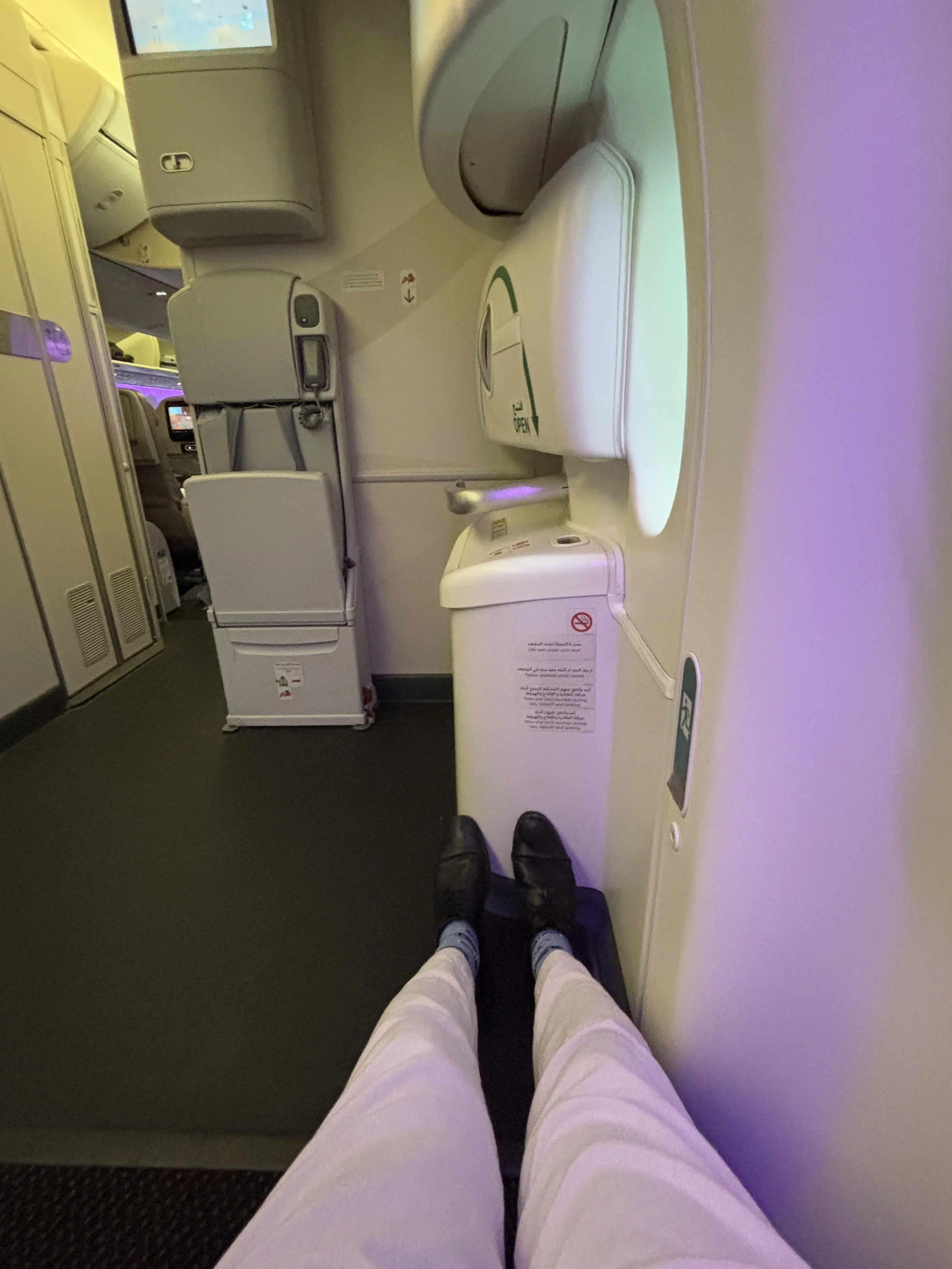
For many travelers, the primary draw of the exit row is the increased seat pitch. Because these rows serve as a primary evacuation route, the space between your seat and the one in front of it is intentionally widened to prevent bottlenecks.
- Maximum Legroom: Exit rows typically offer 5 to 10 inches of additional legroom compared to standard economy seats. For tall passengers, this can be the difference between a painful flight and a comfortable one.
- Ease of Access: In many configurations, especially on larger wide-body aircraft, the extra space allows you to get up from your seat without forcing your row-mates to move.
- Faster Deplaning (Sometimes): If the exit row is located in the forward or middle section of the plane, you may find yourself closer to the front of the "off-boarding" line, though this depends entirely on the specific aircraft model.
The "Hidden" Disadvantages
While the legroom is a major perk, there are several "cons" that many passengers fail to consider until they are already in the air.
Fixed Armrests and Seat Width
To accommodate the tray tables (which cannot be stored in the back of the seat in front of you due to the distance), exit row seats usually have solid, fixed armrests. These armrests are wider than standard ones, which slightly reduces the actual width of the seat. For some passengers, the extra legroom is not worth the trade-off of a narrower seat.
Storage Restrictions
This is often the most frustrating part for passengers. During taxi, takeoff, and landing, all carry-on items must be stored in the overhead bins. Because there is no seat directly in front of you (or the seat is too far away), you cannot keep a personal item, such as a laptop bag or purse, at your feet. Everything must go up, meaning you won't have access to your belongings during the most critical phases of the flight.
Temperature Fluctuations
Exit doors are less insulated than the rest of the fuselage. Passengers sitting in these rows often report feeling significantly colder than those in the middle of the cabin. In 2026, while insulation technology has improved, the "drafty" feeling near a door at 35,000 feet remains a common complaint.
Proximity to Lavatories or Galleys
On many aircraft, emergency exits are located near the galleys or lavatories. This can lead to a constant stream of passengers standing in your "extra space" while they wait for the bathroom, or increased noise and light from the galley during night flights.
Comparison of Economy Seating Options (2026)
| Feature | Standard Economy | Exit Row | Bulkhead Seat |
|---|---|---|---|
| Legroom | 30–32 inches | 37–42 inches | Varies (High) |
| Under-seat Storage | Yes | No (during Takeoff/Landing) | No |
| Tray Table Location | Seatback | Armrest | Armrest or Wall-mount |
| Seat Width | Standard | Slightly Narrower | Slightly Narrower |
| Safety Duties | None | High (Legal Obligation) | None |
| Cost | Baseline | Premium / Fee-based | Premium / Fee-based |
What Happens in an Emergency?
If an evacuation is ordered, the person in the exit row is the "first responder" of the cabin. Your responsibilities include:
- Assessing the Hazard: Looking out the window to ensure there is no fire, smoke, or water that would make opening the door dangerous.
- Operating the Mechanism: Following the depicted diagrams to pull the handle and unseal the door.
- Securing the Door: Depending on the aircraft, you may need to throw the hatch outside or secure it inside the cabin.
- Directing Traffic: Helping passengers move quickly through the exit and away from the aircraft.
Aviation safety experts emphasize that you must be mentally prepared for the noise and urgency of a real emergency. If you feel you would freeze or be unable to act, it is your responsibility to ask for a seat change.
Frequently Asked Questions
Can I sit in an exit row if I am pregnant?
Generally, pregnancy does not automatically disqualify you from an exit row unless it restricts your mobility or strength to the point where you cannot perform the required safety tasks. However, many airlines and crew members prefer to reseat pregnant passengers to the standard rows to avoid any risk to the mother or the evacuation process, especially in later stages of pregnancy.
Is it okay to use a seatbelt extender in an exit row?
No. In almost all jurisdictions, including FAA and EASA zones, passengers requiring a seatbelt extender are prohibited from sitting in an exit row. This is because the extra length of the belt and the extender itself could become a tripping hazard during a rapid evacuation.
Do airlines charge extra for these seats?
Yes, in 2026, nearly all commercial airlines treat exit row seats as "Preferred" or "Premium" seating. Fees can range from $20 to over $200 depending on the length of the flight and the airline's pricing model. Some frequent flyer programs offer these seats for free as a loyalty perk.
What if I don't speak the airline's primary language?
If you cannot understand the flight attendant's instructions or the safety card, you cannot sit in the exit row. For example, if you are flying a domestic route on a French carrier and do not speak French or English (depending on the airline's protocol), you will be moved for safety reasons.
Are children allowed in the exit row if they are over 15?
Yes, if they are 15 or older (the specific age may vary by country, but 15 is the standard) and meet all other physical and cognitive requirements. However, they still cannot be the primary caregiver for a younger sibling in another row during that flight.
Final Practical Recommendation
Before booking an emergency exit seat, honestly assess your physical condition and your willingness to act in a crisis. If you prioritize legroom above all else and are comfortable with the "no floor storage" rule, use tools like SeatGuru or the airline's own seating map to identify the best exit row—specifically looking for "window" exits on narrow-body planes or "aisle-access" exits on wide-body jets. Always arrive at the gate ready to provide a clear, verbal "yes" to the flight attendant's briefing; failure to do so will result in an immediate seat reassignment.
Image Gallery