Understanding the Auto Insurance Comparison Process: A Comprehensive Guide for 2026
The auto insurance comparison process involves a systematic evaluation of various policy offerings to determine which provider offers the best balance of coverage, service, and price. By standardizing coverage limits and deductibles ac...
The auto insurance comparison process involves a systematic evaluation of various policy offerings to determine which provider offers the best balance of coverage, service, and price. By standardizing coverage limits and deductibles across multiple quotes, consumers can accurately identify the most cost-effective protection for their specific driving profile and vehicle type.
Contents
Effective auto insurance comparison is no longer just about finding the lowest monthly premium. In 2026, the landscape has shifted toward high-precision underwriting, where AI-driven algorithms and real-time data play a significant role in how rates are calculated. To navigate this environment, a consumer must understand the mechanics of how insurers assess risk and how to align those assessments with their personal financial needs. This guide breaks down the multi-step journey from gathering initial data to finalizing a policy that provides genuine security.
The Foundation: Information Gathering and Preparation
Before navigating any comparison platform or contacting an agent, the first essential step in the auto insurance comparison process is data consolidation. Insurers in 2026 utilize highly specific data points to generate quotes. If the information provided is inaccurate or incomplete, the final policy price will likely differ from the initial quote, a phenomenon often referred to as "rate shock."
The primary documents required include the Vehicle Identification Number (VIN) for all cars to be insured, the driver’s license numbers for every household member of driving age, and a current copy of your existing "Declarations Page." The Declarations Page is a critical benchmark; it outlines your current coverage limits (such as $100,000/$300,000 for bodily injury), your deductibles, and any specific endorsements or riders you currently carry. Having this document ensures you are comparing "apples to apples" when looking at new options.
Furthermore, drivers should be aware of their recent history. While many insurance systems automatically pull motor vehicle records (MVRs) and claims history through databases like CLUE (Comprehensive Loss Underwriting Exchange), knowing your own history allows you to spot errors. In an era where data transparency is vital, checking your own claims report once a year can prevent you from paying higher premiums based on incorrect information.
Defining Your Coverage Needs
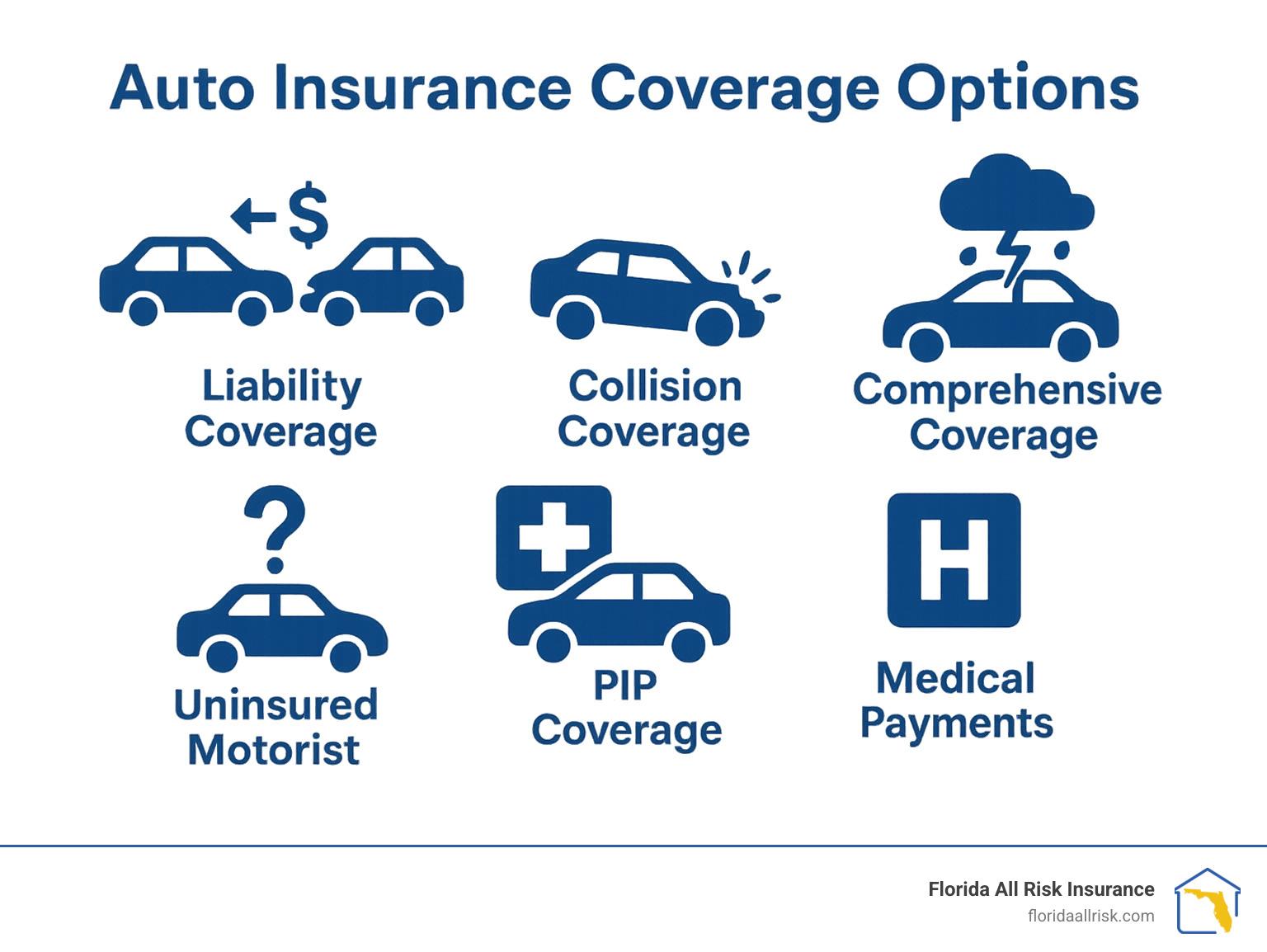
The most common mistake in the comparison process is choosing a policy based solely on the premium. To compare effectively, you must first define your "coverage floor"—the minimum amount of protection you are willing to accept. This goes beyond the state-mandated minimums, which are often insufficient to protect personal assets in the event of a significant lawsuit.
Liability Limits
Liability insurance is the core of any policy. It covers the costs associated with injuries or property damage you cause to others. In the current economic climate of 2026, medical costs and vehicle repair prices (especially for sensor-heavy electric vehicles) have risen. Consequently, standard "minimum" policies may leave a driver vulnerable. When comparing, look at limits such as 100/300/100 (meaning $100,000 per person for bodily injury, $300,000 per accident, and $100,000 for property damage).
Physical Damage Coverage
Collision and Comprehensive coverages protect your own vehicle. Collision covers accidents with other cars or objects, while Comprehensive covers non-collision events like theft, fire, or weather damage. The decision here often hinges on the vehicle’s actual cash value (ACV). If you are driving an older vehicle where the annual cost of the insurance exceeds 10% of the car's value, you might consider dropping these coverages during your comparison.
Emerging Add-ons in 2026
Modern policies often include or offer options for "Gap Insurance," which covers the difference between what you owe on a loan and the car's depreciated value. Additionally, as vehicle technology has advanced, many insurers now offer specific riders for "OEM parts," ensuring that repairs are done with original manufacturer equipment rather than cheaper third-party alternatives.
Evaluating Premium vs. Deductible Dynamics
A central mechanic of the auto insurance comparison process is the inverse relationship between the deductible and the premium. The deductible is the amount you pay out-of-pocket before the insurance company covers a claim. Selecting a higher deductible will lower your monthly or annual premium because you are assuming more of the initial financial risk.
When comparing quotes, it is beneficial to request pricing for at least two different deductible levels (e.g., $500 vs. $1,000). This allows you to calculate the "break-even point." If raising your deductible from $500 to $1,000 saves you $100 a year, it would take five claim-free years to justify the extra $500 you would have to pay in the event of an accident. If the savings are $250 a year, the break-even point is only two years, making the higher deductible a much more attractive option for most drivers.
| Coverage Scenario | Low Deductible ($250) | Standard Deductible ($500) | High Deductible ($1,000) |
|---|---|---|---|
| Monthly Premium (Est.) | $185 | $150 | $120 |
| Annual Savings | Base | $420 | $780 |
| Out-of-Pocket Risk | Lowest | Moderate | Highest |
| Suitability | Low cash reserves | Average driver | High cash reserves/Safe driver |
Leveraging AI and Telematics Tools
In 2026, the use of telematics—technology that monitors driving behavior via smartphone apps or plug-in devices—has become a standard part of the comparison process. Understanding how these programs work is essential for an accurate comparison. Most major carriers now offer a "participation discount" just for signing up for their telematics program, with the potential for further "performance discounts" based on safe driving habits like smooth braking and adhering to speed limits.
When comparing quotes that include telematics, it is important to distinguish between "discount-only" programs and "surcharge" programs. Some insurers only use the data to provide discounts, while others may actually increase your rates if the data shows risky driving behavior. A thorough comparison involves reading the fine print on how your data is used and whether the insurer shares or sells that data to third parties.
Assessing Insurer Reputation and Financial Stability
A low price is meaningless if the insurance company lacks the financial resources to pay claims or provides poor customer service during a crisis. Part of the comparison process must involve checking the "health" of the companies you are considering.
Organizations like A.M. Best, Moody’s, and Standard & Poor’s provide financial strength ratings for insurance companies. A rating of "A" or better is generally recommended. This ensures the company can withstand large-scale events, such as natural disasters, which might trigger a high volume of claims simultaneously.
Simultaneously, look at claims satisfaction scores. The J.D. Power U.S. Auto Insurance Study is a reliable resource for seeing how actual customers rate their insurers' claims processes. A company that consistently ranks low in customer service may not be worth the $10 or $20 in monthly savings.
Common Pitfalls to Avoid
The auto insurance comparison process can be derailed by several common errors that lead to inadequate coverage or higher-than-expected costs.
- Ignoring Discounts: Insurers offer a myriad of discounts that are not always automatically applied. These include multi-policy discounts (bundling home and auto), professional or alumni associations, and "green vehicle" discounts for hybrids or EVs.
- Omitting Household Drivers: Failing to list all licensed drivers in your household can lead to a claim being denied later. Even if a roommate rarely drives your car, most insurers require them to be listed or specifically excluded from the policy.
- Comparing Different Limits: It is tempting to look at a "Gold" plan from one company and a "Silver" plan from another. To truly understand value, you must ensure the liability limits, uninsured motorist coverage, and deductibles are identical across all quotes.
- Forgetting the Fees: Some insurers charge installment fees if you pay monthly rather than annually. When comparing, ask for the "total policy cost" including all administrative fees.
Finalizing the Comparison and Switching Policies
Once you have identified the superior policy through your comparison, the final step is the transition. Timing is critical. You should never cancel your old policy until the new one is officially in force and you have received your new insurance identification cards. A "lapse" in coverage, even for a single day, can lead to significantly higher premiums in the future and may result in legal penalties from your state’s motor vehicle department.
Most insurers offer a "pro-rata" refund for any unused portion of your premium if you switch mid-term. This means you do not have to wait for your current policy to expire to take advantage of a better deal found during your comparison process. Contact your current agent to inform them of the cancellation date once the new policy is active.
Frequently Asked Questions
Does checking multiple auto insurance quotes affect my credit score?
In 2026, most insurance companies use what is known as a "soft pull" or "soft inquiry" to check your insurance-based credit score. Unlike a "hard pull" used for credit card or mortgage applications, a soft pull does not impact your credit score. You can compare as many quotes as you like without worrying about damaging your credit rating.
How often should I perform an auto insurance comparison?
It is recommended to compare auto insurance rates at least once every 12 months, or whenever you experience a major life event. Life events such as moving to a new zip code, getting married, buying a home, or purchasing a new vehicle can all significantly change your risk profile and lead to different pricing tiers across insurers.
Why do I get different quotes from different websites for the same company?
This often happens because different comparison platforms may use slightly different sets of data or may not have access to the insurer's most recent "real-time" rating engine. Additionally, some sites might include certain discounts by default while others do not. Always verify the final price directly with the carrier or a licensed agent before committing.
What is the difference between an insurance broker and a captive agent?
A captive agent works for a single insurance company (e.g., State Farm or Allstate) and can only offer products from that one provider. An independent broker or agent works with multiple companies. Using a broker can simplify the comparison process because they can run quotes through several different systems simultaneously to find the best rate for you.
Can my insurance company raise my rates after I compare and decide to stay?
If you stay with your current insurer, your rates typically only change at the time of policy renewal. However, if you provide new information during a "re-quoting" process—such as a recent ticket or an undisclosed accident—the insurer is required to update your profile, which could lead to a rate adjustment regardless of whether you switch or stay.
Strategic Recommendation
To maximize the benefits of the auto insurance comparison process, start by securing your current "Declarations Page" to use as a baseline. Use a mix of digital comparison tools to get a broad view of the market, then narrow your choices to three top contenders. For these three, contact the insurers directly or speak with an independent agent to ensure every available discount—especially those related to 2026 telematics and professional affiliations—is applied. Always prioritize companies with an A.M. Best rating of "A" or higher to ensure your financial protection is backed by a stable institution.
Image Gallery