How Ordinary Whole Life Insurance Works
Ordinary whole life insurance—often referred to as continuous premium whole life or straight life—is a permanent life insurance contract that provides coverage for the policyholder's entire lifetime, provided premiums are paid as sched...
Ordinary whole life insurance—often referred to as continuous premium whole life or straight life—is a permanent life insurance contract that provides coverage for the policyholder's entire lifetime, provided premiums are paid as scheduled. The policy guarantees a fixed death benefit to beneficiaries upon the insured's passing, while charging a level premium that remains unchanged throughout the contract. A portion of each premium payment accumulates inside a tax-deferred cash value account that grows at a guaranteed interest rate set by the issuing insurer.
Contents
Understanding how ordinary whole life insurance functions requires examining its underlying structure: how level premiums balance the rising cost of mortality, how cash value accumulates over time, how policy loans and dividends operate, and how non-forfeiture options protect policyholders who decide to stop paying premiums.
The Core Mechanisms of Ordinary Whole Life Insurance
Ordinary whole life insurance rests on three foundational pillars: permanent guaranteed protection, a level premium structure, and guaranteed cash value accumulation. Unlike temporary coverage solutions, an ordinary whole life policy is designed to remain in force until the insured dies or until the policy reaches its ultimate maturity age (typically age 120 or 121 under modern mortality tables, such as the 2017 Commissioners Standard Ordinary Mortality Table).
| Early Policy Years | Later Policy Years |
|---|---|
| Premium > Cost of Insurance(Excess builds Cash Value) | Premium < Cost of Insurance(Cash Value offsets deficit) |
The Level-Premium Concept and Mortality Reserve
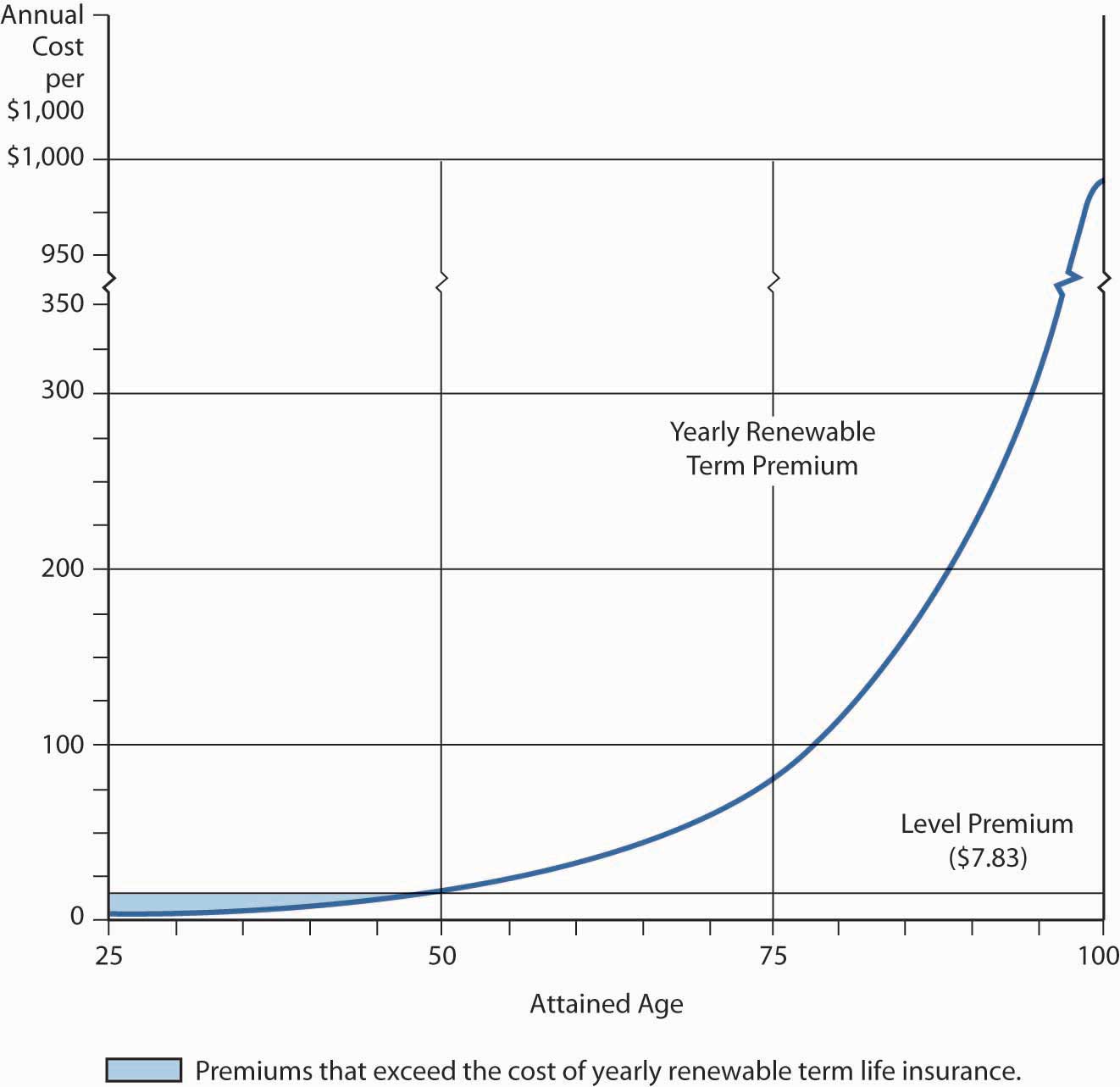
The true cost of insuring a human life increases naturally with age because the probability of death rises over time. If an insurer charged the exact cost of insurance year by year—known as the annual renewable term rate—the premiums would become prohibitively expensive in old age.
Ordinary whole life solves this problem through the level-premium mechanism:
- Early Overpayment: During the early years of the policy, the fixed level premium is higher than the actual mathematical cost of insuring the policyholder at that younger age.
- Reserve Accumulation: The insurer places this excess overpayment into a reserve fund. This reserve is invested in high-quality fixed-income assets, such as investment-grade corporate bonds and government securities.
- Later Underpayment: In the later years of the policy, the actual cost of insuring an older individual exceeds the level premium being collected. The insurer draws down the accumulated reserve and its earned interest to make up the deficit.
This balance allows the insurer to guarantee that the premium will never increase, regardless of changes in the insured’s health, age, or medical condition.
Guaranteed Cash Value Accumulation
The accumulation of excess funds in the policy's reserve creates the policy’s cash value. By law, insurers must share a portion of this reserve equity with the policyholder in the form of a guaranteed cash value schedule.
Under Internal Revenue Code (IRC) Section 7702, cash value inside an ordinary whole life policy grows on a tax-deferred basis. This means the policyholder pays no federal income tax on interest accrued within the policy as long as the funds remain inside the contract. The insurer guarantees a minimum annual growth rate (typically ranging between 2% and 4%, depending on when the policy was issued and prevailing interest rate environments).
During the initial years of an ordinary whole life contract (typically years 1 through 3), cash value growth is minimal because the insurance company must recover upfront underwriting, administrative, and broker commission expenses. After this initial period, the cash value begins to compound more rapidly.
The Guaranteed Death Benefit
The death benefit—or face amount—is the stated dollar amount the policy promises to pay to designated beneficiaries upon the insured's death. In an ordinary whole life policy, this benefit remains fixed for the life of the contract, assuming no loans or unpaid premiums offset the balance.
Under IRC Section 101(a), life insurance death benefits are generally received by beneficiaries free of federal income tax. However, the proceeds may be subject to federal estate tax if the policyholder retains "incidents of ownership" (such as the right to change beneficiaries or surrender the policy) and their total gross estate exceeds the federal estate tax exemption threshold.
Participating vs. Non-Participating Policies and Dividends
Ordinary whole life policies fall into two main structural categories: participating and non-participating.
- Ordinary Whole Life Policy
- Participating Policy (Issued by Mutual Companies)
- Eligible for Policy Dividends (Based on financial performance)
- Non-Participating Policy (Issued by Stock Companies)
- No Dividends Paid (Fixed premiums & values)
- Participating Policy (Issued by Mutual Companies)
Non-Participating Whole Life
Issued primarily by stock insurance companies, non-participating policies offer fixed premiums, fixed cash value growth tables, and a fixed death benefit. The policyholder does not share in the insurance company's operational profits or favorable investment performance.
Participating Whole Life
Issued primarily by mutual insurance companies (which are owned by their policyholders rather than corporate shareholders), participating policies allow policyholders to participate in the company’s financial success through annual policy dividends.
Dividends are legally defined by the Internal Revenue Service (IRS) as a non-taxable return of excess premium paid by the policyholder, provided total dividends received do not exceed the cumulative premiums paid into the policy (the policy's cost basis). Dividends are not guaranteed, but established mutual insurers have paid them consistently for over a century.
When a participating ordinary whole life policy pays a dividend, the policyholder can select one of several dividend options:
- Cash Payout: The insurer mails a check or deposits the dividend directly into the policyholder's bank account.
- Premium Reduction: The dividend is applied toward the policyholder's next scheduled premium payment, reducing out-of-pocket expenses.
- Paid-Up Additions (PUAs): The dividend purchases additional micro-policies of whole life insurance. Each paid-up addition has its own death benefit and guaranteed cash value, compounding the overall growth of the main policy without requiring additional medical underwriting.
- Accumulate at Interest: The dividend remains with the insurer in a separate interest-bearing account. Unlike cash value growth within the policy, the interest earned on accumulated dividends is taxable annually as income.
- One-Year Term Insurance: The dividend is used to purchase additional temporary term insurance equal to the policy's current cash value or a set maximum limit.
Accessing Cash Value and Policy Owner Rights
Because an ordinary whole life policy contains a growing cash component, the policyholder gains living benefits that can be accessed while still alive.
Policy Loans
A policyholder can borrow money from the insurance company using the policy's accumulated cash value as collateral.
- No Credit Approval: Policy loans do not require credit checks, income verification, or formal approval processes because the loan is secured by the policy's cash reserve.
- Loan Interest: The insurer charges interest on the outstanding loan balance. Loan rates can be fixed or variable depending on the policy contract.
- Impact on Death Benefit: If the insured dies with an outstanding policy loan, the unpaid loan principal plus accrued interest is deducted directly from the death benefit payout sent to the beneficiaries.
- Lapse Risks: If total outstanding loan balances plus interest exceed the policy's total cash value, the policy risks lapsing. A lapsed policy with outstanding loans can trigger immediate adverse tax consequences, treating the loan amount above the cost basis as taxable ordinary income.
Cash Surrender and Partial Withdrawals
A policyholder may choose to cancel (surrender) the policy entirely. Upon surrender, the insurance company pays the policyholder the total cash value minus any outstanding loans and applicable surrender charges. Surrender charges are common during the first 10 to 15 years of a policy to help the insurer recover initial acquisition costs.
If the surrender value exceeds the total premiums paid into the policy (the cost basis), the excess amount is taxed as ordinary income in the year of surrender.
Modified Endowment Contract (MEC) Rules
Under the Technical and Miscellaneous Revenue Act of 1988 (TAMRA), Congress created the Modified Endowment Contract (MEC) framework codified in IRC Section 7702A.
If a policyholder pays too much money into an ordinary whole life policy too quickly—failing the IRS "7-pay test"—the contract loses its standard tax advantages for lifetime withdrawals. While the death benefit remains tax-free, cash withdrawals and policy loans from a MEC are taxed on a Last-In, First-Out (LIFO) basis, meaning earnings are withdrawn first as taxable income. Additionally, withdrawals taken before age 59½ from a MEC incur a 10% federal penalty tax.
Non-Forfeiture Options
If an ordinary whole life policyholder can no longer afford to pay the required level premiums, state insurance laws require insurers to provide non-forfeiture options. These options prevent policyholders from losing the equity they built up in their cash value account.
When a policyholder stops paying premiums, they can select one of three primary options:
- Cash Surrender Value: The policyholder terminates the policy completely and receives the net cash value in a lump sum. Coverage ceases immediately.
- Reduced Paid-Up Insurance: The policyholder uses the net cash value as a single premium to purchase a smaller, fully paid-up whole life policy. No further premium payments are ever required, and the policy maintains a reduced death benefit and guaranteed cash value growth for life.
- Extended Term Insurance: The policyholder uses the net cash value to purchase a term life policy with the exact same death benefit as the original whole life policy, lasting for as long a term as the cash value can buy. Once the term expires, coverage ends completely. (This is often the default option if the policyholder fails to make a selection).
Comparing Ordinary Whole Life to Other Policy Types
To determine whether ordinary whole life fits a specific financial scenario, it helps to compare its structure against other standard life insurance products.
| Policy Feature | Ordinary Whole Life | Limited-Pay Whole Life | Term Life Insurance | Universal Life (UL) |
|---|---|---|---|---|
| Coverage Duration | Lifelong (to age 120/121) | Lifelong (to age 120/121) | Temporary (10–30 years) | Lifelong (flexible) |
| Premium Structure | Fixed level premium paid for life | Fixed level premium paid for set period (e.g., 10 or 20 years) | Fixed level premium for term duration only | Flexible premiums adjusted by policy owner |
| Cash Value Growth | Guaranteed minimum interest rate | Guaranteed minimum interest rate | None (pure protection) | Variable based on market or fixed sub-accounts |
| Death Benefit | Fixed guaranteed amount | Fixed guaranteed amount | Fixed for term duration | Flexible (Option A level, Option B increasing) |
| Dividend Eligibility | Yes (if participating policy) | Yes (if participating policy) | No | Rarely |
| Policy Flexibility | Low (rigid premium schedule) | Low (rigid payment structure) | Low (fixed terms) | High (adjustable premiums and death benefits) |
Underwriting, Costs, and Financial Considerations
Premium Determination Factors
When applying for ordinary whole life insurance, applicants undergo medical and financial underwriting. Insurers evaluate risk based on several criteria:
- Age and Sex: Younger applicants pay lower premiums. Statistically longer female life expectancies yield lower annual premiums compared to males of the same age.
- Health History and BMI: Pre-existing conditions, family medical history, tobacco usage, blood pressure, and cholesterol levels place applicants into risk classes (e.g., Preferred Plus, Preferred, Standard, or Substandard/Rated).
- Lifestyle and Occupation: Hazardous occupations (e.g., aviation, underground mining) or high-risk hobbies (e.g., skydiving, racing) increase baseline costs.
Cost Structure Transparency
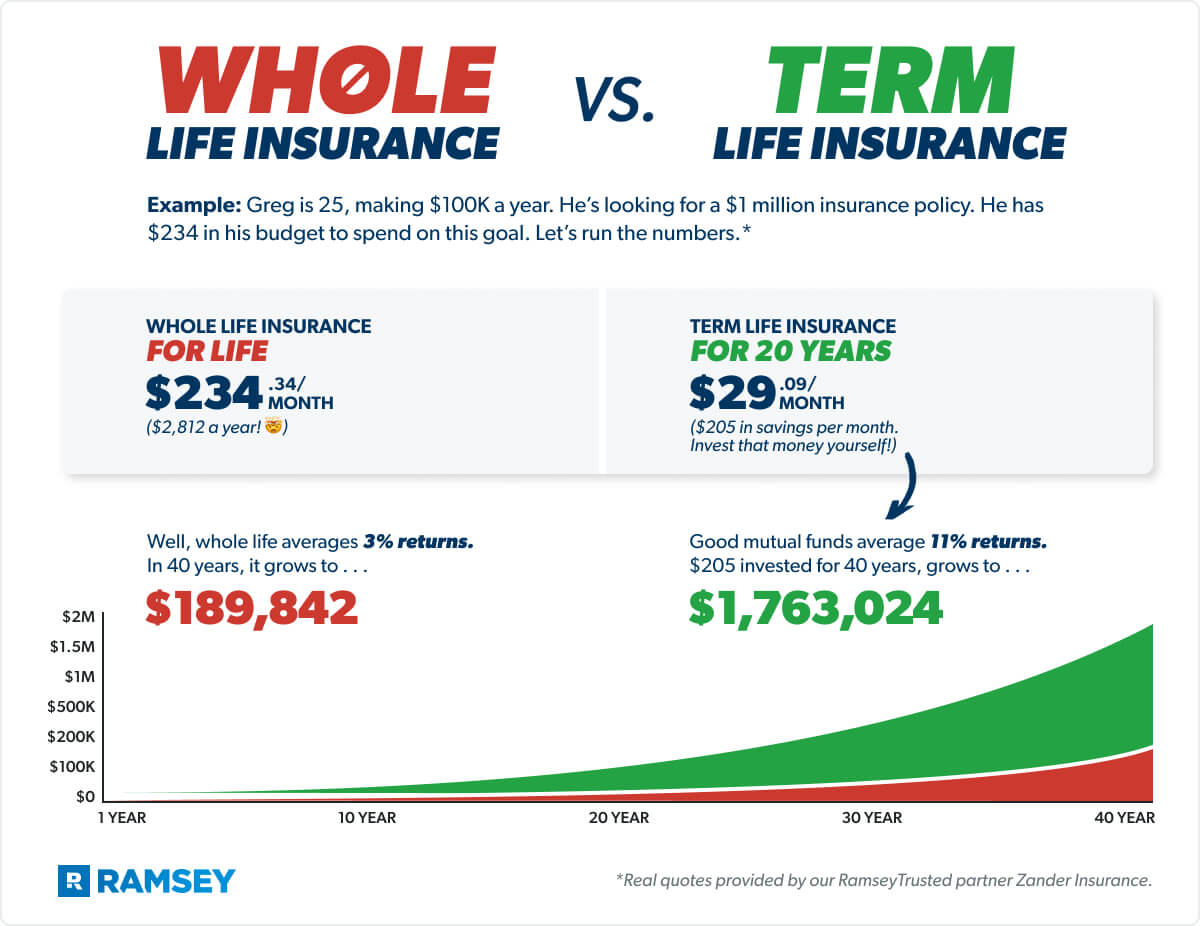
Ordinary whole life insurance carries higher initial premiums per dollar of death benefit than term life insurance. This cost difference stems directly from two factors: the guarantee that a death benefit payout will occur if the policy is kept in force, and the requirement to build up internal cash reserves.
For example, a healthy 30-year-old male might pay $30 to $40 per month for a $500,000, 20-year term life policy, whereas an ordinary whole life policy for the same coverage amount could cost $400 to $600 per month.
Cost Distribution in Early Policy Years:
- Insurer Acquisition & Underwriting Costs: High percentage early on
- Pure Mortality Cost Reserve: Increases with age
- Cash Value Accumulation Account: Accelerates after initial years
Suited Use Cases
Ordinary whole life insurance is generally suited for specific long-term financial planning objectives:
- Permanent Estate Tax Liquidity: Providing cash liquidity to pay federal or state estate taxes without forced liquidation of illiquid assets (like real estate or private businesses).
- Special Needs Trust Funding: Ensuring permanent financial care for dependents with disabilities who will require lifelong financial support.
- Buy-Sell Agreements: Funding cross-purchase or entity-purchase agreements for business owners seeking predictable, permanent coverage.
- Legacy and Wealth Transfer: Leaving a guaranteed tax-free legacy to heirs or charitable organizations regardless of life span.
Common Pitfalls and Operational Limitations
While ordinary whole life provides strong guarantees, prospective policyholders should recognize several operational drawbacks:
- Illiquidity in Early Years: Surrendering a policy within the first 5 to 10 years often results in significant financial losses due to initial expense charges and low cash values.
- Opportunity Cost: The conservative growth rate of guaranteed cash value accounts typically lags behind long-term equity market returns, such as broad-market index funds.
- Rigid Payment Schedules: Missing premium payments without sufficient cash value to cover automatic premium loans can lead to policy lapse, voiding coverage.
- Inflation Erosion: Because the death benefit and minimum cash value growth rates are fixed, high inflation can reduce the purchasing power of the death benefit over decades.
Frequently Asked Questions
How does cash value grow in an ordinary whole life policy?
Cash value grows through fixed premium allocations combined with guaranteed internal interest rates applied by the insurer. In participating policies, dividends paid by the mutual company can be reinvested as paid-up additions, further accelerating cash value and death benefit growth.
What happens to the cash value when the insured dies?
Upon the insured's death, the beneficiary receives the policy’s face amount (death benefit). The accumulated cash value merges back into the insurer's general reserves to offset the death claim payout. The beneficiary does not receive the face amount plus the cash value, unless the policy was specifically written with an increasing death benefit rider.
Can you stop paying premiums on an ordinary whole life insurance policy?
Yes, but doing so alters the policy. You can surrender the policy for its cash value, execute an automatic premium loan (where unpaid premiums are borrowed against existing cash value), or activate non-forfeiture options like reduced paid-up insurance or extended term insurance.
Is ordinary whole life insurance tax-deductible?
Individual premium payments for ordinary whole life insurance are personal expenses and are not tax-deductible. However, the internal cash value growth remains tax-deferred, and the eventual death benefit paid to beneficiaries is generally income-tax-free under IRC Section 101(a).
What is the primary difference between ordinary whole life and limited-pay whole life?
In an ordinary whole life policy, premiums are paid continuously over the insured's entire life (up to age 120/121). In a limited-pay whole life policy, premiums are compressed into a specific timeframe—such as 10 years, 20 years, or until age 65—after which the policy remains fully paid up for life without requiring further payments.
Practical Guidance for Policy Buyers
When considering an ordinary whole life policy, follow these actionable evaluation steps:
- Calculate Long-Term Affordability: Ensure the monthly or annual premium is sustainable over decades. If your budget tightens, maintaining a rigid whole life premium can become difficult.
- Review Illustrations Carefully: Examine both the guaranteed ledger and the non-guaranteed ledger (which projects dividend performance). Base your financial planning primarily on guaranteed values.
- Verify Company Ratings: Check the financial strength ratings of the issuing company using independent rating agencies like A.M. Best, Moody's, or Standard & Poor's. Look for insurers rated A+ or higher.
- Consult Professionals: Consult a licensed insurance agent or fee-only financial planner to verify whether permanent insurance aligns with your broader financial plan, tax status, and estate strategy.
Image Gallery