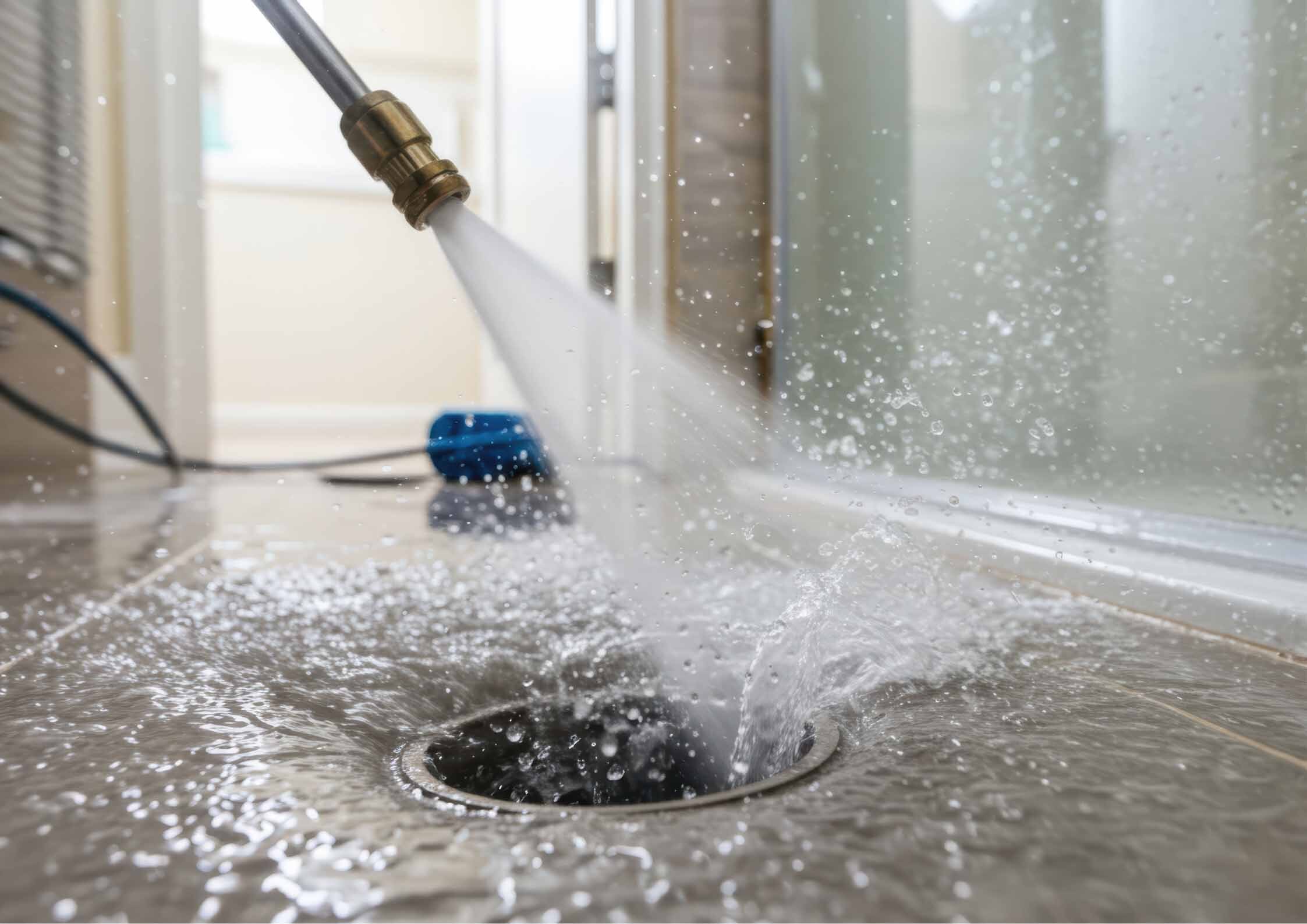
Why the Best Hydro Jet Drain Cleaning Equipment Is Not What You Expect
The best hydro jet drain cleaning equipment is defined not by peak pressure (PSI), but by the synergy of high flow rates (GPM), advanced nozzle fluid dynamics, and digital integration. Modern systems in 2026 prioritize "scour velocity"...
The best hydro jet drain cleaning equipment is defined not by peak pressure (PSI), but by the synergy of high flow rates (GPM), advanced nozzle fluid dynamics, and digital integration. Modern systems in 2026 prioritize "scour velocity" and precision over raw force, utilizing specialized ceramic-orifice nozzles and pulse technology to clear blockages that traditional high-pressure units often fail to dislodge.
Contents
The PSI Trap: Why Pressure Isn’t the Ultimate Metric
For decades, the marketing of hydro jetting equipment focused almost exclusively on Pounds per Square Inch (PSI). Prospective buyers and property managers often assume that a 5,000 PSI machine is inherently superior to a 3,500 PSI machine. However, in the professional drainage industry of 2026, we recognize this as the "PSI Trap."
Raw pressure is certainly necessary to break through a solid obstruction, such as a localized calcification or a specific root mass. But pressure alone only cuts a small hole through the debris. If you have a 4-inch pipe fully choked with grease, a high-pressure, low-flow unit (e.g., 4,000 PSI at 4 GPM) will act like a needle, piercing the blockage but leaving the vast majority of the debris stuck to the pipe walls.
The "unexpected" truth is that Gallons Per Minute (GPM) is the more critical variable for comprehensive cleaning. Flow is what carries the debris out of the line. High-flow machines (12 to 25 GPM) create a "flushing" action that moves dislodged material downstream. Without sufficient flow, the solids you’ve "cut" with high pressure simply settle back into the pipe once the water stops, leading to a "callback" within weeks. Professional-grade equipment now balances these two metrics to achieve a high "scour rate," ensuring the pipe is restored to its original internal diameter rather than just being temporarily opened.
Nozzle Engineering: The Hidden Intelligence of the System
When people think of hydro jetting, they picture the large pump or the engine. Yet, the most sophisticated part of the best equipment is actually the nozzle. A common mistake is using generic, drilled-steel nozzles that lose their precision within a few dozen hours of use.
The best equipment in 2026 utilizes ceramic-insert nozzles. Unlike stainless steel, which erodes under the friction of high-velocity water, ceramic maintains its orifice shape for hundreds of hours. This is vital because even a microscopic change in the orifice size can lead to a massive drop in pressure and a total loss of the jet's "cohesion."
The Science of Jet Angles
The efficiency of a hydro jet is dictated by the angle of the rear-facing jets. Equipment that exceeds expectations usually comes with a kit of nozzles designed for specific tasks:
- Penetrator Nozzles (15°): Designed with a narrow angle to provide maximum forward thrust and cutting power for heavy blockages.
- Flushing Nozzles (35° to 45°): Designed with a wider angle to maximize the cleaning of the pipe walls and the removal of loose debris.
- Rotating Nozzles: These use fluid-driven rotors to provide 360-degree coverage, which is essential for removing grease and scale that fixed-jet nozzles might miss.
By selecting a machine that optimizes the pump's output to these specific nozzle geometries, operators can clean pipes faster using less water—a key sustainability metric in 2026.
The Shift Toward Pulse Technology and Vibration
One of the most counterintuitive features of high-end hydro jetters is the "pulse" or "vibration" mode. Traditionally, a steady, smooth stream of water was thought to be ideal. However, the best modern equipment includes a feature that creates a rhythmic pulsation in the water flow.
This pulsation serves two primary purposes. First, it helps the hose "walk" around tight 90-degree bends and P-traps by reducing the static friction between the hose and the pipe wall. Second, the vibration at the nozzle head helps to shatter brittle obstructions like scale or dried grout more effectively than a steady stream.
When you see a top-tier machine in action, it may sound "rougher" than a cheaper, smoother-running unit. This is intentional. The ability to toggle this pulsation on and off allows the operator to navigate complex commercial plumbing stacks that would be impassable for standard high-pressure hoses.
Digital Integration and Remote Operation
The best hydro jetting equipment in 2026 is no longer a "dumb" mechanical tool. It is an integrated diagnostic and cleaning platform. The most significant advancement is the integration of CCTV synchronization and digital pressure mapping.
Advanced units now allow the operator to monitor the exact pressure at the pump via a wireless tablet while simultaneously viewing the live feed from a sewer camera. This allows for "precision jetting." Instead of blindly running the hose back and forth, the operator can see exactly where the grease buildup remains and apply the appropriate pressure and flow to that specific spot.
Furthermore, remote-control technology has become a standard requirement for "best-in-class" status. Being able to start, stop, and adjust pressure from 500 feet away at the manhole or cleanout—rather than having a second person standing by the machine—increases safety and operational efficiency. It prevents "dry firing" and reduces the risk of high-pressure accidents.
Comparing Equipment Classes: Performance Metrics 2026
To understand why the best equipment is often different from the most "powerful" looking unit, consider the following technical comparison:
| Equipment Type | Typical PSI | Typical GPM | Primary Use Case | The "Unexpected" Advantage |
|---|---|---|---|---|
| Portable Electric Jetter | 1,500 – 2,200 | 1.5 – 2.5 | Indoor residential, 1.5"–3" lines | Can run on standard 15-amp circuits; essential for high-rise condos. |
| Gas-Powered Cart Jetter | 3,000 – 4,000 | 4.0 – 8.0 | Commercial kitchens, 2"–6" lines | High portability combined with enough GPM to flush heavy grease. |
| Trailer-Mounted Unit | 3,500 – 4,000 | 12.0 – 25.0 | Municipal, 6"–18" mainlines | Massive water storage and "scour power" for industrial debris. |
| Hot Water Jetter | 2,500 – 3,500 | 4.0 – 6.0 | Extreme grease, frozen lines | The heat (160°F+) emulsifies grease, requiring 50% less water than cold jetting. |
Material Science: Hose Construction and Friction Loss
The hose is the most underrated component of the hydro jetting system. The best equipment does not use standard hydraulic hoses. Instead, it utilizes hoses reinforced with bonded Terylene or specialized synthetic fibers.
Why is this "unexpected"? Because these hoses are significantly thinner and lighter than their rubber counterparts while maintaining the same burst pressure ratings. A lighter hose allows for longer runs (up to 500 or 600 feet) without the weight of the hose causing it to snag or become unmanageable.
Moreover, the internal lining of these high-end hoses is engineered to be ultra-smooth to minimize "friction loss." In a standard hose, you might lose 500 PSI of pressure for every 100 feet of hose due to internal turbulence. The best equipment uses "low-friction" hoses that deliver nearly 90% of the pump's pressure directly to the nozzle, even at long distances.
Frequency Asked Questions
Does higher PSI always mean faster cleaning?
No. While PSI provides the "cutting" power, GPM (flow) provides the "cleaning" power. A machine with 4,000 PSI and only 2 GPM will take significantly longer to clear a pipe than a machine with 3,000 PSI and 12 GPM because it lacks the volume of water necessary to push the dislodged debris out of the system.
Can hydro jetting damage older pipes?
It can if the wrong equipment is used. The "best" equipment includes adjustable pressure regulators. For older clay or Orangeburg pipes, professional operators lower the PSI and rely on specialized wide-angle flushing nozzles to clean the pipe without risk of structural failure. The intelligence of the operator and the adjustability of the machine are the primary safeguards.
What is the difference between a hydro jetter and a pressure washer?
While they look similar, a hydro jetter is engineered for constant high-flow duty cycles and uses specific pulsation technology to navigate bends. A pressure washer is designed for surface cleaning and usually lacks the pump durability and hose flexibility required to travel hundreds of feet into a drainage system.
Why is hot water jetting considered superior for restaurants?
Grease has a melting point. Cold water jetting merely breaks grease into chunks, which can lead to secondary blockages downstream. Hot water (up to 190°F) liquefies the grease, allowing it to be flushed out as a liquid, which provides a much more thorough and long-lasting cleaning of the pipe walls.
How often should hydro jet nozzles be replaced?
Even the best ceramic nozzles should be inspected every 50 hours of use. While they are durable, the smallest chip or crack in the ceramic can distort the water jet, reducing efficiency by as much as 40%. Stainless steel nozzles often need replacement every 10-20 hours to maintain peak performance.
Final Recommendation for 2026
When evaluating hydro jet drain cleaning equipment, move your focus away from the maximum PSI listed on the spec sheet. Instead, prioritize a machine that offers a minimum of 8-12 GPM for commercial work, includes pulse technology for navigating bends, and is compatible with ceramic-insert nozzles.
The "best" equipment is the one that provides the highest scour rate and total debris removal with the least amount of mechanical stress on the pipe. For most professional applications in 2026, a mid-pressure, high-flow unit with digital remote integration provides the best return on investment and the highest level of service for the end customer.
Image Gallery