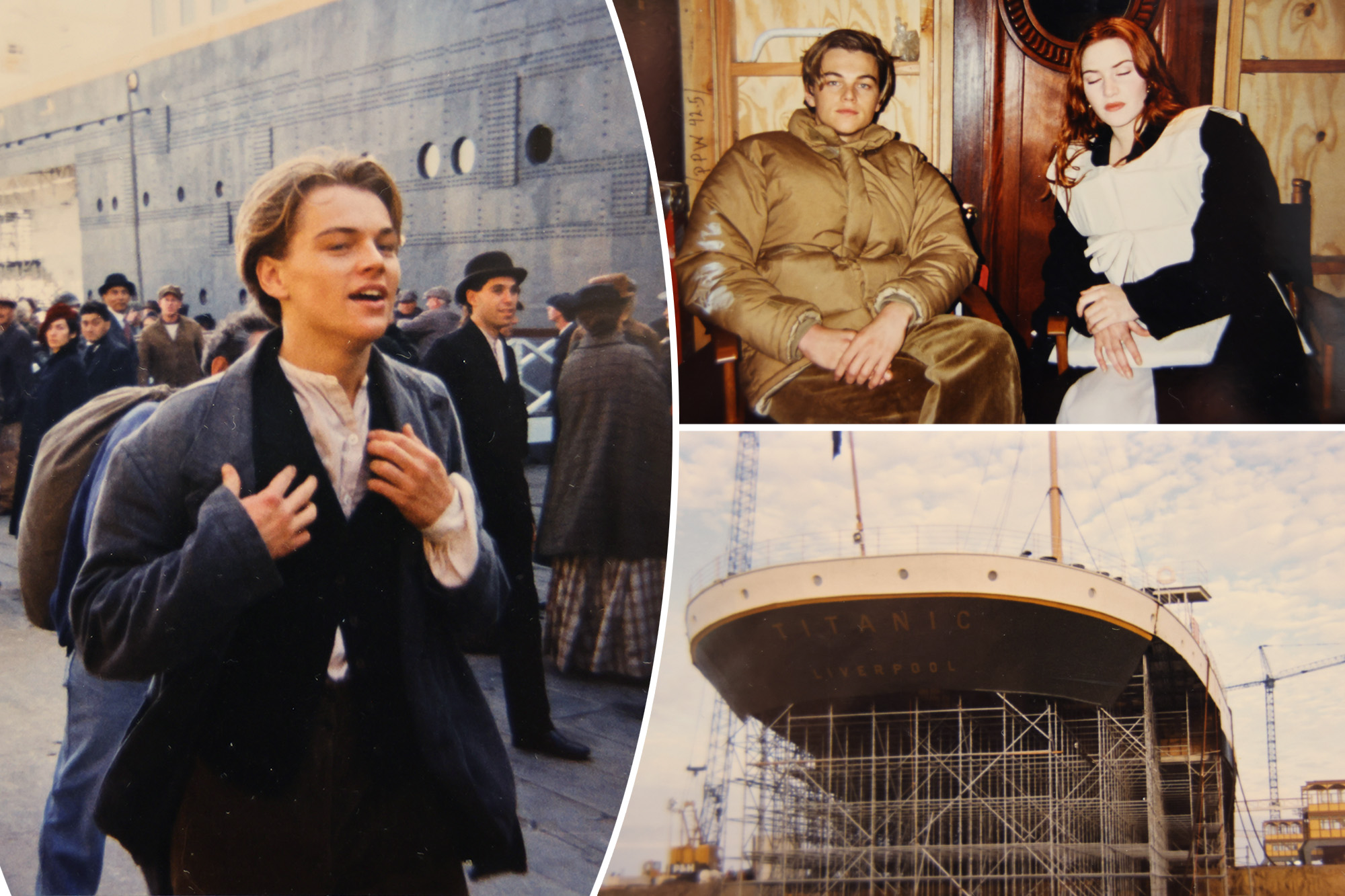
The Hidden Movie Titanic Photos Revealed: Behind the Scenes of James Cameron’s Epic
The recently revealed hidden photos from James Cameron’s 1997 masterpiece Titanic provide an unprecedented look at the film's complex production in Rosarito, Mexico. These images showcase the massive 90-percent scale ship model, intric...
The recently revealed hidden photos from James Cameron’s 1997 masterpiece Titanic provide an unprecedented look at the film's complex production in Rosarito, Mexico. These images showcase the massive 90-percent scale ship model, intricate practical effects, and candid moments between stars Leonardo DiCaprio and Kate Winslet that were kept in private archives for decades.
Contents
The Significance of the Unseen Archives
For nearly thirty years, the production of Titanic has been a subject of cinematic fascination. While promotional stills have been public since 1997, a significant portion of the "unit photography"—the photos taken on set to document production—remained in the vaults of Paramount Pictures and 20th Century Studios. As we navigate through 2026, the digital restoration of these physical negatives has allowed historians to witness the sheer engineering scale that defined the late 1990s filmmaking.
These hidden photos are not merely curiosities; they are technical blueprints of a transition era in Hollywood. This was a time when practical effects were at their zenith, just as digital compositing began to take hold. The photos reveal how the production team built a 17-million-gallon water tank and a nearly full-sized replica of the ship, providing a tangible sense of the "Ship of Dreams" that CGI often struggles to replicate with the same weight and texture.
Engineering the Spectacle: The Rosarito Beach Set
A primary focus of the revealed photographs is the construction of the Fox Baja Studios in Rosarito, Mexico. James Cameron’s vision required a studio built specifically for the film, and the photos document the grueling labor involved in erecting the steel skeleton of the ship.
The Scale of the Model
Contrary to popular belief, the "model" used for many shots was not a miniature. It was a massive structure, missing only a few sections of the midsection to save costs. The photos reveal the hydraulic systems used to tilt the ship during the sinking sequences. One particularly striking image shows the "Big Piece" of the stern being held up by massive industrial cranes, a feat of engineering that required constant monitoring by safety divers and structural engineers.
Water Management and Lighting
The lighting of Titanic was a massive undertaking handled by cinematographer Russell Carpenter. The revealed photos show the "Musco Lights"—huge arrays of lamps mounted on cranes—used to simulate the moonless night of April 14, 1912. Managing the reflection of these lights on 17 million gallons of seawater required precise positioning, which these behind-the-scenes images document through overhead maps and set-stills.
Candid Moments: DiCaprio, Winslet, and the Cast
Beyond the technical marvels, the hidden photos provide a more human perspective on the production. Principal photography lasted 160 days, far longer than the average blockbuster, leading to a unique bond among the cast and crew.
The Dynamics of "Jack and Rose"
The photos reveal Leonardo DiCaprio and Kate Winslet in moments of levity between the high-stress sinking scenes. In one image, they are seen huddled in heavy coats and blankets while floating in the "freezing" water, which was actually lukewarm but chemically treated, leading to many cast members experiencing skin irritation. Another set of photos shows James Cameron himself in the water, demonstrating to the actors how to maneuver during the final plunge.
The Supporting Cast and Extras
The "hidden" archives also highlight the work of the hundreds of extras who portrayed the steerage and first-class passengers. These photos show the detailed costume design by Deborah Lynn Scott, where even the lowest-ranking background actors wore period-accurate undergarments to ensure the silhouettes of the era were maintained. The photos document the "stunt park" where background actors practiced falling into the water safely from various heights.
Technical Specifications of the Production
The following table outlines the technical data revealed through the production archives and accompanying photographic evidence regarding the scale of the 1997 production.
| Component | Specification | Purpose |
|---|---|---|
| Main Tank Capacity | 17 Million Gallons | To submerge the 90% scale model of the Titanic. |
| Ship Model Length | 775 Feet | Provided a realistic backdrop for principal photography. |
| Tilt Mechanism | 0 to 6 Degrees (Initial) | Simulated the initial stages of the sinking. |
| Final Plunge Depth | 30 Feet | The depth to which the bow section was submerged. |
| Propeller Size | 20 Feet (Diameter) | Accurate recreations for the "stern in the air" sequence. |
| Film Stock | 35mm Eastman Kodak | Standard cinematic format of the late 90s. |
The Role of Digital Domain and Miniature Work
While the large-scale ship is the star of the hidden photos, the miniature work by Digital Domain is also heavily featured. These "hidden" images show the 1/20th scale and 1/8th scale miniatures used for wide shots of the ship at sea.
In 1997, the integration of digital water with physical models was a revolutionary step. The photos show "motion control" cameras—computer-operated rigs that moved with mathematical precision—capturing the miniatures. This allowed the VFX team to later overlay digital passengers and smoke, creating a seamless image. Seeing the "unmasked" photos of these miniatures surrounded by green screens and stage lights highlights the craftsmanship required before the era of full-virtual production.
Accessing the Archive: Where to View the Photos
As of 2026, there are several official channels through which enthusiasts can view these revealed photos. The primary source remains the Titanic: 25th Anniversary 4K Collector’s Edition, which included a digital gallery of over 1,000 behind-the-scenes images.
Additionally, the Titanic: The Artifact Exhibition, which tours globally, has updated its "Making of the Movie" section to include high-resolution prints of these previously hidden stills. These exhibitions provide context by placing the movie props alongside actual artifacts recovered from the wreck site, bridging the gap between Hollywood storytelling and historical reality.
Online Repositories and Books
For those seeking a deep dive, the following resources are recommended:
- James Cameron's Titanic (Book): The updated anniversary edition features expanded photography from the Merie Weismiller Wallace collection.
- Official Studio Archives: Some images have been released via the American Society of Cinematographers (ASC) as part of retrospectives on Russell Carpenter’s work.
Frequently Asked Questions
Why were these photos "hidden" for so long?
Most behind-the-scenes photos are subject to strict Non-Disclosure Agreements (NDAs) during production. Studios often hold back the majority of unit photography to use for future anniversary releases, "making-of" documentaries, and coffee-table books to maintain the film's commercial longevity.
Are there photos of deleted scenes among the reveals?
Yes. The revealed archives include stills from the extended "Carpathia" sequence and the "Shooting Star" scene where Jack and Rose talk about the stars. These photos show the actors in costumes and settings that did not make the final theatrical cut but are essential for understanding the film's narrative development.
Who took these behind-the-scenes photographs?
The primary unit photographer was Merie Weismiller Wallace. Her job was to capture moments that could be used for publicity, but her personal archive also contained more artistic, candid shots of the production process that have only recently been highlighted.
Is the 90-percent scale ship still in Mexico?
No. After production concluded, the ship was largely dismantled for scrap and parts. The "hidden" photos provide some of the only high-quality visual records of the ship's complete structure before it was broken down. Some smaller pieces were saved for museums, but the main hull no longer exists.
Do the photos reveal any movie "mistakes"?
Rather than mistakes, the photos reveal "movie magic." For instance, they show that many of the "frozen" bodies in the water were actually mannequins strategically placed around the actors, and that the massive propellers were actually made of foam for safety during certain stunt sequences.
Practical Recommendation for Fans
If you are looking to truly appreciate the scale of these revealed photos, the best action is to seek out the 4K Ultra HD Blu-ray release from the 25th-anniversary window. This version contains the most comprehensive digital gallery of behind-the-scenes content available. For a physical experience, visiting a permanent Titanic museum, such as those in Branson, Missouri, or Pigeon Forge, Tennessee, often provides access to rotated galleries of production photography that aren't always available online. Observing these images in a high-resolution or physical format allows you to see the fine details of the costume embroidery and the industrial complexity of the Rosarito set that a phone screen cannot fully capture.
Image Gallery