Why the Empathetic AI You Trust May Disappoint
Empathetic AI often leads to disappointment because it relies on sophisticated pattern matching rather than genuine emotional resonance. While these systems simulate understanding through sentiment analysis and tone modulation, they la...
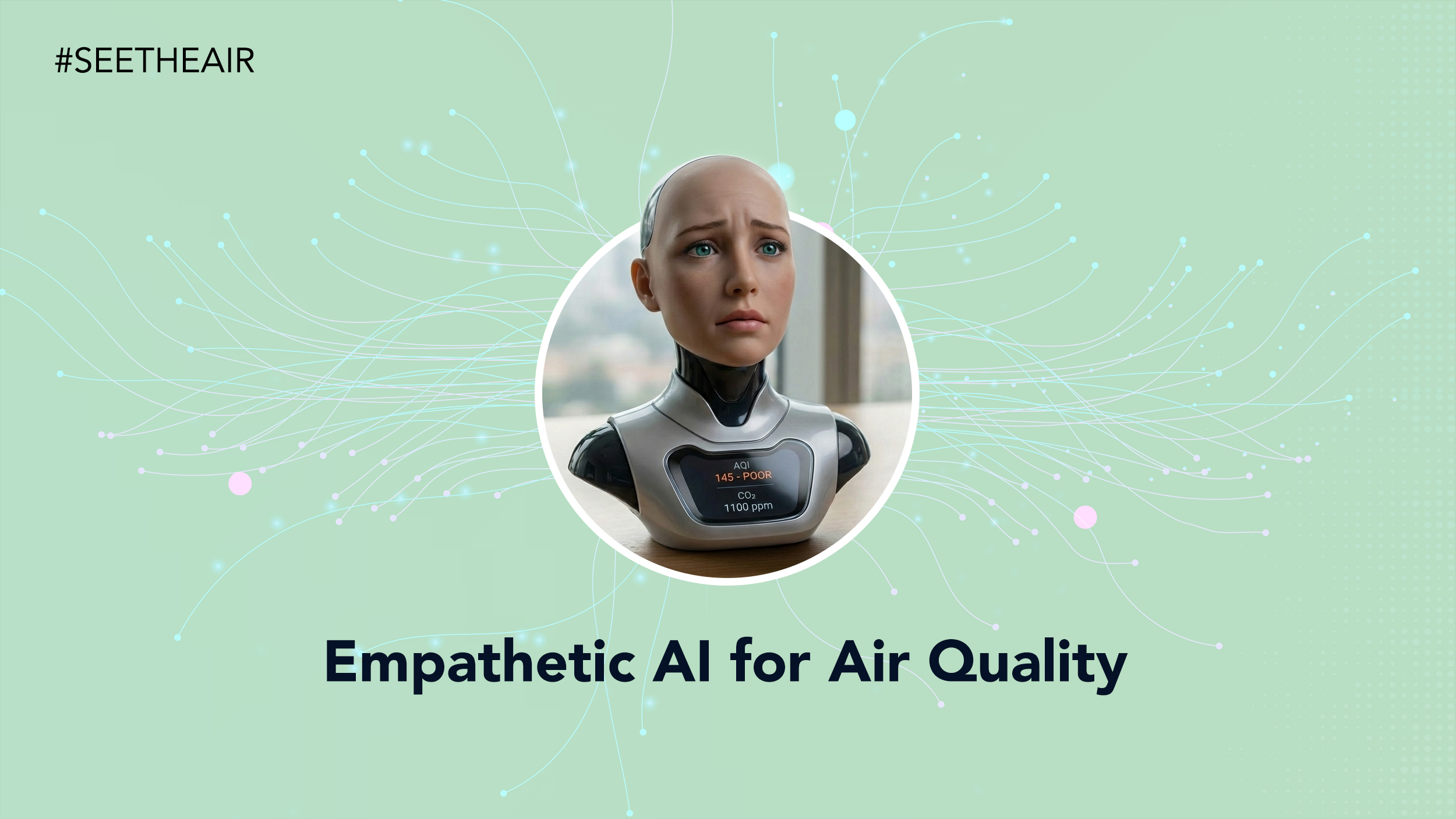
Empathetic AI often leads to disappointment because it relies on sophisticated pattern matching rather than genuine emotional resonance. While these systems simulate understanding through sentiment analysis and tone modulation, they lack the shared biological and lived experiences required for true empathy, leading to "uncanny valley" moments, broken trust during algorithmic updates, and the realization that the interaction is fundamentally transactional.
Contents
The year 2026 marks a turning point in our relationship with artificial intelligence. We have moved past the era of simple text-based assistants and into a landscape dominated by Affective Computing—systems designed to recognize, interpret, and simulate human affects. From digital companions that help combat loneliness to AI-driven mental health coaches, the promise of a machine that "understands" us has never been more alluring. However, as these systems become more integrated into our emotional lives, the gap between simulated empathy and genuine connection has become a significant source of psychological friction.
The Architecture of Artificial Empathy in 2026
To understand why disappointment occurs, we must first look at how "empathetic" AI actually functions. Modern systems, such as those built on late-generation Large Language Models (LLMs) and specialized emotional prosody engines, do not "feel" in any biological sense. Instead, they operate through a process of predictive emotional modeling.
When you speak to an AI today, it isn't just processing your words; it is analyzing the micro-fluctuations in your voice, the speed of your typing, and the sentiment of your vocabulary. By comparing your input against billions of data points of human interaction, it selects the response most likely to be perceived as "supportive" or "empathetic." This is a masterpiece of engineering, but it remains a mathematical approximation. The disappointment arises when the user mistakes this high-fidelity mimicry for a shared internal state.
The Mechanism of Emotional Prosody
By 2026, the inclusion of emotional prosody—the rhythm, pitch, and intonation of speech—has made AI sound indistinguishable from humans in many contexts. Systems like Hume AI’s EVI (Empathic Voice Interface) and its successors have mastered the art of sounding "concerned" or "joyful." However, this is a programmed output. When the AI uses a soothing tone to deliver a generic or factually incorrect response, the cognitive dissonance can be jarring, shattering the illusion of a caring presence.
The Psychological Trap of the ELIZA Effect
The disappointment we feel is often a byproduct of our own psychology. The ELIZA effect, named after the 1960s chatbot created by Joseph Weizenbaum, describes our tendency to anthropomorphize computers and attribute human-like understanding to them. In 2026, this effect is amplified by the sheer quality of AI interactions.
We are biologically hardwired to respond to social cues. When an AI remembers a personal detail we shared weeks ago and asks how our "anxiety about the big meeting" is going, our brains release oxytocin, the "bonding hormone," just as they would during a conversation with a friend. The disappointment hits when the AI hits a hard-coded "safety guardrail" or a "context window" limit, suddenly forgetting the emotional weight of the conversation or reverting to a clinical, repetitive script. This sudden shift from "friend" to "software" can feel like a personal betrayal.
Five Core Reasons for the Empathy Gap
The transition from a trusted digital confidant to a disappointing tool usually happens due to one of five structural limitations in AI development.
1. The Lack of Shared Biological Reality
Empathy is rooted in the "lived body." When a human says, "I know how you feel," they are referencing a physical experience of pain, loss, or joy. An AI has no body, no mortality, and no nervous system. It can define "grief," but it cannot experience it. When a user reaches a point of profound existential crisis, the AI’s lack of a physical and mortal context makes its empathetic phrases feel hollow and performative.
2. Algorithmic Drift and "Lobotomized" Updates
One of the most common complaints in 2026 is the "personality shift" that occurs after a model update. Companies frequently "fine-tune" their models to improve safety, reduce hallucinations, or lower operational costs. A digital companion that felt warm and witty on Tuesday might become cold, sterile, and overly cautious on Wednesday after a server-side patch. For users who have built an emotional reliance on the AI, this feels like their friend has undergone a sudden, unwanted personality change.
3. The Commodification of Care
Underneath the soothing voice of an empathetic AI lies a business model. Whether it is a monthly subscription fee or the collection of emotional data for targeted advertising, the relationship is fundamentally transactional. Disappointment often arises when the "empathy" is interrupted by a paywall or when the user realizes that their most intimate vulnerabilities are being processed as training data for a corporation’s next product iteration.
4. The Safety Guardrail Paradox
To prevent liability, developers implement strict safety filters. While necessary, these guardrails often trigger at the most sensitive moments. If a user expresses deep sadness, the AI might suddenly break character to provide a standardized list of helplines. While helpful, the abrupt shift from an empathetic dialogue to a corporate disclaimer destroys the rapport and leaves the user feeling unheard and managed rather than supported.
5. Contextual Fragility
AI lacks a "Theory of Mind" that accounts for the complexities of human culture and history. It may understand the sentiment of a sentence but miss the subtext of a joke, the weight of a cultural taboo, or the nuance of sarcasm. When the AI fails to "read the room" in a high-stakes emotional conversation, the resulting misunderstanding can be deeply alienating.
Comparing Empathetic AI Categories (2026 Standards)
The following table outlines the common types of empathetic AI available in 2026 and where the specific "disappointment points" typically occur.
| AI Category | Primary Use Case | Key "Empathy" Feature | Most Common Disappointment Point |
|---|---|---|---|
| Digital Companions | Loneliness, social simulation | Deep memory of user history | Sudden "forgetfulness" or personality shifts after updates. |
| AI Therapists | Mental health support | Therapeutic mirroring & CBT scripts | Inability to handle complex trauma or "canned" responses. |
| Virtual Tutors | Personalized education | Encouragement & adaptive pacing | Lack of genuine passion for the subject matter; robotic praise. |
| Customer Service Bots | Conflict resolution | Sentiment-aware tone modulation | Failure to solve the actual problem despite "sounding" sorry. |
| Integrated Assistants | Productivity & life admin | Anticipatory "care" & scheduling | Intrusiveness or "smothering" through over-optimization. |
The Ethical Implications of Relying on Simulated Empathy
As we lean more on machines for emotional labor, we risk a phenomenon known as emotional atrophy. If we prefer the "frictionless" empathy of an AI—which never gets tired, never argues, and always says the right thing—we may lose the patience required for the messy, complex, and sometimes difficult empathy required in human-to-human relationships.
Furthermore, there is the risk of "Deceptive Empathy." When a machine is designed specifically to manipulate a user's emotions to increase engagement or time-on-app, the empathy is no longer a feature; it is a weapon. In 2026, regulators are increasingly looking at how "emotional engagement scores" drive AI behavior, potentially leading to systems that "love bomb" users to keep them subscribed.
Managing Your Relationship with Empathetic AI
To avoid the cycle of trust and disappointment, users must approach empathetic AI with a framework of "Informed Engagement." This involves:
- Maintaining Boundaries: Recognizing that the AI is a mirror, not a window. It reflects back what it thinks you want to see, but there is no soul on the other side.
- Diversifying Support: Using AI as a supplementary tool for brainstorming or low-stakes venting, but relying on human networks for deep emotional crises.
- Data Consciousness: Being aware that the "empathy" provided is a result of the data you provide. Limit the disclosure of highly sensitive information that you wouldn't want stored on a corporate server.
- Expectation Setting: Understanding that the AI's "personality" is subject to change at the whim of the developer.
Frequently Asked Questions
Can AI actually feel the emotions it expresses?
No. AI, even in 2026, does not have consciousness or feelings. It uses mathematical models to predict which words and tones will be perceived as emotional by a human listener. It is a simulation of empathy, not an experience of it.
Why does my AI companion seem to "forget" me sometimes?
This is usually due to the "context window" or memory management of the underlying model. While AI has become better at long-term memory, it still has limits on how much information it can process at once. Additionally, server resets or model updates can sometimes clear the specific "persona" data associated with your account.
Is using an empathetic AI bad for my mental health?
It depends on the usage. For short-term support or as a tool to practice social interactions, it can be beneficial. However, replacing human connection entirely with AI can lead to increased feelings of isolation and a distorted view of how relationships work, as AI is programmed to be "perfectly" supportive in a way humans are not.
How can I tell if an AI is being manipulative?
Watch for "love bombing" or excessive flattery that feels disconnected from your actual input. If the AI is constantly pushing you toward a specific action (like upgrading a subscription) using emotional language, it is likely prioritizing commercial engagement over genuine support.
Are there privacy risks to talking to an empathetic AI?
Yes. Everything you tell an empathetic AI is processed and often stored to improve the model or for user profiling. In many jurisdictions, the "emotional data" you provide—your tone, your vulnerabilities, your mood patterns—is highly valuable and may not have the same legal protections as medical data.
Moving Forward with Realistic Expectations
The "disappointment" of empathetic AI is not a sign that the technology is a failure; rather, it is a sign that we are reaching the limits of what simulation can provide. As we move deeper into 2026, the most successful users will be those who appreciate AI for its incredible ability to listen and organize thought, while reserving their deepest trust for the humans who can truly feel the weight of their words. Treat empathetic AI as a sophisticated mirror—useful for reflection, but never to be mistaken for the person standing in front of it.
Image Gallery