Chicago Internet Providers: Comprehensive Guide to Options, Prices, and Coverage in 2026
Choosing the right internet service in Chicago requires balancing speed, reliability, and cost within your specific neighborhood. In 2026, the market is defined by widespread fiber-optic availability and mature 5G home internet options...
Choosing the right internet service in Chicago requires balancing speed, reliability, and cost within your specific neighborhood. In 2026, the market is defined by widespread fiber-optic availability and mature 5G home internet options. Residents can access speeds ranging from 300 Mbps for basic use to 5,000 Mbps for power users, with monthly prices typically starting at $30 and scaling up to $180 depending on the technology and bandwidth tier.
Contents
The Connectivity Landscape of Chicago in 2026
Chicago’s internet infrastructure has undergone significant modernization over the last several years. The city, once heavily reliant on aging copper-based DSL and traditional coaxial cable, has transitioned into a "fiber-first" urban center. This shift is driven by both private investment from major carriers and municipal initiatives aimed at closing the digital divide in underserved wards on the South and West Sides.
As of 2026, the primary competition exists between high-capacity fiber-optic providers and established cable giants. However, a third pillar—Fixed Wireless Access (FWA) via 5G networks—has become a formidable competitor for apartment dwellers and small households. While fiber offers the highest reliability and symmetrical speeds (equal upload and download), cable remains the most widely available, and 5G offers the most flexibility with "plug-and-play" setups.
The Illinois Office of Broadband has played a pivotal role in this expansion through the Connect Illinois program, which has funneled grants into infrastructure projects to ensure that even the more residential peripheries of the city have access to "future-proof" speeds of at least 100/20 Mbps.
Major Internet Service Providers in Chicago
AT&T Fiber and DSL
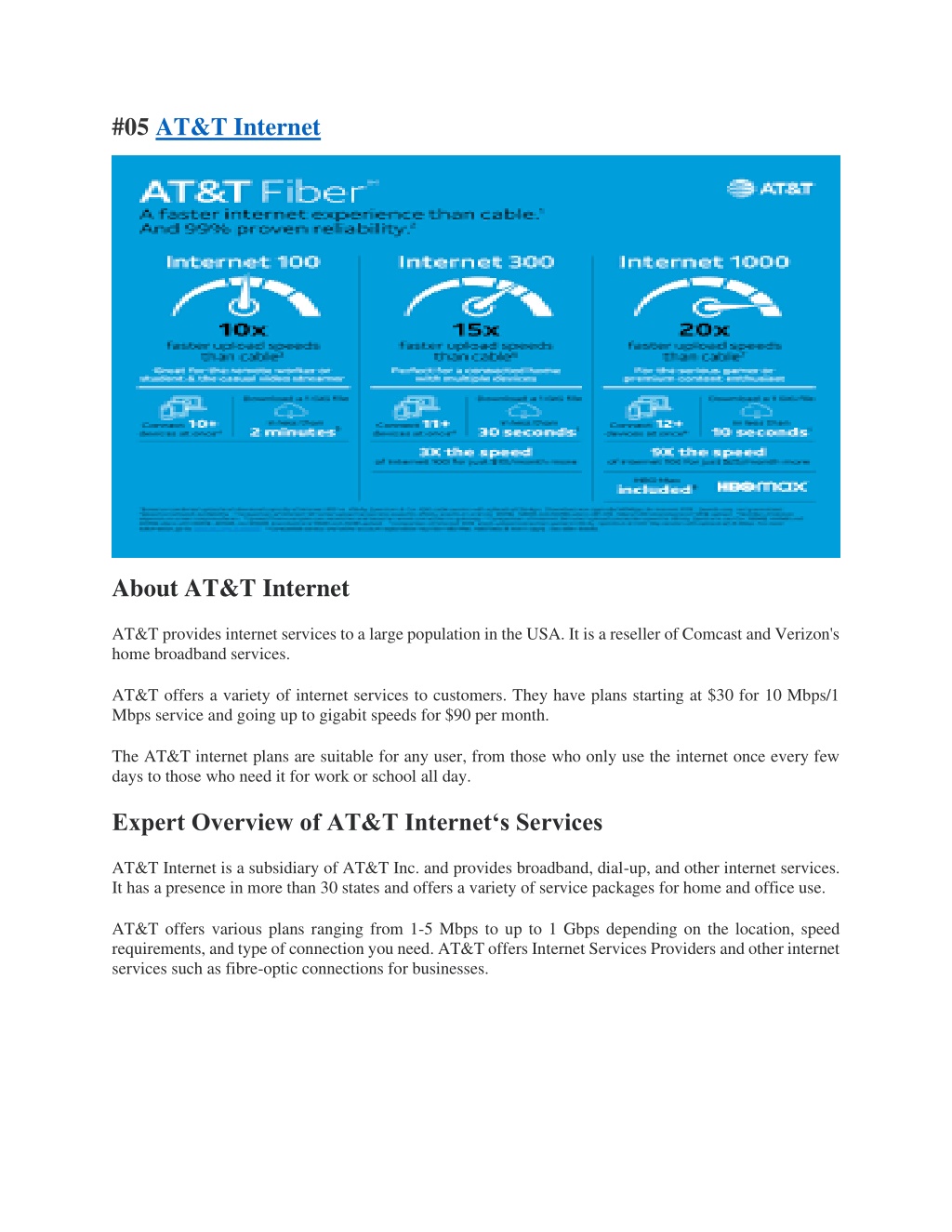
AT&T remains one of the most prominent players in the Chicago market. By 2026, their fiber-optic footprint covers a vast majority of the city, especially in high-density areas like River North, the Loop, and Wicker Park. Unlike their older DSL service, which is being phased out in favor of "Internet Air" (their wireless product), AT&T Fiber provides a dedicated line to the home. This results in lower latency, which is critical for online gaming and high-definition video conferencing. Their tiers often include 1-Gig, 2-Gig, and 5-Gig options, appealing to households with dozens of connected devices.
Xfinity (Comcast)
As the provider with the largest overall coverage area in the Chicagoland region, Xfinity utilizes a hybrid fiber-coaxial (HFC) network. While historically known for fast downloads but slower uploads, Xfinity’s "10G Network" upgrades have significantly boosted upload capacities to meet the demands of a remote-work workforce. Xfinity is often the most accessible option for residents in older multi-unit dwellings where running new fiber lines might be architecturally challenging. They also offer a robust "Internet Essentials" program for low-income households, which has been expanded to support more residents as of 2026.
Astound Broadband (formerly RCN)
Astound continues to be the "local favorite" for many Chicagoans, known for competitive introductory pricing and a strong presence in neighborhoods like Lakeview, Lincoln Park, and Uptown. They offer a mix of cable and fiber services. Astound’s primary value proposition in 2026 is their lack of long-term contracts on many plans, providing a flexible alternative to the larger national brands.
Google Fiber Webpass
Focusing specifically on high-rise apartments and condominiums, Google Fiber’s Webpass uses point-to-point wireless technology to deliver gigabit speeds. It is not available in single-family homes, making it a niche but highly effective solution for downtown residents. The service is prized for its simplicity—usually a flat monthly fee with no equipment costs or complex installation.
T-Mobile and Verizon 5G Home Internet
These providers have revolutionized the "budget" segment of the Chicago market. By leveraging their 5G cellular towers, they offer home internet that requires no professional installation. In 2026, these services are highly reliable in Chicago’s flat topography, though speeds can fluctuate based on network congestion. They are particularly popular in neighborhoods where residents want to avoid the "hidden fees" associated with traditional cable companies.
Comparing Chicago Internet Options: 2026 Pricing and Speeds
The following table provides a snapshot of the current market offerings. Prices reflect standard residential rates; promotional discounts for the first 12–24 months are common but vary by zip code.
| Provider | Connection Type | Max Download Speed | Starting Price (Approx.) | Data Caps |
|---|---|---|---|---|
| AT&T Fiber | Fiber | 5,000 Mbps | $55 | None |
| Xfinity | Cable | 2,000 Mbps | $30 | 1.2 TB (varies) |
| Astound | Cable/Fiber | 1,200 Mbps | $25 | None (on most plans) |
| Verizon 5G | 5G Wireless | 1,000 Mbps | $50 | None |
| T-Mobile 5G | 5G Wireless | 245 Mbps | $50 | None |
| Google Webpass | Fixed Wireless | 1,000 Mbps | $70 | None |
Note: Availability is highly localized. Check the FCC National Broadband Map for the most accurate street-level data.
Deep Dive: Fiber vs. Cable vs. 5G in the Chicago Context
When selecting a provider, understanding the underlying technology is more important than just looking at the "Up to" speed listed in advertisements.
The Superiority of Fiber
For the modern Chicago household, fiber-optic internet is the gold standard. In neighborhoods like Logan Square or the West Loop, where many residents work in tech, design, or content creation, the symmetrical speeds of fiber are indispensable. A 1-Gig fiber connection allows you to upload a 10GB video file in the same time it takes to download it. Furthermore, fiber is less susceptible to electromagnetic interference and weather-related outages compared to cable.
The Reliability of Cable
Cable internet remains a powerhouse due to its existing infrastructure. In many of Chicago's historic brick bungalows, Xfinity or Astound are already wired into the building. While cable download speeds can rival fiber, the upload speeds are generally 10% to 20% of the download speed. This is sufficient for most users but may cause "lag" during simultaneous Zoom calls and 4K streaming.
The Flexibility of 5G Home Internet
In 2026, 5G Home Internet has moved past its "early adopter" phase. For a flat $50 or $60, a resident in Pilsen or Bridgeport can get a gateway in the mail, plug it in, and have 300+ Mbps internet within minutes. This is an excellent option for renters who move frequently or those who want to "unbundle" their services from traditional utilities. The downside is that latency (ping) is generally higher than wired connections, which can affect competitive gaming.
Neighborhood Coverage and Digital Equity
Coverage in Chicago is not uniform. The "Digital Divide" has historically left South and West Side neighborhoods with fewer choices and slower speeds. However, as of 2026, several initiatives have changed this:
- Chicago Connected: This program has matured into a permanent fixture, providing subsidized or free high-speed internet to families with students in Chicago Public Schools (CPS).
- Fiber Expansion: AT&T and Xfinity have both completed major infrastructure "overlays" in neighborhoods like Englewood, Austin, and Roseland, bringing high-speed fiber where only basic DSL once existed.
- Community Mesh Networks: In some areas, community-led organizations have built mesh networks to provide localized, low-cost access, though these are typically slower than commercial ISP offerings.
Before signing a contract, residents should verify if their specific building is "pre-wired" for a certain provider. In many Chicago apartments, an exclusive marketing agreement may mean one provider has easier installation than others, though legally, residents often have the right to choose any provider that can reach their unit.
Hidden Costs and Contract Nuances
The advertised price is rarely the final price on your monthly statement. Chicago residents should be aware of several common "add-ons" that can inflate a $50 bill to $80 or more:
- Equipment Rentals: Most ISPs charge $10–$15 per month for a modem/router gateway. Purchasing your own compatible modem (especially for cable providers like Xfinity) can save over $150 per year.
- Installation Fees: Professional installation can cost between $50 and $100. Many providers in 2026 offer "Self-Install Kits" for free, which are highly recommended for tech-savvy users.
- Data Overage Charges: While fiber plans rarely have caps, some cable plans limit users to 1.2 Terabytes per month. In an age of 4K streaming and large game downloads (like those for the latest consoles in 2026), a high-usage household can easily exceed this limit.
- Regional Sports Fees: If you bundle internet with cable TV to watch the Cubs or White Sox, expect "Broadcast TV Fees" and "Regional Sports Fees" which can add $30+ to a monthly bill.
Verifying Availability: A Step-by-Step Guide
To find the best provider for your specific Chicago address, follow these steps:
- Use the FCC Broadband Map: Visit the official federal site to see every provider that claims to serve your address.
- Check for Fiber First: Enter your zip code on the AT&T Fiber and Astound websites. If fiber is available, it is almost always the better technical choice over cable.
- Audit Your Speed Needs: A single person working from home usually only needs 300 Mbps. A family of four with multiple gamers and streamers should look at 1-Gig (1,000 Mbps) or higher.
- Inquire About "Bulk" Rates: If you live in a large condo building or managed apartment complex, ask the HOA or management office if internet is included in your assessments or rent.
Frequently Asked Questions
What is the fastest internet provider in Chicago?
As of 2026, AT&T Fiber offers the fastest residential speeds in Chicago, with tiers reaching up to 5,000 Mbps (5-Gig). Xfinity follows closely with its Gigabit x2 (2,000 Mbps) service in select areas. However, for 99% of households, any connection over 1,000 Mbps provides more bandwidth than standard hardware can even utilize.
Which Chicago internet provider is cheapest?
Astound Broadband and Xfinity typically offer the lowest "entry-level" prices, often starting around $25–$30 per month for speeds between 100 Mbps and 300 Mbps. These are usually promotional rates that expire after 12 or 24 months. For a "flat" price that doesn't change, T-Mobile and Verizon 5G Home Internet are often the most predictable at roughly $50 per month.
Is fiber internet available in all Chicago neighborhoods?
While fiber coverage has expanded significantly by 2026, it is not universal. Most of the North Side and the downtown "Loop" area have high fiber density. The South and West Sides have seen rapid expansion over the last three years, but some specific blocks may still be limited to cable or 5G wireless options.
Can I get internet in Chicago without a credit check?
Yes. Many 5G home internet providers and "prepaid" cable options (like Xfinity Prepaid) do not require a traditional credit check. These plans usually require you to pay for the first month and the equipment upfront.
How do I avoid price hikes after the first year?
The most effective way is to call your provider's "retention department" when your promotional period ends. In a competitive market like Chicago, providers are often willing to extend a promotion or offer a new one to prevent you from switching to a competitor like Astound or a 5G provider.
Practical Recommendation for Chicago Residents
For the best overall experience in 2026, Chicago residents should prioritize Fiber-to-the-Home (FTTH) connections from AT&T or Astound if available at their address. The symmetrical speeds and low latency are superior for the modern digital lifestyle. If fiber is unavailable, Xfinity’s higher-tier cable plans are a reliable second choice. For those living in smaller apartments or those on a strict budget, 5G Home Internet from T-Mobile or Verizon offers the best balance of price and ease of use, provided you have a strong cellular signal near a window in your home.
Image Gallery