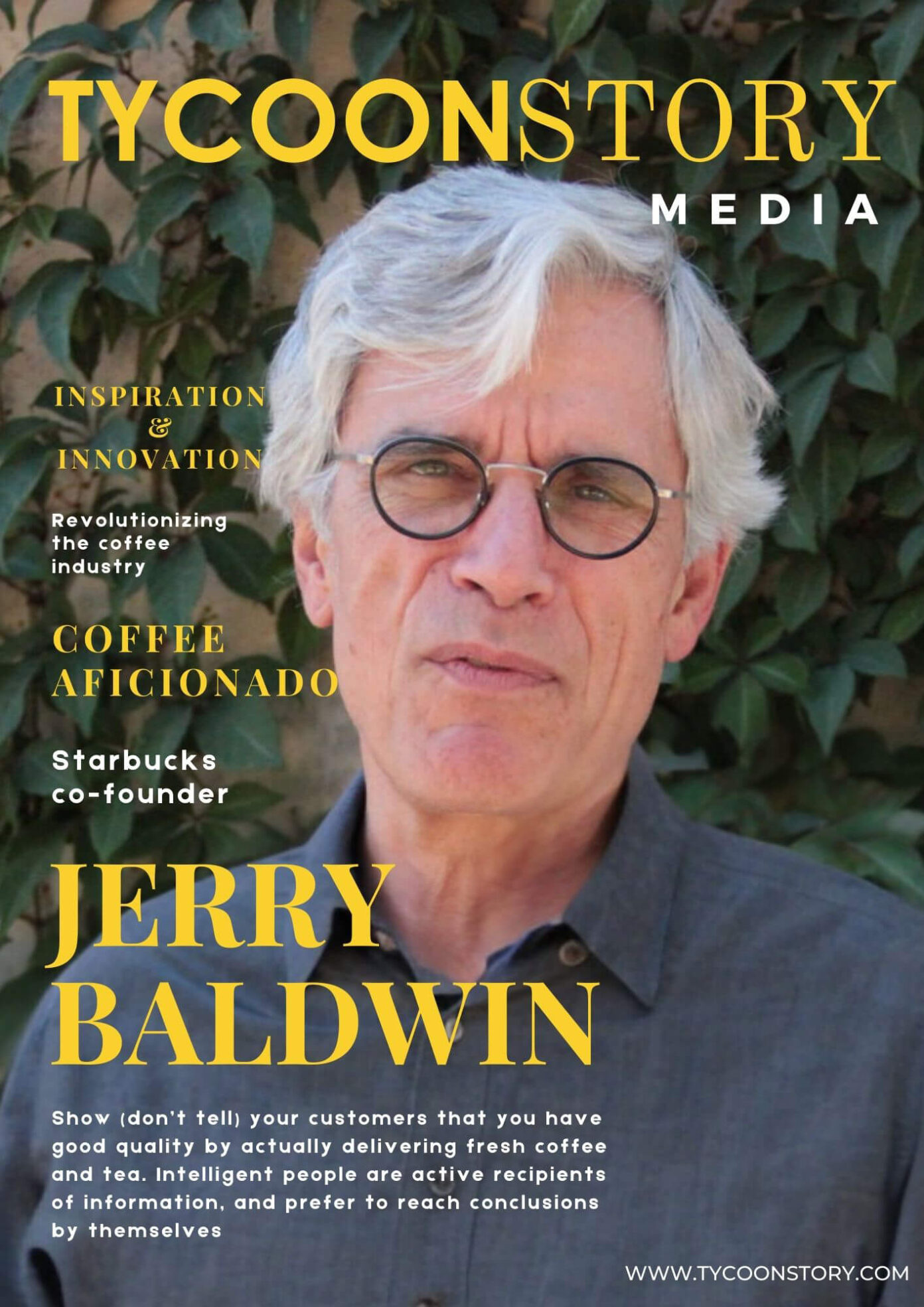
Jerry Baldwin Net Worth: A Profile of the Starbucks Co-Founder
Jerry Baldwin holds a significant place in American business history as one of the three original co-founders of Starbucks. As of 2026, while his personal financial standing is not publicly disclosed via official SEC filings or public...
Jerry Baldwin holds a significant place in American business history as one of the three original co-founders of Starbucks. As of 2026, while his personal financial standing is not publicly disclosed via official SEC filings or public wealth indexes—unlike the holdings of active public company CEOs—his net worth is primarily derived from his foundational role in the specialty coffee industry and his subsequent long-term leadership of Peet’s Coffee & Tea. His wealth reflects decades of strategic executive management, entrepreneurship, and the successful navigation of the retail coffee market's evolution from a niche craft to a global commodity.
Contents
The Origins of a Coffee Entrepreneur
Jerry Baldwin’s professional journey began in the late 1960s in the San Francisco Bay Area. Alongside Gordon Bowker and Zev Siegl, Baldwin was mentored by Alfred Peet, the founder of Peet’s Coffee & Tea. Under Peet’s guidance, the trio learned the intricacies of sourcing high-quality Arabica beans, the importance of dark roasting, and the operational demands of retail coffee distribution.
In 1971, this foundational knowledge led to the opening of the first Starbucks store in Seattle’s Pike Place Market. Unlike the expansive global franchises that would later define the brand, the original intent was centered on selling high-quality whole-bean coffee and espresso-making equipment. Baldwin, with his background in English teaching, brought a methodical, patient approach to building a brand that emphasized product education.
From Starbucks to Peet’s Coffee
A critical turning point in Baldwin’s career occurred in the mid-1980s. Following the purchase of Starbucks by Howard Schultz in 1987—a transition in which Baldwin played a pivotal role in negotiating—he chose to focus his attention on the company that had originally inspired his career: Peet’s Coffee & Tea.
Baldwin served as the CEO of Peet’s from 1987 until his retirement in 2001. During this fourteen-year tenure, he transformed Peet’s from a regional boutique operation into a modernized, national brand. Under his leadership, Peet’s successfully scaled its retail footprint and established a robust mail-order and wholesale business. This period is essential to understanding his financial status, as his leadership of a high-growth consumer packaged goods (CPG) company allowed him to participate in equity growth and long-term performance incentives that are standard in private equity-backed corporate transitions.
Wealth Composition and Assets
It is important to distinguish between the valuation of a company and the personal net worth of its former executives. Baldwin’s wealth is largely private, as he is no longer an officer of a publicly traded company. His financial profile is likely characterized by:
- Equity Participation: Gains from the sale of his original interests in Starbucks and his tenure at Peet’s, which was acquired by a private equity group (JAB Holding Company) years after his retirement.
- Investments: Diversified holdings in private companies and real estate typical of long-term executive wealth management.
- Advisory Roles: Income derived from board memberships and strategic consulting services provided to the food and beverage industry post-retirement.
Because Baldwin has maintained a relatively private lifestyle away from the high-profile media scrutiny that follows current Fortune 500 CEOs, his exact net worth remains speculative rather than a matter of public record.
Comparative Industry Context
To understand the financial landscape of early specialty coffee pioneers, it is useful to view their career trajectories alongside the expansion of the industry itself. The following table illustrates the developmental phases that contribute to the long-term wealth of coffee industry leaders.
| Career Phase | Focus Area | Financial Driver |
|---|---|---|
| Foundational (1971–1987) | Starbucks Operations | Entrepreneurial Equity |
| Expansionary (1987–2001) | Peet's CEO Leadership | Executive Compensation & Performance Bonuses |
| Strategic (2001–Present) | Advisory & Investments | Capital Gains & Passive Income |
Influence on the Modern Coffee Market
Baldwin’s contribution to the coffee industry was not purely financial; it was foundational to the "Second Wave" of coffee. By maintaining a focus on sourcing and roasting standards even as he scaled businesses, he created a model for high-margin, premium retail experiences. This model became the blueprint for the entire specialty coffee industry.
His wealth is a reflection of the "first-mover" advantage—he was among the first to successfully commercialize a premium coffee experience in the United States. While the astronomical valuations of modern tech firms often dominate discussions of net worth, the wealth generated by early retail pioneers like Baldwin relies on operational longevity, brand loyalty, and, ultimately, the successful exit of his primary corporate interests.
Frequently Asked Questions
Is Jerry Baldwin still involved in Starbucks? No. Jerry Baldwin stepped away from Starbucks in 1987 when he sold the company to Howard Schultz. Since that time, he has had no operational or ownership role in the brand.
What was his primary business success after Starbucks? His primary success after leaving Starbucks was his long-term tenure as the CEO of Peet’s Coffee & Tea. He guided the company through a period of significant growth, professionalizing its operations while maintaining the brand's commitment to high-quality coffee roasting.
Why is there no exact figure for his net worth? Jerry Baldwin is not a public figure in the context of currently traded securities. Because he is retired and does not hold an executive position in a public company, he is not required to file financial disclosures with the Securities and Exchange Commission (SEC). Any figures appearing in media reports are estimates and are not officially verified.
How does his wealth compare to current coffee entrepreneurs? Comparing Baldwin’s wealth to modern founders is difficult because the scale of global coffee retail today is drastically different. While Baldwin helped build the foundation for an industry now worth hundreds of billions, his personal wealth reflects the exit valuations of the 1980s and 90s, rather than the scale of current multinational coffee conglomerates.
Next Steps for Researching Business Leaders
For those interested in tracking the financial trajectory of business founders who have transitioned into private life, the most reliable information is found through:
- Corporate Filings: Reviewing historical SEC EDGAR filings for companies where the individual was previously a significant shareholder or officer.
- Acquisition Records: Identifying the sale price of companies where the individual held an equity stake, though individual payouts are rarely public.
- Industry Journals: Professional trade publications such as CoffeeTalk or Barista Magazine provide insights into the historical development of leaders in this niche.
If you are conducting due diligence for financial planning or academic research, remember that executive net worth is often a composite of non-liquid assets, family trusts, and private equity investments. Always consult with a qualified financial advisor when evaluating the risks and structures associated with private wealth.
Image Gallery