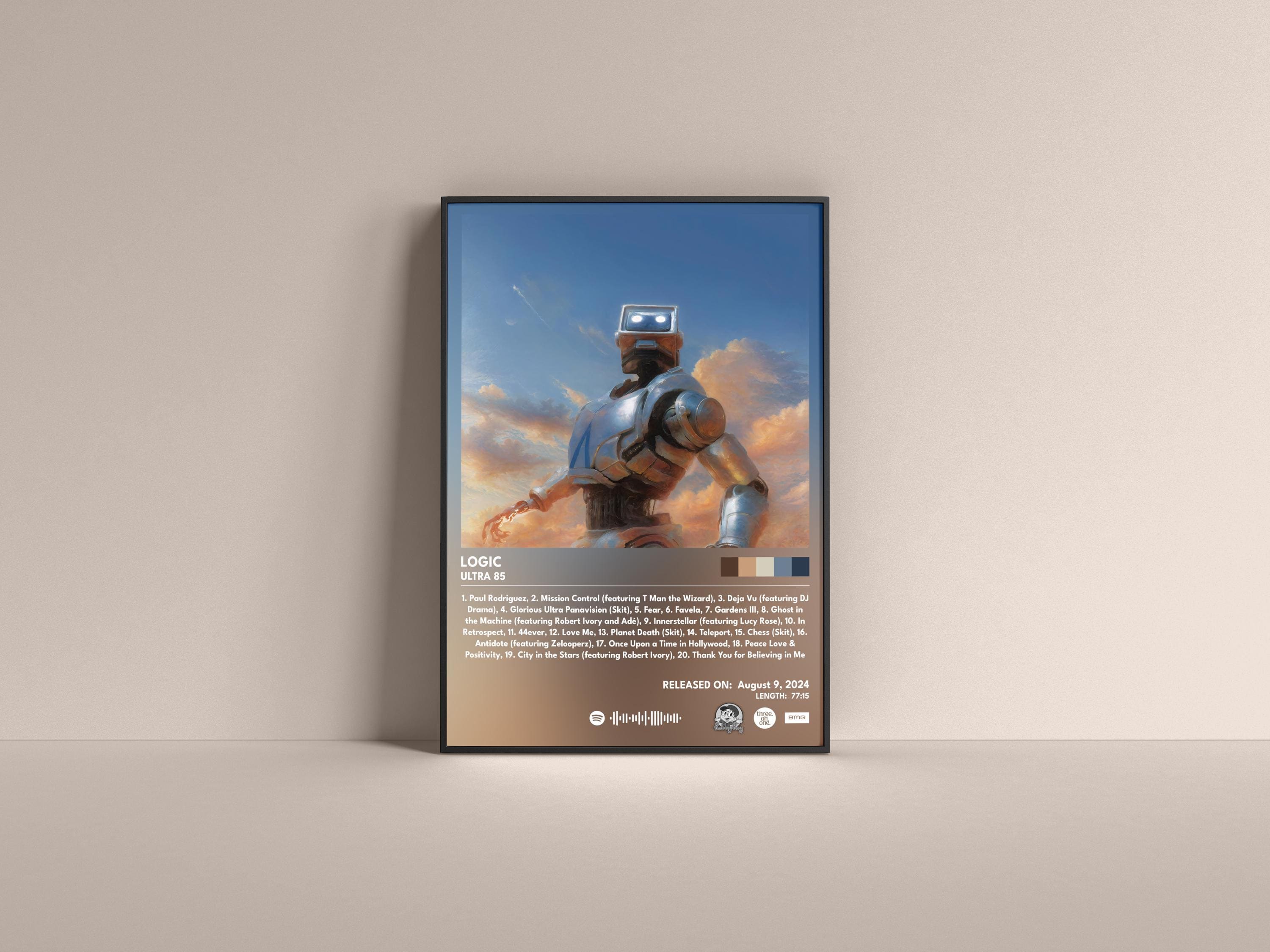
85 Logic Ultra 85 Album Overview: A Comprehensive Analysis
The Ultra 85 album by Logic, released as the highly anticipated conclusion to his long-running The Incredible True Story narrative arc, functions as a hybrid project blending his traditional hip-hop sensibilities with sci-fi conceptual...
The Ultra 85 album by Logic, released as the highly anticipated conclusion to his long-running The Incredible True Story narrative arc, functions as a hybrid project blending his traditional hip-hop sensibilities with sci-fi conceptual storytelling. It serves as a definitive resolution to the interstellar journey of characters Thomas and Kai, integrating spoken-word narrative tracks with a curated selection of tracks designed to reflect the protagonist's growth and artistic evolution.
Contents
The Narrative Framework of Ultra 85
At its core, Ultra 85 is not merely a collection of songs but a literary-musical hybrid. The album exists within the continuity established by Logic’s earlier work, specifically The Incredible True Story (2015). For the uninitiated, the narrative follows two pilots, Thomas and Kai, who are tasked with finding a habitable planet for the remnants of humanity in the distant future.
Throughout the album, the music is interspersed with cinematic dialogue sequences. These segments provide the "glue" for the project, filling in the gaps that fans have been speculating about for nearly a decade. The transition from the high-concept world-building of his early career to the finalized version presented here reflects Logic’s desire to tie off his creative universe. By the time the listener reaches the final tracks, the narrative arc completes the mission, offering a sense of closure that is rare in the landscape of modern hip-hop discography.
Musical Production and Technical Execution
Logic’s production style on Ultra 85 leans heavily into the boom-bap foundations that defined his rise, while simultaneously embracing the spacey, synth-heavy atmosphere required by the album's extraterrestrial premise. The sound engineering balances the vocal clarity of his rapid-fire delivery with expansive, layered instrumental backdrops.
Key Sonic Characteristics
- Boom-Bap Resurgence: The album features classic drum patterns and gritty loops that pay homage to 90s East Coast hip-hop production.
- Cinematic Soundscapes: Synthesizers and atmospheric pads are used to establish the "void" of space, contrasting with the grounded, heavy-hitting percussion.
- Vocal Layering: Logic utilizes complex vocal stacking, particularly on the choruses, to create a fuller sound during high-intensity bars.
The technical depth of the production suggests an intentional choice to bridge the gap between "Underground Logic" and "Mainstream Logic." By focusing on high-fidelity instrumentation rather than over-reliance on digital trap beats, the project achieves a timeless quality that suits its conceptual focus on the future of humanity.
Comparison of Narrative vs. Independent Tracks
A common point of discussion among listeners is the divide between the concept-heavy tracks and the standalone lyrical displays. While some tracks are deeply embedded in the plot, others serve as "freestyle-esque" outlets for the artist to demonstrate his technical rapping prowess.
| Track Category | Focus | Primary Goal |
|---|---|---|
| Narrative Tracks | Dialogue/Concept | Advancing the storyline of Thomas and Kai |
| Lyrical Showcases | Technical Skill | Showcasing rhyme schemes and flow speed |
| Atmospheric Cuts | Vibe/Production | Creating an immersive space-themed experience |
This duality ensures that the album remains accessible to casual listeners who may not be invested in the ten-year lore, while simultaneously rewarding "super-fans" who have been tracking the narrative clues since 2015.
Understanding the "Ultra 85" Concept
The significance of the number 85 in Logic’s discography has been a subject of intense fan theories for years. Within the context of this project, it represents the culmination of his artistic "mission." Just as his characters seek a home, the album represents the artist finding his "home" in his sound—stripping away the pressure of industry trends to produce something that feels authentically his own.
The project demonstrates a high level of self-awareness. Logic frequently references his own career arc, the criticism he has received, and his transition into independent creative ownership. The technical choices—such as the length of the tracklist and the pacing of the skits—are designed to force the listener to engage with the project as a cohesive body of work rather than a collection of individual singles.
Potential Challenges and Criticisms
Despite the high production value and the long-awaited payoff for the narrative, listeners should approach Ultra 85 with an understanding of its stylistic choices.
- Narrative Interruption: For those who prefer a "no-skip" musical experience, the inclusion of dialogue-heavy skits between songs may break the flow. These are integral to the lore but can become repetitive on repeat listens.
- Length and Scope: The album is dense. Navigating the narrative requires attention to detail, which may be a barrier for listeners looking for background music rather than an active listening experience.
- Genre Blending: Because the album moves between hard-hitting rap and cinematic score, the tone shifts rapidly. This volatility is a stylistic choice, but it may not appeal to those who prefer a consistent mood throughout an entire album.
Tips for the First-Time Listener
To get the most out of Ultra 85, it is recommended that you approach it as an audio experience.
- Listen in Sequence: The album is sequenced as a journey. Skipping tracks will cause the listener to miss the narrative context provided by the dialogue segments.
- Review The Incredible True Story: While not strictly necessary to enjoy the music, refreshing your memory on the events of the 2015 album will significantly enhance your understanding of the conclusion presented here.
- Headphone Usage: The atmospheric elements and nuanced panning in the production are designed to be captured in a high-fidelity listening environment. This is particularly important for the space-themed interludes.
Frequently Asked Questions
Is Ultra 85 the final album by Logic?
Logic has frequently spoken about retirement and creative pivots throughout his career. Ultra 85 is marketed as the final chapter of a specific narrative arc, but the artist has continued to release and produce music, suggesting it is a conclusion to a story rather than a conclusion to his entire career.
Do I need to listen to all the skits to understand the music?
The skits contain the essential plot points for the characters of Thomas and Kai. If your goal is to understand the "Ultra 85" universe, the skits are mandatory. If you are primarily interested in the hip-hop performance, they can be treated as transitions.
How does Ultra 85 compare to Logic's earlier work?
Compared to his early mixtapes, Ultra 85 is more polished and controlled. It lacks the raw, chaotic energy of his earliest works but replaces it with professional-grade songwriting and a level of thematic maturity that aligns with his current position in the industry.
What is the significance of the "Ultra 85" title?
It serves as a thematic bridge. It signifies the "85th" iteration or the destination of the journey, referencing both the character arc within his lore and his own personal journey of self-discovery as an artist who has moved from major label constraints to creative independence.
Where can I find the official narrative transcripts?
While no official book exists, the digital liner notes and community-sourced archives often track the lyrics and dialogue. Focus on official streaming platforms for the most accurate track sequence and intended listening order.
Final Recommendation
To fully appreciate Ultra 85, set aside dedicated time to listen to the album from start to finish in a single session. This project is a rewarding endeavor for those who enjoy world-building within music. Focus on the production choices during the non-narrative tracks to appreciate the evolution of the sound, and treat the narrative interludes as essential chapters in a larger, long-form story.
Image Gallery