The Courts of Appeals Below the Supreme Court: Structure, Function, and Legal Process
The courts of appeals directly below the Supreme Court serve as the intermediate appellate layer of the judicial system, primarily responsible for reviewing decisions made by lower trial courts. In the U.S. federal judicial hierarchy,...
The courts of appeals directly below the Supreme Court serve as the intermediate appellate layer of the judicial system, primarily responsible for reviewing decisions made by lower trial courts. In the U.S. federal judicial hierarchy, these are the 13 United States Courts of Appeals—commonly known as circuit courts—which correct legal errors and establish binding precedent within their respective jurisdictions.
Contents
Understanding the Intermediate Appellate System
In both the federal judicial system and most state court structures, the courts of appeals directly below the supreme court act as intermediate appellate courts. Their primary function is not to hold new trials, re-examine witnesses, or discover new factual evidence, but rather to evaluate whether the lower trial courts applied the law correctly during proceedings.
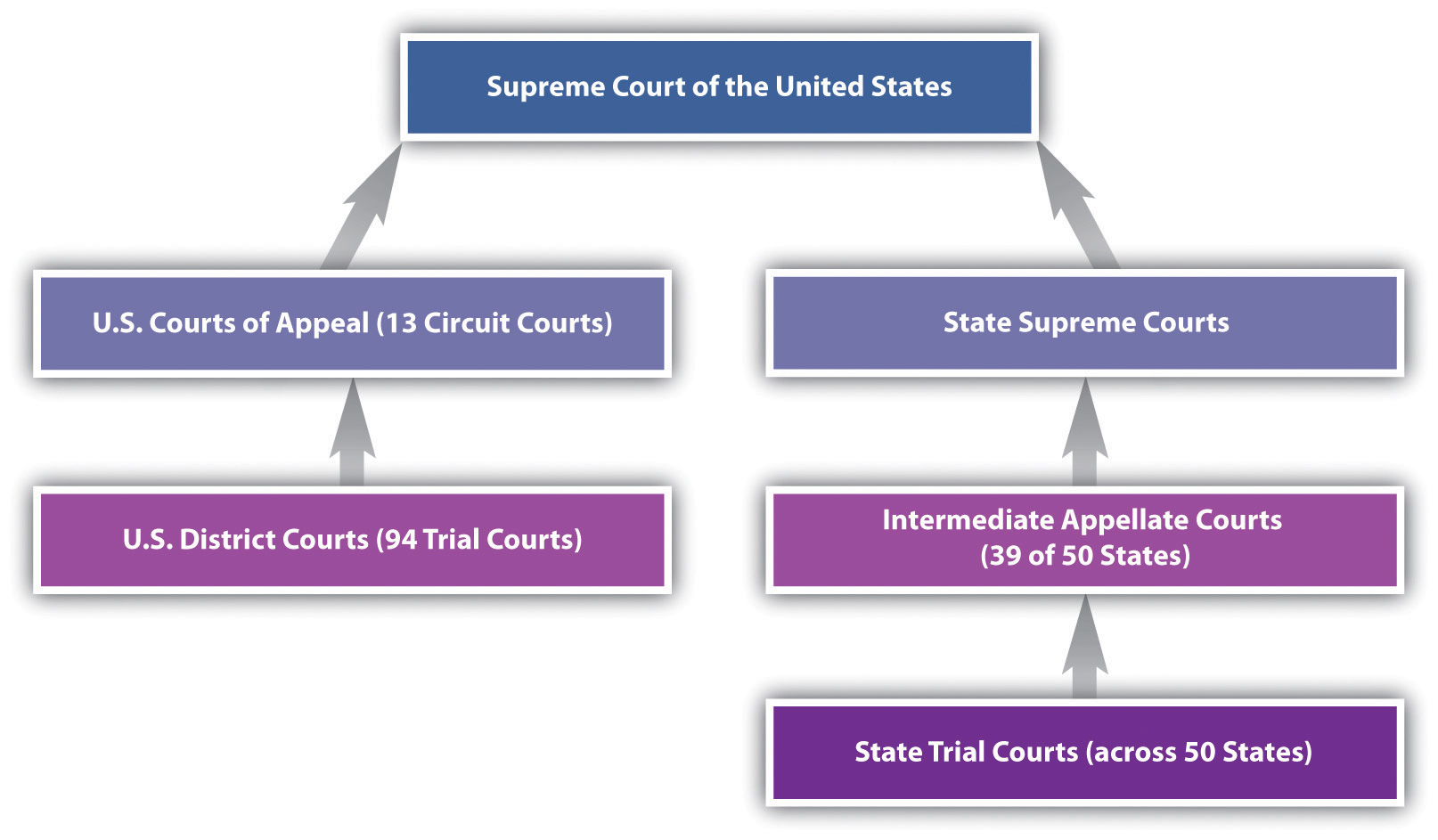
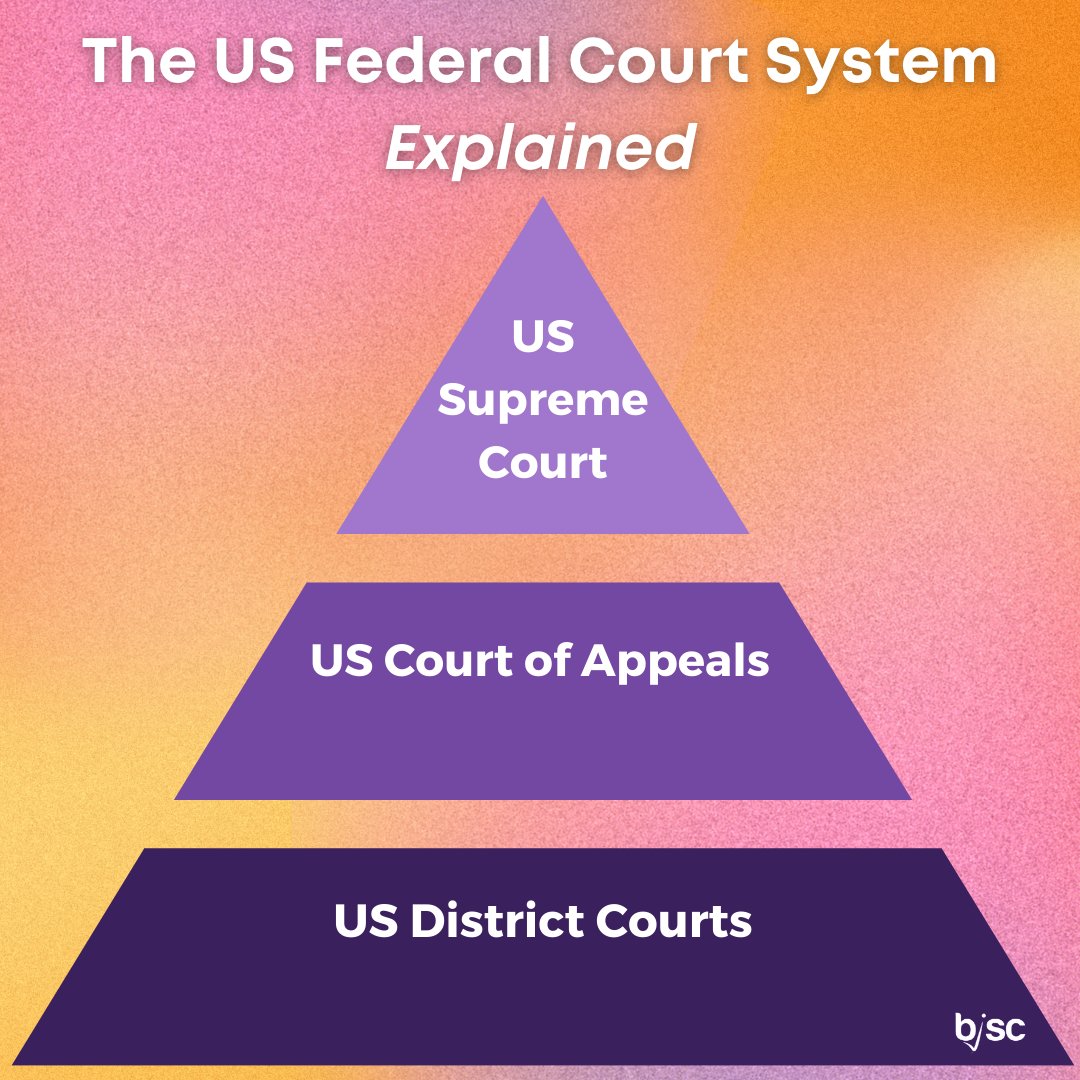
In the federal judiciary, the trial level is represented by the U.S. District Courts. When a party loses a case in a U.S. District Court, they generally have a statutory right to appeal the judgment to the appropriate U.S. Court of Appeals. The Supreme Court of the United States sits above these courts of appeals. Unlike the circuit courts, the Supreme Court possesses discretionary jurisdiction over almost all cases, meaning it chooses which appeals it hears. Consequently, for the vast majority of federal lawsuits and criminal cases, the decision reached by the court of appeals below the Supreme Court is the final legal determination.
State court systems parallel this federal structure. Most state judiciaries feature trial courts of general jurisdiction (often called Superior, Circuit, or District Courts), intermediate state courts of appeals, and a state supreme court as the court of last resort.
Structure of the Federal Circuit Courts
The federal court of appeals system consists of 13 separate courts created by Congress under Article III of the U.S. Constitution. These 13 courts are divided based on regional geography and specific subject matter jurisdiction:
- The Regional Circuits (1st through 11th Circuits): These courts review civil, criminal, and administrative appeals arising from federal district courts and regulatory agencies located within designated multi-state judicial regions. For example, the Ninth Circuit covers several Western states and territories, making it the largest geographic circuit in the country.
- The District of Columbia Circuit (D.C. Circuit): Located in Washington, D.C., this court handles federal administrative law disputes, appeals from federal regulatory agencies, and complex statutory cases. Because of its jurisdiction over major executive branch agencies and regulatory actions, it is widely regarded as one of the most influential federal courts below the Supreme Court.
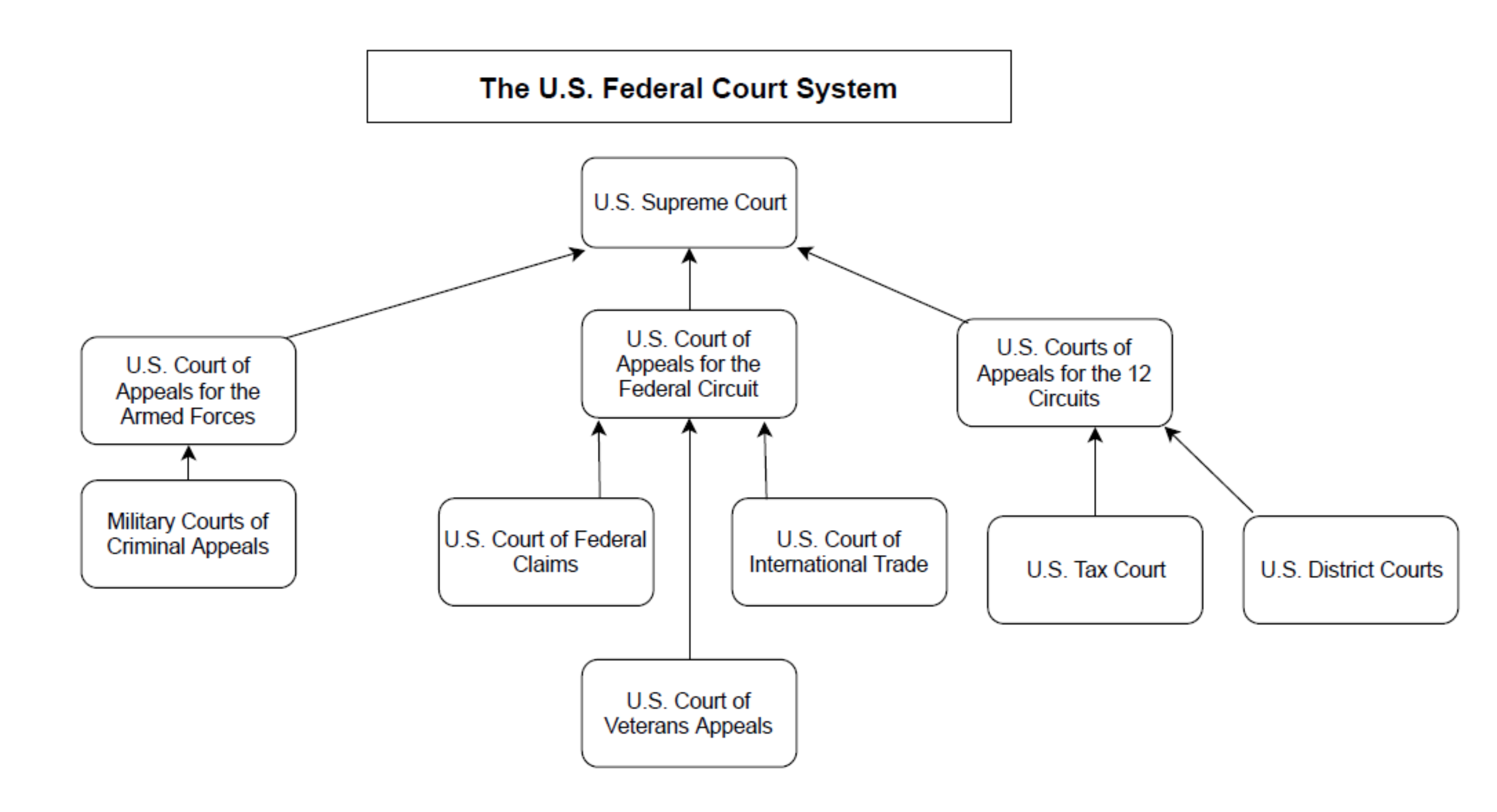
- The Federal Circuit: Unlike the 12 regional circuits, the Court of Appeals for the Federal Circuit possesses nationwide jurisdiction defined by specialized subject matter rather than geographic boundaries. Established under the Federal Courts Improvement Act of 1982, the Federal Circuit hears appeals regarding patent law, international trade, federal government contracts, veterans' claims, federal personnel claims, and monetary claims against the U.S. government (originating from the U.S. Court of Federal Claims).
- Supreme Court of the U.S.
- 12 Regional Circuit Courts (1st - 11th & D.C. Circuit)
- U.S. District Courts & Federal Agencies
- U.S. Court of Appeals for the Federal Circuit
- Specialized Courts (Claims, Patent Office, Trade, etc.)
- 12 Regional Circuit Courts (1st - 11th & D.C. Circuit)
Jurisdiction and Appellate Procedures
Appellate litigation before the courts of appeals follows formal procedures governed by the Federal Rules of Appellate Procedure and local circuit rules. Understanding how these courts operate requires examining the procedural steps that bring a case from trial to appeal.
Notice of Appeal and Briefing Phase
To initiate an appeal, the appellant (the party challenging the trial court's order) must file a Notice of Appeal in the district court within a strict statutory deadline—typically 30 days after the entry of judgment in civil cases (or 60 days if the U.S. government is a party), and 14 days in criminal cases.
Once the appeal is docketed, both parties submit written briefs:
- Appellant’s Brief: Details procedural or substantive legal errors made by the trial judge and explains why the decision should be reversed or remanded.
- Appellee’s Brief: Responds to the appellant's arguments, contending that the trial judge applied the law correctly or that any error was harmless.
- Reply Brief: The appellant receives a final opportunity to address points raised in the appellee's brief.
Decision-Making by Three-Judge Panels
Unlike trial courts presided over by a single judge, appeals are assigned to a three-judge panel randomly drawn from the active (and senior) judges sitting on that circuit. The panel reviews the district court's record, trial transcript, evidence, and written briefs.
Oral arguments are granted at the court’s discretion. If scheduled, attorneys present concise arguments—often 15 to 30 minutes per side—and directly answer questions from the panel of judges.
Hearing En Banc
In rare circumstances involving exceptionally significant legal questions or conflicting precedent within the circuit, an appeal may be heard en banc. An en banc hearing brings together all active circuit judges (or a larger designated panel in high-volume circuits like the Ninth) to review and decide a case, potentially overturning prior panel precedents.
Standards of Judicial Review
When reviewing trial court records, intermediate appellate courts do not re-evaluate the credibility of witnesses or substitute their judgment on factual matters. Instead, they apply distinct judicial standards of review based on the type of issue presented:
- De Novo Review: Applied strictly to legal questions, statutory interpretations, and constitutional issues. Under de novo review, the circuit court gives no deference to the trial court's legal conclusions and considers the issue afresh.
- Clear Error Review: Applied to factual findings made by a trial judge sitting without a jury (bench trial). Under Federal Rule of Civil Procedure 52(a), the appellate court accepts trial judges' factual determinations unless firmly convinced that a mistake occurred.
- Abuse of Discretion: Applied to discretionary, procedural, or evidentiary rulings made by the trial court (such as rulings on motion extensions or admissibility of specific witness testimony). The circuit court will overturn the decision only if the lower court acted arbitrarily, unreasonably, or clearly outside its legal boundaries.
- Substantial Evidence: Applied when reviewing decisions originating from administrative agencies or jury verdicts. The appellate court will uphold findings if a reasonable mind might accept the evidence presented as adequate to support the decision.
Federal Circuit Jurisdiction Summary
The following table summarizes the structural organization, scope, and primary responsibilities of the courts of appeals sitting directly below the Supreme Court:
| Court Designation | Geographical Scope | Primary Subject Jurisdiction | Review Body For |
|---|---|---|---|
| 1st - 11th Regional Circuits | 50 U.S. States and Territories divided into 11 regional judicial units | Federal statutes, constitutional law, diversity civil suits, federal crimes | Federal District Courts within their geographic boundaries |
| D.C. Circuit | Washington, D.C. | Federal administrative regulations, executive authority, regulatory actions | D.C. District Court and federal administrative agencies (EPA, FCC, SEC, etc.) |
| Federal Circuit | Nationwide (Non-geographic) | Patent disputes, international trade, government contracts, federal monetary claims | Court of Federal Claims, Patent & Trademark Office, Court of Int'l Trade |
| State Courts of Appeal | Within individual state borders | State constitutional law, state statutes, common law torts and contracts | State trial courts (Superior, Circuit, or District courts) |
Legal Outcomes of Appeals
Once the three-judge panel reaches a decision, the court issues a written opinion. The judgment typically results in one or a combination of the following actions:
- Affirmed: The appellate court agrees with the lower court's ruling, leaving the original judgment in effect.
- Reversed: The appellate court determines the trial court committed a material legal error, overturning the trial court's judgment.
- Vacated: The appellate court sets aside the lower court’s ruling, declaring it void, often instructing the court to re-examine the issue under updated standards.
- Remanded: The appellate court sends the case back to the trial court with specific legal instructions on how to proceed, which may include holding a new trial or recalculating damages.
Circuit court decisions establish legal precedents that are binding on all federal district courts located within that specific circuit’s geographic boundaries. However, a decision by one circuit court is only considered "persuasive authority"—not binding precedent—for other federal circuits.
Circuit Splits and Escalation to the Supreme Court
Because the 13 federal courts of appeals operate independently within their jurisdictions, different circuits occasionally interpret the same federal statute, administrative regulation, or constitutional provision in opposing ways. When two or more circuit courts issue contradictory decisions on the same legal question, this conflict is known as a circuit split.
- Circuit Split
- Circuit A (e.g., 2nd Circuit) Rules Statute Constitutional
- Circuit B (e.g., 5th Circuit) Rules Statute Unconstitutional
- U.S. Supreme Court Grants Certiorari to Resolve National Split
Circuit splits represent one of the primary criteria used by the U.S. Supreme Court when determining whether to grant a Writ of Certiorari. The Supreme Court typically steps in to resolve circuit splits to maintain consistent national application of federal law.
Litigants who lose an appeal in a federal circuit court generally have two legal avenues remaining:
- Petition for Rehearing En Banc: Requesting that all active judges on the circuit court reconsider the panel's ruling.
- Petition for Writ of Certiorari: Requesting that the U.S. Supreme Court review the circuit court's decision.
The Supreme Court receives thousands of certiorari petitions annually but accepts and reviews roughly 70 to 80 cases per term. Therefore, the decision made by the court of appeals below the Supreme Court remains the final legal authority in over 98% of federal cases.
Practical Considerations for Appellate Litigants
Navigating litigation in intermediate appellate courts requires a strategy separate from trial presentation. Key procedural practices include:
1. Issue Preservation at Trial
Appellate courts generally refuse to evaluate legal arguments, objections, or evidentiary challenges that were not properly raised and recorded on the record during trial court proceedings. Unpreserved arguments are considered "waived," except in rare instances of "plain error."
2. Adherence to Appellate Timelines
Appellate deadlines are strictly enforced by clerk offices and judicial panels. Failing to file a Notice of Appeal or an appellant's brief within mandated procedural windows can result in immediate dismissals for lack of jurisdiction.
3. Record-Based Scope
Appellate courts will not accept new evidence, witness testimonies, or affidavits that were omitted from the lower court's trial record. Briefs and arguments must rely entirely on facts established before the trial judge.
Disclaimer: This analysis provides educational information regarding judicial structure and federal rules of appellate procedure. It does not constitute formal legal advice. Litigants seeking representation should consult a licensed appellate attorney within their relevant jurisdiction.
Frequently Asked Questions
What are the federal courts directly below the U.S. Supreme Court called?
The federal intermediate courts directly beneath the U.S. Supreme Court are the United States Courts of Appeals, commonly referred to as federal circuit courts. There are 13 federal appellate courts: 11 numbered regional circuits, the District of Columbia Circuit, and the Federal Circuit.
How many judges sit on a court of appeals panel?
Appeals in federal circuit courts are typically heard and decided by a panel of three judges assigned at random. In rare situations involving conflicting circuit precedent or nationwide legal questions, the entire active bench of judges may rehear a case en banc.
Do the courts of appeals hear witness testimony or hold trials?
No. The courts of appeals do not conduct trials, hear live witness testimony, or review new evidence. They exclusively examine written briefs, the trial court record, and oral arguments from attorneys to determine if the lower court applied the law correctly.
Can a circuit court decision be appealed automatically to the Supreme Court?
No automatic right of appeal exists from a federal court of appeals to the U.S. Supreme Court in nearly all civil and criminal cases. A party must file a petition for a Writ of Certiorari asking the Supreme Court to hear the case, which the Supreme Court accepts entirely at its discretion.
What happens if two different circuit courts disagree on the same law?
When two or more U.S. Courts of Appeals render conflicting legal interpretations of the same constitutional provision, statute, or federal law, a "circuit split" is created. Circuit splits are one of the key factors that prompt the Supreme Court to grant certiorari and resolve the conflict to unify federal precedent.
Next Steps for Litigants and Legal Researchers
If you are considering appealing a trial court decision or analyzing intermediate appellate precedents, consider the following action items:
- Review the Federal Rules of Appellate Procedure: Examine uscourts.gov to ensure full compliance with filing deadlines, page limits, appendix formatting, and procedural standards.
- Identify Circuit-Specific Local Rules: Local rules vary between circuits (e.g., the Fifth Circuit versus the Ninth Circuit). Review local administrative standing orders before drafting appellate submissions.
- Consult an Appellate Specialist: Because appellate courts focus strictly on legal errors, standards of review, and statutory construction, engaging an experienced appellate litigator is highly recommended following an adverse trial court decision.
Image Gallery