Mike Tyson’s Biggest Purse Revealed: A Deep Dive into Iron Mike’s Record Earnings
Mike Tyson’s biggest single-fight guaranteed purse was $35 million, earned for his 2002 heavyweight championship bout against Lennox Lewis. When adjusted for 2026 inflation, this figure represents a staggering value of approximately $6...
Mike Tyson’s biggest single-fight guaranteed purse was $35 million, earned for his 2002 heavyweight championship bout against Lennox Lewis. When adjusted for 2026 inflation, this figure represents a staggering value of approximately $62 million. While Tyson generated hundreds of millions in total career revenue, this specific fight remains his highest disclosed base payout.
Contents
The financial trajectory of Mike Tyson is one of the most storied in professional sports history. From his meteoric rise as the youngest heavyweight champion to his high-profile comeback exhibitions in the mid-2020s, Tyson's ability to command massive "purses"—the guaranteed money paid to a fighter—has rarely been matched. To understand the magnitude of his biggest purse, one must look at the specific deals that defined the era of "Iron Mike."
The Record-Breaking Night: Tyson vs. Lewis (2002)
In June 2002, the boxing world converged on Memphis, Tennessee, for a fight that many believed was years overdue. Mike Tyson challenged Lennox Lewis for the WBC, IBF, and IBO heavyweight titles. Despite Tyson being past his physical prime, his drawing power remained unparalleled.
The fight was a logistical and financial marvel because it required a joint venture between HBO and Showtime, the two rival cable giants that held exclusive contracts with Lewis and Tyson, respectively. This collaboration was almost unprecedented at the time and set the stage for the massive payout.
The $35 Million Guarantee
Tyson was guaranteed $35 million for the Lewis fight. This was a "flat" guarantee, meaning he was promised this amount regardless of the Pay-Per-View (PPV) performance, though upside bonuses often existed in such contracts. At the time, this was one of the largest single-day paydays for any athlete in the world.
The fight generated 1.95 million PPV buys in the United States, producing $106.9 million in revenue. While Tyson lost the fight via an eighth-round knockout, the financial legacy of the event cemented his status as a permanent "A-side" draw. In the context of 2026, where streaming rights and global betting partnerships have shifted the boxing economy, a $35 million guarantee for a challenger remains a rare benchmark.
The Holyfield Rematch and the $30 Million Threshold
Before the Lewis fight, Tyson’s peak earnings revolved around his legendary rivalry with Evander Holyfield. The 1997 rematch, famously known as "The Bite Fight," saw Tyson earn a guaranteed $30 million.
Financial Implications of the "Bite"
While $30 million was the agreed purse, Tyson did not take the full amount home immediately. Following the incident where Tyson bit Holyfield’s ear, the Nevada State Athletic Commission withheld 10% of the purse ($3 million) as a fine and revoked his boxing license. This event highlighted the volatility of Tyson’s earnings; while his "purses" were astronomical, legal fees, fines, and promotional cuts often depleted the final net amount.
Comparison to the First Holyfield Fight
In their first meeting in 1996, Tyson was also guaranteed $30 million, while Holyfield, the underdog, received $12 million. The consistency of Tyson’s $30 million floor during the late 90s demonstrated his total control over the boxing market, as he was able to command these figures even after serving time in prison and losing his world titles.
The Modern Era: Tyson vs. Jake Paul (2024)
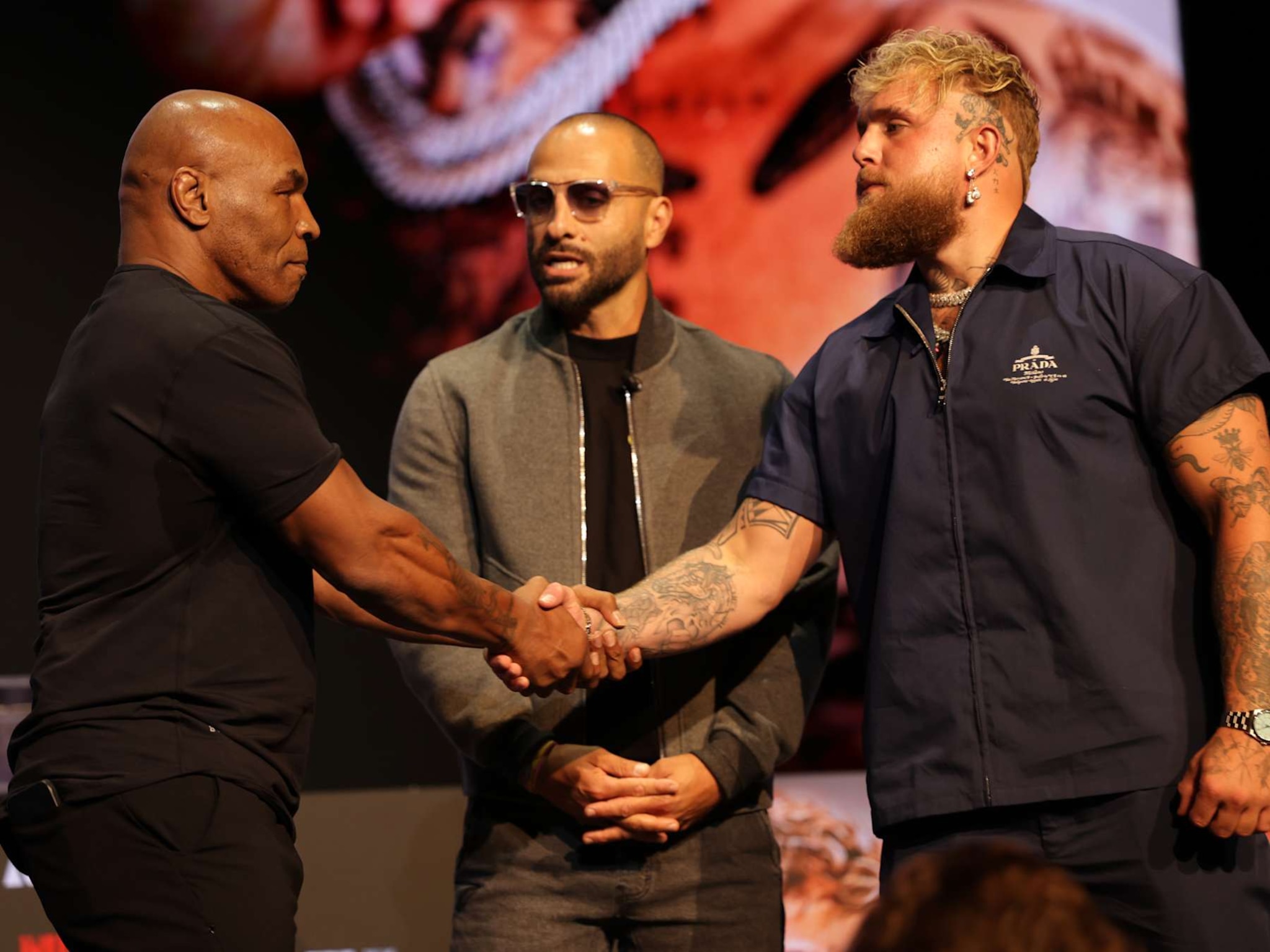
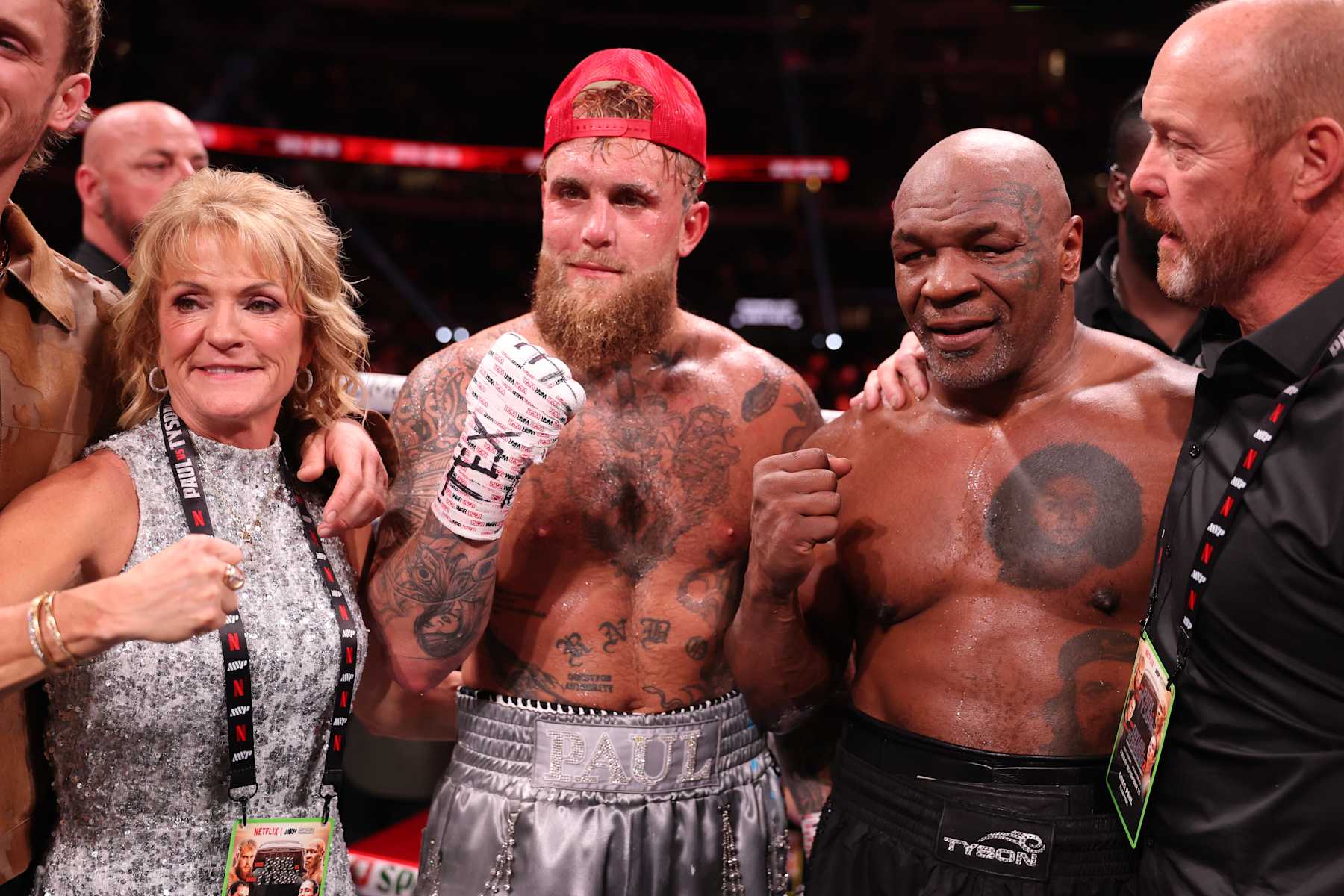
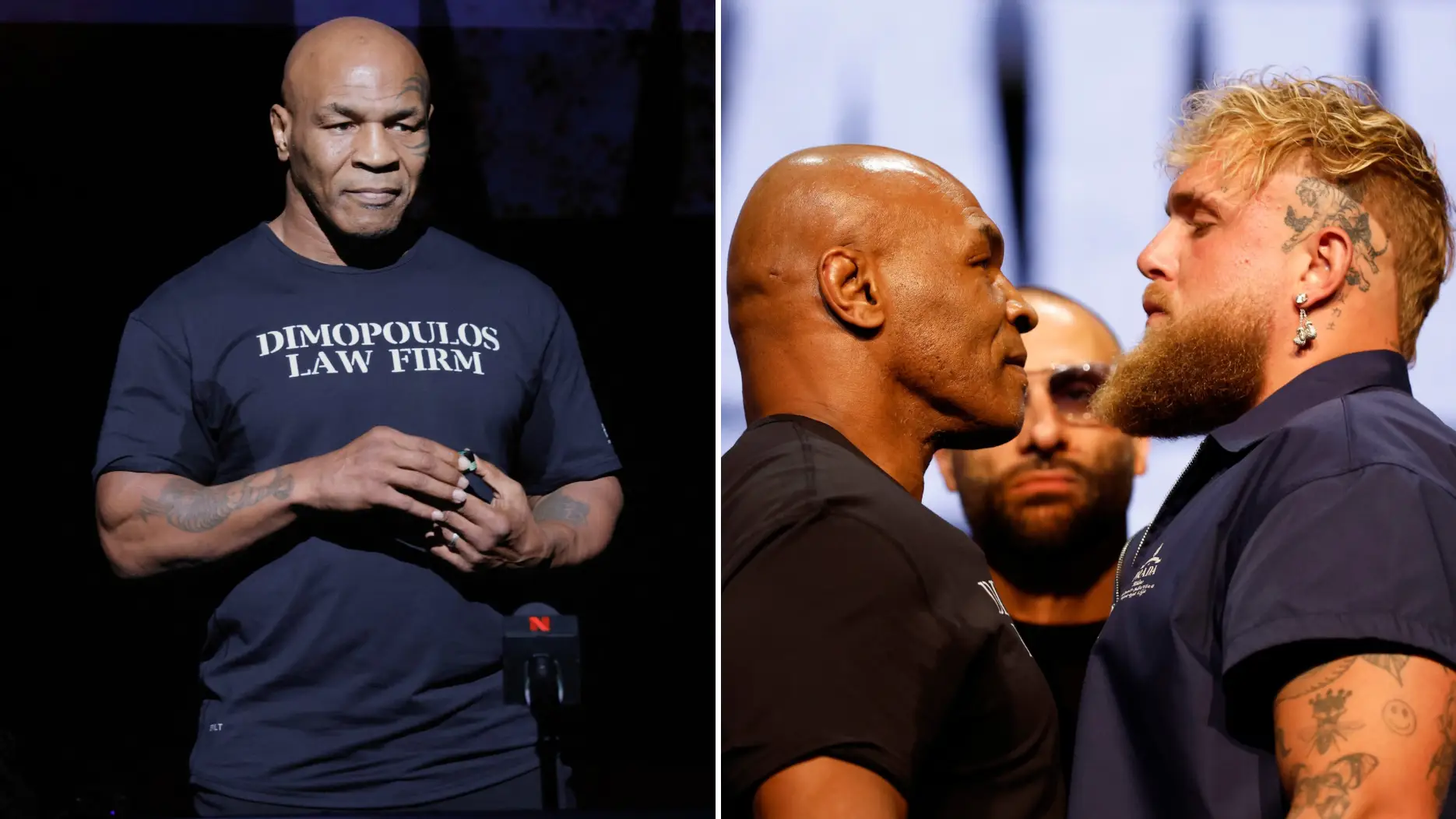
As we look back from 2026, one of the most significant shifts in Tyson’s earning history occurred during his late-career exhibition phase. The November 2024 fight against YouTuber-turned-boxer Jake Paul represented a new frontier in sports broadcasting.
The Netflix Deal
Unlike his previous fights which relied on the traditional PPV model, the clash with Jake Paul was broadcast on Netflix. Reports at the time revealed that Tyson’s purse for the exhibition was approximately $20 million.
While $20 million is lower than his 2002 peak in nominal dollars, it is remarkably high for an athlete in his late 50s. The deal was structured differently than the "Iron Mike" era, focusing on global streaming reach rather than individual $75–$100 PPV purchases. This fight proved that the "Tyson" brand remained one of the most lucrative intellectual properties in combat sports, even decades after his professional retirement.
Historical Comparison of Mike Tyson’s Major Purses
The following table outlines the disclosed guaranteed purses for Mike Tyson’s most financially significant fights. These figures represent the base guarantee and do not include additional percentages of the PPV gate or international television rights, which often added millions more to his total take-home pay.
| Year | Opponent | Guaranteed Purse (Nominal) | Adjusted for Inflation (2026 Est.) |
|---|---|---|---|
| 1988 | Michael Spinks | $22,000,000 | ~$58,000,000 |
| 1991 | Razor Ruddock II | $15,000,000 | ~$35,000,000 |
| 1995 | Peter McNeeley | $25,000,000 | ~$52,000,000 |
| 1996 | Evander Holyfield I | $30,000,000 | ~$60,000,000 |
| 1997 | Evander Holyfield II | $30,000,000 | ~$59,000,000 |
| 2002 | Lennox Lewis | $35,000,000 | ~$62,000,000 |
| 2020 | Roy Jones Jr. (Exh.) | $10,000,000 | ~$12,500,000 |
| 2024 | Jake Paul (Exh.) | $20,000,000 | ~$21,500,000 |
Factors That Influenced Tyson’s Payouts
To understand why Tyson’s purses were so high, one must look at the specific market conditions of the 1980s, 90s, and early 2000s. Several factors allowed him to "reveal" such massive numbers.
1. The Don King and Showtime Era
Tyson’s career was largely managed by Don King, who, despite legal controversies, was a master at inflating the "spectacle" of a heavyweight fight. In 1991, Tyson signed a massive deal with Showtime worth a reported $120 million for several fights. This locked in high guarantees regardless of the opponent's stature, which is why Tyson was able to earn $25 million for fighting Peter McNeeley—a fighter significantly lower in rank than Tyson’s previous opponents.
2. Heavyweight Dominance
During Tyson's prime, the heavyweight division was the "glamour division" of sports. Before the rise of the UFC and the lighter-weight dominance of Floyd Mayweather Jr., the heavyweight champion was arguably the most famous athlete on the planet. This cultural saturation allowed Tyson to demand purses that dwarfed those of other champions in lower weight classes.
3. The "Intimidation" Factor as a Product
Tyson didn't just sell boxing; he sold the "knockout." The brevity of many of his fights—some lasting less than 91 seconds—actually increased his value. Fans were willing to pay record-breaking sums for a PPV just for the chance to see a historic, one-punch finish. This created a high-velocity economy around his fights.
The Gap Between Purse and Net Worth
It is a common misconception that a $35 million purse equates to $35 million in the bank. For Mike Tyson, the reveal of these massive purses often stood in stark contrast to his actual financial standing. By 2003, just one year after his record $35 million payday against Lennox Lewis, Tyson filed for Chapter 11 bankruptcy.
The erosion of these purses was caused by several factors:
- Promotional Fees: Managers and promoters (like Don King) often took 20% to 50% of the total revenue.
- Training Expenses: Top-tier camps, sparring partners, and security could cost hundreds of thousands of dollars per fight.
- Tax Obligations: Tyson faced significant issues with the IRS, which eventually claimed a large portion of his peak earnings to settle back taxes.
- Lifestyle Spending: Tyson’s legendary spending on mansions, luxury cars, and Siberian tigers quickly liquidated even the largest purses.
In 2026, Tyson’s financial story is often used as a case study for modern athletes on the importance of wealth management versus raw earning power.
Frequently Asked Questions
What was Mike Tyson's total career earnings?
While exact figures vary due to undisclosed PPV shares, most financial analysts estimate that Mike Tyson earned between $400 million and $430 million throughout his professional career. However, due to mismanagement and high spending, he famously declared bankruptcy in 2003 with $23 million in debt.
How much did Mike Tyson make for the Jake Paul fight?
Mike Tyson reportedly earned $20 million for his 2024 exhibition match against Jake Paul. This fight was a significant departure from his previous earnings as it was funded by Netflix as part of their live sports expansion, rather than a traditional Pay-Per-View model.
Is the $35 million purse from the Lewis fight the highest in boxing history?
No. While $35 million was a record for its time, it has since been eclipsed by Floyd Mayweather Jr. and Manny Pacquiao. Mayweather, for example, earned a guaranteed $100 million for his 2015 fight against Pacquiao and reportedly over $275 million for his 2017 fight against Conor McGregor when PPV shares were included.
Did Mike Tyson keep his full purse from the Holyfield "Bite Fight"?
No. The Nevada State Athletic Commission fined Tyson $3 million (10% of his $30 million purse) and revoked his license following the 1997 ear-biting incident. This remains one of the largest fines ever levied against a professional athlete in a competitive setting.
How do Mike Tyson's purses compare to modern UFC fighters?
Historically, Tyson’s purses are significantly higher than those of most UFC fighters. Even in 2026, very few MMA athletes receive a $30 million or $35 million base guarantee. Most high-earning UFC fighters rely heavily on "PPV points" to reach those levels, whereas Tyson was often guaranteed those sums before a single ticket was sold.
Practical Recommendation for Further Research
If you are investigating the financial history of professional boxing, it is recommended to consult the Nevada State Athletic Commission (NSAC) archives for official fight contracts. While "revealed" purses in the media are often accurate, the official filings provide the exact base guarantee versus the expected PPV bonuses. Additionally, examining the 2003 bankruptcy filings of Mike Tyson provides a transparent, legally-verified look at where his record-breaking purses were spent and how the boxing industry’s financial structures operated during that era.
Image Gallery