What Is Included in General Damages for Auto Accident Claims?
In auto accident claims, general damages represent the non-monetary, subjective losses an individual experiences following a collision. These include compensation for physical pain and suffering, emotional distress, loss of enjoyment o...
In auto accident claims, general damages represent the non-monetary, subjective losses an individual experiences following a collision. These include compensation for physical pain and suffering, emotional distress, loss of enjoyment of life, physical impairment, disfigurement, and loss of consortium. Unlike special damages, which cover quantifiable costs like medical bills, general damages address the intangible impact the injury has on a victim's quality of life.
Contents
Understanding the Distinction Between General and Special Damages
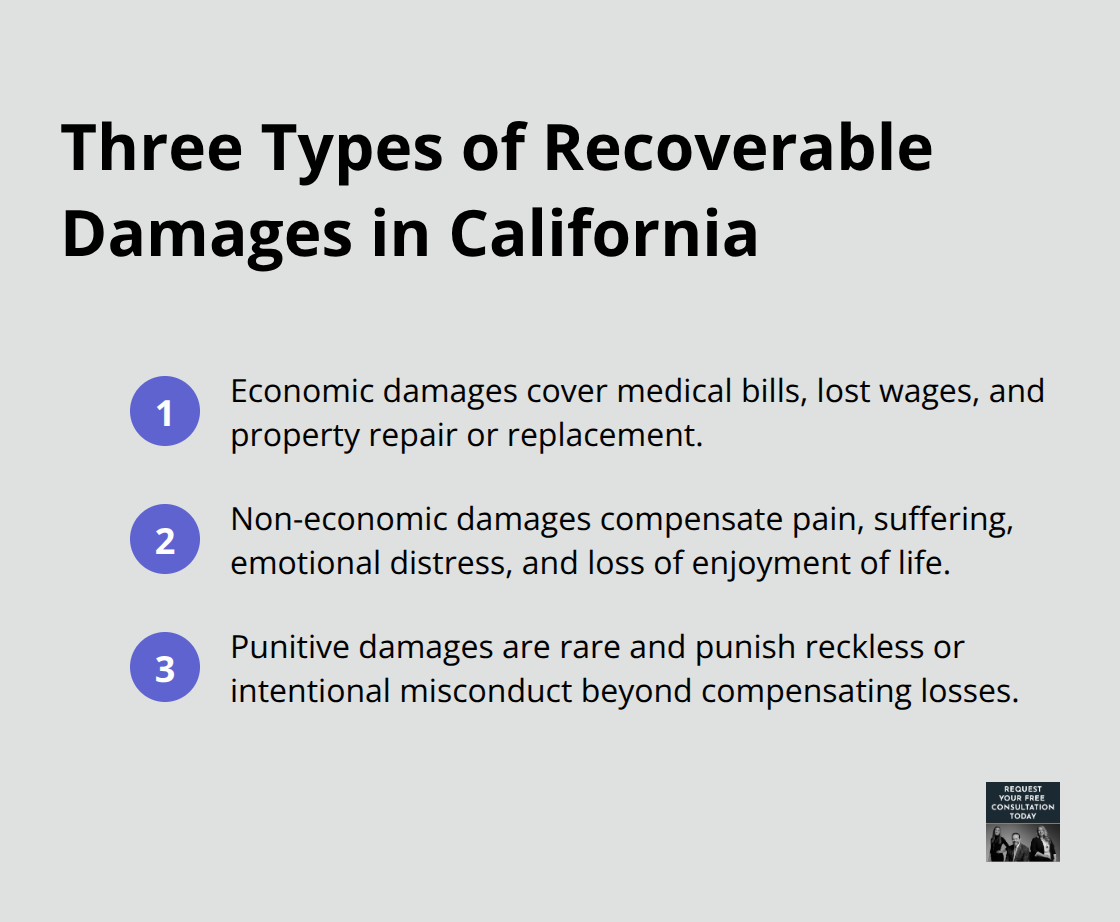
To navigate an insurance claim or personal injury lawsuit in 2026, it is vital to distinguish between the two primary categories of compensatory damages: special and general. While both aim to "make the plaintiff whole," they approach the concept of loss from different angles.
Special damages, also known as economic damages, are the easily quantifiable financial losses. These include receipts for emergency room visits, invoices for vehicle repairs, and documented lost wages from missed workdays. Because these have a clear "price tag," they are rarely the most contentious part of a settlement negotiation.
General damages, or non-economic damages, are inherently subjective. There is no standard invoice for the trauma of a high-speed collision or the chronic back pain that prevents a parent from lifting their child. Because these losses are unique to the individual, calculating them requires a nuanced look at the victim’s life before and after the accident. In legal terms, these damages are "presumed" to flow from the injury, but the specific dollar amount must be argued based on the severity and duration of the suffering.
Core Components of General Damages
General damages are not a monolithic block; they are composed of several distinct types of intangible loss. Understanding each component helps claimants and legal professionals build a more comprehensive demand package.
Physical Pain and Suffering
This is the most common element of general damages. It encompasses the actual physical discomfort caused by the accident and the subsequent medical treatments. It covers both the immediate sharp pain of the injury and the lingering, chronic discomfort that may persist for months or years. For instance, a victim with a spinal cord injury experiences pain not just from the initial impact, but from the grueling physical therapy sessions required during recovery.
Emotional Distress and Mental Anguish
Modern personal injury law increasingly recognizes the psychological toll of motor vehicle accidents. Emotional distress includes anxiety, depression, post-traumatic stress disorder (PTSD), sleep disturbances, and the "loss of peace of mind." If a victim develops a fear of driving or experiences recurring nightmares about the crash, these are compensable forms of mental anguish. In 2026, psychiatric evaluations and therapy records are standard tools used to substantiate these claims.
Loss of Enjoyment of Life
When an injury prevents a person from participating in hobbies, exercise, or social activities they once loved, they have suffered a "loss of enjoyment of life." For example, if an avid marathon runner suffers a knee injury that prevents them from ever running again, the loss extends far beyond the medical cost of the surgery. It includes the loss of the mental and physical fulfillment that running provided.
Physical Impairment and Disfigurement
This category addresses the permanent changes to a person’s body. Disfigurement refers to visible scarring or loss of limbs, which can lead to significant psychological trauma and social withdrawal. Physical impairment refers to the loss of function, such as limited range of motion in a limb or the loss of eyesight. These damages are often valued highly because they are permanent reminders of the trauma.
Loss of Consortium
Loss of consortium claims are typically filed by the spouse or family members of the injured party. They compensate for the loss of companionship, affection, comfort, and even the ability to maintain a sexual relationship. While the injured person is the primary victim, the law recognizes that their inability to participate in family life affects their closest relations.
How General Damages are Calculated in 2026
Since there are no receipts for pain, insurance adjusters and attorneys use specific formulas to estimate the value of general damages. While the industry has seen an increase in AI-driven "valuation models" by 2026, the traditional methods still provide the framework for negotiations.
The Multiplier Method
The most common approach is the multiplier method. Here, the total amount of special damages (medical bills and lost wages) is multiplied by a number—typically between 1.5 and 5.
- A 1.5 multiplier might be used for a minor "soft tissue" injury like whiplash that heals in a few weeks.
- A 5.0 multiplier (or higher) is reserved for catastrophic injuries involving permanent disability or extreme suffering.
The choice of multiplier depends on the severity of the injury, the clarity of the defendant's liability, and the impact on the victim's daily life.
The Per Diem Method
The "per diem" (per day) method assigns a specific dollar value to each day the victim suffers from their injuries. This daily rate is often tied to the victim’s actual daily earnings. For example, if a victim earns $300 a day and remains in significant pain for 100 days, the general damages might be calculated at $30,000. This method is often more effective for short-term recoveries where the pain is intense but has a clear end date.
Comparative Overview of Damage Types
| Feature | Special Damages (Economic) | General Damages (Non-Economic) |
|---|---|---|
| Quantifiability | High; based on receipts and bills | Low; based on subjective experience |
| Examples | Medical bills, car repairs, lost wages | Pain and suffering, anxiety, scarring |
| Evidence Used | Invoices, pay stubs, tax returns | Journals, witness testimony, psych reports |
| Calculation | Direct addition of costs | Multiplier or Per Diem formulas |
| Predictability | Generally predictable | Highly variable; jury-dependent |
Factors That Influence the Value of Your Claim
The amount awarded for general damages is not a fixed percentage. Several qualitative factors can significantly drive the valuation up or down.
- Severity of the Injury: A fractured femur is objectively more painful and restrictive than a bruised rib. The more invasive the treatment (e.g., surgeries vs. physical therapy), the higher the general damages.
- Length of Recovery: A victim who requires two years of rehabilitation will naturally receive higher compensation than someone who recovers in two months.
- Consistency of Medical Treatment: Insurance adjusters look for "gaps in treatment." If a victim stops going to the doctor, the insurer will argue that the pain was not significant enough to warrant high general damages.
- Impact on Career and Lifestyle: If an injury forces a professional pianist to change careers, the general damages for "loss of enjoyment" and "impairment" will be substantial compared to a victim whose career is unaffected.
- Credibility and Testimony: The way a victim describes their pain can influence a jury or adjuster. Sincere, documented accounts of how the injury changed their life are more effective than vague complaints.
Proving General Damages: The Role of Evidence
Because general damages are subjective, the burden of proof is high. You must provide a "preponderance of evidence" that the suffering is real and significant. In 2026, this evidence often goes beyond traditional medical records.
- Pain Journals: Keeping a daily log of pain levels, emotional states, and activities that could not be performed provides a "real-time" look at the suffering.
- Witness Testimony: Friends, family members, and colleagues can testify to the changes they have observed in the victim’s personality, mood, and physical capabilities.
- Expert Medical Testimony: Physicians can explain the biological basis for the pain, while vocational experts can testify about how physical impairments limit life activities.
- Mental Health Records: Documentation from psychologists or counselors is essential for proving emotional distress and PTSD.
Legal Hurdles and Jurisdictional Limits
It is important to note that the availability of general damages can be limited by state law. Some jurisdictions have "damage caps" on non-economic awards, particularly in states with aggressive tort reform.
Additionally, in "no-fault" insurance states, victims may be barred from seeking general damages unless their injuries meet a specific "tort threshold"—usually defined as a permanent injury, significant disfigurement, or medical expenses exceeding a certain dollar amount. In 2026, staying informed about local statutes is critical, as these thresholds are frequently adjusted for inflation and legislative policy shifts.
FAQ
Can I get general damages if I was partially at fault?Yes, in most states that follow "comparative negligence" rules. However, your total compensation—including general damages—will be reduced by your percentage of fault. For example, if you are 20% at fault and your general damages are valued at $100,000, you would receive $80,000.
Are general damages taxable?Generally, no. Under federal law, compensation received for physical injuries and the emotional distress flowing from those injuries is typically tax-exempt. However, punitive damages or interest on an award may be taxable. It is always best to consult a tax professional regarding specific settlements.
How long does it take to settle the general damages portion of a claim?General damages are usually the last part of a claim to be settled. Most attorneys recommend waiting until the victim reaches "Maximum Medical Improvement" (MMI). This ensures that the full extent of the long-term pain and suffering is known before a final demand is made.
Is "pain and suffering" the same as "general damages"?Pain and suffering is the largest component of general damages, but the terms are often used interchangeably in casual conversation. Legally, general damages is the umbrella term that also includes loss of consortium, disfigurement, and emotional distress.
Do insurance companies use AI to calculate these damages?By 2026, many insurers use sophisticated algorithms and historical data to suggest a "range" for general damages. However, these systems often fail to account for the unique human elements of a case, which is why manual negotiation by an experienced attorney remains essential.
Practical Recommendation
If you are involved in an auto accident claim, do not accept a "quick settlement" from an insurance company before you have a clear understanding of your long-term prognosis. General damages often represent the largest portion of a settlement in serious injury cases. To maximize this value, maintain a detailed daily journal of your physical and emotional struggles, follow all medical advice without interruption, and consult with a legal professional who can apply the appropriate multiplier or per diem calculations to your specific circumstances.
Image Gallery