Important Cities in Ancient Egypt: Capitals, Cult Sites, and Urban Hubs
The important cities of ancient egypt—including Memphis, Thebes, Alexandria, Heliopolis, Abydos, and Pi-Ramesses—served as administrative capitals, sacred cult centers, and vital trade hubs along the Nile River. These urban centers sha...
The important cities of ancient egypt—including Memphis, Thebes, Alexandria, Heliopolis, Abydos, and Pi-Ramesses—served as administrative capitals, sacred cult centers, and vital trade hubs along the Nile River. These urban centers shaped the political power, religious architecture, economic networks, and cultural developments of Egyptian civilization over three millennia.
Contents
The Strategic Urban Landscape of Ancient Egypt
Urban settlement in ancient Egypt developed uniquely compared to other early civilizations. Rather than existing as isolated city-states, Egyptian urban centers operated within a highly centralized nation-state anchored by the Nile River. The geography of the Nile valley created two distinct geopolitical zones: Upper Egypt (the narrow southern river valley) and Lower Egypt (the expansive northern river delta).
Cities in ancient Egypt served four primary functions: administrative governance, religious worship, military defense, and commercial trade. Because the pharaoh was both political monarch and divine intermediary, major administrative capitals doubled as grand religious centers. Over Egypt's long dynastic timeline, the royal seat shifted multiple times between Upper and Lower Egypt depending on political unification, security threats, and dynastic origins.
The stability of these cities depended entirely on proximity to the Nile's annual inundation, access to agricultural hinterlands, and control over regional trade routes leading to the Sinai Peninsula, the Red Sea, Nubia, and the broader Mediterranean basin.
The Dynastic and Administrative Capitals
- Ancient Egyptian Urban System
- Lower Egypt Capitals
- Memphis
- Pi-Ramesses
- Alexandria
- Upper Egypt Capitals
- Thebes (Waset)
- Hierakonpolis
- Frontier & Sacred Sites
- Abydos (Osiris Cult)
- Elephantine (Southern Gateway)
- Heliopolis (Solar Center)
- Lower Egypt Capitals
Memphis: The First Capital of Unified Egypt
Founded around 3100 BCE by King Menes (Narmer) following the unification of Upper and Lower Egypt, Memphis (originally Inebu-hedj, meaning "The White Walls") occupied a prime strategic position at the apex of the Nile Delta, just south of modern Cairo. This location allowed royal administrators to monitor both the Delta region and the southern river valley.
Memphis served as the imperial capital throughout the Old Kingdom (c. 2686–2181 BCE), the era of monument building that produced the great pyramid fields of Giza, Saqqara, Dahshur, and Abusir. The city was the primary cult center for Ptah, the patron god of craftsmen, architects, and creation. The Great Temple of Hut-ka-Ptah ("Enclosure of the Ka of Ptah") was one of the largest religious complexes in the city; its name influenced the Greek word Aegyptos, from which the modern name "Egypt" derives.
Even when political power shifted to Thebes or Delta cities in later periods, Memphis remained Egypt's secondary capital, major military garrison, and essential administrative center until the founding of Alexandria.
Thebes (Waset): The Religious and Imperial Powerhouse
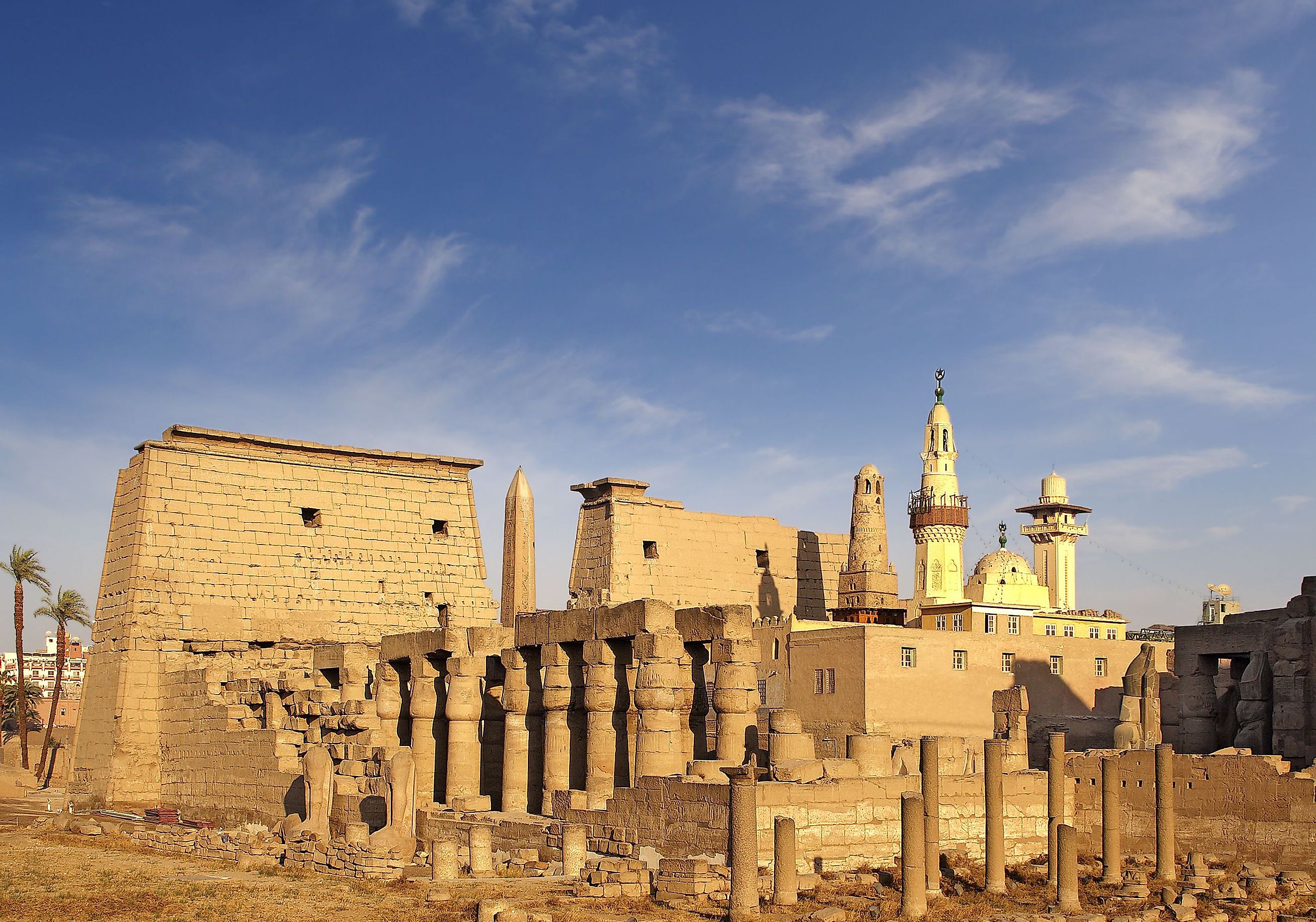
Known to the ancient Egyptians as Waset ("City of the Scepter") and to the ancient Greeks as Thebai, Thebes became the dominant metropolis of Upper Egypt during the Middle Kingdom and reached its absolute zenith during the New Kingdom (c. 1550–1077 BCE). Located along a dramatic bend in the Nile in modern-day Luxor, Thebes grew from a provincial town into the wealthy political and religious heart of the empire.
The city was dedicated to the triad of Amun, his consort Mut, and their son Khonsu. As the pharaohs of the 18th, 19th, and 20th Dynasties expanded Egyptian influence into the Levant and Nubia, tribute flowed directly into the treasuries of Thebes.
The city was divided into two distinct functional zones:
- East Bank of the Nile: The domain of the living, featuring the massive architectural complexes of Karnak Temple and Luxor Temple, connected by an avenue of sphinxes.
- West Bank of the Nile: The domain of the dead, hosting royal mortuary temples (such as Deir el-Bahari and the Ramesseum) and deep subterranean royal tombs cut into the desert cliffs at the Valley of the Kings and Valley of the Queens.
Thebes lost its status as the political capital when 19th and 20th Dynasty pharaohs moved the royal court north, but it remained Egypt's spiritual center for centuries. Today, the monumental ruins of ancient Thebes are designated as a UNESCO World Heritage Site.
Pi-Ramesses: The Delta Fortress of Ramesses II
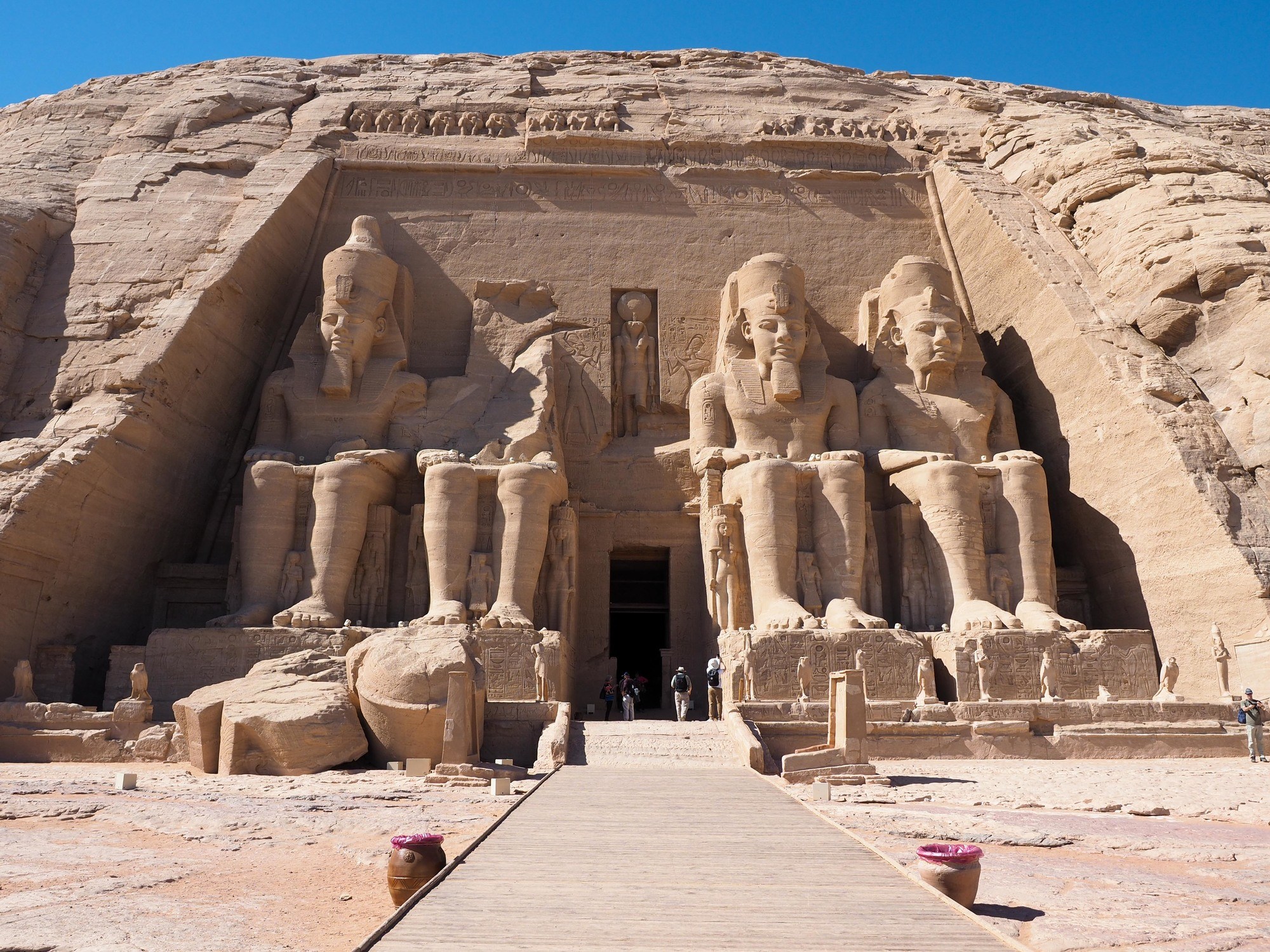
During the 19th Dynasty, Pharaoh Ramesses II constructed a brand-new imperial capital named Pi-Ramesses (Per-Ramweswes-mery-Amun, meaning "House of Ramesses, Beloved of Amun") at the site of modern Qantir in the northeastern Nile Delta. Built near the older Hyksos capital of Avaris, Pi-Ramesses placed the Egyptian royal court close to Egypt's vassal states in Syria-Palestine and enabled swift military deployments along the Way of Horus coastal road.
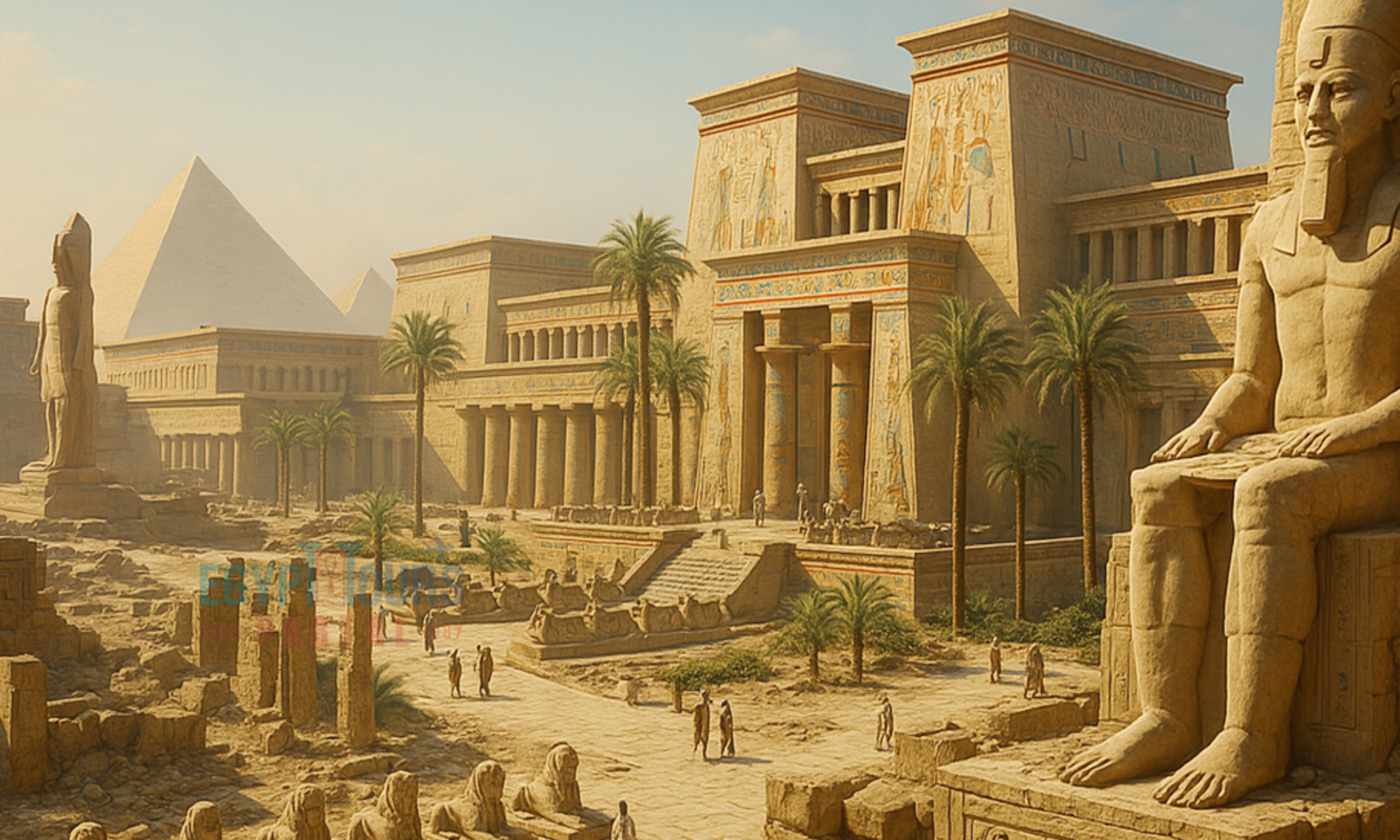
Pi-Ramesses was a sprawling metropolis featuring grand palaces, expansive military barracks, training grounds for war chariots, and vast bronze foundries. However, during the 21st Dynasty, the Pelusiac branch of the Nile silted up, cutting the city off from fresh water and river trade. Egyptian engineers stripped the temples and palaces of their stone blocks and statues, transporting them to nearby Tanis, which served as the capital of the 21st and 22nd Dynasties.
Alexandria: The Hellenistic Metropolis
Founded by Alexander the Great in 331 BCE on the western edge of the Nile Delta, Alexandria represented a radical departure from traditional Egyptian urban design. Designed by the architect Dinocrates on a grid system, Alexandria became the Mediterranean capital of the Ptolemaic Kingdom and later Roman Egypt.
Alexandria functioned as a bridge between the classical Mediterranean world and Egyptian traditions. It hosted monumental structures of antiquity, including:
- The Pharos of Alexandria: A massive lighthouse counted among the Seven Wonders of the Ancient World.
- The Great Library of Alexandria and the Serapeum: International centers of classical scholarship, mathematics, medicine, and philosophy.
- The Royal Quarter: Home to the Ptolemaic royal family, including Cleopatra VII.
Unlike interior river cities, Alexandria was a deep-water port that dominated Mediterranean maritime commerce, exporting Egyptian grain, papyrus, and luxury goods throughout the Greco-Roman world.
Sacred Cult Centers and Specialized Cities
- Specialized Urban Roles
- Solar Theology (Heliopolis)
- Center of Ra/Atum
- Priestly academy
- Osirian Cult (Abydos)
- Osiris Burial Site
- Royal Necropolis
- Sun-Disk Experiment (Akhetaten / Amarna)
- Single-god devotion
- Rapid build/abandonment
- Solar Theology (Heliopolis)
Heliopolis: The Center of Solar Theology
Located northeast of modern Cairo, Heliopolis (ancient Iunu, meaning "The Pillars") was the sacred center of Egyptian solar worship. Dedicated to the sun god Ra (and his combined forms Ra-Horakhty and Atum), Heliopolis played an indispensable role in developing Egyptian theology, creation myths, and calendar systems.
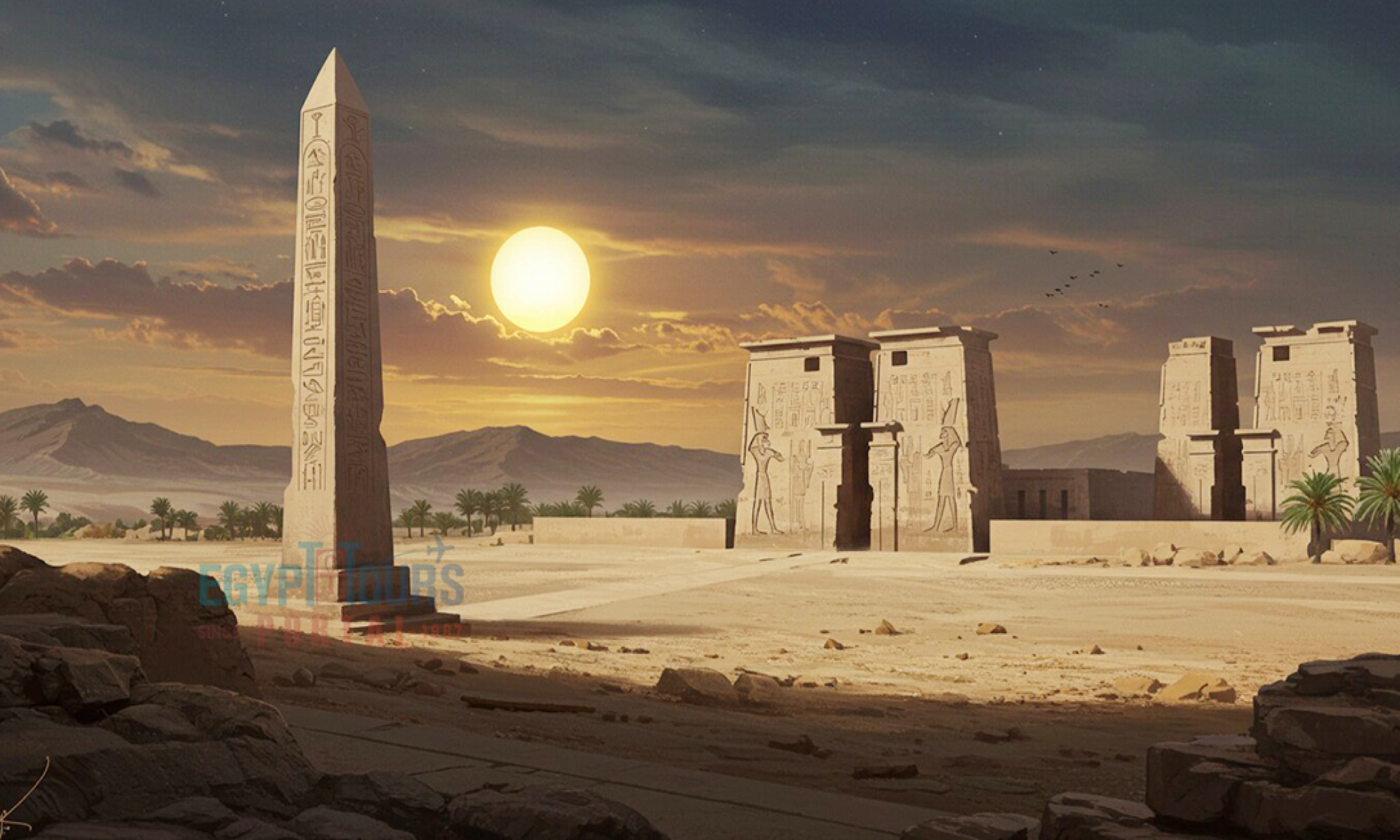
Although Heliopolis rarely served as Egypt's political capital, its high priests exercised immense political influence. Pharaohs across all dynasties erected obelisks and temples at Heliopolis to legitimize their rule as the literal "Sons of Ra." The city housed vast libraries and schools of astronomy, mathematics, and theology, drawing scholars from across the ancient Mediterranean.
Abydos: The Sacred City of Osiris
Situated in Upper Egypt northwest of Thebes, Abydos (ancient Abdju) was one of Egypt's oldest and most sacred religious landscapes. It served as the burial site for the pharaohs of the First and Second Dynasties at Umm el-Qa'ab.
By the Middle Kingdom, Abydos became the primary cult site for Osiris, god of the underworld and afterlife resurrection. Egyptians believed that the head of Osiris was buried at Abydos, making the city the ultimate pilgrimage destination. Thousands of Egyptians traveled to Abydos annually to participate in the Mysteries of Osiris, erecting votive stelae and cenotaphs to secure their own eternal life.
The site features the grand Temple of Seti I, famous for its detailed relief carvings and the Abydos King List, a carved wall inscription listing seventy-six historic pharaohs that remains a foundational document for modern Egyptologists.
Akhetaten (Amarna): The Revolutionary Experiment
Founded around 1346 BCE by the pharaoh Amenhotep IV (who renamed himself Akhenaten), Akhetaten ("Horizon of the Aten") was built in a virgin desert site in Middle Egypt, known today as Amarna. Akhenaten created the city to serve as the exclusive cult center for his newly introduced solar deity, the Aten (the physical sun disk).
Akhetaten was designed rapidly using standardized, small limestone blocks (talatat). The city featured open-air temples designed to absorb direct sunlight, wide avenues for royal processions, and distinct residential quarters for nobles, artisans, and workers.
The city's existence was brief. Following Akhenaten's death around 1336 BCE, his successor Tutankhamun restored the traditional polytheistic religion and abandoned Akhetaten, returning the administrative capital to Memphis and the religious center to Thebes. Subsequent rulers dismantled Akhetaten's buildings, leaving an undisturbed archaeological footprint that provides modern historians with an unparalleled look at ancient Egyptian urban layout and daily life.
Frontier Posts and Trade Hubs
Elephantine and Swenet (Aswan): The Southern Border
Located at the First Cataract of the Nile in southern Upper Egypt, Elephantine (ancient Abu) and its neighboring mainland city Swenet (modern Aswan) formed ancient Egypt's permanent southern frontier. The First Cataract created a natural barrier of granite boulders and rapids, making river navigation difficult and establishing a clear border between Egypt and Nubia.
Elephantine was a critical hub for trade, military garrisons, and stone quarrying. Nubian ivory, gold, ebony, incense, and exotic animal skins entered Egypt through its markets. The island housed the cult of Khnum, the ram-headed god of the cataracts who was believed to control the annual flooding of the Nile. Elephantine is also famous for its surviving ancient Nilometers—stone staircases descending into the river used to measure water levels and predict annual harvest yields for tax assessment.
Tanis: The Northern Gateway of the Late Period
Following the silting of Pi-Ramesses' water supply, Tanis (ancient San el-Hagar) rose to prominence in the northeastern Delta as the capital of Egypt during the Third Intermediate Period (21st and 22nd Dynasties). Rulers in Tanis built massive temple complexes dedicated to Amun, Mut, and Khonsu, mimicking the religious landscape of Thebes.
In 1939, French archaeologist Pierre Montet discovered the royal tombs of Tanis intact inside the temple precinct. The silver coffins, golden burial masks, and jewelry of Pharaoh Psusennes I and Shoshenq II revealed the architectural richness of this northern Delta capital.
Comparative Matrix of Ancient Egypt’s Core Cities
| City Name | Ancient Name | Geographic Zone | Primary Era of Prominence | Main Religious Cult | Key Architectural Features |
|---|---|---|---|---|---|
| Memphis | Inebu-hedj / Mennefer | Apex of Nile Delta | Old Kingdom (c. 2686–2181 BCE) | Ptah | Great Temple of Ptah, Pyramids of Giza & Saqqara |
| Thebes | Waset | Upper Egypt | Middle & New Kingdoms (c. 2055–1077 BCE) | Amun-Ra | Karnak Temple, Luxor Temple, Valley of the Kings |
| Heliopolis | Iunu | Lower Egypt | Early Dynastic through Ptolemaic Era | Ra / Atum | Solar Obelisks, Great Temple of Ra |
| Abydos | Abdju | Upper Egypt | Early Dynastic & Middle Kingdom | Osiris | Royal Tombs of 1st Dynasty, Temple of Seti I |
| Pi-Ramesses | Per-Ramesses | Eastern Nile Delta | 19th–20th Dynasties (New Kingdom) | Amun / Seth / Ramesses II | Chariot Barracks, Palaces, Bronze Foundries |
| Akhetaten | Amarna | Middle Egypt | Amarna Period (c. 1346–1336 BCE) | The Aten | Open-air Aten Temples, Boundary Stelae |
| Elephantine | Abu | Southern Frontier | Old Kingdom through Roman Era | Khnum / Satis / Anuket | Temple of Khnum, Ancient Nilometer |
| Alexandria | Alexandreia | Western Delta Coast | Ptolemaic & Roman Eras (331 BCE–642 CE) | Serapis / Isis | Pharos Lighthouse, Great Library, Serapeum |
Archaeological Preservation and Architectural Evolution
The archaeological record of ancient Egyptian cities reflects a stark material division between sacred monuments and domestic architecture:
- Stone Construction for Eternity: Temples and tombs were constructed using durable granite, sandstone, and limestone because they were intended to endure forever as eternal dwellings for gods and deceased ancestors. Consequently, these monumental structures survive in exceptional detail today at sites like Luxor, Abydos, and Karnak.
- Mud-Brick Construction for the Living: Palaces, administrative offices, military barracks, and private residences were constructed primarily from sun-dried mud bricks made from Nile silt and straw. Over centuries of Nile floods, agricultural expansion, and modern urban development, most ancient residential zones deteriorated into elevated archaeological mounds called tells.
In Lower Egypt and the Nile Delta (where sites like Pi-Ramesses, Heliopolis, and Tanis were situated), high water tables, agricultural cultivation, and shifting river channels destroyed or buried large portions of the mud-brick infrastructure. By contrast, in the hyper-arid climate of Upper Egypt (where sites like Thebes, Abydos, and Amarna are located), organic materials, wall paintings, papyri, and mud-brick ruins have survived in remarkable detail.
Frequently Asked Questions
What was the official capital of ancient Egypt?
Ancient Egypt did not have a single permanent capital throughout its 3,000-year history. The administrative seat shifted based on dynastic origins and political needs. Memphis was the unified nation's first capital during the Old Kingdom. Thebes served as the imperial capital during the Middle and New Kingdoms. Pi-Ramesses, Tanis, Sais, and Alexandria served as capitals during later dynasties and foreign rule.
Why did pharaohs move the capital city so frequently?
Capital cities were relocated primarily for strategic, military, commercial, and dynastic reasons. Relocating north to the Nile Delta (e.g., Pi-Ramesses or Tanis) placed pharaohs closer to international trade routes and military theaters in the Near East. Relocating south to Thebes allowed rulers to consolidate power in Upper Egypt and control trade routes leading into Nubia. In special cases, like Akhetaten, relocations were driven by religious reform.
What is the oldest recorded city in ancient Egypt?
Hierakonpolis (ancient Nekhen), located in Upper Egypt, is recognized as one of the oldest proto-urban sites in Egypt, dating back to the Predynastic period (c. 4000–3100 BCE). It was a major cultural center where early political consolidation occurred, culminating in the unification of Egypt under the First Dynasty.
Where were the royal tombs built relative to these cities?
Ancient Egyptian towns and administrative centers for the living were built on the East Bank of the Nile River, where the sun rises. Royal tombs, necropolises, and pyramid complexes were built on the West Bank, where the sun sets, symbolizing the journey into the afterlife.
What happened to ancient Egyptian cities after the fall of the empire?
Many ancient cities evolved into modern settlements; for example, ancient Thebes developed into modern Luxor, Swenet became Aswan, and ancient Heliopolis was absorbed into greater Cairo. Other cities, such as Akhetaten and Pi-Ramesses, were abandoned due to religious shifts or changing Nile river courses, leaving their structural remains preserved underground for modern archaeological discovery.
Recommended Next Steps for Researchers and Travelers
To explore the urban history of ancient Egypt in greater depth, consider the following practical approaches:
- Field Exploration: When visiting Egypt, structure your itinerary to observe both administrative and sacred landscapes. Spend time on the West Bank of Luxor (ancient Thebes) to examine mortuary architecture, then visit the open-air museum at Saqqara to view the necropolis associated with ancient Memphis.
- Museum Collections: Study urban artifacts, administrative papyri, and architectural elements preserved in major global institutions, including the Grand Egyptian Museum (GEM) in Giza, the Egyptian Museum in Tahrir Square, the British Museum in London, and the Louvre in Paris.
- Academic Literature: Consult published archaeological site reports from institutions such as the Egypt Exploration Society (EES) and the Oriental Institute of the University of Chicago for updated excavation reports on Delta sites like Qantir (Pi-Ramesses) and Tell el-Amarna.
Image Gallery