The Luxury Safe Room for Secure Living: Advanced Engineering Meets High-End Design
A luxury safe room is a fortified residential sanctuary designed to provide ballistic, blast, and intrusion protection while maintaining the aesthetic standards and comfort of a high-end estate. Unlike basic panic rooms, these spaces f...
A luxury safe room is a fortified residential sanctuary designed to provide ballistic, blast, and intrusion protection while maintaining the aesthetic standards and comfort of a high-end estate. Unlike basic panic rooms, these spaces feature integrated life-support systems, sophisticated communication arrays, and bespoke interior finishes designed for long-term habitability during extended security threats or environmental disasters.
Contents
The Evolution of Residential Security in 2026
The concept of the home sanctuary has undergone a significant transformation. In 2026, high-net-worth individuals are moving away from the cramped, utilitarian "panic rooms" of the past toward the luxury safe room for secure living. This shift reflects a broader desire for multi-functional spaces that serve as both a high-security vault and a comfortable living area. Modern safe rooms are no longer just closets reinforced with steel; they are master suites, home offices, or private lounges designed to be occupied for days or even weeks if necessary.
The primary driver for this evolution is the need for comprehensive protection against a diverse range of threats, including sophisticated home invasions, civil unrest, and extreme weather events. By integrating security into the home’s primary architecture, owners ensure that protection is immediate and does not require traversing the property to reach a remote bunker.
Structural Integrity and Ballistic Standards
The foundation of any luxury safe room is its structural resistance. In 2026, engineering standards have standardized around the UL 752 ballistic ratings and FEMA P-361 guidelines for storm shelters. A luxury installation typically targets a minimum of UL 752 Level 8, which provides protection against high-power rifle fire, such as 7.62mm ammunition.
Hardened Materials
Modern constructions utilize a combination of materials to balance weight and thickness:
- Ballistic Steel Plate: Often used in retrofits where space is at a premium. High-hardened steel provides exceptional protection with minimal thickness.
- Reinforced Concrete: Standard for new builds, providing both ballistic and blast resistance.
- Kevlar and Composite Panels: These are used for lighter-weight protection in upper-story installations where floor load capacity is a concern.
- Transparent Armor: Ballistic glass (polycarbonate laminates) allows for visibility without sacrificing security, often used in "soft" safe rooms that function as daily-use sunrooms or offices.
Blast and Forced Entry Resistance
Beyond bullets, the luxury safe room must withstand mechanical breaching attempts. This includes reinforced door frames anchored deep into the structural slab and multi-point locking systems. Doors are often disguised as standard interior doors using custom millwork, yet they possess internal steel cores and electromagnetic locks capable of withstanding thousands of pounds of force.
Life Support and Environmental Control Systems
True "secure living" requires more than just physical walls; it necessitates an independent environment capable of sustaining life when external utilities are compromised.
CBRN Filtration
A critical component of the 2026 luxury safe room is a CBRN (Chemical, Biological, Radiological, and Nuclear) air filtration system. These systems use high-efficiency particulate air (HEPA) filters and activated carbon stages to scrub incoming air of contaminants. Advanced units include overpressure valves, which create a positive pressure environment inside the room to prevent unfiltered air from leaking in through microscopic gaps.
Off-Grid Power and Water
Reliability is the hallmark of luxury security. Integrated power solutions typically involve:
- Dedicated Battery Arrays: Solid-state battery systems or high-capacity lithium-ion banks (such as the latest iterations of the Tesla Powerwall) provide silent, immediate power.
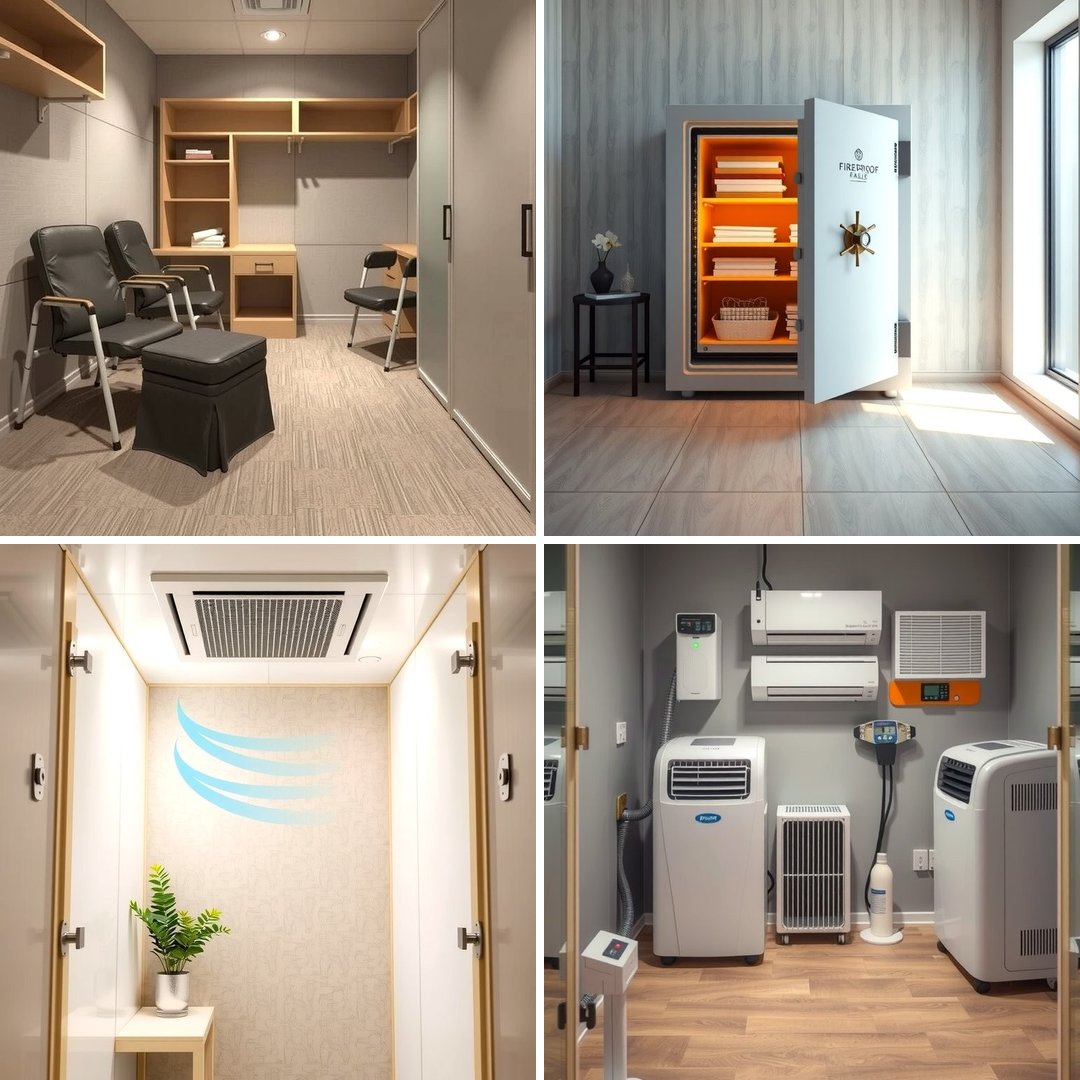
- Dedicated HVAC: Independent climate control ensures the room remains habitable, preventing the buildup of CO2 and managing humidity.
- Water Scarcity Solutions: Hidden, pressurized water tanks and localized filtration systems ensure a potable supply independent of the home’s main plumbing.
Strategic Integration and The Art of Invisibility
One of the defining features of a luxury safe room is its "invisible" integration into the home. Security consultants in 2026 emphasize that the best defense is one the intruder cannot find.
Concealed Access
Access points are often hidden behind "invisible" doors—bookshelves, wood-paneled walls, or heavy mirrors that operate on high-speed silent actuators. These are triggered by biometric redundancy, requiring a combination of facial recognition, iris scanning, or fingerprint verification. For added safety, many systems include a "duress code" feature, which opens the door but silently alerts private security or law enforcement that the owner is entering under threat.
Faraday Shielding
To protect against electronic eavesdropping or Electromagnetic Pulse (EMP) events, luxury safe rooms often incorporate Faraday shielding. By lining the room with conductive copper or steel mesh, the space becomes a dead zone for external signals, protecting sensitive digital hardware and ensuring that internal communications remain private and functional.
Digital Fortification and Communications
In a crisis, information is as valuable as physical protection. The luxury safe room acts as a "command center" for the entire estate.
- Hardwired Surveillance: While the rest of the home may use wireless cameras, the safe room is linked via shielded fiber-optic cables to the estate’s security perimeter. This ensures the feed cannot be jammed or intercepted.
- Redundant Communication: Systems typically include a satellite phone uplink, a dedicated landline, and high-frequency radio (HAM) capabilities. This ensures the occupants can contact emergency services even if cellular towers and internet grids are down.
- AI-Enhanced Monitoring: By 2026, AI-driven security software can automatically identify threats on the perimeter and display tactical overlays on the safe room’s internal monitors, allowing occupants to track an intruder's movements in real-time.
Interior Design: Comfort for Long-Term Habitability
The "luxury" aspect of these rooms is found in their interior execution. Designers treat the safe room with the same attention to detail as a primary bedroom or a home theater. High-end finishes—such as exotic wood veneers, premium leathers, and custom lighting—mask the underlying industrial strength of the room.
Amenities and Psychology
Extended stays in confined spaces can be psychologically taxing. To mitigate this, luxury safe rooms often include:
- Virtual Windows: High-resolution LED screens that simulate outdoor views using real-time external cameras or pre-recorded landscapes.
- Kitchenettes and Sanitation: Compact, high-end appliances and concealed plumbing for basic hygiene.
- Modular Furniture: Designs that allow the room to transition from a sleeping area to a workspace or lounge.
Comparative Overview: Security Tiers
| Feature | Standard Panic Room | Luxury Safe Room (2026) |
|---|---|---|
| Primary Use | Short-term hiding (minutes/hours) | Long-term secure living (days/weeks) |
| Ballistic Rating | UL 752 Level 1-3 (Handguns) | UL 752 Level 8+ (High-power Rifles) |
| Air Filtration | None or Basic HEPA | Full CBRN Overpressure System |
| Communication | Cellular/Wi-Fi | Satellite, Fiber-optic, & Radio |
| Aesthetics | Utilitarian/Visible | Bespoke/Completely Concealed |
| Power Source | Home Grid / Small UPS | Dedicated Solid-State Battery/Solar Link |
| Typical Cost | $20,000 – $50,000 | $150,000 – $1,000,000+ |
Cost Considerations and Property Value
Investing in a luxury safe room is a significant financial undertaking. Costs vary widely based on the level of protection and the complexity of the concealment.
- Retrofitting: Modifying an existing room is generally more expensive than building new, as it requires stripping walls to the studs, reinforcing the floor joists to handle the weight of ballistic plates, and rerouting utilities.
- New Construction: Integrating the safe room into the initial architectural plans of a home is the most cost-effective method. This allows for the use of poured reinforced concrete and seamless utility integration.
- Appraisal Impact: In the luxury real estate market of 2026, a professionally installed and certified safe room is often viewed as a "value-add" feature, similar to a high-end wine cellar or home wellness spa. It provides peace of mind to future buyers, particularly in high-profile neighborhoods.
Frequently Asked Questions
How long can you stay in a luxury safe room?
With modern CBRN filtration and integrated life support, a luxury safe room is typically designed for a stay of 72 hours to two weeks. The duration is primarily limited by the capacity of the water storage and the efficiency of the waste management system. High-end custom builds can extend this duration indefinitely if linked to a deep-well water source and renewable energy.
Are these rooms fireproof?
Yes. Most luxury safe rooms are built using materials that meet or exceed a two-hour fire rating. This ensures that even if the rest of the structure is compromised by fire, the occupants remain protected within a temperature-controlled environment.
Do I need a permit to install a luxury safe room?
In most jurisdictions, yes. Structural modifications, electrical work, and plumbing all require permits. Furthermore, if the safe room is intended to function as a FEMA-certified storm shelter, it must meet specific engineering criteria and be inspected by a qualified professional.
Can the room be hacked?
While any digital system has vulnerabilities, luxury safe rooms use "air-gapped" security systems. This means the critical controls for the door locks and life support are not connected to the external internet, making them virtually impossible to breach remotely.
What is the most common mistake in safe room design?
The most common mistake is failing to account for ventilation and heat load. A small room occupied by several people will quickly become overheated and oxygen-depleted without a dedicated, hardened HVAC system. Proper airflow is as essential as ballistic protection.
Professional Recommendation for Secure Living
When planning a luxury safe room, the first step should be a comprehensive risk assessment by a qualified security consultant. It is essential to choose a firm that specializes in "discreet hardening," ensuring that the room does not detract from the home's architectural beauty. For technical standards, always verify that materials are tested and certified by recognized bodies such as Underwriters Laboratories (UL) or the National Institute of Justice (NIJ).
Prioritize the "living" aspect of the room. A space that is uncomfortable will be underutilized. By investing in high-quality air filtration and redundant communication, you ensure that the safe room is not just a place to hide, but a functional extension of your home where you can manage a crisis with confidence and comfort.
Image Gallery