What Is a Fifth Wheel? Hitch Mechanism, RV Design, and Towing Basics
A fifth wheel is a specialized heavy-duty coupling mechanism and a category of towable trailer designed to connect directly over the rear axle of a pickup truck or semi-tractor. Unlike conventional bumper-pull trailers, a fifth wheel r...
A fifth wheel is a specialized heavy-duty coupling mechanism and a category of towable trailer designed to connect directly over the rear axle of a pickup truck or semi-tractor. Unlike conventional bumper-pull trailers, a fifth wheel relies on a jaw-and-kingpin latch system mounted inside the truck bed, significantly improving weight distribution, stability, and towing capacity.
Contents
The Origin and Anatomy of the Fifth Wheel Mechanism
To understand what a fifth wheel is today, it helps to examine its mechanical origins and component design. The term originally applied to horse-drawn carriages, where a horizontal wheel-shaped frame was mounted above the front axle to allow the axle to pivot freely during turns. In modern automotive engineering, modern heavy towing adapted this concept into a U-shaped hitch plate that articulates to handle heavy loads smoothly.
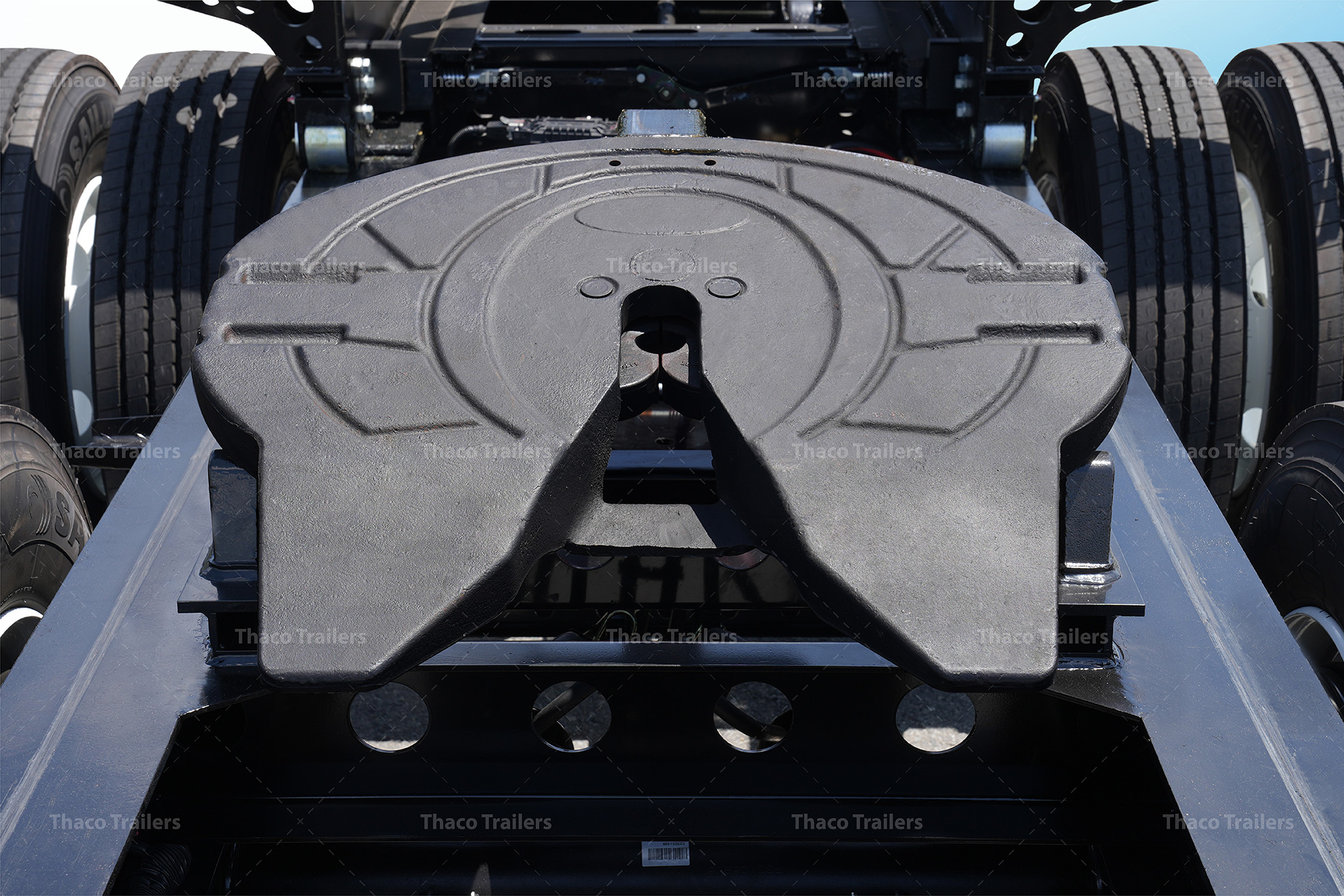
The modern fifth wheel assembly consists of two distinct components: the hitch receiver mounted inside the truck bed and the pin box attached to the trailer's overhang.
Fifth Wheel Coupling Structure:
- Trailer Side:
- Trailer Overhang
- Pin Box
- Kingpin (Steel Pin)
- Truck Side:
- Truck Bed
- Base Rails
- Hitch Plate (Jaws)
Key Components of the Coupling System
- The Kingpin: A solid steel pin protruding downward from the underside of the trailer’s forward pin box. It acts as the primary pivot point for the trailer during transport.
- The Hitch Plate (Skid Plate): A horseshoe-shaped metal plate mounted inside the tow vehicle's bed. It features a funneled slot that guides the kingpin into the central locking mechanism.
- Locking Jaws or Bar: Heavy metal latches built into the hitch plate that automatically wrap around and lock the kingpin in place once fully seated.
- Pin Box: The steel structure extending from the front frame of the trailer that holds the kingpin. Advanced pin boxes often incorporate air bladders or rubber dampeners to reduce "chucking"—the back-and-forth fore-and-aft motion experienced while driving.
- Lube Plate or Grease Layer: A high-density polyethylene (HDPE) disk placed over the kingpin, or a layer of heavy grease applied directly to the hitch plate, designed to reduce friction between the metal surfaces during turns.
Because the connection point sits directly above or slightly ahead of the tow vehicle’s rear axle, the vertical load—known as pin weight—is pushed down into the truck’s chassis rather than leveraging off the rear bumper.
Fifth Wheel RVs: Design Features and Layouts
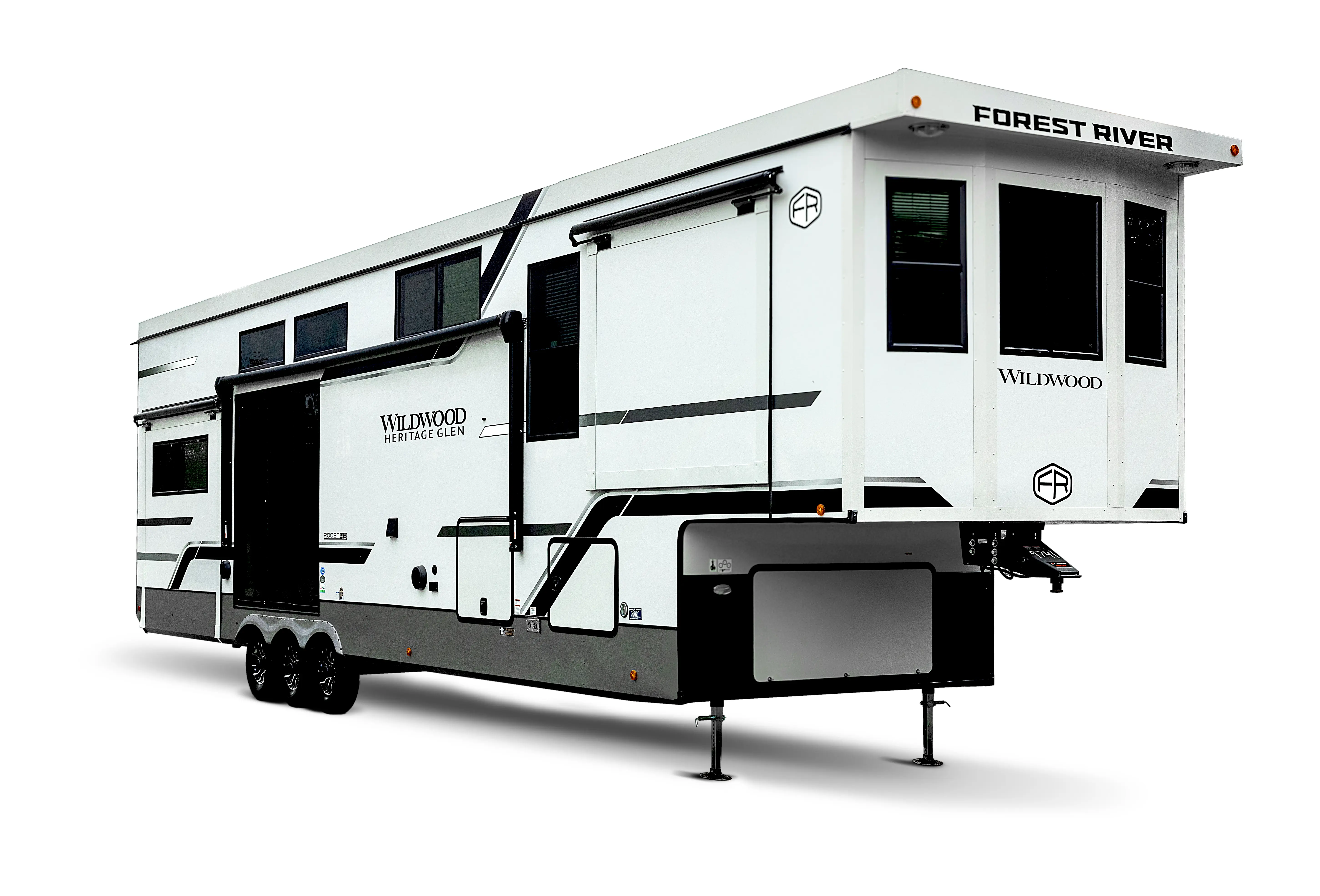
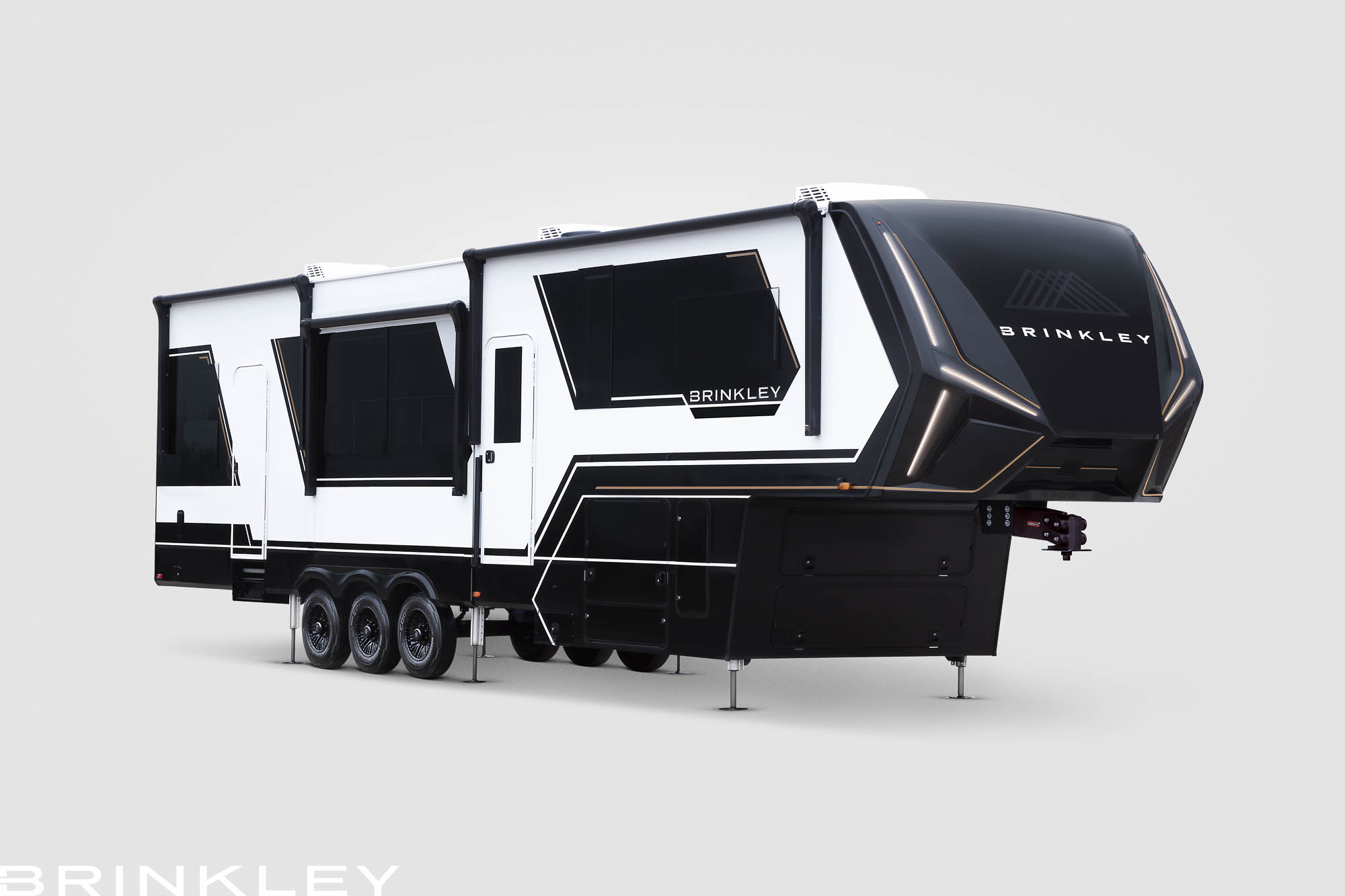
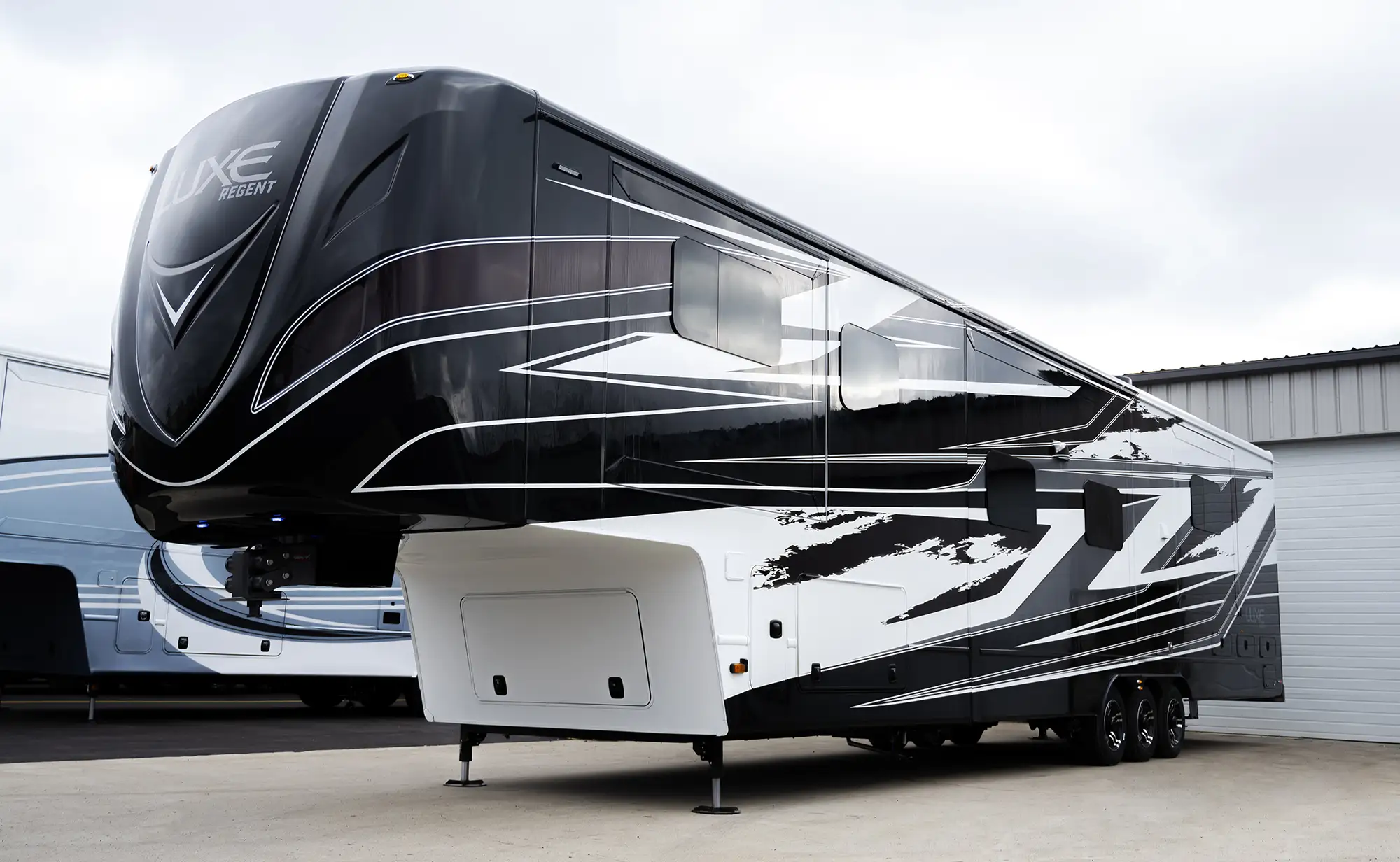
When consumers refer to a "fifth wheel," they are often referring to a class of towable recreational vehicles (RVs). Fifth wheel trailers represent some of the largest, most spacious towable RVs available on the market, combining residential amenities with high load capacities.
Fifth Wheel RV Profile:
- Raised Front Bedroom / Bathroom (extends over pickup bed hitch)
- Lower Living Area & Kitchen Space (positioned over trailer axles)
The Raised Front Cap and Split-Level Floor Plan
The defining visual characteristic of a fifth wheel RV is its bi-level construction. The forward section of the trailer extends over the bed of the pickup truck. This raised upper deck almost universally houses the primary bedroom, a full bathroom, or occasionally a front living room. Step-down stairs connect this upper area to the main floor, which typically features higher ceilings (often 8 feet or more) than standard travel trailers.
High Gross Vehicle Weight Ratings (GVWR)
Fifth wheel RVs typically range from 28 feet to over 45 feet in length, with Gross Vehicle Weight Ratings (GVWR) ranging between 10,000 and 20,000 pounds or more. Because the hitch connection distributes mass directly over the truck's rear suspension, fifth wheels can accommodate higher structural weights, multiple heavy slide-out sections, residential appliances, and substantial fresh water and waste storage tanks.
Expanded Interior Volume and Insulation
Due to their height and structural rigid frame, fifth wheels offer substantially more interior volume per foot of length than traditional travel trailers. Many models feature full-profile caps, heavy thermal insulation packages for year-round living, washer and dryer hookups, and multi-zone climate control systems.
Comparing Fifth Wheels, Travel Trailers, and Goosenecks
Understanding how a fifth wheel performs requires comparing it to alternative towing systems. The three primary types of heavy towables are conventional bumper-pull travel trailers, fifth wheel trailers, and goosenecks.
| Feature / Metric | Fifth Wheel Trailer | Travel Trailer (Bumper-Pull) | Gooseneck Trailer |
|---|---|---|---|
| Coupling Point | Inside truck bed, over rear axle | Rear bumper / Receiver hitch | Inside truck bed, over rear axle |
| Coupling Type | Kingpin and locking jaws plate | Ball mount and coupler | Ball mount (2 5/16") and sleeve |
| Pin / Tongue Weight Percentage | 15% to 25% of total trailer weight | 10% to 15% of total trailer weight | 15% to 25% of total trailer weight |
| Primary Use Case | Luxury RVing, full-time living | Light-to-medium RVing, utility | Agricultural, commercial, livestock |
| Sway Resistance | High (pivot point over axle) | Moderate (susceptible to crosswinds) | High (pivot point over axle) |
| Truck Bed Availability | Obstructed by large hitch mechanism | Fully open bed space | Minimal footprint (ball removable) |
| Maneuverability & Turning | Superior turning angle (up to 90°) | Standard turning radius | Superior turning angle |
Fifth Wheel vs. Travel Trailer
The primary practical distinction between a fifth wheel and a travel trailer lies in towing stability and leverage. A travel trailer attaches to a hitch receiver mounted on the vehicle's rear frame. This distance behind the rear axle creates a lever effect: wind gusts or sudden maneuvers cause the trailer to exert lateral force on the rear of the towing vehicle, creating sway.
In contrast, a fifth wheel rests its load directly over the tow vehicle's rear axle. This eliminates the leverage distance, transferring lateral forces directly to the vehicle's suspension and frame, which substantially minimizes crosswind sway and swaying caused by passing semi-trucks.
Fifth Wheel vs. Gooseneck
While both hitches mount inside the truck bed over the rear axle, their coupling mechanisms serve different industries:
- Fifth wheels use a heavy hitch receiver plate that mates with a smooth kingpin, providing a wide supporting surface area designed to smooth out ride comfort in passenger RV applications.
- Goosenecks attach to a 2 5/16-inch hitch ball mounted flat in the truck bed. Goosenecks are widely used in commercial, livestock, and agricultural transport because the ball can be removed or flipped down, leaving a flat bed floor for hauling cargo when not towing.
Tow Vehicle Requirements and Installation Basics
Towing a fifth wheel safely requires strict adherence to vehicle payload capacities, rear axle weight ratings, and structural hitch mounting systems.
Vehicle Weight Distributions:
- Pin Weight (15-25%): Rests over the truck axle and pushes payload into the chassis directly.
- Bumper Pull Tongue Weight (10-15%): Applies weight at the rear leverage point, causing rear squat.
Critical Weight Terminology
Before selecting a tow vehicle for a fifth wheel, buyers must calculate several essential ratings established by manufacturers and regulatory authorities, such as the Federal Motor Carrier Safety Administration (FMCSA):
- Gross Vehicle Weight Rating (GVWR): The absolute maximum allowable total weight of the truck or trailer when fully loaded with cargo, fluids, passengers, and equipment.
- Gross Combined Weight Rating (GCWR): The maximum allowable total weight of the truck, trailer, cargo, passengers, and fluids combined.
- Gross Axle Weight Rating (GAWR): The maximum structural load individual front or rear axles can carry.
- Pin Weight (Kingpin Weight): The downward vertical force the trailer pin box exerts onto the truck hitch plate. For fifth wheels, pin weight is typically 15% to 25% of the trailer's total actual loaded weight.
- Payload Capacity: The maximum cargo weight the truck can carry in its bed and cab. Pin weight subtracts directly from the truck's available payload capacity.
A common mistake is selecting a truck based solely on its maximum conventional towing capacity without factoring in payload. Because a 14,000-pound fifth wheel can generate a pin weight of 2,800 to 3,500 pounds, the truck must possess enough payload capacity to accommodate that downward weight alongside passengers, fuel, and bed equipment.
Bed Length: Short Bed vs. Long Bed Trucks
The length of the pickup truck bed determines how the fifth wheel turns without contacting the vehicle's cab during tight maneuvers.
- Long Bed Trucks (8 Feet): Provide ample distance between the cab and the hitch plate. A standard fixed fifth wheel hitch can be installed directly over the rear axle without risk of clearance issues during 90-degree turns.
- Short Bed Trucks (6.5 Feet or shorter): Require additional clearance considerations. During sharp turns, the forward corners of a wide fifth wheel front cap can strike the truck cab. Short bed owners typically utilize:
- Sliding Hitches (Manual or Automatic): Mechanisms that move the hitch connection point backward toward the tailgate during low-speed, tight turns.
- Extended Pin Boxes: Specially shaped pin boxes that push the trailer further back relative to the kingpin.
Mounting Systems: Bed Rails vs. Puck Systems
Modern pickup trucks offer specialized towing prep packages from the factory, commonly referred to as "puck systems."
- Puck Systems: Built-in mounting points recessed directly into the truck bed floor from the factory. Fifth wheel hitches drop into these mounting holes and drop-lock without requiring permanently exposed bed rails.
- Standard Industry Bed Rails: Aftermarket steel rails bolted through the truck bed floor into the frame. The hitch pins directly to these elevated rails, which remain in the bed when the hitch frame is removed.
Advantages and Operational Drawbacks
Evaluating a fifth wheel trailer requires balancing its towing stability against operational constraints.
| Advantages | Drawbacks |
|---|---|
| Extreme towing stability | Consumes truck bed space |
| Exceptional ceiling height | High overall clearance |
| High cargo capacities | Heavier overall unit weight |
| Tight turning leverage | Requires heavy-duty truck |
Primary Advantages
- Superior Towing Stability: Positioned over the axle, the trailer's sway forces are reduced compared to frame-mounted bumper-pull hitches.
- Enhanced Maneuverability: Fifth wheel coupling allows tight turning radii, making it easier to back large trailers into tight campsite spots or loading bays.
- Maximizing Interior Space: High ceiling profiles and bi-level floor plans create home-like interiors with elevated master suites and spacious storage holds.
- Storage Volume: The front pass-through storage compartments beneath the upper deck offer larger exterior storage volume than standard travel trailers.
Primary Drawbacks
- Truck Bed Usage: The hitch frame takes up substantial truck bed space and can weigh between 100 and 250 pounds, making manual removal labor-intensive.
- Overall Vehicle Height: Fifth wheel trailers commonly stand 12.5 to 13.5 feet tall. Drivers must monitor bridge clearances, low-hanging trees, and fuel station canopy height limits.
- Higher Tow Vehicle Demands: Most full-sized fifth wheels require a 3/4-ton (2500 series) or 1-ton (3500 series) heavy-duty pickup truck, often requiring dual rear wheels (duallies) for heavy pin loads.
- Fuel Efficiency: The tall front profile creates elevated aerodynamic drag, lowering tow vehicle fuel economy relative to lower-profile trailers.
Maintenance and Safety Procedures
Safe operation of a fifth wheel relies on proper coupling routines and routine hardware inspection.
The Coupling Sequence and "Pull Test"
Improper hitch locking is a common cause of trailer detachment accidents. Drivers should execute a rigorous coupling routine:
- Adjust the trailer landing gear so the pin box plate sits slightly lower than the hitch plate—forcing the hitch plate to take the trailer weight gradually as the truck backs up.
- Back the truck slowly until the kingpin slides fully into the jaws and the handle engages into the locked position.
- Insert the safety pin or lock through the hitch handle mechanism to prevent accidental release.
- Attach the emergency breakaway switch cable to an anchor point inside the truck bed.
- Perform a Pull Test: With the trailer wheel chocks removed and the trailer brakes manually applied using the brake controller, shift the truck into forward gear and pull forward gently. Resistance confirms that the hitch jaws have closed around the kingpin.
Hitch Safety Checklist:
- Kingpin engaged in locking jaws
- Safety latch pin fully inserted
- Emergency breakaway cable attached
- Electrical umbilical cord plugged in & light-checked
- Landing gear fully retracted
- Friction disk (lube plate) checked for wear
Regular Maintenance Requirements
- Lube Plate / Jaw Grease: Inspect the high-density plastic lube plate for cracking or wear. If not using a lube plate, apply lithium-based grease to the hitch plate contact area.
- Jaw Adjustment: Periodically check the tolerance on the locking jaws. Over time, heavy pin usage can create slack, requiring adjustment according to manufacturer torque specifications.
- Pin Box Mount Bolts: Check the mounting hardware attaching the pin box to the trailer frame using a calibrated torque wrench, verifying torque standards provided by the manufacturer (e.g., SAE International standards).
Frequently Asked Questions
Can you tow a fifth wheel with a short-bed pickup truck?
Yes, you can tow a fifth wheel with a short-bed pickup truck (typically 6.5 feet), provided you use the proper equipment. Because short beds place the hitch closer to the back of the truck cab, tight turns can cause the front cap of the trailer to make contact with the cab glass. To prevent this, owners install sliding hitches (which shift the trailer backward during tight turns) or extended pin boxes that create additional clearance space.
What is the main difference between a fifth wheel and a gooseneck hitch?
The main difference is the coupling mechanism. A fifth wheel uses a large, horseshoe-shaped hitch plate in the truck bed that locks onto a downward-pointing pin (kingpin) on the trailer. A gooseneck hitch uses a standard 2 5/16-inch trailer hitch ball mounted in the bed, which couples with a ball receiver sleeve hanging from the trailer. Fifth wheels are standard for recreational vehicles, whereas goosenecks are standard for heavy commercial, horse, and agricultural trailers.
Why is it called a "fifth wheel"?
The term originates from 19th-century horse-drawn carriages. Builders installed an extra wheel-shaped horizontal iron ring above the front axle assembly. This horizontal assembly allowed the front axle to rotate smoothly relative to the carriage body when turning corners. Modern automotive transport adapted this pivoting horizontal surface concept, keeping the historical name "fifth wheel."
How much pin weight should a fifth wheel trailer have?
A properly balanced fifth wheel trailer should place between 15% and 25% of its total actual weight onto the hitch pin. For example, if a fully loaded fifth wheel trailer weighs 14,000 pounds, the pin weight pushing down on the truck bed should be between 2,100 pounds and 3,500 pounds. Having too little pin weight can lead to instability, while excessive pin weight can exceed the tow vehicle's rear axle weight rating (GAWR) or payload capacity.
Do I need a commercial driver's license (CDL) to drive a fifth wheel RV?
In most jurisdictions within the United States, non-commercial recreational vehicle operators do not require a Class A Commercial Driver's License (CDL) for standard recreational use. However, regulations vary by state. Some states require a specialized non-commercial driver's license (such as a Class A or B non-commercial endorsement) if the trailer's Gross Vehicle Weight Rating (GVWR) exceeds 10,000 pounds or if the combined gross weight rating of the truck and trailer exceeds 26,000 pounds. Check local state department of motor vehicles regulations for exact thresholds.
Recommendation and Next Steps
If you are evaluating a fifth wheel purchase, begin by reviewing your vehicle's payload capacity rather than relying solely on overall tow capacity ratings. Locate the tire and loading information sticker inside your truck's driver-side door jamb to determine its specific payload capacity limit.
Calculate the real-world pin weight of your prospective trailer by taking 20% of its listed GVWR, and add the weight of the hitch assembly (roughly 150 to 200 pounds), passengers, fuel, and bed cargo. If this total exceeds your vehicle's rated payload capacity, select a lighter trailer or upgrade to a higher-capacity tow vehicle, such as a 1-ton (3500 series) pickup, before purchasing.
Image Gallery