The History and Identity of Killer Whales at SeaWorld
SeaWorld parks currently house several surviving killer whales, notably including Corky, Kasatka's descendants, and other resident orcas across locations in San Diego, San Antonio, and Orlando. These individuals have unique veterinary...
SeaWorld parks currently house several surviving killer whales, notably including Corky, Kasatka's descendants, and other resident orcas across locations in San Diego, San Antonio, and Orlando. These individuals have unique veterinary histories, lineage records, and varying statuses regarding breeding and performance programs that shifted significantly over the company's operational lifetime.
Contents
Understanding SeaWorld's Orca Population: An Overview
The presence of killer whales (Orcinus orca) at SeaWorld entertainment facilities has long drawn public interest, scientific study, and regulatory scrutiny. Understanding the identity of these animals requires looking past the brand's theatrical presentations to examine individual lineage, birth origins, and the monumental policy shifts that altered how these marine mammals are managed.
For decades, SeaWorld relied on captive-born and wild-captured killer whales to anchor its aquatic theme parks. Following intense public advocacy, shifting social norms, and legislative actions—such as California's 2016 ban on captive orca breeding—SeaWorld transitioned away from theatrical circus-style shows toward natural behavior presentations and educational programming. Consequently, the individual orcas housed across the San Diego, San Antonio, and Orlando parks represent a finite population whose care guidelines, medical treatments, and housing requirements are subject to strict oversight by federal agencies like the United States Department of Agriculture (USDA) under the Animal Welfare Act.
Key Surviving Killer Whales and Their Backgrounds
Because SeaWorld phased out its captive breeding program entirely, the remaining killer whale population consists of aging adults and individuals born prior to the policy change. Each surviving whale possesses a distinct history, including capture origins (for the oldest generation) or lineage tracking (for those born within the park system).
Corky (SeaWorld San Diego)
Captured in 1969 near British Columbia, Canada, Corky is one of the oldest living killer whales in human care. Originally a resident of the A5 pod, Corky was purchased by Marineland of the Pacific before moving to SeaWorld San Diego in 1987. Over more than five decades in captivity, Corky has experienced numerous pregnancies, though none of her calves survived past early infancy. Today, she resides in San Diego as a matriarch figure, receiving specialized geriatric veterinary care tailored to her advanced age.
Other Notable Residents
- Ulises: A large male wild-captured from the waters near Iceland in 1980, Ulises spent time in Barcelona before being transferred to SeaWorld San Diego, where he remains a prominent part of the male population.
- Kamilah, Nakai, and Kalia: Representing the captive-born generation, these individuals were integrated into multi-generational social pods designed to mimic wild pod structures as closely as possible within controlled environments.
- The San Antonio and Orlando Populations: Facilities in Texas and Florida house their own distinct pods, composed of mixed ages that navigate social dynamics under the watchful eye of dedicated marine mammal specialists and attending veterinarians.
Summary Table: Notable Orcas in the SeaWorld System
| Name | Sex | Estimated Birth / Capture Year | Origin | Current Location |
|---|---|---|---|---|
| Corky | Female | 1965 (Estimated) / Captured 1969 | British Columbia, Canada | SeaWorld San Diego |
| Ulises | Male | 1977 (Estimated) / Captured 1980 | Icelandic Waters | SeaWorld San Diego |
| Kalia | Female | December 2004 | Captive-Born (SeaWorld San Diego) | SeaWorld San Diego |
| Takara | Female | August 1991 | Captive-Born (SeaWorld Orlando) | SeaWorld San Antonio |
| Trua | Male | November 2005 | Captive-Born (SeaWorld Orlando) | SeaWorld Orlando |
Operational Shifts: From Theatrical Shows to Educational Presentations
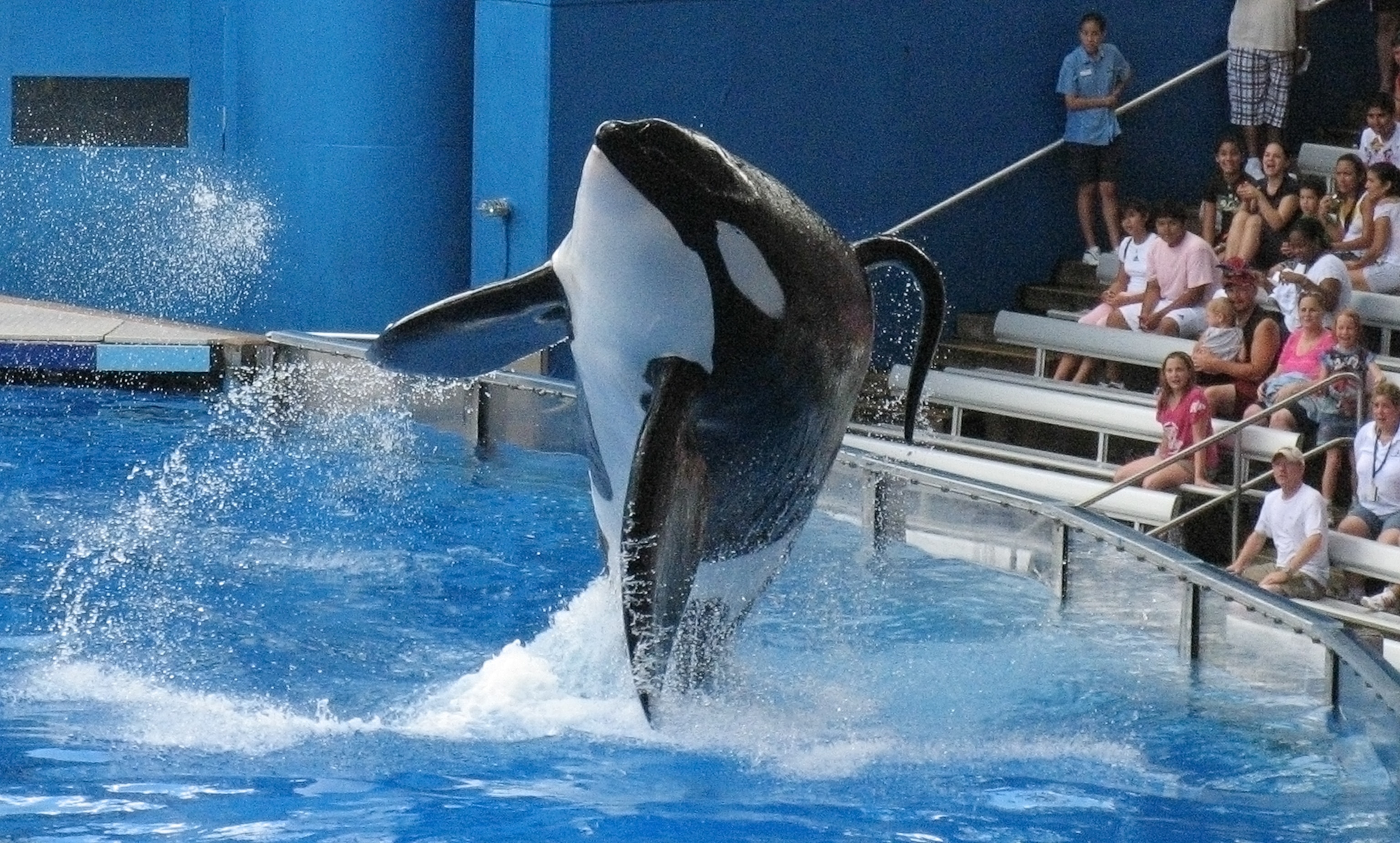
The management of killer whales at SeaWorld underwent a profound transformation in the late 2010s. For generations, the primary focus of keeping these animals was entertainment—featuring trainers performing acrobatic stunts alongside orcas in high-energy performances popularized by shows like "Shamu."
As public sentiment evolved and documentary scrutiny increased, SeaWorld faced mounting pressure from animal welfare organizations and consumers. In March 2016, the company announced a definitive end to its orca breeding program, ensuring that the generation alive at that time would be the last generation of killer whales in SeaWorld's care. Following this decision, the theatrical performances were systematically phased out.
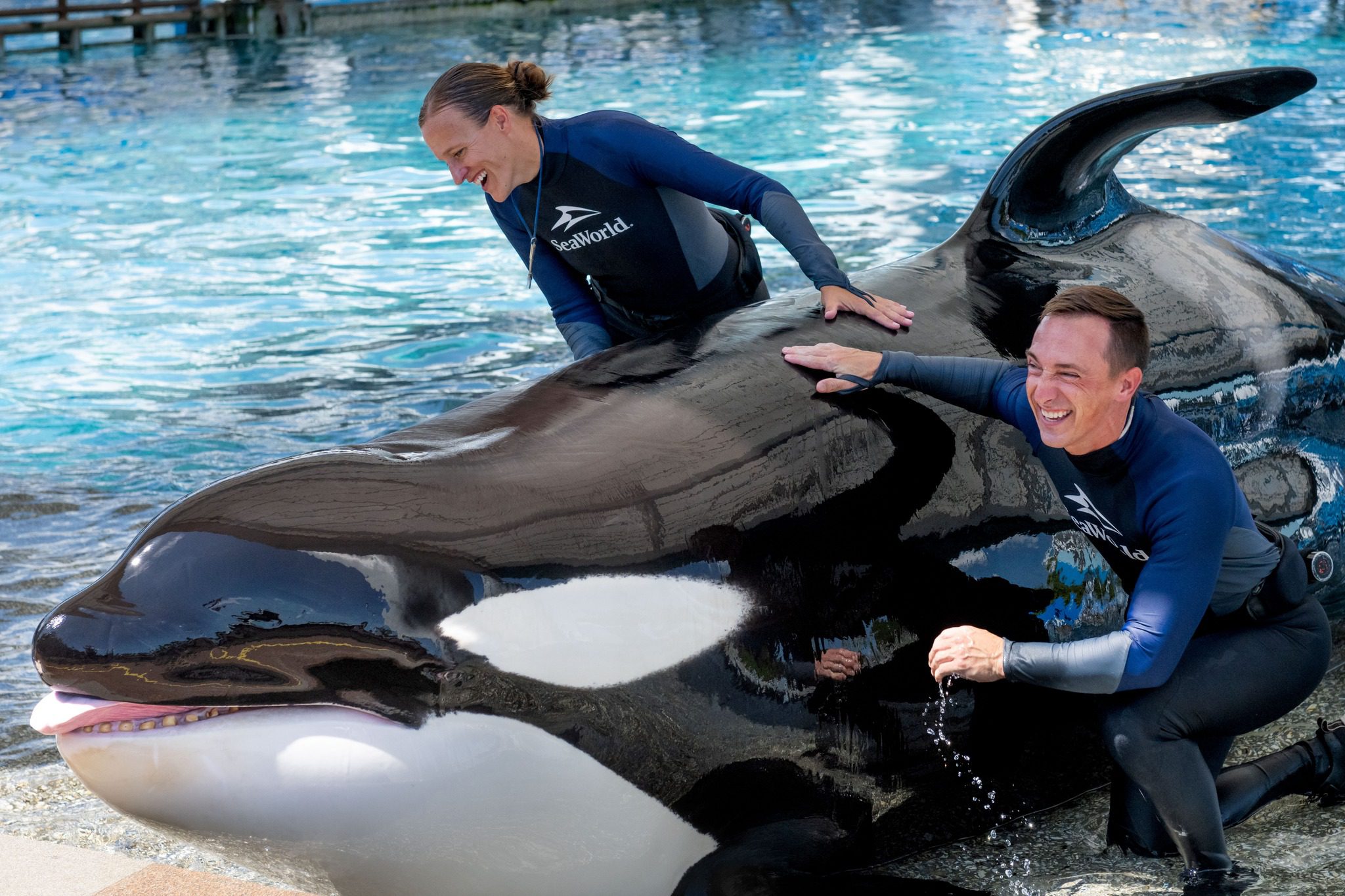
The traditional shows were replaced by the "Orca Encounter" educational presentations. These sessions focus on natural behaviors, physical adaptations, and conservation messaging. Trainers no longer enter the water for acrobatic routines during these presentations; instead, veterinary behaviors, medical conditioning, and cognitive enrichment exercises are performed from the pool deck to demonstrate animal husbandry practices to park visitors.
Veterinary Care, Diet, and Longevity Challenges
Maintaining killer whales in controlled environments requires immense logistical support, specialized veterinary medicine, and strict nutritional oversight. In the wild, orcas travel vast distances and hunt varied prey, including fish, marine mammals, and sharks. Replicating this in a facility demands careful management.
Diet and Nutrition
SeaWorld's killer whales are fed a daily diet consisting of several species of sustainably sourced fish, including herring, capelin, salmon, and mackerel. The food is carefully inspected for quality, defrosted under strict hygiene protocols, and supplemented with vitamins—particularly Vitamin E and thiamine—to make up for nutrients lost during freezing and storage. Daily food intake varies by the whale's age, sex, weight, and activity level, often ranging from 100 to over 300 pounds of fish per day for a large adult male.
Veterinary Medicine and Healthcare
Veterinarians train the whales to participate willingly in their own medical care. Through positive reinforcement, orcas learn to present their flukes for blood draws, allow respiratory blowhole samples to be collected, and permit ultrasound examinations of their internal organs. This voluntary medical behavior reduces the need for physical restraint or chemical sedation during routine health checks.
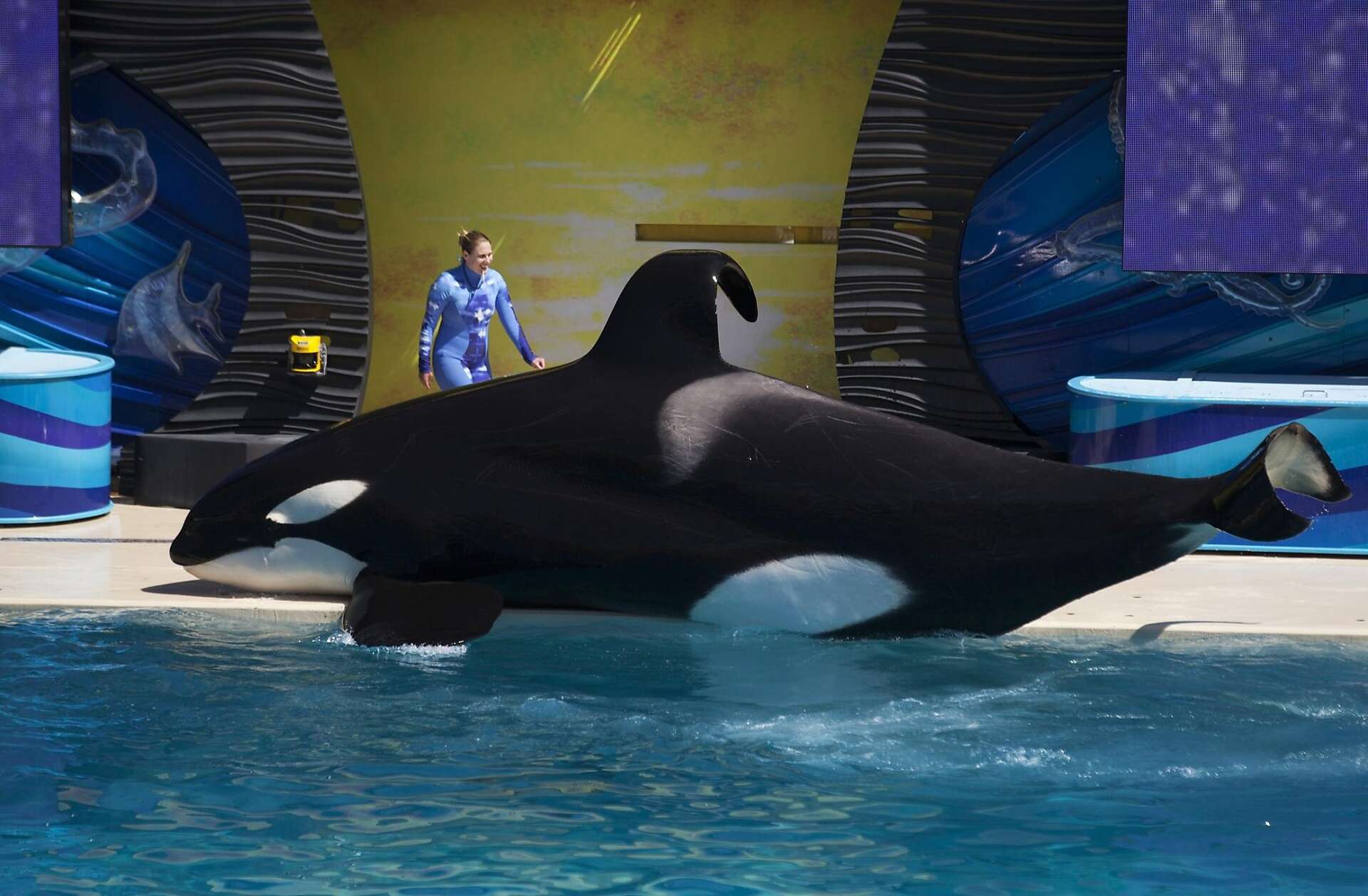
Despite these advanced medical protocols, captive killer whales face health challenges distinct from their wild counterparts. Dental wear resulting from stereotypic behaviors—such as chewing on concrete pool walls or metal gates—is common, frequently requiring specialized dental irrigation or root canal procedures. Furthermore, dorsal fin collapse, a phenomenon rarely observed in healthy wild males, is nearly universal among adult male orcas in captivity due to hydrostatic pressure differences and differences in muscle utilization in confined spaces.
Frequently Asked Questions
Are there still baby killer whales being born at SeaWorld?
No. SeaWorld officially ended its killer whale breeding program in March 2016. The policy change means no new calves are born within the park system, and the existing population represents the final generation of orcas in SeaWorld facilities.
Can SeaWorld's killer whales be released back into the ocean?
Releasing long-term captive or wild-born orcas that have spent decades in human care into the open ocean is widely considered unfeasible by marine biologists and animal welfare experts. Captive whales lack the hunting skills, pod-specific dialects, and natural immunities required to survive in the wild. Transferring them to sea-pens or coastal sanctuaries remains a topic of ongoing debate among advocacy groups, though such facilities require immense infrastructure and face their own environmental and logistical hurdles.
Why do captive male killer whales have collapsed dorsal fins?
The dorsal fin of a killer whale is made of fibrous connective tissue rather than bone. In wild orcas, the tall dorsal fin is supported by consistent swimming speeds in deep, open waters. In structured pool environments, reduced continuous forward momentum and altered water pressure contribute to the softening and eventual lateral leaning or collapse of the fin.
How much do SeaWorld killer whales weigh?
Weight varies significantly depending on sex, age, and genetics. Adult female killer whales at SeaWorld generally weigh between 3,000 and 5,500 pounds, while adult males can reach lengths exceeding 20 feet and weigh anywhere from 8,000 to over 10,000 pounds.
What happened to the famous whale named Shamu?
"Shamu" was not a single whale, but a stage name utilized for the original killer whale brought to SeaWorld San Diego in 1965 from Seattle's Marineland. Following the death of the original Shamu in 1971, SeaWorld trademarked the name and applied it to various headline killer whales across its different park locations for decades before retiring the moniker entirely during the brand's operational restructuring.
Conclusion and Next Actions
The killer whales remaining at SeaWorld represent a complex legacy of marine mammal exhibition, scientific observation, and shifting ethical standards. For visitors or researchers investigating these animals, understanding their specific identities, medical histories, and the regulatory frameworks governing their welfare provides a clearer picture of modern zoological management. When planning a visit or conducting academic research, consult official veterinary logs, USDA inspection reports, and independent marine science publications for verified, up-to-date data on animal welfare standards and facility operations.
Image Gallery