Comprehensive 2026 Guide to USTA Racing Harness Safety and Installation
Note: In the context of motorsport equipment, "usta" typically refers to stylized or mis-transcribed aftermarket universal racing harnesses (often associated with brands like NRG, Takata-style replicas, or generic tuning gear). This gu...
Note: In the context of motorsport equipment, "usta" typically refers to stylized or mis-transcribed aftermarket universal racing harnesses (often associated with brands like NRG, Takata-style replicas, or generic tuning gear). This guide focuses on high-performance 4-point, 5-point, and 6-point racing harnesses, structural mounting compliance, and safety standards expected in competitive track environments.
Contents
Motorsport safety equipment has undergone strict regulatory evolution, and selecting the correct racing harness for your vehicle in 2026 requires a deep understanding of structural physics, sanctioning body specifications, and proper installation geometry. Whether building a dedicated time-attack car, a drift machine, or an autocross competitor, the restraint system is your primary line of defense against severe kinetic forces. Integrating aftermarket racing harnesses demands precision engineering to ensure structural integrity during high-speed impacts or rollovers.
Evolution of Motorsport Restraints and Modern Engineering Standards
The primary purpose of a racing harness is to keep the driver firmly pinned against the seat, preventing ejection and minimizing spinal compression during a collision. Unlike standard three-point factory seatbelts that distribute force across the shoulder and lap dynamically, racing harnesses lock the occupant rigidly into the chassis.
Modern racing harnesses rely on high-tensile polyester or nylon webbing designed to stretch minimally under heavy loads. This controlled elongation absorbs a fraction of kinetic energy while preventing the occupant from striking the steering wheel or roll cage.
Understanding the configuration options is critical before purchasing or installing a harness system in 2026:
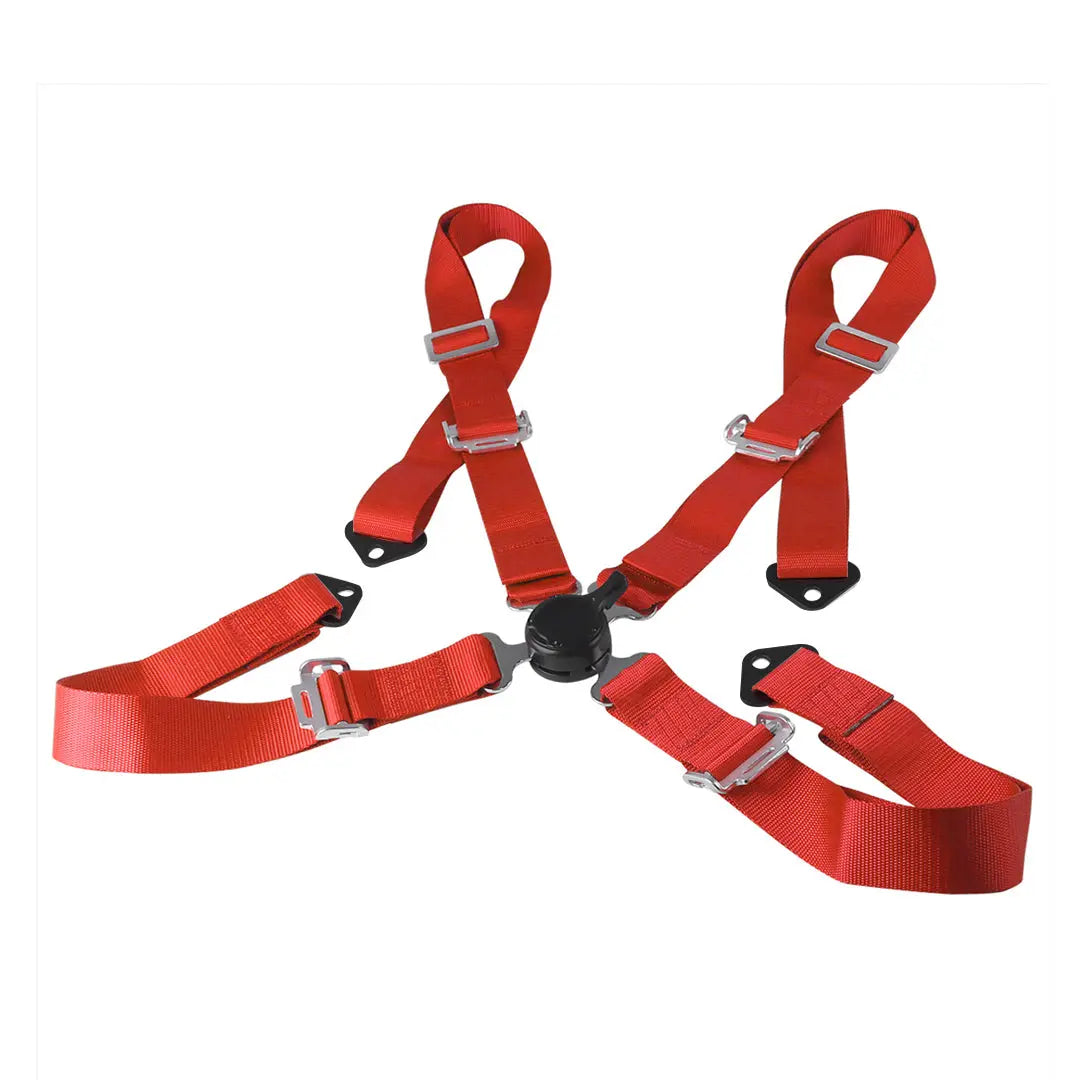
- Four-Point Harnesses: Feature two shoulder straps and two lap belts. While popular for street-tuned vehicles, standard four-point configurations can lead to "submarining" (sliding underneath the lap belt during a frontal impact) unless specifically engineered with anti-submarining technology or an integrated crotch strap.
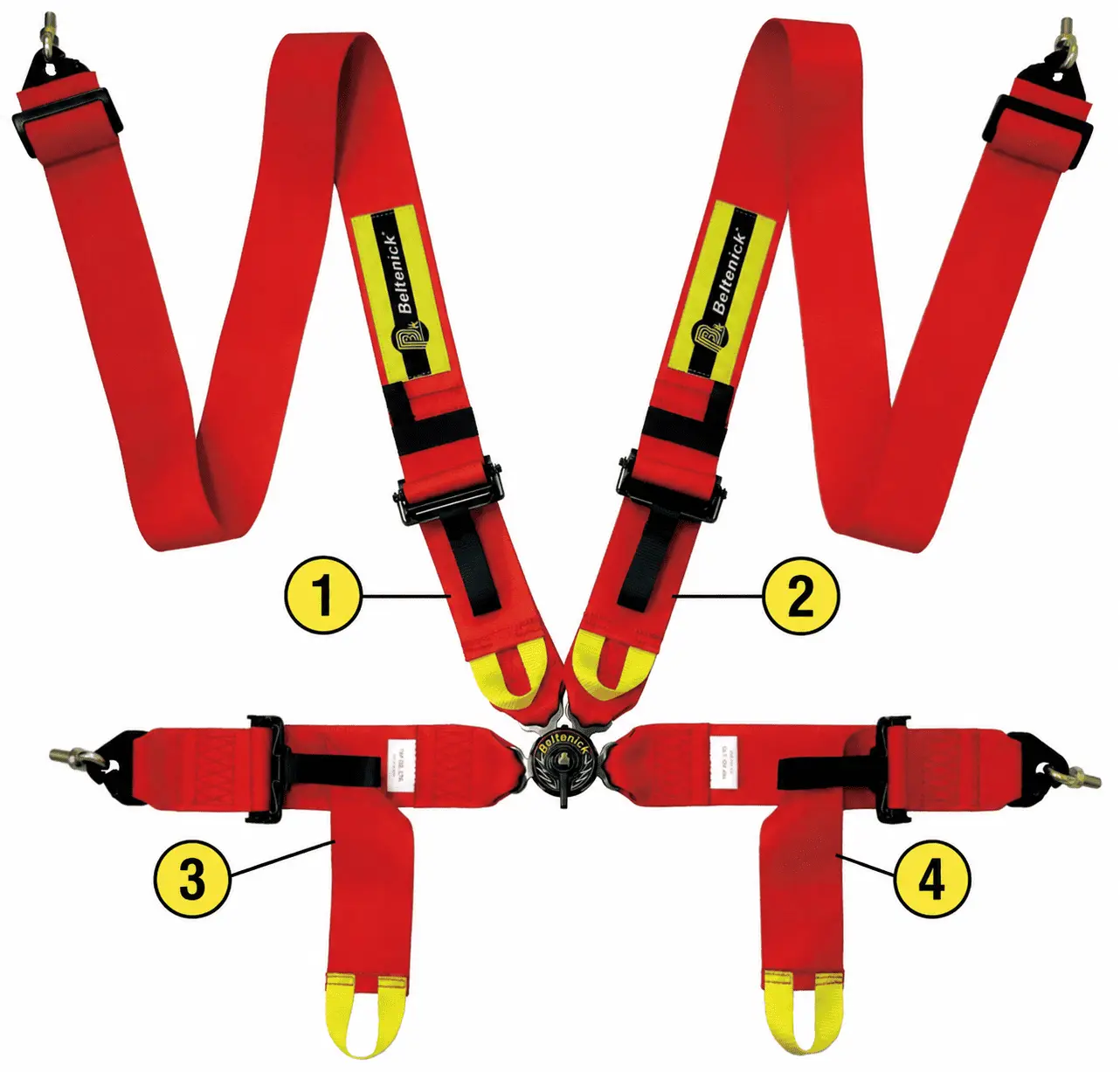
- Five-Point Harnesses: Add a single crotch strap extending from the center buckle to anchor the lap belt downward over the pelvic bones, preventing upward migration of the lap belt into the soft abdomen.
- Six-Point Harnesses: The gold standard for competitive racing. Utilize two anti-submarining straps that wrap around the upper thighs or anchor independently through the floorpan, offering superior restraint and load distribution.
- Camlock vs. Latch-Link Mechanisms: Camlock buckles utilize a rotary dial mechanism for instant, simultaneous release of all straps. Latch-link designs utilize individual metal tongue inserts clicked into a central gate, favored in dirt track and heavy-duty off-road applications for grit resistance.
Technical Specifications and Material Compliance Benchmarks
When evaluating racing harnesses for your build, looking at material certifications ensures the webbing and hardware will not fail under stress. Sanctioning bodies such as the FIA (Fédération Internationale de l'Automobile) and SFI (Sports Car Club of America / SFI Foundation) maintain strict homologation standards.
| Harness Type | Typical Webbing Width | Primary Homologation Standard | Best Application | Expiration Rule of Thumb |
|---|---|---|---|---|
| 4-Point Universal | 2 inches or 3 inches | Non-Homologated / Tuner | Track Days, Sim Rigs, Show Cars | Inspect Annually |
| 5-Point Competition | 3 inches (Shoulder/Lap) | SFI 16.1 / FIA 8853-2016 | Autocross, Drag Racing, HPDE | 2 Years (SFI) / 5 Years (FIA) |
| 6-Point Professional | 3 inches / 2 inches HANS | FIA 8853-2016 | Road Racing, Time Attack, Drift | 5 Years from Date of Manufacture |
Webbing degradation occurs naturally due to ultraviolet (UV) light exposure, sweat, friction, and moisture. Even if a harness looks pristine, expired webbing loses its dynamic energy-absorption capabilities. Always check tag dates before entering tech inspection at any track event.
Step-by-Step Installation Protocols for Structural Safety
Improper mounting is the leading cause of harness failure during accidents. Bolting shoulder straps to factory rear seat belt mounting points or wrapping them incorrectly around a roll bar can cause spinal compression or seat failure. Follow this rigorous installation methodology to maintain safety compliance.
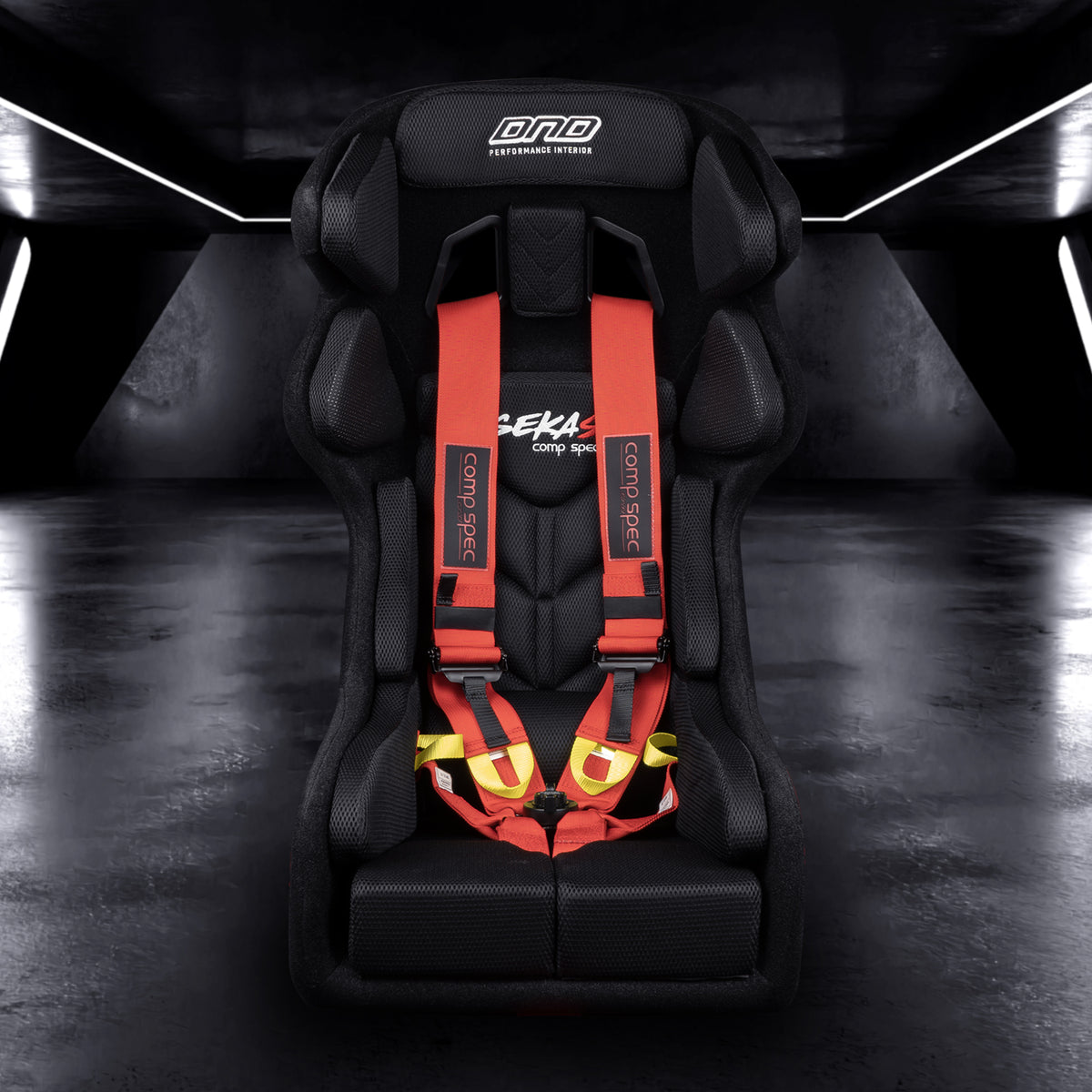
- Verify Seat Compatibility: Ensure your racing seat features properly reinforced harness routing slots (pass-throughs) at the correct height for your shoulders. Shoulder straps must never cross over the top of a seat back.
- Establish Correct Shoulder Angle: Mount shoulder straps to a harness bar or roll cage rear stays. The acceptable angle for shoulder straps is horizontal or angled downward between 0 to 20 degrees relative to the driver's shoulders. Exceeding a 20-degree downward angle can induce spinal compression during a rear-end collision or rollover.
- Secure Lap Belt Geometry: Lap belts must wrap tightly across the pelvic bone (iliac crest), never across the soft tissue of the stomach. Anchor points should be positioned symmetrically so the belt pulls downward and backward at an angle between 45 and 60 degrees.
- Anchor Crotch Straps Properly: For 5-point and 6-point systems, drill or utilize factory-reinforced floorpan mounting points directly beneath or slightly behind the hips. Crotch straps must prevent the lap belt from riding up without chafing the occupant.
- Torque All Hardware to Spec: Utilize high-grade hardware (typically SAE Grade 8 or metric 10.9 bolts) with thick backing plates (large washers) under the chassis floorpan to prevent pull-through during high-g loads. Torque all eye bolts and mounting bolts to manufacturer specifications (usually 30-40 ft-lbs), applying thread-locker where appropriate.
Crucial Installation Warning
Never Wrap Shoulder Straps Around Harness Bars Without Proper Stops: If your shoulder straps wrap around a harness bar, they must be prevented from sliding laterally along the bar by welded harness guides or specialized collar clamps. Unsecured straps can slide during a side-impact collision, causing the occupant to slip out of the restraint.
Balancing Performance, Comfort, and Compliance: Pros and Cons
Upgrading to a racing harness transforms the driving experience, but it introduces trade-offs regarding street usability and ergonomics.
- Pros:
- Eliminates body shift during heavy cornering, braking, and acceleration, allowing for precise steering input and throttle control.
- Significantly reduces driver fatigue on high-g track days by keeping the body anchored without requiring upper-body bracing.
- Works seamlessly with Head and Neck Support (HANS) devices, reducing the risk of whiplash and basal skull fractures.
- Cons:
- Drastically restricts upper body mobility, making it difficult to reach dashboard controls, check blind spots, or adjust climate controls while belted in.
- Inconvenient for daily street driving due to the time required to adjust and buckle multi-point camlock systems.
- Requires complementary safety equipment (roll bars, fixed-back racing seats, HANS devices) to function safely; using a harness with factory reclining seats can be dangerous in a rollover.
Frequently Asked Questions
Can I use a racing harness with factory OEM seats?
Using a multi-point racing harness with factory reclining seats is strongly discouraged and often prohibited by track tech inspectors. Factory seat backs lack structural rigidity and proper pass-through slots, meaning the shoulder straps can slip off the shoulders during an impact or cause the seat back to fail backward.
What is the difference between SFI and FIA harness ratings?
SFI ratings (such as SFI 16.1) typically require recertification or replacement every two years, whereas FIA ratings (such as FIA 8853-2016) generally offer a five-year lifespan from the date of manufacture stamped on the label. Always check your specific racing organization's rulebook to confirm which standard is mandatory.
How tight should a racing harness be adjusted?
A racing harness must be pulled extremely tight—often described as "comfortably uncomfortable." Once buckled, you should not be able to slip a fist between your chest and the shoulder straps. If the straps are loose, your body will build up momentum before engaging the belt during an impact, increasing injury risk.
Are universal racing harnesses street legal?
In most jurisdictions, aftermarket multi-point racing harnesses do not replace the legal requirement for OEM three-point seatbelts unless specifically DOT-approved. Furthermore, fixed harnesses make everyday driving impractical because they prevent you from leaning forward to check cross-traffic at intersections.
How do I properly maintain and clean racing harness webbing?
Inspect your harness webbing before every track event for fraying, chemical contamination, fading, or cuts. Clean dirty webbing exclusively with lukewarm water and mild soap, allowing it to air dry completely out of direct sunlight. Never use harsh chemical solvents, bleach, or hot air blowers, as these degrade the synthetic fibers.
To maximize your track safety in 2026, verify all mounting points, inspect your hardware for wear, and ensure your harness certification aligns with your local motorsport sanctioning body guidelines before hitting the asphalt.
Image Gallery